

Imagine the quiet relief of returning to your own lounge room after a hospital stay, only to find that the technical reality of managing a catheter feels like a barrier to your daily comfort. It's a common experience for many Western Australians who value their privacy but worry about the risk of recurring infections or the possibility of ending up back in emergency. You shouldn't have to choose between clinical safety and the sanctity of your home life.
We understand that the confusion surrounding the new Support at Home program or NDIS nursing price limits can add unnecessary stress to an already sensitive situation. Professional in-home catheter care Perth offers a vital bridge to independence, combining high-level clinical standards with a deeply respectful, human touch. By choosing nurse-led management, you can significantly reduce the risk of complications and regain the confidence to live life on your own terms. This guide explains how to access dignified clinical support, understand your rights under the 2024 Aged Care Act, and ensure a seamless transition from hospital to home.
Key Takeaways
- Learn how professional oversight reduces the risk of Catheter-Associated Urinary Tract Infections (CAUTIs) through strict clinical hygiene standards.
- Understand the distinct clinical requirements for Indwelling and Suprapubic catheters, including specialised stoma care and evidence-based change cycles.
- Identify the professional credentials required for safe in-home catheter care Perth, focusing on AHPRA-registered nurses and registered NDIS providers.
- Discover how to maintain catheter patency through daily hygiene routines and effective hydration strategies tailored for the unique Western Australian climate.
- Recognise the value of a holistic care model that integrates technical expertise with a deep commitment to your personal dignity and independence.
Understanding In-Home Catheter Care in Perth
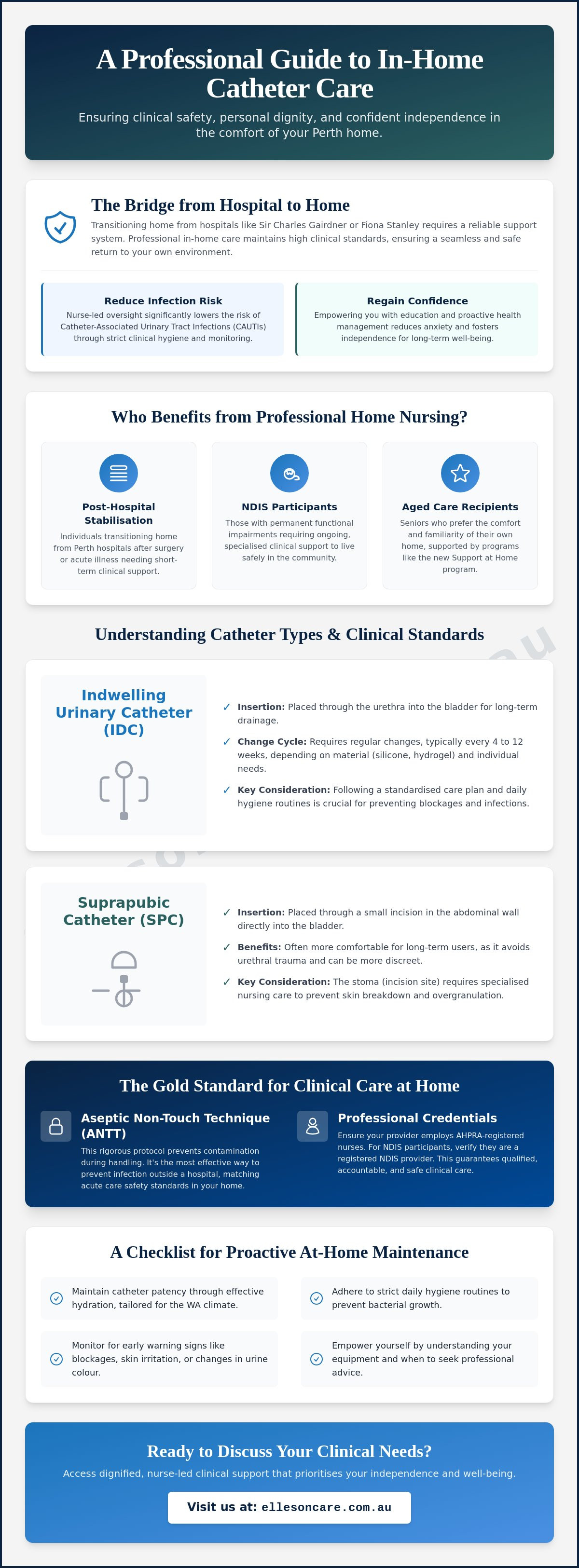
In-home catheter care Perth is a specialised clinical service delivered by nursing professionals within the comfort of your own residence. While Urinary catheterization is a common medical procedure, the long-term management of these devices requires precise clinical knowledge to ensure safety and comfort. Professional oversight is absolutely vital for preventing Catheter-Associated Urinary Tract Infections (CAUTIs), which can lead to serious health setbacks if not managed correctly. Registered Nurses provide this essential layer of protection, monitoring your bladder health and ensuring that all equipment is functioning as it should. Their expertise allows for the early detection of issues, such as blockages or skin irritation, which helps avoid unnecessary hospital visits.
For many people in Western Australia, the transition from major metropolitan hospitals like Sir Charles Gairdner Hospital (SCGH) or Fiona Stanley Hospital (FSH) can be a vulnerable time. The shift from 24-hour clinical supervision to managing a catheter at home requires a reliable support system. Professional in-home catheter care Perth bridges this gap, ensuring that the high standards of care you received in the hospital are maintained in your own suburb. This continuity is especially important for Perth seniors and NDIS participants who are working to balance their independence with the requirements of the WA health system.
Who Benefits from Professional Home Nursing?
This support is designed for individuals who value their privacy but require technical clinical assistance. It is particularly beneficial for:
- Individuals transitioning home from Perth hospitals following surgery or acute illness who need short-term clinical stabilisation.
- NDIS participants with permanent functional impairments who require ongoing, specialised clinical support to live safely in the community.
- Aged care recipients who prefer the comfort and familiarity of their own home over residential facilities, supported by the new Support at Home program.
The Goal of Independent Clinical Services
Effective clinical support moves beyond simple maintenance; it focuses on proactive health management and education. We believe in empowering you to understand your equipment and recognise potential warning signs before they become emergencies. This approach reduces anxiety for both the client and their family, creating a stable environment for long-term well-being. Independent clinical services are nurse-led care models that prioritise client autonomy and personal dignity through expert, community-based support.
Types of Catheter Management and Clinical Standards
Every individual's clinical journey is unique, which is why in-home catheter care Perth must be tailored to specific medical requirements and lifestyle preferences. Maintaining high clinical standards in a home environment relies heavily on the Aseptic Non-Touch Technique (ANTT). This protocol ensures that key parts of the catheter and drainage system aren't contaminated during handling, which is the most effective way to prevent infection outside of a hospital setting. Our nurses prioritises these rigorous standards to provide a level of safety that matches acute care facilities while respecting the privacy of your own home.
Indwelling Urinary Catheters (IDC) are a common choice for long-term drainage. These devices require regular change cycles, typically occurring every four to twelve weeks. The exact timing depends on the catheter material, such as silicone or hydrogel, and the individual's history of encrustation or blockage. Following a standardised catheter care fact sheet can help you and your carers stay organised with these cycles and maintain the necessary daily hygiene routines. For those seeking personalised advice on managing these cycles, professional clinical support can provide the clarity and technical expertise required for safe, long-term management.
Indwelling vs. Suprapubic: What You Need to Know
Choosing between an indwelling urethral catheter and a suprapubic catheter (SPC) is a decision often made in consultation with a Continence Nurse Consultant and a urologist. While an IDC is inserted through the urethra, an SPC is placed through a small incision in the abdominal wall. Many long-term users find the SPC more comfortable as it avoids urethral trauma and can be more discreet. However, the stoma site of an SPC requires specialised care to prevent skin breakdown or overgranulation. We focus on ensuring the skin surrounding the stoma remains healthy and the site is cleaned using appropriate clinical solutions.
Training for Intermittent Self-Catheterisation
Intermittent Self-Catheterisation (ISC) is often the gold standard for those seeking maximum independence. This technique involves the temporary insertion of a catheter several times a day to empty the bladder, which is then immediately removed. Our nursing team provides comprehensive, patient-led training to help you master this skill safely. The psychological benefits of ISC are significant, as it eliminates the need for permanent drainage bags and allows for greater freedom in clothing and physical activity. Selecting the right equipment, such as hydrophilic or pre-lubricated catheters, is a key part of this process to ensure the technique fits your daily life in Perth seamlessly.
Choosing the Right Clinical Nursing Provider in Western Australia
Selecting a provider for your clinical needs is a significant decision that directly impacts your safety and long-term comfort. You should look for a team that prioritises clinical excellence and transparency above all else. The most important credential to verify is that the services are delivered by Registered Nurses with current AHPRA (Australian Health Practitioner Regulation Agency) registration. These professionals have the advanced training required to manage complex comorbidities, such as neurological conditions or diabetes, which often influence bladder health and catheter management. Don't hesitate to ask a potential provider about their specific experience with these complex needs.
A nurse-led organisation offers a different level of security compared to a generalist care agency. In a nurse-led model, clinical decisions and care plans are overseen by experienced healthcare professionals rather than administrative staff. This structure ensures that your in-home catheter care Perth is evidence-based and highly responsive to any changes in your medical condition. It also means that the nurses advocating for your health understand the technical nuances of your care and can communicate effectively with your wider medical team.
Evaluating Local Perth Expertise
Local knowledge of the Western Australian health system is invaluable for a smooth care experience. Providers who understand the specific discharge protocols of Perth hospitals, such as Sir Charles Gairdner or Fiona Stanley, can facilitate a seamless transition back to your community. They often maintain established relationships with local GPs across the Perth metropolitan area, ensuring your care is coordinated and consistent. This level of local integration is a cornerstone of high-quality in home aged care perth. A truly compassionate provider will also adopt a family-oriented approach, involving your primary carers in the care plan to ensure everyone feels supported and informed.
Funding Your Catheter Care: NDIS, Aged Care, and DVA
Understanding how to fund your clinical support is essential for maintaining a consistent care routine. Clinical nursing is a recognised support under the NDIS for participants with high-intensity needs, provided the agency is a Registered NDIS Provider. For older Australians, the new support at home program provides a clear framework to access professional nursing within your government-funded package. It's important to ensure your plan specifically accounts for clinical consumables, such as drainage bags and securement devices. For our local veterans, DVA (Department of Veterans’ Affairs) community nursing remains a vital pillar, ensuring those who served have access to the dignified, professional support they deserve.
Preventing Complications: The Gold Standard for At-Home Maintenance
Establishing a consistent daily hygiene routine is the most effective way to safeguard your health and prevent the discomfort of infections. Professional in-home catheter care Perth focuses on the "closed drainage system" principle, which means the connection between the catheter and the drainage bag should remain intact whenever possible. Every time this seal is broken, you create a potential entry point for bacteria. By maintaining this closed system and cleaning the insertion site with mild soap and water daily, you significantly reduce the likelihood of developing a clinical complication. It's these small, disciplined steps that ensure your long-term comfort and safety.
Vigilance is equally important when monitoring for warning signs that require professional intervention. You should contact your nursing team if you notice cloudy or foul-smelling urine, persistent abdominal pain, or a sudden onset of fever and chills. These symptoms often indicate the beginning of an infection that needs prompt clinical attention. If you feel unsure about your current routine or want to ensure your technique is optimal, reaching out for expert clinical support can provide the reassurance you need to manage your care with confidence.
Hydration Strategies for the Perth Summer
Maintaining catheter patency is heavily dependent on your fluid intake, a factor that becomes critical during the Western Australian summer. When temperatures in Perth exceed 35 degrees, your body loses fluids more rapidly through perspiration, which can lead to concentrated urine and a higher risk of catheter encrustation. We recommend monitoring your urine colour; it should ideally be a pale straw shade. If it appears dark or concentrated, it's a clear signal to increase your water intake. You should also try to limit bladder irritants like excessive caffeine or alcohol, as these can trigger bladder spasms or "bypassing," where urine leaks around the outside of the tube.
Troubleshooting Common Issues at Home
It can be distressing if your catheter suddenly stops draining, but often the solution is simple. Your first step should be to check the entire length of the tubing for any kinks or loops that might be obstructing the flow. Ensure the drainage bag is always positioned below the level of your bladder to allow gravity to do its work. If you experience bypassing, it may signal a blockage or a bladder spasm rather than a faulty device. For those managing a suprapubic catheter, maintaining the skin around the stoma is vital. You can refer to our wound care at home perth checklist for detailed advice on preserving skin integrity and recognising early signs of irritation at the insertion site.
How Elleson Care Redefines Independent Clinical Services in Perth
Elleson Care brings over 22 years of specialised experience to the Western Australian community. We recognise that in-home catheter care Perth is about more than technical proficiency; it's about the person behind the procedure. Our holistic approach ensures we don't just "change a tube." Instead, we manage your total well-being, considering how clinical needs intersect with your daily life and personal comfort. This person-centred model respects your cultural background and individual preferences, ensuring that care feels like a supportive partnership rather than a clinical intrusion.
We seamlessly integrate clinical nursing with your existing domestic and personal care supports. This unified approach prevents the fragmentation of care that often occurs when multiple agencies are involved. By coordinating every aspect of your support, we create a stable environment where your health and independence can flourish. Our team focuses on consistency, so you see familiar faces who understand your history and your specific health goals.
The Elleson Difference: Compassionate Expertise
Our Registered Nurses prioritise building long-term, trusting relationships with Perth families. They understand that clinical support is most effective when it's built on a foundation of dignity and safety. Every home visit is an opportunity to listen, assess, and provide the steady reassurance that comes from decades of expertise. Elleson Care is a proudly West Australian owned and operated specialist, dedicated to serving our local community with integrity.
Getting Started with Your Personalised Care Plan
The journey begins with a comprehensive clinical assessment. We work closely with you to set individual health goals that reflect what you want to achieve, whether that's returning to social activities or simply feeling more secure at home. Our team coordinates directly with your GP and specialists, ensuring a unified health approach that keeps everyone on the same page. This proactive communication minimises risks and ensures your care plan evolves as your needs change.
Contact Elleson Care today to discuss your clinical nursing needs.
Restoring Your Confidence and Independence at Home
Managing a catheter shouldn't feel like a barrier to living a full life in your own community. By prioritising rigorous clinical standards and proactive maintenance, you can effectively reduce the risk of infections and avoid the stress of hospital readmissions. Professional in-home catheter care Perth provides the technical support needed to ensure your safety while protecting your personal dignity and autonomy. Selecting a provider that understands the nuances of the Western Australian health system ensures that your care remains consistent, coordinated, and respectful of your individual needs.
Elleson Care is a West Australian owned and operated specialist, led by Registered Nurses with over 22 years of experience. As a Registered NDIS and Aged Care Provider, we're committed to providing the steady, expert presence you need to thrive at home. We invite you to Book a Clinical Assessment with our Perth Nursing Team to begin your journey toward more confident self-management. You deserve support that is as technically proficient as it is fundamentally kind.
Frequently Asked Questions
How often does a catheter need to be changed by a nurse at home?
Catheters are typically changed every four to twelve weeks, depending on the device material and your specific clinical history. Some silicone catheters are designed for longer use, while others require more frequent replacement to prevent encrustation. Your nurse will establish a personalised schedule to ensure changes occur before blockages or discomfort become an issue.
Can I shower or swim with an indwelling catheter?
You can certainly shower as usual, provided the drainage bag remains positioned below the level of your bladder to maintain flow. Swimming is generally possible but requires specific clinical advice regarding the use of catheter valves or waterproof covers for the insertion site. It's best to discuss your lifestyle activities with your nurse to ensure your routine remains safe and hygienic.
What are the early signs of a urinary tract infection (UTI) to look out for?
Early indicators of a UTI include cloudy or dark urine, a strong or unusual odour, and new discomfort in your lower abdomen. You might also experience a sudden fever, chills, or increased confusion, which are signs that the infection requires prompt attention. If you notice these changes, contact your clinical team immediately to prevent further complications.
Does the NDIS cover the cost of catheter bags and clinical supplies in Perth?
The NDIS typically covers the cost of clinical consumables, including drainage bags and securement devices, through your "Core Supports" budget. If your catheter use is directly related to your disability, these items are considered essential for your daily living. Professional providers of in-home catheter care Perth can help you identify the correct equipment to include in your plan review.
What should I do if my catheter falls out or stops draining?
If your catheter stops draining, first check the tubing for any visible kinks or loops that might be obstructing the flow. If it has fallen out entirely or remains blocked after you've checked the tubing, you should contact your nurse or visit your GP or local hospital immediately. Never attempt to reinsert a catheter yourself, as this must be done by a professional using sterile techniques.
Can a nurse teach my family member how to help with my catheter care?
Education is a fundamental part of professional clinical support, and we're happy to teach your family or carers how to assist you safely. We focus on training them in basic hygiene protocols and how to recognise the early warning signs of a potential blockage or infection. This collaborative approach ensures you feel supported by your loved ones while maintaining rigorous clinical standards.
Is in-home catheter care covered by my Home Care Package?
Clinical nursing services, such as catheter management, are fully covered under the Support at Home program for eligible individuals. This funding is designed to help you receive high-quality in-home catheter care Perth so you can remain living independently. Your provider can assist you in ensuring your care plan allocates enough funding for regular nursing visits and clinical supplies.
Why is professional nursing better than managing a catheter myself?
Professional nursing ensures that every procedure follows strict Aseptic Non-Touch Techniques (ANTT) to minimise the risk of serious infection. Registered Nurses have the advanced training to detect subtle changes in your health that might indicate a developing complication. This proactive oversight provides a level of safety and stability that is difficult to achieve when managing complex clinical needs on your own.


