
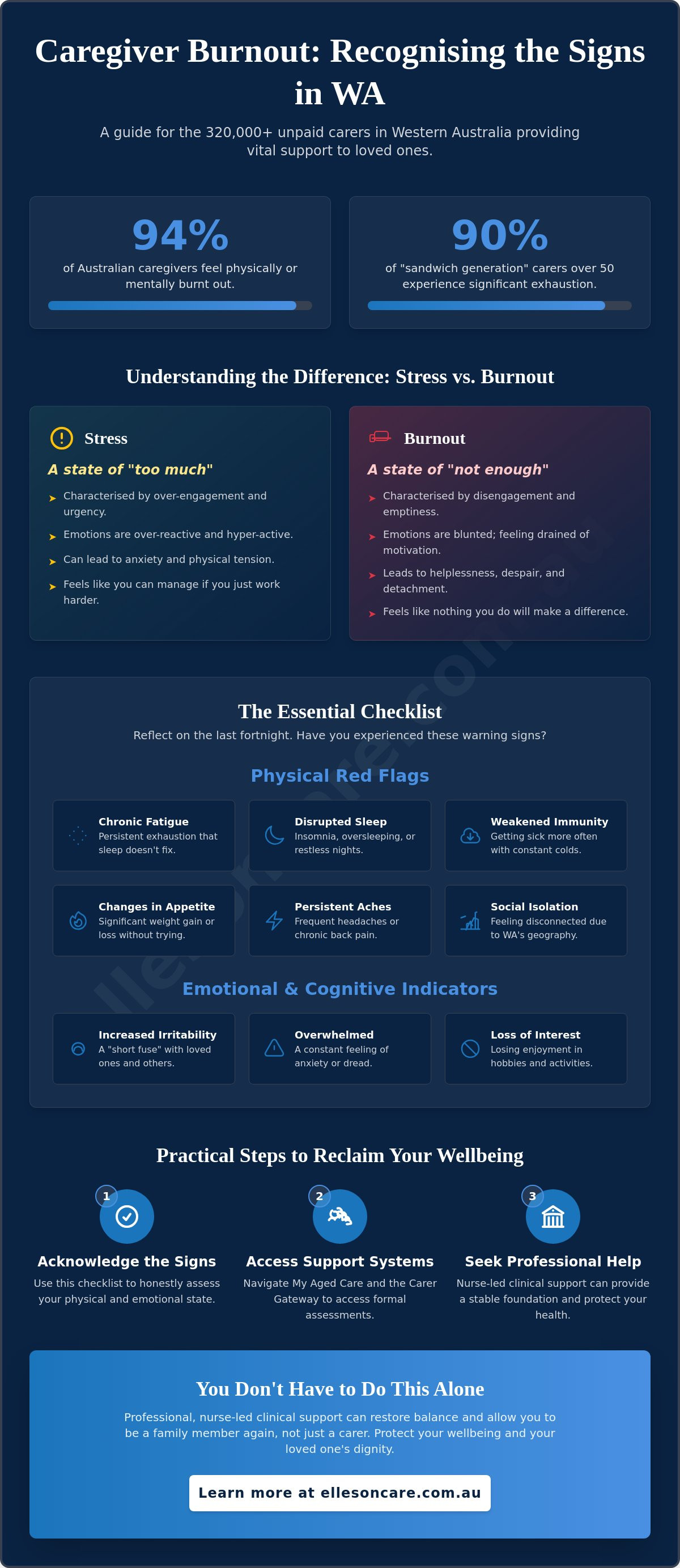
Did you know that over 320,000 unpaid carers live in Western Australia, yet recent research shows that 94% of Australian caregivers feel physically or mentally burnt out? You likely began this journey with a deep commitment to your family, but now you might find yourself waking up exhausted despite a full night's rest or feeling a heavy sense of isolation from your Perth social circles. It's common to feel overwhelmed when you're navigating the complexities of the NDIS or My Aged Care systems without professional guidance.
This article will help you identify the specific caregiver stress and burnout symptoms that signal it's time to prioritise your own wellbeing. We provide a clear checklist to help you assess your current stress levels and offer practical, nurse-led strategies to access support right here in WA. By recognising these early warning signs, you can move toward a more sustainable way of caring that protects both your health and your loved one's dignity. Your feelings are a natural response to a demanding role, and finding a path back to stability is possible with the right clinical support.
Key Takeaways
- Understand the clinical distinction between temporary caregiving pressure and the total physical and emotional depletion of burnout.
- Utilise a comprehensive checklist to identify specific caregiver stress and burnout symptoms across physical, emotional, and social areas of your life.
- Recognise how Perth’s geography and local cultural expectations can contribute to social isolation and the "invisible" nature of carer exhaustion.
- Learn the practical steps for navigating My Aged Care and the Carer Gateway to access the formal assessments and support you require.
- Discover how professional, nurse-led clinical support can provide a stable foundation for your family while protecting your personal wellbeing.
Understanding Caregiver Stress and Burnout Symptoms in 2026
Caring for a family member is a profound act of devotion, yet it often carries a weight that can become unsustainable. In Western Australia, there are currently over 320,000 unpaid carers providing vital support to loved ones. However, as we move through 2026, the pressure on these individuals is intensifying. A foundational understanding of caregiver stress is essential for anyone providing long-term support, as it represents the initial emotional and physical response to the relentless demands of care. Without intervention, this stress often transitions into a more critical state.
Recent data highlights a concerning trend for Perth families. A 2025 report by Australian Seniors found that 90% of carers over the age of 50 who belong to the "sandwich generation", those simultaneously caring for ageing parents and children or grandchildren, experience significant exhaustion. Recognising caregiver stress and burnout symptoms in these early stages is not merely helpful; it is a vital safeguard to prevent a total crisis within the home environment. When symptoms are identified early, families can implement clinical support structures that protect the health of everyone involved.
Stress vs. Burnout: Knowing the Difference
It is helpful to distinguish between the experience of being stressed and the state of being burnt out. Stress typically involves a sense of "too much". There are too many appointments to manage, too many physical tasks to complete, and too much pressure to perform. This often leads to a state of hyper-reactivity and anxiety. In contrast, burnout is characterised by "not enough". It is a state of feeling entirely empty, dried up, and devoid of motivation. While a stressed carer may feel they can get things under control if they just work harder, a burnt out carer often feels a sense of profound despair and emotional bluntedness. Burnout is the critical point where a carer can no longer provide safe or empathetic support because their own internal resources are completely exhausted.
The Role of Compassion Fatigue
Often described as the "cost of caring", compassion fatigue is a specific type of secondary traumatic stress that affects those in high-intensity care roles. Unlike general burnout, which can happen in any job, compassion fatigue is directly linked to the act of witnessing the suffering of a loved one. Symptoms often include a loss of hope and a feeling of being overwhelmed by the person’s pain or decline. At Elleson Care, our nurse-led clinical support teams are trained to identify these subtle shifts in family dynamics. By introducing professional assistance with daily living or clinical tasks, we help restore the emotional space required for you to simply be a family member again, rather than a full-time clinician.
The Essential Checklist: Identifying Physical and Emotional Warning Signs
Many families in Western Australia find themselves in a situation similar to the "boiling frog" analogy. The temperature of your caregiving responsibilities rises so gradually that the physical and emotional toll becomes your "new normal" without you ever noticing the shift. You might assume that waking up exhausted is simply part of life now, but these subtle changes are often the first caregiver stress and burnout symptoms to emerge. To help you assess your current situation, we encourage you to reflect on the last fortnight and consider if you have experienced any of the following indicators.
Physical Red Flags You Should Not Ignore
Physical symptoms are often the most visible signs that your body is reaching its limit. Chronic fatigue is more than just feeling tired; it is a persistent exhaustion that a full night of sleep does not seem to fix. You might experience disrupted sleep patterns, such as insomnia or oversleeping, which leave you feeling depleted during the day. Frequent headaches, persistent back pain, or a weakened immune system that results in constant colds are also common signals from your body. Changes in your appetite or weight often correlate directly with the intensity of your caregiving duties. If these physical signs are present, it may be time to consider how clinical support can alleviate some of the daily physical burden.
Emotional and Cognitive Indicators
Emotional strain can be harder to quantify, yet it is equally impactful on your quality of life. A "short fuse" or increased irritability with the person receiving care is a significant sign of emotional depletion. You may feel a sense of hopelessness, helplessness, or a nagging belief that "nothing I do is enough" regardless of your effort. Cognitive symptoms often manifest as "brain fog," where you have difficulty concentrating or feel an inability to make simple decisions about the household or care plan. Identifying these official steps to manage stress is a vital first step in reclaiming your mental clarity and emotional stability.
Social Withdrawal and Behavioural Changes
The social impact of caregiving is often the most isolating aspect for Perth families. Have you lost interest in the hobbies you once enjoyed or stopped visiting your local Perth community centres to see friends? Social isolation is a frequent side effect of intense caregiving, as the role consumes all available time and energy. You might find yourself neglecting your own health appointments, dental check-ups, or medications because you are prioritising the client's needs above your own. Some individuals also turn to unhealthy coping mechanisms, such as increased alcohol consumption or emotional eating, to manage the underlying pressure. Recognising these behavioural shifts allows you to seek help before they lead to a total health crisis.
The Invisible Impact: Why Burnout Often Goes Unnoticed in WA Homes
In Western Australia, a strong cultural ethos of self-reliance often masks the severity of caregiver fatigue. Many families believe that "looking after our own" is a private responsibility to be managed without complaint. This stoicism, while well-intentioned, frequently hides the escalating caregiver stress and burnout symptoms that develop behind closed doors. Perth’s unique geography also plays a role. The sprawling nature of our suburbs can make it difficult for primary carers to maintain regular social connections, leading to a profound sense of isolation that accelerates emotional decline.
This isolation often feeds into a repetitive "guilt cycle" that many carers find difficult to break. It typically follows a predictable pattern:
- You feel profound exhaustion or resentment toward your caregiving duties.
- You feel guilty for having these feelings, believing you are failing your loved one.
- This guilt creates internal stress, which drives you to work harder and neglect your own needs.
- The increased effort leads to deeper burnout, restarting the cycle.
From a clinical perspective, our registered nurses view this not just as a personal struggle, but as a significant risk to the safety and health of the person being cared for. When emotional resources are depleted, the ability to provide high-quality, attentive care is naturally compromised.
The "Hero" Complex and Its Dangers
Many dedicated family members fall into the trap of the "hero" complex, believing they must handle every aspect of care alone to prove their devotion. This mindset often persists until a physical collapse or a medical emergency occurs, forcing a sudden and stressful transition in care. Refusing assistance often prevents the implementation of sustainable in home aged care Perth families can rely on for long-term stability. At Elleson Care, we encourage families to reframe "asking for help" not as a sign of weakness, but as a professional management strategy. It is an essential step in ensuring your loved one remains safe and well-supported in their own home.
When Caregiver Stress Becomes a Clinical Risk
Burnout is more than an emotional state; it is a clinical condition that directly impacts the quality of care provided. Research indicates a clear link between carer exhaustion and increased hospitalisation rates for the person receiving care. When a carer experiences the cognitive fog associated with the symptoms of caregiver burnout, the risk of medication errors or missing subtle clinical signs increases dramatically. A nurse-led assessment is often the most effective way to identify these risks before they escalate into a crisis. By having a professional eye on the home environment, we can protect the health of both the carer and the client, ensuring that care remains high-quality and safe.
Practical Steps to Manage Stress and Reclaim Your Wellbeing
Once you have identified the caregiver stress and burnout symptoms present in your life, moving from recognition to action is the most important step for your family's stability. This transition often feels daunting, particularly when you are already exhausted. However, reclaiming your wellbeing is a methodical process that begins with a shift in perspective. Acknowledging the reality of your situation without self-judgement is the first hurdle. It is not a failure to admit that the demands of care have exceeded your current capacity; it is a clinical reality that requires a structured response.
- Step 1: Validate your experience. Accept that your exhaustion is a natural response to a demanding role and not a reflection of your character.
- Step 2: Seek formal assessments. Contact My Aged Care or the Carer Gateway to document your needs and explore available funding options.
- Step 3: Organise micro-breaks. Even fifteen minutes of quiet time daily can help regulate your nervous system and reduce immediate tension.
- Step 4: Build a "Care Circle". Delegate specific tasks to friends, family members, or professional providers to share the physical and administrative load.
- Step 5: Mandate self-care. Treat your own health appointments and rest periods as non-negotiable clinical requirements within the care plan.
Accessing Support Services in Western Australia
Navigating the local support landscape is essential for Perth families seeking sustainable solutions. You can contact the Carer Gateway for access to specialised counselling and emergency respite services throughout WA. If you are supporting someone under the NDIS, exploring "Capacity Building" supports can significantly reduce your daily administrative and physical load. It is vital to remember that professional respite care in Perth is a funded right designed to sustain the caring relationship, not a luxury for those who can no longer cope.
The Power of Respite and Daytime Care
Introducing even a four-hour block of professional support each week can provide the necessary space to "reset" your stress levels. This time allows you to attend to your own needs while your loved one benefits from social participation and professional clinical oversight. Beyond personal care, domestic assistance can take the burden of household chores off your plate. This allows you to focus your energy on quality time and emotional connection rather than endless tasks. If you are ready to explore how a tailored support plan can help your family, you can contact our clinical team to discuss your specific needs.
Professional Support: How Elleson Care Protects Perth Families
Identifying the early caregiver stress and burnout symptoms described in this guide is a vital act of self-awareness. However, the next step involves transitioning from a state of solitary struggle to a supported, sustainable care model. At Elleson Care, we provide a holistic, nurse-led approach that prioritises the wellbeing of the entire family unit. We understand that for a loved one to thrive at home, their primary carer must also be physically and emotionally resilient. Our customised NDIS and Aged Care services are designed to integrate seamlessly into your life, providing the clinical stability required to alleviate your daily worries.
Our commitment to person-centred care means we don't just see a list of tasks; we see a family that deserves dignity and rest. By tailoring our support packages to your specific household dynamics, we ensure that professional intervention serves as a foundation for your sustainability rather than an intrusion. This balanced relationship allows you to step back from the high-pressure role of a clinical coordinator and return to being a supportive daughter, son, or partner.
Nurse-Led Clinical Oversight
One of the most significant contributors to carer exhaustion is the weight of managing complex medical needs without professional training. With over 22 years of experience, our team is equipped to manage intricate requirements such as wound care, ventilator support, and chronic disease management. Having a Registered Nurse oversee the care plan significantly reduces the "medical coordinator" burden that often leads to a physical collapse. Our professional nursing services provide families with the peace of mind that comes from evidence-based practices and high ethical standards. When a qualified professional is managing the clinical risks, you are free to focus on the emotional connection that matters most.
Starting Your Journey with Elleson Care
The transition from "doing it all" to having a supportive team is a deliberate process that we manage with sensitivity and care. We work closely with NDIS Support Coordinators and families navigating the My Aged Care system to ensure your funding is utilised effectively for carer relief. With the upcoming 1 October 2026 policy shift to the Support at Home program, there are more opportunities than ever to access fully funded clinical supports that protect your health. You don't have to wait for a crisis to occur before seeking a partner in care. Our Perth-based team is here to provide the steady, reliable presence you need to reclaim your quality of life. You've looked after your family with dedication; now, it's time to let us look after you.
Restoring Balance to Your Family Home
Prioritising your own health is a clinical necessity that ensures the long-term safety and dignity of your loved one. By identifying caregiver stress and burnout symptoms early, you can move away from the "guilt cycle" and toward a professional support model that protects your whole family. Remember that accessing respite and clinical assistance is a funded right designed to sustain the vital bond between you and the person you care for.
Elleson Care is a West Australian owned and operated provider led by Registered Nurses with over 22 years of experience. We specialise in complex clinical support and NDIS services, ensuring that your home remains a place of comfort and connection rather than a site of constant clinical pressure. You don't have to navigate these complex systems alone; our team is dedicated to providing the steady, expert guidance you deserve.
Take the first step toward reclaiming your wellbeing today. Book a Compassionate Care Assessment with our Perth Nursing Team and discover how a professional partner can help you find stability once again. You've provided so much for others; now, let us support you.
Frequently Asked Questions
What are the first signs of caregiver burnout?
The first signs typically include chronic exhaustion that persists even after sleep, a "short fuse" with loved ones, and a loss of interest in personal hobbies. You might also notice a persistent sense of dread regarding daily care tasks or a feeling of being trapped in your role. Recognising these early caregiver stress and burnout symptoms allows you to implement support before a total physical or emotional collapse occurs.
Is caregiver burnout a mental illness?
Caregiver burnout is not classified as a mental illness; rather, it is a clinical state of total physical, emotional, and mental exhaustion resulting from prolonged stress. While it is not a psychiatric disorder itself, if left unaddressed, it can significantly increase the risk of developing clinical depression or anxiety. It is a physiological response to an unsustainable workload that requires professional intervention and a change in the care environment to resolve.
How do I tell my family I can no longer cope with caregiving?
When telling your family you can no longer cope, it is most effective to be direct and focus on the safety of your loved one. Explain that your current level of exhaustion has become a clinical risk that could lead to medication errors or a decline in care quality. Frame the introduction of professional support as a management strategy that ensures your family member receives the high standard of care they deserve while protecting your own health.
Can I get government funding for respite care in Perth?
Yes, you can access government funding for respite care in Western Australia through My Aged Care and the Carer Gateway. From 1 October 2026, the Australian Government will fully fund personal care services under the Support at Home program for those with available funding in their plan. This change removes out-of-pocket contributions for essential clinical supports, making it easier for Perth families to access the professional relief they need to prevent burnout.
What is the difference between caregiver stress and compassion fatigue?
The primary difference lies in the source and nature of the exhaustion. Caregiver stress is usually about having "too much" to do, leading to anxiety and hyper-reactivity. Compassion fatigue is specifically the "cost of caring" and involves a loss of hope or a sense of being overwhelmed by the loved one's suffering. While stress is often task-oriented, compassion fatigue is a deeper emotional depletion that affects your ability to empathise with the person receiving care.
How long does it take to recover from caregiver burnout?
Recovery is a gradual process that depends on the implementation of long-term support systems. It is rarely solved by a single weekend away; instead, it requires a fundamental shift in the care structure to reduce your daily burden. For many carers, significant improvement begins once professional clinical support is introduced, allowing the nervous system to move out of a constant "fight or flight" state and begin the healing process over several months.
Will the NDIS pay for someone to help me at home?
The NDIS provides funding for personal care and domestic assistance if these supports are deemed "reasonable and necessary" to help a participant live independently. These are typically funded under "Core Supports" or "Capacity Building" in an NDIS plan. By utilising these funds for professional support workers or nurses, the primary carer can reduce their physical workload and focus on maintaining a healthy, supportive relationship with the participant without total depletion.
What should I do if I feel resentment toward the person I am caring for?
If you feel resentment, it is important to understand that this is a common clinical symptom of burnout and not a personal failure. Resentment often signals that your personal boundaries have been crossed and your internal resources are entirely depleted. Seeking immediate respite care is the most effective way to create the space needed to process these feelings and restore a sense of personal dignity and safety to your home environment.


