

Many families in Perth believe that introducing professional support means their loved ones are losing their independence, but the reality is often the exact opposite. Clinical evidence suggests that early intervention is the most effective strategy to prevent the crisis point that often forces a move into residential aged care. You want your parents to remain safe in the comfort of their own home, yet it's difficult to ignore the growing worry when you notice an uncharacteristic bruise or a kitchen that isn't as tidy as it used to be.
It's natural to feel a sense of guilt or confusion as you search for the signs my parents need in-home care. This nurse-led guide is designed to provide you with the professional clarity you need to make an informed decision for your family. We will examine twelve critical physical, cognitive, and clinical red flags that indicate a need for support. You'll also learn how the new Support at Home program, which replaced the old package system in November 2025, provides fully funded clinical care to help Western Australian seniors maintain their dignity and autonomy for longer.
Key Takeaways
- Learn to identify subtle physical changes, such as unexplained weight loss or declining personal hygiene, that often precede more significant health challenges.
- Discover how simple environmental checks, like the "Fridge Test" and monitoring medication adherence, can reveal hidden clinical risks in the home.
- Understand the emotional and cognitive shifts, including social withdrawal and confusion, that signal a need for professional clinical oversight.
- Use our nurse-led checklist to objectively evaluate the signs my parents need in-home care before a preventable accident or crisis occurs.
- Gain clarity on the My Aged Care assessment process and how the Support at Home program helps Perth families preserve their loved ones' independence.
Physical Red Flags: Changes in Appearance and Mobility
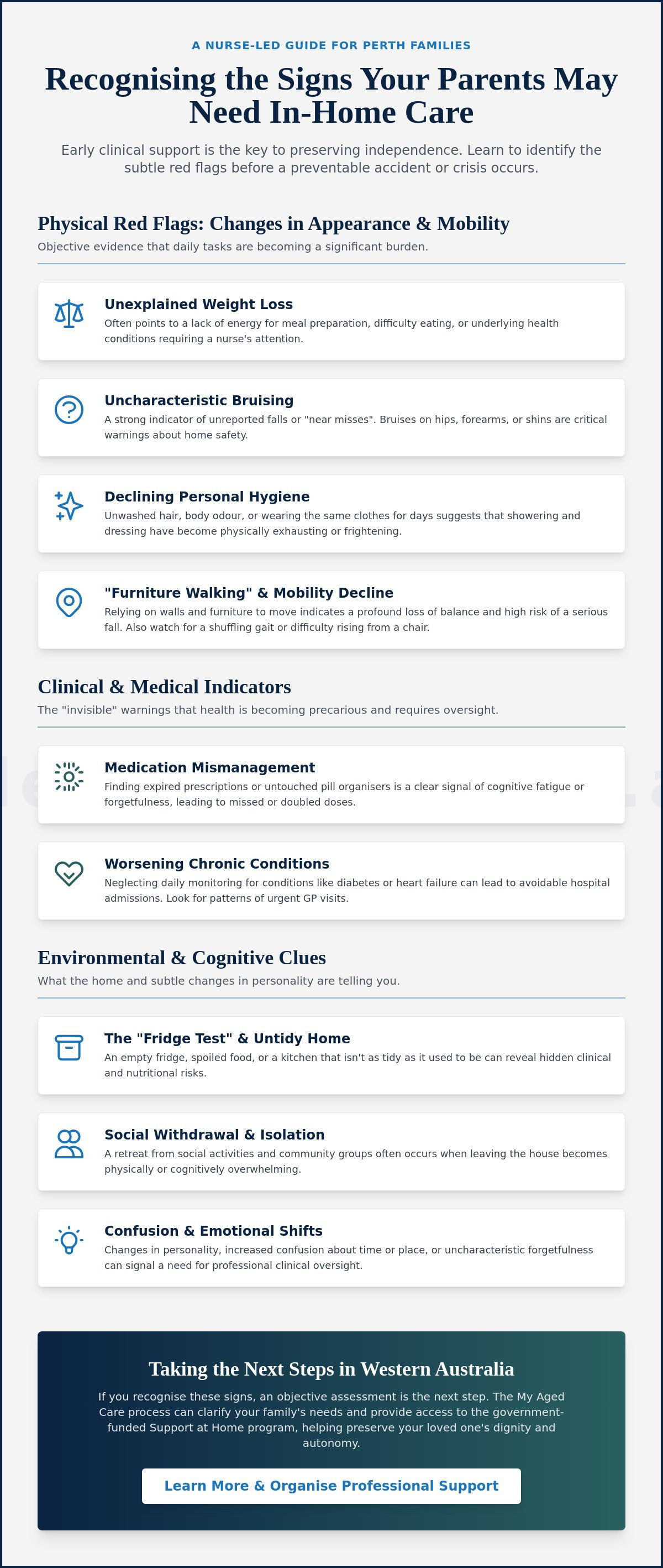
Physical changes are often the most tangible signs my parents need in-home care, providing objective evidence that daily tasks are becoming a significant burden. While some decline is expected with age, sudden shifts in appearance or movement usually indicate a need for professional clinical oversight. Unexplained weight loss, for instance, isn't just about a change in appetite; it often points to a lack of physical energy for meal preparation or underlying health conditions that require a nurse's attention. If you notice uncharacteristic bruising on their hips, forearms, or shins, it's a strong indicator of unreported falls. Many seniors hide these incidents to avoid worrying their families, but these "near misses" are critical warnings that their current environment is no longer safe without assistance.
Hygiene and Personal Presentation
Maintaining personal care requires significant physical effort and complex cognitive organisation. When a parent begins to neglect grooming habits they once took pride in, it's rarely a conscious choice. You might notice the "scent of neglect", such as unwashed hair or persistent body odour, which suggests that stepping into a high-walled shower has become a frightening or exhausting prospect. Pay close attention to their wardrobe; difficulty with fine motor tasks like buttons and zippers often leads to wearing the same elastic-waisted trousers for several days. Similarly, choosing heavy woollen layers on a warm Perth afternoon can indicate a loss of thermal regulation or cognitive confusion regarding the weather.
The "Furniture Walk" and Mobility Declines
Mobility is the cornerstone of independence, yet it's often the first area where safety is compromised. One of the most telling signs of decline is "furniture walking", where a parent relies on walls, hallway tables, and chair backs to navigate their home. This behaviour suggests a profound loss of balance and a high risk of a hip fracture or head injury. Understanding what in-home care involves can help families see that mobility support isn't about restriction. Instead, it's about providing the clinical stability and physical aids needed to move safely. You should watch for specific mobility changes, including:
- A shuffling gait or dragging of the feet.
- Difficulty rising from a low sofa or armchair.
- A new-found hesitancy when stepping over door thresholds or onto different floor surfaces.
When these shifts occur, seniors often stop leaving the house altogether. This retreat leads to a dangerous cycle of social isolation and rapid muscle wasting, which further increases the likelihood of a medical crisis. Recognising these physical red flags early allows you to implement support that keeps your parents active and safe in their own community.
Clinical and Medical Indicators: When Ageing Becomes a Health Risk
Clinical indicators are often the "invisible" warnings that a parent's health is becoming precarious. While a messy kitchen is a visible cue, a forgotten heart medication or a small, festering skin tear can be far more dangerous. Recognising these clinical signs an older adult needs help is essential for preventing avoidable hospital admissions. When chronic conditions like diabetes or heart failure are part of the picture, the margin for error narrows significantly. These conditions require a level of daily monitoring that often exceeds what a family member can provide. For instance, heart failure requires careful tracking of fluid retention, while diabetes demands precise blood glucose management. When these tasks are neglected, you'll likely notice a pattern of "near-miss" medical events or sudden, urgent trips to the GP.
Medication Mismanagement
Finding expired prescriptions or untouched pill organisers is a clear signal that a parent is struggling with their health regime. Cognitive fatigue or simple forgetfulness can lead to the dangerous practice of "doubling up" on doses. This behaviour significantly increases the risk of adverse drug reactions or balance issues. For many families, these medical errors are the primary signs my parents need in-home care to ensure clinical safety. Accessing professional nursing services provides a structured approach to medication, ensuring the right dose is taken at the right time and reducing the stress on family carers.
Slow-Healing Wounds and Skin Integrity
Skin integrity is a vital but often overlooked aspect of senior health. A simple skin tear or a bruise that hasn't faded after several weeks is more than just a consequence of thin skin; it's a sign of poor circulation or nutritional deficiency. Without professional wound management, these minor injuries can quickly escalate into recurring infections or even sepsis. If a parent has become increasingly sedentary, you should also check for the early signs of pressure sores. These clinical red flags suggest that the current level of support is insufficient. In many cases, these clinical indicators are the most reliable signs my parents need in-home care to maintain their independence safely. If you're concerned about these medical indicators, our Clinical Support team can help you navigate a safer path forward for your loved one.
Environmental Signs: What the Home is Telling You
A parent's home often acts as a silent witness to their daily struggles. While they might tell you they're "managing fine" during a phone call, the physical state of their living space frequently tells a different story. These environmental signs my parents need in-home care are often subtle at first, appearing as a slightly overgrown garden or a few days of unwashed dishes. However, as cognitive or physical limitations grow, these small oversights can transform into genuine safety hazards. Recognising these warning signs for caregiving assistance within the home allows families to intervene before a household accident occurs.
The Fridge and Pantry Audit
The "Fridge Test" is one of the most reliable ways to assess nutritional health and cognitive function. Open the refrigerator and look for expired dairy, mouldy produce, or, conversely, multiples of the same item, like three half-used cartons of milk. This repetitive purchasing often indicates short-term memory loss. You should also look for signs of "tea and toast" syndrome, where a parent stops cooking balanced meals and relies on simple, low-nutrient snacks because the effort of using the stove feels too great. Check that basic appliances like kettles and toasters are being used safely; scorched surfaces or crumbs left to accumulate in a toaster are significant fire risks.
Maintenance and Safety in the WA Climate
In Western Australia, the environment presents unique challenges that require constant vigilance. During the intense Perth summer, a functioning and properly used air conditioning system is a clinical necessity, not a luxury. Seniors are at a much higher risk of heatstroke and dehydration, so noticing a stiflingly hot house despite a heatwave is a major red flag. Beyond the climate, look for structural trip hazards such as loose rugs, cluttered hallways, or dim lighting in thoroughfares. Maintaining a safe, temperate environment is a core component of in-home aged care in Perth, ensuring that the home remains a sanctuary rather than a source of danger.
Unusual odours, such as the smell of accumulating rubbish, stale urine, or even a faint scent of gas from an unlit burner, should never be dismissed. These are clear indicators that the complex tasks of home maintenance and personal hygiene have become overwhelming. Neglected chores, such as piles of unopened mail or a laundry basket that hasn't been emptied in weeks, suggest that your parent is prioritising their limited energy on basic survival rather than maintaining a healthy living standard. Addressing these environmental cues early can prevent a minor lapse in home care from becoming a major health crisis.
Cognitive and Emotional Shifts: Subtle Changes in Personality
Cognitive decline often hides behind a mask of "just getting older," making it one of the most challenging areas for families to assess objectively. While a physical bruise is visible, a subtle shift in executive function or a sudden change in temperament requires a more nuanced observation. These internal changes frequently manifest as a loss of confidence in tasks that were once second nature. If your parent starts repeating the same stories within a single conversation or loses track of the current month or year, these are significant signs my parents need in-home care. Recognising these shifts early allows for a transition that prioritises dignity and safety before a cognitive lapse leads to a dangerous situation, such as leaving a stove top unattended.
Social Isolation and Withdrawal
When a parent suddenly stops attending their local bowls club, church group, or weekly morning tea, it is rarely a simple change in preference. Often, social withdrawal is a defensive strategy used to mask a fear of falling in public or the embarrassment of managing incontinence. This isolation is a heavy burden. Loneliness has a documented impact on physical health in seniors, often accelerating the progression of chronic conditions. Introducing professional support can break this cycle of retreat. Accessing respite care in Perth provides necessary social stimulation and clinical oversight, ensuring your loved one remains connected to their community in a safe, supported manner.
Executive Function and Confusion
Executive function involves the complex mental processes required to plan and complete tasks. You might notice a parent struggling to follow a familiar recipe, becoming overwhelmed by a simple utility bill, or failing to balance their chequebook. These are not merely "senior moments"; they are indicators that the brain is struggling to process multi-step information. Persistent confusion regarding familiar locations or dates suggests a need for a formal clinical review. If these patterns continue, the first step should always be a consultation with a GP to discuss a formal dementia assessment. This professional clarity helps you distinguish between normal ageing and the need for structured clinical support.
Sudden mood swings, increased irritability, or heightened anxiety are also common emotional red flags. These reactions often stem from a parent's internal frustration as they realise they are losing control over their environment or their own thoughts. They may become uncharacteristically suspicious of others or withdraw into themselves to avoid making mistakes. If you are noticing these emotional shifts, our Aged Care Services can provide the professional stability and compassionate expertise your family needs to navigate this transition safely.
Taking the Next Steps: Navigating Support in Western Australia
Once you have identified the signs my parents need in-home care, the focus shifts from observation to action. This transition is often accompanied by a sense of urgency, yet it's essential to move at a pace that respects your parent's dignity and autonomy. In Western Australia, the aged care landscape has undergone significant reform to make support more accessible and transparent. The Support at Home program, which replaced the previous Home Care Packages system on 1 November 2025, now provides a more streamlined way to access clinical and domestic help. A key benefit of this new model is that clinical care, including nursing and occupational therapy, is fully funded by the government with a $0 cost to the individual, ensuring that health needs are met without financial strain.
The My Aged Care and ACAT Process
The journey toward professional support begins with a referral to My Aged Care for an assessment. For most seniors with clinical needs, this involves an Aged Care Assessment Team (ACAT) visit to their home. During this interview, a professional will evaluate their physical mobility, cognitive health, and safety within the home environment. It's helpful to act as an advocate for your parent during this process. They may inadvertently downplay their struggles out of a desire to remain independent, so having a family member present to provide an objective perspective is vital. While the Commonwealth Home Support Programme (CHSP) is still operating for basic needs, it's scheduled to merge into the Support at Home system no earlier than 1 July 2027. Understanding these timelines helps you plan for both immediate requirements and long-term stability.
Why a Nurse-Led Approach Matters
Choosing a provider is a deeply personal decision that impacts the entire family. Opting for a nurse-led, family-owned Perth provider ensures that clinical oversight is at the heart of every care plan. This medical expertise is crucial for preventing the "crisis points" mentioned earlier, such as medication errors or untreated infections that lead to hospitalisation. With the introduction of mandatory pricing caps on 1 July 2026, families can now expect greater predictability in costs, with care management fees also capped at 10% of the funding package. This transparency allows you to focus on the quality of support rather than complex billing structures.
Our approach at Elleson Care is built on the belief that professional support should feel like a natural extension of the family unit. We prioritise a holistic view of well-being, ensuring that clinical needs are met while preserving the individual's comfort and lifestyle. If you've recognised the signs my parents need in-home care and feel ready to explore the options available in WA, we invite you to book a private consultation. Together, we can create a transition plan that provides the safety your parents need and the peace of mind your family deserves.
Supporting Your Parents' Independence at Home
Recognising the signs my parents need in-home care is a significant first step toward ensuring their long-term safety and well-being. By observing subtle changes in their physical mobility, clinical health, and home environment, you can intervene before a minor challenge becomes a medical crisis. Professional oversight provides a vital bridge to continued independence, whether it's managing complex medications or ensuring their home remains a safe sanctuary during a Perth summer.
As a West Australian owned and operated provider led by Registered Nurses with over 22 years of experience, Elleson Care provides holistic, person-centred support. We understand the emotional weight of these decisions and are here to partner with your family to find the best path forward. To gain professional clarity on your loved one's needs, you can book a nurse-led clinical assessment for your parents with Elleson Care today. Taking this proactive step ensures your parents receive the high-tier professional care they deserve while remaining in the comfort of their own community. You don't have to navigate this transition alone.
Frequently Asked Questions
What is the Support at Home program starting in 2026?
The Support at Home program is the Australian Government's new model for aged care, which officially replaced the previous Home Care Packages system on 1 November 2025. From 1 July 2026, the program will introduce mandatory pricing caps to ensure more predictable and transparent costs for families. A significant feature of this reform is that clinical services, such as nursing, wound care, and occupational therapy, are now fully funded by the government with no out-of-pocket cost to the individual.
How do I tell my parents they need help without upsetting them?
It's best to approach the conversation as a collaborative strategy for maintaining their independence rather than a loss of control. Frame the introduction of support as a way to prevent a crisis that might otherwise force a move into a residential facility. Using the specific signs my parents need in-home care as objective, safety-based observations can help keep the discussion focused on their well-being rather than personal judgement or a perceived lack of capability.
Can my parents stay at home if they have complex medical needs?
Yes, many seniors with complex medical conditions, such as diabetes, heart failure, or chronic wounds, can safely remain at home with professional clinical oversight. Registered nurses provide specialised treatments, medication management, and regular health monitoring that can prevent avoidable hospital admissions. This nurse-led approach ensures that clinical risks are managed in a familiar environment, prioritising the individual's dignity and personal comfort while they receive high-level care.
What is the difference between a Home Care Package and private nursing?
The primary difference lies in the funding source and the assessment process. Support at Home, which was formerly known as Home Care Packages, is a government-subsidised program that requires a formal My Aged Care assessment to determine eligibility and funding levels. Private nursing is a self-funded service that can be accessed immediately without government wait times, offering a flexible option for families who require urgent clinical support or additional care beyond their allocated government budget.
How long does it take to get an ACAT assessment in Perth?
Wait times for an Aged Care Assessment Team (ACAT) visit in Perth vary based on the perceived level of urgency and current demand in your specific local area. Generally, a high-priority assessment may occur within a few weeks, while lower-priority cases can take several months. It is important to contact My Aged Care as soon as you notice the signs my parents need in-home care to begin the process early and avoid a crisis situation.
Does the NDIS cover aged care for people over 65?
No, the National Disability Insurance Scheme (NDIS) is specifically designed for individuals who acquire a disability before the age of 65. If a parent is over 65 and requires support due to age-related decline or a new health condition, they must access assistance through the My Aged Care system. However, individuals who were already receiving NDIS support before they turned 65 can often choose to remain with the scheme as they age rather than transitioning to aged care.
What happens if my parent refuses to let a carer into the house?
Resistance is a common reaction often rooted in a fear of losing privacy or independence. In these situations, it is often helpful to start with a "trial period" of limited support, such as a weekly visit for a specific, non-intrusive task like garden maintenance or a basic clinical health check. This allows the parent to build a trusting relationship with a consistent professional at their own pace, which often makes them more open to further assistance over time.
Is in-home care cheaper than a nursing home in WA?
For many Western Australians, staying at home is a more cost-effective option, particularly since the government now fully funds clinical care under the new system. Residential care involves substantial costs, including a Basic Daily Fee of approximately $65.55 and potentially a large Refundable Accommodation Deposit (RAD). In-home support allows families to pay only for the specific non-clinical services they require, often resulting in lower overall contributions while keeping their loved one in a familiar environment.


