

What if the most vital part of your caregiving routine isn't the daily medication or the meals, but the time you spend away from it? For the 2.65 million Australians providing unpaid care, the weight of responsibility often leads to profound exhaustion and a sense of isolation. Finding high-quality respite care Perth families can trust is often the difference between sustainable support and total burnout. It's natural to feel a flicker of guilt when considering a break, yet acknowledging your own need for rest is an essential act of advocacy for your loved one.
We understand that the thought of leaving a family member with someone new can be daunting, especially when navigating the complexities of NDIS Short Term Accommodation or My Aged Care funding. This guide will show you how professional, nurse-led support at home can protect your loved one's dignity and daily routine while giving you the space to recharge. You'll discover the practical steps to secure reliable care in 2026, ensuring your mental health remains a priority without compromising the clinical standards your family deserves. We will look at how to bridge the gap between clinical necessity and the comfort of home.
Key Takeaways
- Understand why viewing respite as a proactive strategy rather than a last resort is essential for maintaining your own well-being and the long-term quality of care you provide.
- Discover the clinical and emotional advantages of choosing in-home support to maintain your loved one’s familiar routine, comfort, and sense of dignity.
- Learn how to navigate the specific funding pathways available through My Aged Care and NDIS Short Term Accommodation to access subsidised professional support.
- Identify the critical questions to ask when selecting respite care Perth providers, focusing on the safety benefits of nurse-led clinical supervision.
- Explore why locally owned Western Australian providers offer a higher level of continuity and personalised care for families navigating the local healthcare landscape.
What is Respite Care and Why is it Essential for Perth Families?
To understand What is Respite Care, one must look beyond the simple definition of a 'break'. At its core, it's a short-term, professional care arrangement designed to provide primary caregivers with the opportunity to rest while ensuring their loved one continues to receive expert support. In our experience as clinical professionals, we view respite as a vital tool for long-term care sustainability. It's not a last resort or an admission of defeat; it's a proactive step that ensures the family unit remains strong and healthy over time. By prioritising your own health, you're actually investing in the quality of care you provide.
Perth families are increasingly seeking local, WA-owned support that understands our specific community needs and healthcare landscape. The flexibility of respite care Perth services allows for a highly personalised approach. Support can range from a few hours of daytime caregiver support Perth families use to manage errands, to several weeks of intensive clinical nursing care during a recovery period. This breadth of service ensures that whether the need is for simple companionship or complex medical monitoring, the support is available when you need it most.
The Different Forms of Respite Support
Respite isn't a one-size-fits-all service. In-home respite is often the preferred choice for many Western Australians, as it maintains the person’s daily routines in the familiar surroundings of their own home, reducing the stress of transition. For those who enjoy getting out, community access respite facilitates social participation and outings across Perth. There's also emergency respite, which provides a critical safety net when primary caregivers face unexpected illnesses or family crises themselves. This variety allows families to tailor support to their specific lifestyle and clinical requirements.
Recognising the Signs of Caregiver Burnout
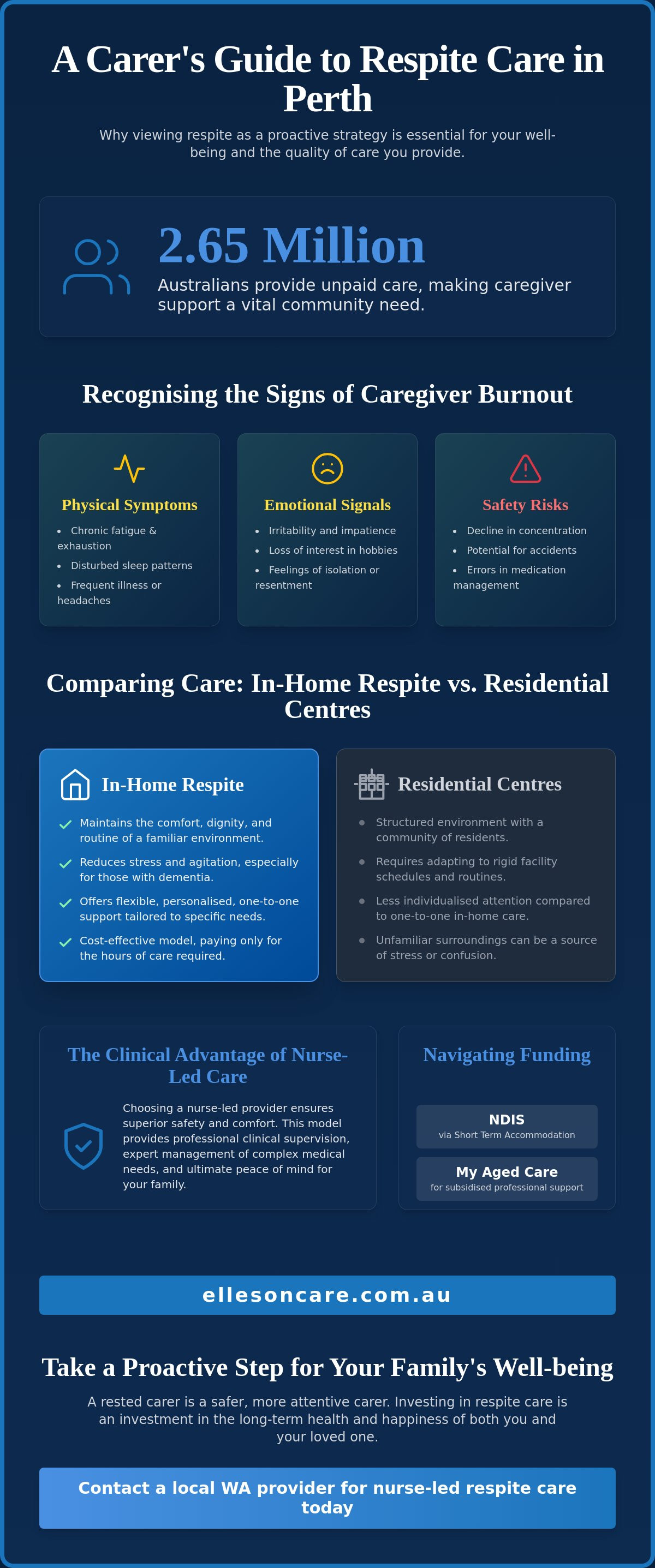
Providing constant care is a demanding role that can lead to significant physical and emotional strain. It's essential to monitor yourself for the following signs:
- Physical symptoms: Chronic fatigue, sleep disturbances, and frequent illness due to a weakened immune system.
- Emotional signals: Irritability, loss of interest in personal hobbies, and feelings of isolation or resentment.
- Safety risks: A decline in concentration or physical strength that could lead to accidents during transfers or medication management.
We advocate for a 'safety first' approach. A rested carer is a safer, more attentive carer, capable of providing the high standard of support their loved one deserves without compromising their own health. Taking a break isn't just about you; it's about the safety and dignity of the person you care for. Using respite care Perth helps prevent the crisis point where burnout becomes unavoidable.
Comparing In-Home Respite vs. Residential Care Centres
Deciding between a residential facility and in-home respite care Perth services is a significant choice for any family. While residential centres provide a structured environment, they often require the person receiving care to adapt to a rigid facility routine. In contrast, in-home support prioritises the individual’s existing habits and personal dignity. This familiarity is clinically significant; for those living with dementia, staying in a known environment can substantially reduce 'sundowning' behaviours and the agitation often triggered by unfamiliar surroundings. By maintaining the status quo, we help preserve the person's sense of self during the caregiver's absence.
Cost-effectiveness also plays a critical role in this decision. Residential respite usually involves flat daily rates that may include services the individual doesn't necessarily require. In-home care allows for a more surgical approach where support is tailored to specific hours or high-need periods, ensuring resources are used efficiently. When this support is nurse-led, clinical safety is maintained at a level that matches or often exceeds facility standards. Families often find peace of mind knowing that Navigating Funding: My Aged Care pathways can support these personalised, high-standard arrangements within the home.
The Benefits of Maintaining a Familiar Environment
Moving to an institution, even temporarily, can cause transition trauma for seniors and NDIS participants. Remaining at home means keeping cherished pets nearby, enjoying preferred foods, and maintaining local social connections within the Perth community. Person-centred care in a home setting means the support is built entirely around the individual's unique life story and daily preferences rather than a pre-set institutional schedule. This continuity is vital for emotional stability and physical well-being.
When In-Home Respite is the Superior Choice
Certain situations demand the clinical stability that only a home environment can provide. It is often the superior choice for individuals with complex clinical needs, such as those requiring ventilator or oxygen support, where a highly controlled and familiar setup is essential for safety. Similarly, individuals with a psychosocial disability often thrive on the consistency and privacy of their own space. In palliative care, the home becomes a sanctuary, allowing for a dignified and peaceful experience surrounded by family. If you are exploring how these services can be integrated into your life, our team is here to discuss personalised support options that honour your loved one's routine.
Navigating Funding: NDIS, My Aged Care, and DVA in WA
Understanding the financial landscape is often the most stressful part of arranging support. In Western Australia, funding for respite care Perth is primarily accessed through three streams: My Aged Care, the National Disability Insurance Scheme (NDIS), and the Department of Veterans' Affairs (DVA). Each program has distinct eligibility criteria and benefit structures, making it vital to prepare for your assessment with a clear understanding of your family’s clinical needs. A well-documented history of care requirements ensures that the support provided is both adequate and sustainable.
Understanding NDIS Respite Funding
For NDIS participants, funding is typically categorised under 'Core Supports'. This flexibility allows families to organise home care disability support that fits their specific routine and clinical goals. If you require more intensive relief, you may access Short Term Accommodation (STA) funding. To secure this, you must demonstrate that the support is 'reasonable and necessary' to sustain your informal care network. Most plans fund up to 28 days of STA per year. We recommend discussing these needs clearly with your Support Coordinator to ensure your plan reflects the true intensity of your daily care requirements.
My Aged Care and Home Care Packages (HCP)
If you are navigating the aged care system, your Home Care Package (HCP), particularly at Level 3 or 4, can be utilised for professional nursing respite. The Australian Government provides government subsidies for respite care, allowing eligible individuals to access up to 63 days of subsidised support per financial year. As of 20 March 2026, the maximum basic daily fee is set at $66.80 per day. For families facing a sudden crisis, the Carer Gateway offers a pathway to emergency financial assistance. This serves as a critical safety net when unexpected circumstances arise.
Veterans in Perth have access to specific allocations through the DVA. This includes up to 196 hours of in-home respite care or 28 days of residential support each financial year at no cost to the veteran when provided through the Veterans' Home Care program. These provisions acknowledge the unique service of our veterans and provide a robust framework for professional clinical assistance. Regardless of your funding source, having a clear list of daily tasks and clinical observations ready for your assessor will help you secure the respite care Perth services your family needs to thrive.
Selecting the Right Respite Provider: Key Questions for Peace of Mind
Vetting a provider requires looking beyond glossy brochures to the clinical foundations of their service. The most critical litmus test for any family is whether the caregivers are directly supervised by Registered Nurses. This nurse-led model ensures that even non-clinical tasks are performed with an underlying understanding of patient safety and personal dignity. When choosing respite care Perth families often find that WA-owned providers offer a level of continuity that national chains struggle to replicate. Local ownership means the leadership is directly accountable to the community and understands the specific nuances of the Western Australian healthcare system.
Clinical capability is another non-negotiable factor in your selection process. You must ensure the provider has the expertise to manage specific needs such as wound care, catheter management, or complex medication administration. Beyond medical skills, a high-quality provider demonstrates deep cultural and individual sensitivity. This involves respecting unique family traditions, dietary requirements, and the subtle personality traits of your loved one. It's about finding a partner who sees the person, not just a list of tasks to be completed. If you are ready to experience this level of clinical excellence, we invite you to enquire about our nurse-led respite services today.
Essential Questions to Ask During Your Initial Consultation
To gain true peace of mind, we recommend asking direct, practical questions during your first meeting with a potential provider:
- What is your process for matching a carer to my loved one's personality? A successful match is based on shared interests and temperament, not just schedule availability.
- How do you document and communicate clinical changes during a respite stay? Transparency is vital. You should know exactly how updates are relayed to you and your primary medical team.
- Are your staff trained in specialised dementia or disability support? Specific training ensures the carer can manage challenging behaviours or complex physical needs with patience and clinical skill.
The Importance of Holistic Family Support
The most effective providers offer a family-centred approach rather than a transactional service. This means they view themselves as an extension of your support network, not just a temporary replacement. The value of having allied health assessments integrated into the respite plan cannot be overstated, as it ensures physical therapy or occupational goals are maintained even during your absence. Finally, ensure the provider has a robust plan for after-hours clinical support in Perth. Knowing a Registered Nurse is available to assist your carer at any hour provides a layer of security that standard agencies often cannot match. This commitment to safety allows you to truly rest, knowing your family is in expert hands.
Why Nurse-Led Respite Care Offers Superior Safety and Comfort
Choosing a partner for respite care Perth involves more than just filling a gap in your schedule; it's about ensuring the clinical safety of your loved one is never compromised. Elleson Care brings 22 years of clinical excellence to Western Australian families, providing a model of support where every interaction is informed by professional expertise. Our Registered Nurses oversee every aspect of the care plan, from basic domestic assistance to high-level nursing tasks. This clinical governance ensures that subtle changes in health are identified early, preventing minor issues from becoming medical emergencies. We believe that professional healthcare standards belong in the home, where comfort and dignity are most naturally preserved.
For families who prioritise safety, the logical choice is a provider that treats respite as a clinical discipline rather than a transactional service. This nurse-led approach provides a level of stability that standard agencies often cannot match. By integrating clinical authority with human warmth, we create an environment where the person receiving care feels secure and the primary caregiver can truly rest. You aren't just hiring a carer; you're engaging a team of experts dedicated to maintaining the health and autonomy of your family member.
Specialised Clinical Support at Home
Our expertise allows us to manage complex needs that often require a facility-based setting in other models. This includes comprehensive wound management, ventilator support, and diligent pressure injury prevention. We also specialise in post-hospital transitions, using respite care Perth to bridge the gap between acute hospital stays and independent living. During life's most sensitive stages, our palliative support provides a compassionate, professional presence that honours the individual's wishes. This ensures that even the most complex clinical requirements are met within the sanctuary of the family home.
A West Australian Legacy of Care
Being WA owned and operated means we are an active part of the Perth community we serve. We understand the local healthcare system and the unique challenges Western Australian families face. Our focus remains on holistic health, which means we address emotional and social well-being with the same rigour as clinical needs. We don't just follow a checklist; we build relationships based on trust, integrity, and a deep respect for the individual's life story. This local legacy ensures continuity of care that national providers simply cannot replicate. Ready for a break? Contact the Elleson Care team to discuss a personalised respite plan for your family.
Empowering Your Family with Sustainable Support
Choosing the right respite care Perth service is a significant step toward protecting your own health and the long-term well-being of your loved one. By prioritising in-home support that respects established routines and navigating funding pathways with clarity, you move from a state of reactive stress to proactive clinical management. This approach ensures that your loved one remains safe and comfortable in their own environment while you receive the essential rest required to continue your caregiving journey with compassion.
As a West Australian owned and operated provider, Elleson Care offers a holistic, family-centred approach led by Registered Nurses with over 22 years of clinical experience. We bridge the gap between clinical necessity and the warmth of home, ensuring every aspect of care is handled with professional integrity. If you are ready to explore how professional support can transform your daily life, we invite you to Book a Nurse-Led Respite Consultation with Elleson Care. You don't have to carry the weight of care alone; expert support is ready to walk alongside you.
Frequently Asked Questions
What is the difference between respite care and permanent aged care?
Respite care is a temporary arrangement designed to provide short-term relief for primary caregivers, whereas permanent aged care involves a long-term relocation to a residential facility. Respite allows your loved one to receive professional support for a few hours or weeks before returning to their usual routine. It's a proactive strategy to prevent caregiver burnout rather than a permanent change in living arrangements.
Can I use my NDIS funding for in-home respite care in Perth?
Yes, you can use your NDIS funding for respite care Perth services through your 'Core Supports' budget or 'Short Term Accommodation' (STA) allocations. These funds assist participants in maintaining their independence while giving informal carers a necessary break. We recommend checking that your plan includes 'Assistance with Daily Life' to ensure these services are covered under your current budget.
How long can a respite care stay last?
The duration depends on your funding source and individual clinical needs. Under My Aged Care, eligible individuals can access up to 63 days of subsidised care per financial year, with potential extensions of 21 days if approved by an assessor. NDIS plans typically fund up to 28 days of Short Term Accommodation annually. Private arrangements can be tailored to any length, from a single afternoon to several consecutive weeks.
Is emergency respite care available if I suddenly become ill?
Emergency support is available for families facing unexpected crises through the Carer Gateway and specific local providers. This service is prioritised for situations where the primary carer is suddenly unable to provide support due to illness, injury, or a family emergency. It's a sensible idea to have a plan in place with a WA-owned provider beforehand so they understand your loved one's clinical requirements if a crisis arises.
What clinical services can be provided during home respite?
A nurse-led home care provider can deliver a wide range of clinical services including wound management, catheter care, and complex medication administration. More intensive needs such as ventilator support or pressure injury prevention are also manageable in a home setting when supervised by Registered Nurses. This ensures that the clinical standard of care remains high while your loved one enjoys the comfort of their own environment.
Do I need a My Aged Care assessment to access respite services?
You require an assessment by the Aged Care Assessment Team (ACAT) to access any government-subsidised respite services through My Aged Care. This assessment determines your eligibility and the level of support required for your specific situation. If you choose to pay for services privately, an ACAT assessment isn't necessary, allowing you to organise support directly with a provider of your choice.
How much does respite care cost in Western Australia?
Costs vary based on the funding model and the level of support required for the individual. For government-subsidised residential respite, the maximum basic daily fee is $66.80 as of 20 March 2026. NDIS participants have specific price limits for Short Term Accommodation based on staff ratios and the day of the week, while veterans may access certain respite hours at no cost through the DVA program.
Can respite care help with my loved one's dementia symptoms?
Professional respite care Perth can significantly assist in managing dementia symptoms by providing a consistent, person-centred routine. Experienced carers use evidence-based techniques to reduce agitation and 'sundowning' behaviours, which are often triggered by fatigue or changes in environment. By keeping your loved one at home, you avoid the confusion and distress that often accompany a move to an unfamiliar residential facility.


