
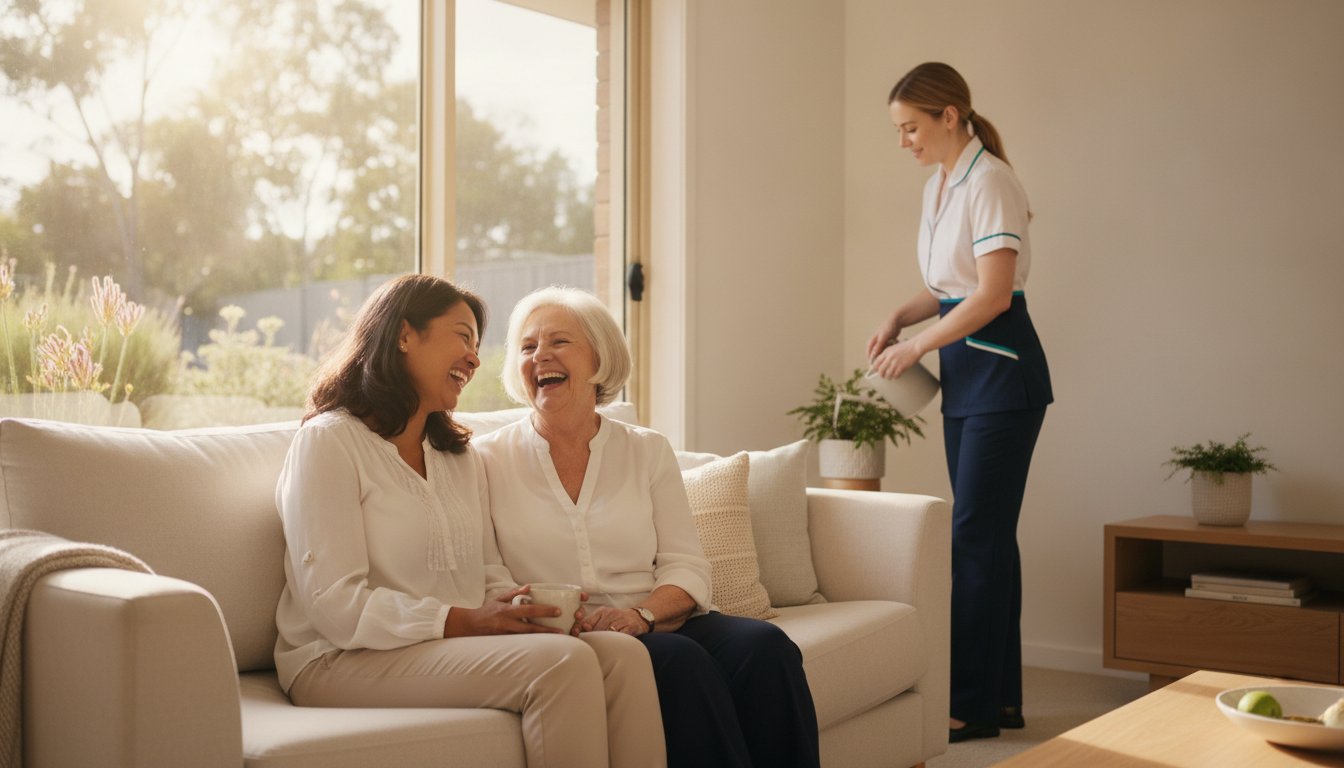
What if the most selfless thing you could do for your Mum isn't to do everything yourself, but to step back? Many devoted children find themselves feeling guilty about needing a carer for mum, often viewing the request for help as a sign of failure or a betrayal of their family duty. You've likely spent months balancing your own life with the heavy demands of her care, only to find yourself exhausted and anxious about her safety when you aren't there. It's a heavy burden to carry alone, especially when your role shifts from being a loving daughter to an unpaid nurse and administrator.
We understand that this emotional conflict is deeply personal. This article will help you navigate these complex feelings and explain why professional in-home support is actually the key to preserving your relationship. By establishing a clinical foundation of care, you can move away from the burnout of daily chores and return to a place of genuine connection. We'll explore how delegating specialised tasks ensures your Mum's wellbeing while allowing you to reclaim your most important role: being her daughter.
Key Takeaways
- Understand why feeling guilty about needing a carer for mum is a natural emotional response and how to reframe professional support as an act of advocacy.
- Distinguish between instrumental care and emotional connection to help you reclaim your role as a daughter rather than a full-time caregiver.
- Recognise the physical and nutritional signs that indicate a need for specialised clinical support to ensure your Mum’s safety and quality of life.
- Navigate the practicalities of the Australian aged care system, including the My Aged Care assessment process and available funding options.
- Learn how a nurse-led approach to support provides the professional expertise required to manage complex care needs with dignity and compassion.
Understanding Caregiver Guilt: Why You Feel Like You Are Failing
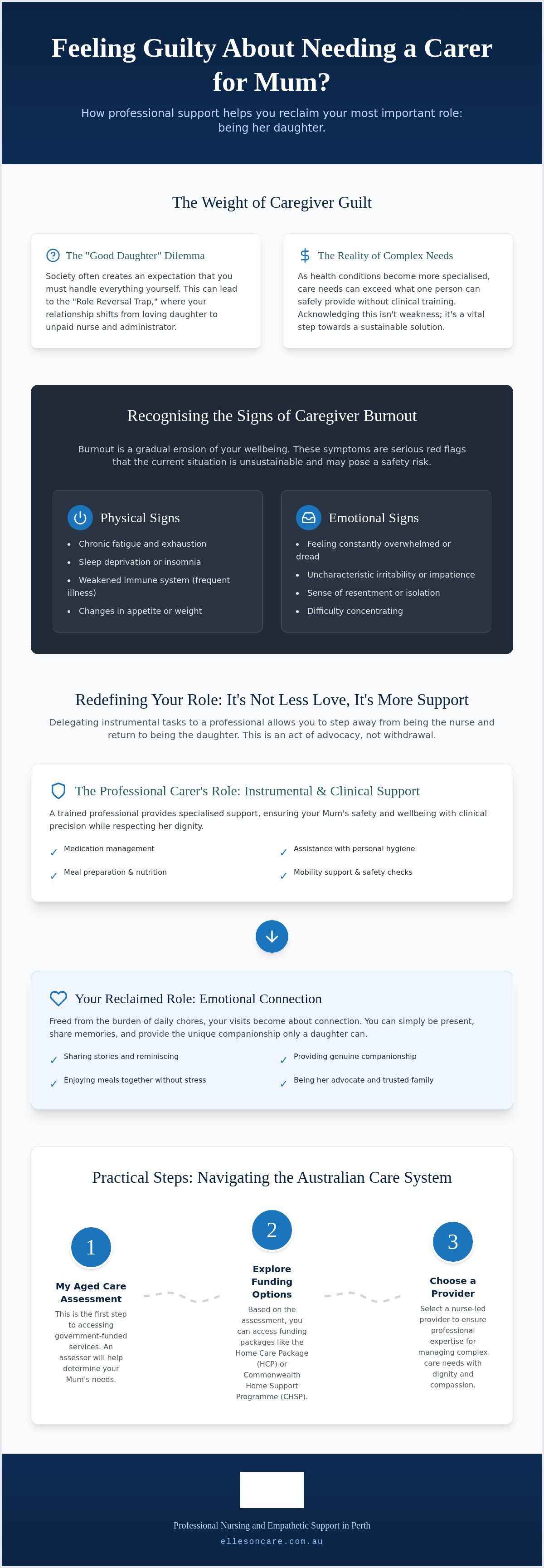
Caregiver guilt is a heavy weight that many Australians carry in silence. It usually stems from the widening gap between your expectations of yourself and the reality of managing complex aged care needs. You might find yourself feeling guilty about needing a carer for mum because you equate asking for help with a personal failure. In your mind, you may feel that you are breaking a silent promise to keep her at home and handle everything yourself, just as she once did for you.
This "cultural promise" is deeply ingrained in our society. We often believe that "looking after our own" is the only way to show true love. However, as health conditions become more specialised, the level of support required often exceeds what one person can provide without clinical training. When you try to bridge this gap alone, you often fall into the "Role Reversal Trap." This happens when your relationship shifts from being a daughter to being a manager of hygiene, medication, and safety. Instead of enjoying each other's company, your time together is defined by a checklist of chores, which often leads to friction and a sense of resentment that neither of you deserves.
It is vital to recognise that your exhaustion is a physiological reality rather than a moral failing. Caregiver stress is a documented clinical state where the body remains in a constant "fight or flight" mode due to the relentless pressure of responsibility. Your fatigue is your biology telling you that the current situation is unsustainable. Acknowledging this isn't a sign of weakness; it's the first step toward finding a safer, more sustainable path for your whole family.
The "Good Daughter" Syndrome in Australian Culture
There is immense societal pressure to be the "perfect" daughter who balances a career, her own family, and her elderly parents without complaint. This syndrome convinces you that seeking aged care services is an admission of defeat. Ironically, by trying to do it all, the quality of care often diminishes. When you are stretched too thin, you cannot provide the focused, patient attention your Mum needs. Realising that "doing it all" has become "doing too much" is actually an act of profound responsibility and love.
Recognising the Signs of Caregiver Burnout
Burnout is a slow erosion of your well-being. Physical symptoms often include chronic fatigue, sleep deprivation, and a weakened immune system that leaves you prone to frequent illness. Emotionally, you might feel a sense of constant dread or find yourself becoming uncharacteristically irritable with your Mum. These symptoms are serious red flags. A burnt-out caregiver represents a genuine safety risk, as exhaustion can lead to mistakes with medication or a failure to notice subtle changes in Mum's health. Professional support ensures her safety while protecting your health.
Reframing the Role: Professional Care vs. Family Love
It is helpful to view the introduction of a professional carer not as a withdrawal of your love, but as a proactive act of advocacy. When you are feeling guilty about needing a carer for mum, you may be overlooking the fact that you are actually securing the highest standard of support for her. By bringing in a specialist, you ensure her environment remains safe and her medical needs are met with clinical precision. This choice isn't about doing less; it's about ensuring Mum receives more than any single family member can realistically provide.
We often categorise care into two distinct areas: instrumental and emotional. Instrumental care involves the physical tasks of daily living, such as showering, medication management, and meal preparation. Emotional care, however, is the foundation of your relationship. It involves reminiscing, sharing a laugh, and providing the companionship that only a daughter can offer. When your energy is entirely consumed by instrumental tasks, the emotional connection often suffers. Professional intervention also preserves a parent's dignity. Many older Australians find it deeply uncomfortable or even embarrassing to have their adult children assist with intimate personal hygiene. By delegating these tasks to a respectful professional, you remove that awkwardness, allowing your Mum to maintain her sense of self and privacy within the family dynamic.
Person-centred care is a framework that prioritises Mum’s autonomy and individual choices above all else.
Becoming the Daughter Again, Not the Nurse
Visiting your Mum should be a highlight of your day, not another item on an exhausting to-do list. When a professional takes over the housework and physical assistance, you are free to sit down for a cuppa and a proper chat. Utilising respite care in Perth can restore family harmony by ensuring you aren't constantly approaching her with a checklist of chores. Quality time is far more valuable for her mental well-being than the quantity of hours you spend scrubbing her floors.
Clinical Safety: Why Love Isn’t Always Enough
Love is a powerful motivator, but it cannot replace clinical expertise when health needs become complex. If your Mum requires wound management, catheter care, or help with specialised equipment, professional nursing services become a necessity rather than an option. An untrained family member, no matter how devoted, is at risk of making medication errors when they are sleep-deprived. You can check your eligibility for funded support through the My Aged Care portal to see how these clinical safeguards can be integrated into her home. Partnering with a dedicated team like Elleson Care ensures that Mum’s health is monitored by experts, giving you the peace of mind to focus on being her daughter again.
Signs That Your Mum Needs More Support Than You Can Give
Recognising when a loved one requires professional assistance is often the most difficult part of the caregiving journey. You may find yourself feeling guilty about needing a carer for mum because you believe you should be able to manage her needs on your own. However, certain physical and behavioural indicators suggest that the level of support required has moved beyond what a family member can safely provide. Acknowledging these signs is not a sign of failure; it is a vital step in ensuring her safety and quality of life.
Safety is the primary concern for many families. Frequent falls or "near misses" in the home environment are clear signals that Mum’s mobility and balance are compromised. Similarly, poor nutrition often goes unnoticed until it becomes a clinical issue. If she is "forgetting" to eat or no longer has the physical energy to prepare balanced meals, her strength and cognitive function will decline. Beyond physical health, social isolation is a quiet but devastating factor. When a parent loses community access, their mental health often suffers, leading to increased confusion or a sense of hopelessness.
Clinical oversight is also a major consideration. If Mum has chronic conditions that require the expertise of a Registered Nurse, such as complex medication regimes or wound management, relying solely on family can be dangerous. Finally, you must consider your own health. If you are physically unable to assist her with transfers or if your own wellbeing is deteriorating to the point of chronic fatigue, you are no longer in a position to provide the stable environment she deserves.
The Subtle Indicators of Decline
Changes in a parent's routine often happen gradually. You might notice a decline in personal hygiene or that the family home is becoming uncharacteristically neglected. Unexplained bruises on her limbs often point to balance issues she may be hiding out of fear of losing her independence. Emotionally, Mum might become increasingly anxious or demanding when you prepare to leave her house. These behaviours are frequently a response to her own internal fear of being alone and unable to cope with daily tasks.
Assessing the Home Environment for Safety
An objective look at the living space is essential for long-term independence. Identifying trip hazards, such as loose rugs or inadequate lighting, is a practical step that can prevent life-changing injuries. Engaging in-home aged care in Perth allows for a professional assessment of the home environment. This process identifies the need for modifications, such as grab rails or ramps, which can be funded through government support. A professional's view is often more objective than a family member's, as they can identify risks that you may have become accustomed to over time.
Practical Steps: Navigating the Australian Care System
Once you move past the initial hurdle of feeling guilty about needing a carer for mum, the focus shifts to the practicalities of the Australian aged care system. This process is designed to be thorough, ensuring that Mum receives the exact level of support her health requires. While the administrative side can feel overwhelming, taking it one step at a time provides a clear pathway toward a safer home life. By following a structured approach, you can ensure her clinical needs are met while maintaining her dignity and comfort.
- Step 1: Registration. Contact My Aged Care to register for an assessment. Depending on her situation, she will receive an ACAT (Aged Care Assessment Team) or RAS (Regional Assessment Service) visit to determine her eligibility for funding.
- Step 2: Package Levels. Understand that Home Care Packages are divided into four levels, ranging from basic support to high-level clinical care. These funds can cover everything from personal care to home modifications.
- Step 3: Provider Selection. Choose a partner that offers both clinical expertise and a personality that Mum will welcome into her home. It is essential that the provider understands her unique history and preferences.
- Step 4: Soft Care Introduction. Start with small amounts of help, such as light domestic assistance or meal preparation. This builds trust and allows her to get used to a new person in her space before introducing more personal clinical tasks.
- Step 5: Regular Reviews. Ensure her care plan is reviewed frequently. As her health changes, her support must adapt to keep her safe and independent.
Introducing a Carer Without the Conflict
The way you frame the conversation with your Mum can significantly reduce resistance. Instead of telling her she can no longer cope, try explaining the situation from your perspective. Phrasing it as, "It would give me great peace of mind to know someone is here to help with the heavy lifting," positions the carer as a support for the whole family. We recommend a "meet and greet" session to ensure the carer’s personality aligns with hers, making the transition feel like a natural addition to her life. You can also explore the Support at Home program to understand how new reforms in 2026 are making it easier for WA families to access these services without friction.
Funding Your Care: Packages and DVA
The Australian government provides significant financial assistance to help seniors remain in their homes. Home Care Packages are the primary source of this funding, but veterans may also be eligible for specialised support through the Department of Veterans’ Affairs (DVA). Navigating the paperwork for these claims is often the most stressful part for families. Professional providers usually manage these administrative tasks on your behalf, ensuring Mum gets her full entitlements without you having to master the bureaucracy. If you are unsure where to begin, you can speak with our clinical team for guidance on the assessment process and funding options.
Elleson Care: Professional Nursing and Empathetic Support in Perth
Choosing to partner with a professional service is the final step in resolving the internal conflict of feeling guilty about needing a carer for mum. At Elleson Care, we believe that high-quality aged care is not a replacement for family love, but the clinical foundation that allows that love to flourish. Our philosophy is nurse-led and family-centred, ensuring that every decision we make prioritises the safety, dignity, and autonomy of your loved one. As a local, Perth-owned organisation, we have a deep understanding of the Western Australian community and the specific challenges families face when navigating the transition to in-home support.
With more than 22 years of clinical experience, our team provides a steady and reliable presence for families in distress. We recognise that inviting someone into your Mum’s home requires immense trust. This is why we focus on a holistic view of well-being, moving beyond basic checklists to provide a comprehensive standard of care that honours the individual. Our expertise ensures that your Mum is in safe hands, allowing you to step back from the physical demands of caregiving and return to your vital role as her daughter.
Our Nurse-Led Approach to Aged Care
The presence of Registered Nurses at the helm of our service ensures a level of clinical oversight that is essential for managing complex health needs. We develop personalised care plans that are not static; they adapt as your Mum’s requirements change over time. This proactive approach includes specialised clinical support such as pressure injury management and medication reviews, which are vital for preventing hospital admissions. By having medical experts manage these technical aspects, we provide a layer of protection that ensures her health is monitored with professional precision.
Joining the Elleson Care Family
We believe that the relationship between a carer and a client is the heart of successful support. We take great care to match our staff with your Mum based on her interests, personality, and values, ensuring she feels comfortable and respected in her own home. Our focus extends beyond the house, as we actively encourage community access to keep her socially engaged and active within Perth. This commitment to her social life helps combat the isolation often associated with ageing. If you are ready to transition from being an exhausted caregiver to a supported family member, we invite you to book a compassionate consultation with our nursing team today.
Reclaiming Your Relationship and Peace of Mind
Choosing professional support is a decision rooted in safety and deep respect for your Mum's autonomy. By distinguishing between the physical tasks of daily care and the emotional bonds of family, you create the necessary space for your relationship to thrive without the relentless strain of burnout. You now understand that recognising the signs of decline and navigating the My Aged Care system are practical steps toward a sustainable and dignified future. It is time to release the burden of feeling guilty about needing a carer for mum and instead view this transition as a profound commitment to her long-term well-being.
As a WA owned and operated organisation with over 22 years of clinical experience, Elleson Care provides the expert oversight required for complex clinical care and NDIS support. Our nurse-led approach ensures that every family receives a high-tier professional service that prioritises personal dignity and clinical safety. We are here to act as a steady, reliable partner for your family. Let Elleson Care help you return to being a daughter again; explore our Perth home care services. You don't have to navigate these complex needs alone. A more balanced and supportive life for both you and your Mum is within reach.
Frequently Asked Questions
Is it normal to feel guilty about hiring a carer for my Mum?
It is entirely natural to experience these emotions during such a significant transition. Many adult children find themselves feeling guilty about needing a carer for mum because they view it as a personal failure or a breach of family duty. This sentiment usually arises from the gap between your desire to provide everything yourself and the practical reality of her complex health needs. Recognising that professional help is a tool to ensure her safety is an act of advocacy rather than a failure.
How do I tell my Mum she needs a carer when she refuses help?
Approaching this conversation with empathy is essential for maintaining trust. Instead of highlighting her limitations, explain how professional support will provide you with peace of mind and allow you to spend more quality time together as a family. You might suggest starting with a small, specific task like light cleaning or meal preparation. This helps her get used to a new person in her home environment without feeling overwhelmed by a perceived loss of independence.
Can I get government funding for an in-home carer in Western Australia?
Yes, the Australian Government provides significant funding through Home Care Packages and the Support at Home program. Residents in Western Australia can access these funds after completing an assessment through My Aged Care. The level of funding depends on her specific clinical and social needs, ranging from basic support to high-level nursing care. These packages are designed to help seniors remain independent in their own homes for as long as possible while reducing the financial burden on families.
What is the difference between a home carer and a registered nurse?
The primary difference lies in their clinical training and scope of practice. A home carer typically assists with daily living tasks such as personal hygiene, meal preparation, and companionship. A Registered Nurse possesses the clinical expertise required to manage complex medical needs, including wound care, medication administration, and chronic disease monitoring. At Elleson Care, our nurse-led model ensures that clinical oversight is always integrated into the broader support plan for your Mum's safety and long-term health.
What happens during a My Aged Care assessment?
During the assessment, a representative from the Aged Care Assessment Team (ACAT) or Regional Assessment Service (RAS) will visit your Mum at home. They will discuss her health conditions, how she manages daily tasks, and any safety concerns within the house. This conversation helps determine her eligibility for specific funding levels and types of support. It is a thorough and respectful process intended to identify the exact services required to maintain her quality of life and independence safely.
Can I still be my Mum’s primary carer if we hire professional help?
Hiring professional help does not mean you are stepping away from your role as a devoted daughter. Instead, it creates a partnership where the carer handles the physically demanding or clinical tasks while you provide the emotional support and advocacy she needs. This arrangement prevents caregiver burnout and allows you to focus on the meaningful parts of your relationship. You remain the primary decision-maker and the most important person in her life, supported by a professional team.
How do I know if a carer is the right fit for my parent?
A good fit is defined by a combination of clinical competence and a personality that complements your Mum's temperament. You should look for a carer who shows genuine respect for her autonomy and communicates clearly with both of you. Many families find that a "meet and greet" session is the best way to gauge compatibility. Pay attention to how they interact and whether your Mum feels comfortable and heard during their initial conversations and trial visits.
What if my Mum doesn’t like the carer we’ve chosen?
You have the right to request a different carer if the initial match isn't successful. Consistency is vital for building trust, but personal chemistry cannot be forced. If your Mum feels uncomfortable, a professional provider will work with you to find a more suitable match. Open communication with the service coordinator ensures that her preferences are prioritised. This is essential for her to feel safe and respected in her own home, which is the ultimate goal of the care plan.


