

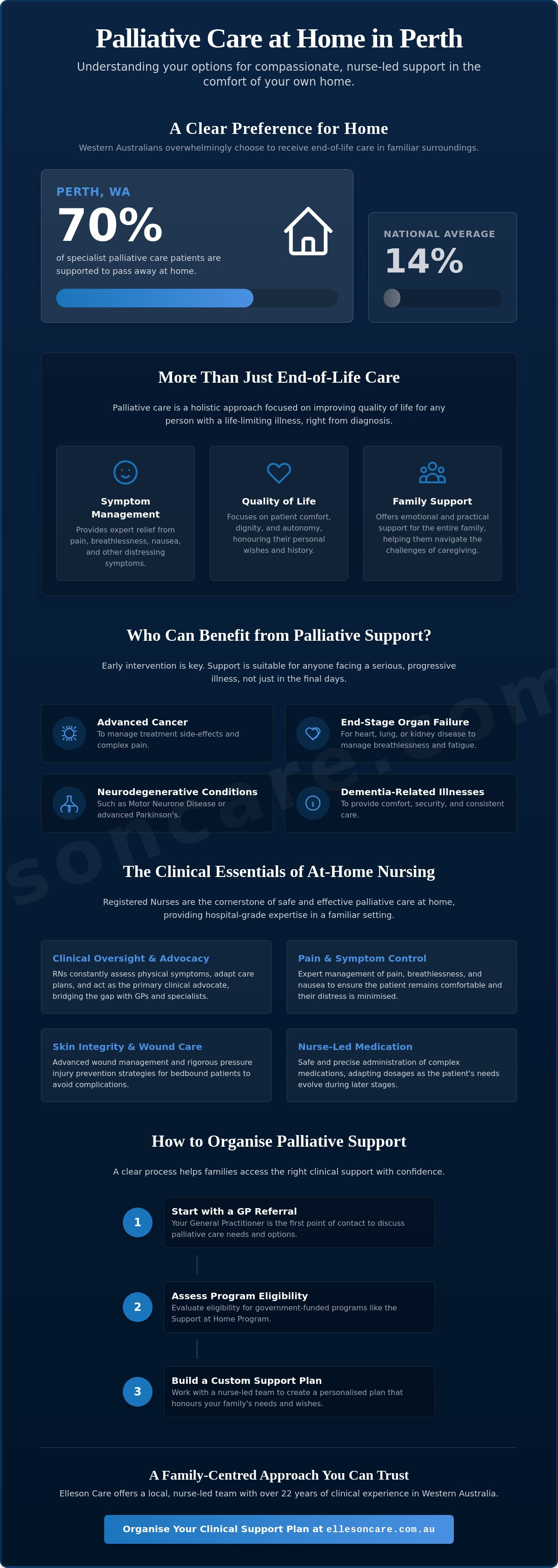
Did you know that 70% of specialist palliative care patients in Perth are supported to pass away peacefully in their own homes, compared to a national average of just 14%? This statistic reflects a profound desire for familiarity and dignity during life's final chapter. When considering palliative care at home Perth, it's completely natural to feel a heavy sense of responsibility. Many families find themselves gripped by the fear of being unable to manage complex medical symptoms, while others feel the weight of emotional burnout or confusion regarding the city's public and private health systems.
Choosing this path doesn't mean you have to carry the clinical burden on your own. This guide provides a clear roadmap to coordinating professional, nurse-led support that prioritises your loved one's comfort and personal dignity above all else. You'll discover how to access specialist clinical help, manage the daily demands of caregiving with confidence, and ensure your home remains a sanctuary of peace. We will outline the practical steps to building a support plan that honours your family's needs while maintaining the highest standards of medical care.
Key Takeaways
- Understand the holistic nature of palliative support and why more families in Western Australia are choosing the comfort of their own environment.
- Learn about the essential role Registered Nurses play in managing complex symptoms through professional palliative care at home Perth.
- Evaluate the differences between institutional hospital settings and the personalised pace of home-based nursing to find the best fit for your loved one.
- Follow a clear process for organising clinical support, beginning with a GP referral and assessing eligibility for the Support at Home Program.
- Discover the value of a family-centred approach provided by a local, nurse-led team with over 22 years of clinical experience in Western Australia.
What is Palliative Care at Home in Perth?
Palliative care is often misunderstood as a service reserved only for the final hours of life. In reality, it's a holistic approach to clinical support designed to improve the quality of life for anyone living with a life-limiting illness. For many families, palliative care at home Perth represents a shift away from hospital wards and toward a model that prioritises the patient's personal history alongside their medical needs. It's about providing comfort, managing complex symptoms, and ensuring that the individual's wishes are respected within their own community. For those seeking a comprehensive guide to palliative care, it's helpful to understand that this discipline focuses on the prevention and relief of suffering through early identification and assessment.
In Western Australia, the landscape of end-of-life care is changing rapidly. Local community health reports indicate that approximately 70% of specialist palliative care patients in the metropolitan area are now supported to pass away in their own homes, a figure that far exceeds the national average of 14%. This trend shows a clear preference for "home with care," where professional clinical support is integrated into the domestic environment. This model relies on a multidisciplinary team, often led by Registered Nurses, who coordinate with GPs and specialists to provide seamless medical oversight without the need for a hospital bed.
The Philosophy of Home-Based Support
The core of home-based support is the belief that a person's surroundings deeply influence their sense of peace. By choosing to stay at home, individuals remain surrounded by their family, cherished pets, and the memories that define their lives. This approach removes the institutional feel of traditional healthcare settings, allowing for a more personalised pace of life. It’s not just about medical intervention; it’s about protecting a person's autonomy and personal dignity during a vulnerable time.
Who is Palliative Care For?
One of the most common misconceptions is that palliative support should only begin when death is imminent. However, early intervention is often the most effective way to manage long-term symptoms and reduce hospitalisations. This type of care is suitable for anyone facing a serious, progressive illness, including:
- Advanced cancer
- End-stage organ failure, such as heart, lung, or kidney disease
- Neurodegenerative conditions like Motor Neurone Disease or Parkinson's
- Dementia-related illnesses
Starting support early allows for better pain management and gives families time to build a relationship with their clinical team before needs become acute. It provides a steady, reliable presence that helps everyone involved feel more secure in the care plan.
The Clinical Essentials of Specialist Nursing at Home
Providing palliative care at home Perth families can trust requires a sophisticated level of clinical oversight. While the setting is domestic, the standard of care must remain equivalent to a specialist facility. Registered Nurses (RNs) serve as the primary clinical advocates in this environment, bridging the gap between hospital-grade expertise and the comfort of the family home. Their role involves the constant assessment of physical symptoms and the implementation of complex care plans that adapt as the patient’s needs evolve.
Managing physical distress is a priority for any specialist nursing team. This includes the precise control of pain, breathlessness, and nausea, which are common challenges in advanced illness. For patients who are bedbound, RNs focus heavily on skin integrity. They employ advanced wound management techniques and rigorous pressure injury prevention strategies to ensure the patient remains comfortable and free from secondary complications. This clinical vigilance is what allows a home environment to remain a safe, viable alternative to a hospice ward.
As outlined in the official guide to Palliative care services in Western Australia, clinical support is a foundational element of end-of-life care. It ensures that patients receive the right interventions at the right time. If you are currently navigating these decisions, consulting with a dedicated provider of clinical support can provide the clarity needed to manage these complex requirements safely.
Nurse-Led Medication Administration
Medication management becomes increasingly technical during the later stages of illness. RNs are responsible for the safe administration of subcutaneous infusions and the monitoring of syringe drivers. These devices are essential for maintaining a steady state of comfort when oral medications are no longer suitable. The nursing team works in close partnership with Perth-based GPs and community pharmacists to organise prescriptions and adjust dosages in real-time. This ensures that any change in the patient's condition is met with an immediate, professionally calibrated response.
Complex Clinical Needs and Equipment
Modern home-based nursing can now accommodate highly technical medical requirements that were once limited to intensive care units. This includes the management of home-based oxygen therapy and ventilator support for those with respiratory failure. Nurses also handle catheter care and ensure that nutritional and hydration needs are met through specialised clinical methods if required. Having a professional nurse manage these systems provides a sense of security for the family, knowing that technical medical tasks are being handled with disciplined, evidence-based precision.
Comparing Home Care with Perth Hospitals and Hospices
Families in Western Australia often reach a crossroads where they must decide between institutional support and remaining in a residential setting. While hospitals are equipped for acute crises, they operate on a rigid clinical schedule that can feel disconnected from a patient's personal life. In contrast, palliative care at home Perth allows for a "person-first" approach where medical interventions are integrated into the existing rhythms of the household. This distinction is vital for those who value their autonomy and wish to spend their time in a space that feels like theirs, rather than a clinical ward.
Specialised facilities such as the Cottage Hospice offer a tranquil environment for those who cannot remain at home, yet even the most peaceful hospice is still a communal facility. Home-based nursing removes the need for transition entirely. It provides the same level of specialist oversight while keeping the individual in their own bed, surrounded by their own belongings. When considering cost, families can navigate a mix of public funding and private specialist support. Initiatives supported by the WA Primary Health Alliance aim to improve access to these services, ensuring that high-quality care is a reachable goal for Perth residents regardless of their chosen setting.
Flexibility and Personal Autonomy
One of the most significant advantages of receiving care at home is the absence of restrictive visiting hours. Family members, friends, and even pets can be present whenever they are needed, without having to navigate hospital protocols. This environment also makes it easier to maintain specific cultural or spiritual practices that might be difficult to accommodate in a busy hospital. Daily routines, from meal times to sleep patterns, are tailored to the patient’s preferences. The nursing team adapts to the household, rather than the patient having to adapt to a ward schedule.
The Impact on Family Caregivers
The emotional and physical toll on family members is a critical factor in this decision. Choosing home-based support eliminates the exhausting cycle of travelling to and from hospitals, which often adds unnecessary stress to an already difficult time. By introducing professional nursing, the burden of clinical responsibility is lifted from the family's shoulders. This "shared care" model creates a sense of psychological safety. It allows family members to return to their roles as daughters, sons, or partners, while the technical medical needs are managed by experts. Professional respite care is also integrated into this model, which is essential for preventing primary carer burnout and ensuring the home remains a peaceful, sustainable environment for everyone involved.
How to Organise Palliative Support in Western Australia
Organising palliative care at home Perth can feel like a logistical challenge when you are already managing the emotional weight of a loved one's illness. However, a structured approach helps transform this complexity into a manageable plan. The first step always involves a thorough consultation with your GP or specialist. They are the clinical gatekeepers who provide the necessary referrals for specialist palliative support and coordinate with community health teams across the Perth metropolitan area.
Once the referral is in place, you should assess eligibility for the Support at Home Program. This government initiative is designed to streamline access to clinical care and domestic assistance. Simultaneously, you will need to consider the physical requirements of the home. This often involves sourcing specialised medical equipment, such as hospital beds with pressure-relieving mattresses, mobile hoists for safe transfers, and monitoring devices. Many Perth-based suppliers offer flexible hire arrangements; this allows you to adapt the equipment as the patient's condition changes. Finally, selecting a specialist nursing provider is about finding a partner who offers both technical proficiency and a deep respect for your family's privacy.
Navigating Funding and My Aged Care
Understanding the financial landscape is a key part of the planning process. Many families utilise Home Care Packages to fund a combination of palliative nursing and domestic help. It's quite common to see a transition from standard In-Home Aged Care to more intensive palliative support as clinical needs increase. For those with a military background, DVA pathways provide specific end-of-life care benefits, while the NDIS may offer support for younger individuals with life-limiting disabilities. If you require guidance on navigating these pathways, our team provides expert Clinical Support to help you secure the right resources.
Preparing the Home Environment
Creating a safe clinical space doesn't have to mean sacrificing the warmth of a home. Modifying a bedroom for clinical safety involves ensuring there is enough space for nursing staff to move around the bed and clear access for any necessary medical machinery. Accessibility is also a priority. Ensuring emergency services or visiting nurses can enter the property easily is a small but vital detail. Beyond the clinical, focus on creating a 'peaceful centre' by adjusting lighting, introducing familiar music, and keeping cherished items within the patient's line of sight. This balance ensures that while the room is equipped for medical care, it remains a sanctuary of comfort and dignity.
Elleson Care: A Family-Centred Approach to Nursing in Perth
Elleson Care operates with a deep understanding of the unique needs of West Australian families. As a locally owned and operated provider, we recognise that palliative care at home Perth is more than a medical service; it is a commitment to a person's final chapter. Our nurse-led team brings over 22 years of clinical experience to every household we serve. This longevity in the field allows us to offer a steady, reliable presence during times of significant change. We prioritise a holistic 'family approach' that considers the well-being of everyone in the home, ensuring that medical support never feels like an intrusion but rather a partnership.
Our clinicians work in close coordination with your existing GPs, specialists, and allied health professionals. This integration is essential for maintaining a seamless care plan that addresses both clinical requirements and the patient's personal comfort. By acting as a central point of contact for clinical oversight, we reduce the administrative burden on families. This allows you to focus on meaningful moments with your loved one while we manage the technical complexities of their care.
The Elleson Difference: Clinical Excellence with Heart
Our Registered Nurses are selected for their ability to provide high-level clinical support with a gentle, human touch. They understand that their role involves more than just performing medical tasks; it is about providing a calming presence that fosters a sense of safety. Every individual we care for receives a customised plan that is reviewed and adjusted as their needs evolve. We remain steadfast in our commitment to ethical standards, ensuring that every person's autonomy and dignity are held in the highest regard throughout their journey.
Starting Your Journey with Us
Beginning home-based support is a delicate transition. We manage this process by coordinating directly with your medical team to ensure all clinical protocols are transferred accurately to the home setting. Our approach to palliative care at home Perth families rely on is built on a foundation of clinical integrity and personal advocacy. We also pride ourselves on delivering culturally sensitive care that respects the diverse backgrounds of Perth's community. If you are ready to explore how professional nursing can support your family's needs, contact Elleson Care today to discuss a personalised home care plan. Our team is here to provide the expert guidance and compassionate care your loved one deserves.
Creating a Sanctuary of Care and Dignity
Choosing to remain at home during a life-limiting illness is a profound decision that honours a person's personal history and autonomy. Successful palliative care at home Perth relies on more than just medical intervention. It requires a partnership built on clinical excellence and genuine human connection. By integrating specialist nursing into your domestic environment, you ensure that complex symptoms are managed professionally. This allows your loved one to remain surrounded by the people and memories they cherish most, without the clinical atmosphere of a hospital ward.
Elleson Care brings a "Compassionate Expert" perspective to every family we support. We are a proudly West Australian owned and operated service, led by Registered Nurses with over 22 years of clinical experience. Our holistic, family-centred approach ensures that both the patient and their caregivers feel secure and respected throughout the journey. If you're navigating these complex decisions, we're here to help you find a path forward that prioritises peace and stability.
Speak with our Registered Nurses about palliative support at home to discover how we can help you coordinate a dignified, nurse-led care plan. You don't have to walk this path alone.
Frequently Asked Questions
Can I really manage palliative care at home if my loved one needs oxygen?
Yes, home-based oxygen therapy is a standard component of clinical support in a domestic setting. Registered Nurses provide the necessary training and oversight to ensure equipment is used safely and effectively. This technical support allows families to focus on emotional comfort while the nursing team manages the clinical requirements of respiratory care.
How much does private palliative nursing cost in Perth?
Costs for private nursing depend on the complexity of clinical needs and the required frequency of visits. Many families utilise Home Care Package funds to cover these services, while others opt for private health insurance or direct payment. Requesting a detailed care assessment is the most accurate way to understand the specific fees involved for your unique situation.
What is the difference between public community services and a private nursing agency?
Public community services provide essential specialist care at no out-of-pocket cost through government-funded programmes. Private nursing agencies serve as a tailored alternative for those seeking palliative care at home Perth with greater flexibility. This support often allows for longer, more frequent visits and a consistent clinical team, which is vital for families who require intensive oversight or a more personalised relationship with their Registered Nurse.
What happens if there is a medical emergency in the middle of the night?
Every professional care plan includes clear protocols for managing sudden changes in condition. You should discuss after-hours support with your provider during the initial consultation to understand their specific on-call capabilities. In the event of an immediate life-threatening crisis, contacting 000 remains the standard procedure unless a specific non-resuscitation plan is already in place.
Can NDIS funding be used for palliative care at home?
Yes, NDIS participants can often use their funding for palliative supports if the needs are directly related to their disability. This usually falls under the category of disability-related health supports. Coordinating with your Support Coordinator ensures that clinical nursing services are correctly allocated within your plan to maintain continuity of care.
How do we get a hospital bed delivered to our home in Perth?
Specialised equipment like hospital beds and hoists are available through several local hire companies in the Perth metropolitan area. Your clinical team or GP can provide recommendations for reputable suppliers who handle delivery and setup. These beds are crucial for maintaining skin integrity and ensuring the patient can be moved safely without causing distress.
Is palliative care only for people who have cancer?
No, palliative support is available for any chronic, progressive illness. While many associate it with oncology, it is equally important for those with neurological conditions or end-stage organ failure. The goal is symptom relief and quality of life regardless of the specific diagnosis.
How do I know when it is time to start palliative support?
It is appropriate to begin support once the primary focus of care shifts from curative treatment to comfort and quality of life. Initiating these services early helps manage symptoms before they become acute. This proactive approach also gives families time to build a trusting relationship with their clinical team before technical care needs increase.


