

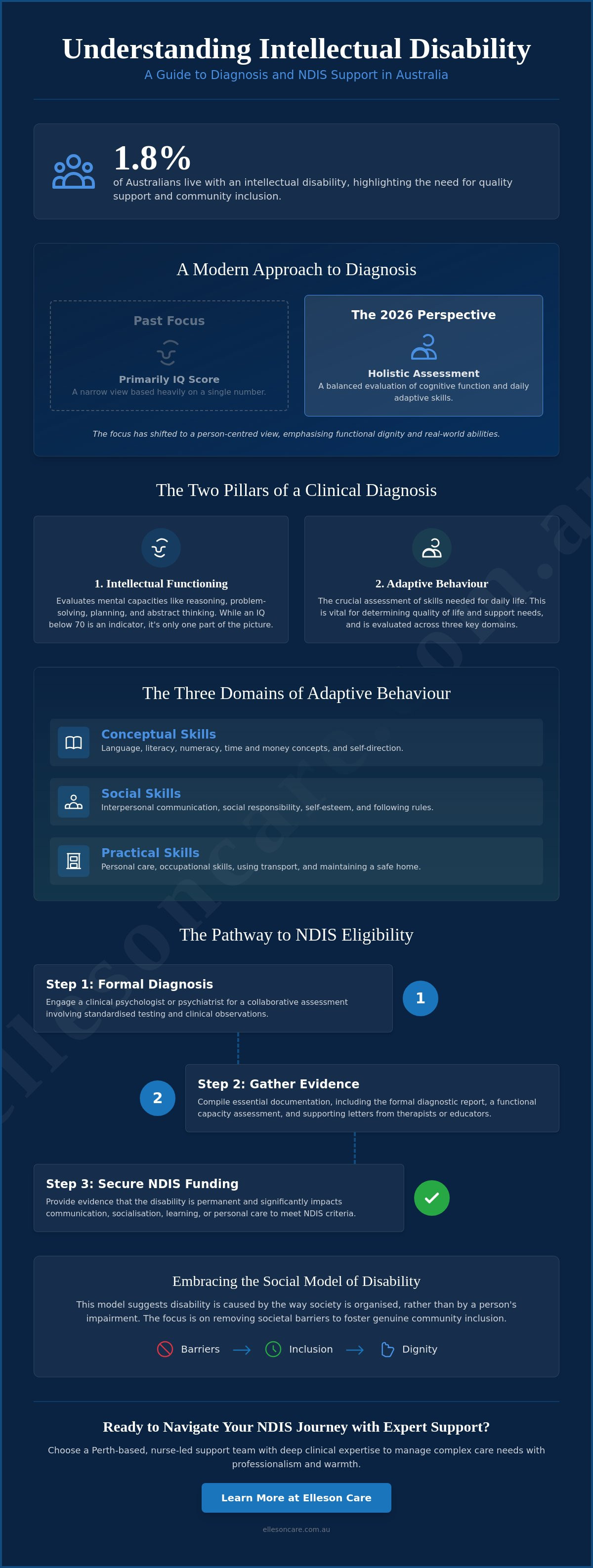
With approximately 1.8 per cent of Australians living with an intellectual disability, it’s vital to recognise that a diagnosis is no longer just a number on an IQ test, but a gateway to a life defined by functional dignity. For many Perth families, receiving this news feels like being handed a complex map written in a foreign language. You might feel overwhelmed by clinical jargon or anxious about what the future holds for your loved one’s long-term independence. It’s completely natural to feel a sense of weight when you’re trying to balance immediate care with future quality of life.
We understand that the path to securing NDIS eligibility often feels like an uphill battle against paperwork and rigid criteria. This guide provides a clear, compassionate roadmap through the diagnostic process and explains how to access high-quality NDIS support services right here in Western Australia. You’ll gain a thorough understanding of the 2026 funding landscape, including the March 2026 Disability Support Pension rates and the latest NDIS price limits. By the end, you’ll have the knowledge needed to choose a local provider that treats your family with the professional expertise and human warmth you deserve.
Key Takeaways
- Understand that an intellectual disability diagnosis in 2026 focuses on a person's adaptive daily skills and cognitive functioning rather than just an IQ score.
- Learn how to navigate the clinical pathways involving psychologists and psychiatrists to secure essential NDIS eligibility.
- Discover the Social Model of Disability and how it helps families focus on removing societal barriers to foster genuine community inclusion.
- Gain practical strategies for using visual aids and structured routines to create a predictable and safe environment at home.
- Explore the advantages of choosing a Perth-based, nurse-led support team with deep clinical expertise to manage complex care needs.
What is Intellectual Disability? Defining the Condition in 2026
In 2026, our collective understanding of What is Intellectual Disability? has shifted toward a more holistic, person-centred perspective. It is defined as a neurodevelopmental condition that begins during the developmental period, typically before an individual reaches 18 years of age. Recent data suggests that approximately 1.8 per cent of the Australian population, or about 490,000 people, live with an intellectual disability. While the condition is permanent, it's essential to recognise that it doesn't define a person's worth or their capacity for a meaningful life. High-quality clinical support and tailored NDIS services can significantly improve daily outcomes, fostering a sense of stability and personal dignity.
The clinical diagnosis rests on two primary pillars. The first is intellectual functioning, which involves mental capacities such as reasoning, problem-solving, and abstract thinking. The second, and often more vital for daily quality of life, is adaptive behaviour. This refers to the collection of conceptual, social, and practical skills people learn and perform in their everyday routines. Every individual possesses a unique set of strengths and aspirations. Our role as a community is to uphold their rights and provide the steady, professional guidance they need to navigate their world with confidence.
The Three Domains of Adaptive Behaviour
To understand how an individual interacts with their environment, clinicians evaluate three specific domains of adaptive skills:
- Conceptual skills: This includes language development, literacy, numeracy, time management, and the ability to self-direct one's actions.
- Social skills: This involves interpersonal communication, social responsibility, the ability to follow rules, and the capacity to avoid being victimised.
- Practical skills: These are the essential tasks of daily living, such as personal care, occupational skills, using public transport, and maintaining a safe home environment.
Common Causes and Related Conditions
Intellectual disability can arise from a wide variety of factors. Genetic conditions, such as Down syndrome or Fragile X syndrome, are well-documented origins. In other instances, acquired causes play a significant role. These might include complications during a premature birth, oxygen deprivation, or a childhood brain injury. It's important to distinguish an intellectual disability from specific learning disorders like dyslexia or dyscalculia. While a learning disorder might affect a specific academic area, an intellectual disability involves a more generalised impact on both cognitive functioning and the adaptive skills required for independent living across all areas of life.
The Diagnostic Journey and NDIS Eligibility in Australia
A formal diagnosis of intellectual disability is more than a clinical label; it's a vital key to unlocking the support needed for a dignified, independent life. This journey typically involves a collaborative assessment led by clinical psychologists or psychiatrists. These professionals utilise standardised testing to evaluate cognitive abilities alongside clinical observations of daily behaviour. For families, this process can feel daunting, but it's designed to create a comprehensive picture of an individual's unique needs. This Intellectual disability factsheet provides an excellent overview of how these clinical markers are identified during early development.
In 2026, the Australian diagnostic landscape has moved away from a narrow focus on IQ scores. While an IQ below 70 remains a significant indicator, clinicians now place equal weight on adaptive functioning. This shift reflects the Social Model of Disability, which acknowledges that a person's limitations are often a result of societal barriers rather than just their biological condition. To secure NDIS funding, you must provide evidence that the disability is permanent and significantly impacts the individual's ability to communicate, socialise, learn, or manage personal care. Providing thorough documentation is essential for a smooth application. You should prepare a file containing your formal diagnostic report, a recent functional capacity assessment, and any supporting letters from therapists or educators. If you feel uncertain about the paperwork, seeking professional NDIS support services can help clarify the requirements for your specific situation.
Understanding IQ vs. Functional Capacity
There's a distinct difference between intellectual potential and real-world performance. An IQ test measures cognitive potential in a controlled environment, whereas functional capacity assessments measure how a person manages tasks in their actual home and community. The NDIS prioritises these functional assessments because they directly correlate to the level of funding required for daily assistance. Taking a holistic view of these capabilities is vital when you begin home care disability planning, as it ensures support is targeted where it's most needed.
Accessing Government Support and the DSP
The National Disability Insurance Agency (NDIA) maintains "List A," which includes conditions like moderate to profound intellectual disability that are likely to meet the disability requirements without further evidence of functional impairment. Beyond the NDIS, many individuals are eligible for the Disability Support Pension (DSP). As of March 20, 2026, the maximum fortnightly rate for a single person is $1,200.90, while each member of a couple receives $905.20. For those who receive a diagnosis later in life, usually after age 18, the process remains similar, though the focus shifts toward proving the condition was present during the developmental period. This ensures that even those who were "missed" by the system in childhood can still access the stability they require in adulthood.
Navigating Daily Life: Clinical and Social Considerations
The question most families ask after a diagnosis isn't about clinical definitions, but about the future. They want to know if their loved one will lead a fulfilling, happy life. The reality in 2026 is that a person's quality of life is determined less by their intellectual disability and more by the strength of their support network. Achieving a sense of belonging requires a shift in perspective. We must move away from seeing the individual as someone who needs "fixing" and start seeing them as a person with a right to participate in every aspect of Australian society. Organisations like Inclusion Australia provide essential advocacy to ensure these rights are upheld at a national level.
Daily life often involves managing more than one condition. It's common for individuals to experience co-occurring challenges, such as a psychosocial disability, which can impact mental health and social engagement. When these complexities overlap, the need for a stable, coordinated approach becomes even more critical. Professional clinical support ensures that both the cognitive and emotional needs of the individual are met with equal care. By addressing these factors holistically, we create a foundation of safety that allows personal growth and community connection to flourish.
The Social Model vs. The Medical Model
The medical model of disability traditionally views an impairment as a problem to be cured by health professionals. In contrast, the social model argues that people are disabled by barriers in society, such as inaccessible buildings or prejudiced attitudes. At Elleson Care, we adopt the social model for all our Perth-based services. This means we focus on adapting the environment and providing the right tools to foster independence. Our goal is to remove the obstacles that prevent a person from living their life on their own terms.
Managing Complex Health Needs at Home
Health disparities remain a significant concern for the 490,000 Australians living with an intellectual disability. Statistics from 2024 show that people in this group have a median age at death of just 54 years, which is 27 years earlier than the general population. They also face twice the rate of avoidable deaths. These figures highlight why professional clinical support is not just a luxury, but a necessity. Having registered nurses oversee medication management and preventative health strategies helps mitigate these risks. Our clinical teams focus on long-term wellness, ensuring that physical health challenges don't stand in the way of a person's daily happiness and community participation.
Practical Strategies for Home and Community Inclusion
Creating a home environment that feels predictable and safe is the cornerstone of effective support for an individual with an intellectual disability. Routine reduces anxiety and provides a structured framework where success becomes more achievable. When a person knows what to expect from their day, they can direct their energy toward learning new skills rather than managing the stress of the unknown. This sense of stability is not about restriction; it is about providing the foundation upon which a person can build their autonomy.
We must also embrace the concept of "dignity of risk". This principle acknowledges that making choices, taking risks, and occasionally failing are essential parts of the human experience. While safety is paramount, over-protection can inadvertently limit personal growth. Allowing a person to choose their own activities or manage small responsibilities fosters a sense of agency. Visual aids and simplified communication tools play a vital role here, as they provide the clarity needed to make informed decisions. Whether it's a colour-coded kitchen or a digital schedule, these tools translate complex environments into manageable information.
Building Daily Living Skills
Complex tasks like preparing a meal or using a washing machine can be overwhelming if approached all at once. Success lies in breaking these activities down into single, manageable steps. Our approach to domestic assistance focuses on "teaching, not just doing". A support worker's presence should empower the individual to participate in the task at their own pace. We use positive reinforcement to celebrate every small win, ensuring that the journey toward independence is marked by encouragement and pride.
Fostering Social Connections in Perth
Social isolation remains a challenge for many families, but Perth offers a wealth of inclusive community groups and activities. From local gardening clubs to accessible sporting programmes, the opportunities for connection are growing. It is essential to ensure that your NDIS plan includes adequate funding for social and community participation. This funding allows support workers to facilitate meaningful engagement outside the home, helping individuals build a network of friends and peers. If you are looking for a partner to help navigate these community pathways, our NDIS support services provide the consistent, professional guidance your family needs.
Choosing the Right Support: The Elleson Care Difference in Perth
Selecting a partner for long-term care is a significant decision that requires both trust and clinical confidence. As a West Australian owned and operated provider, Elleson Care understands the unique landscape of our local community. We believe that supporting someone with an intellectual disability requires more than just basic assistance; it demands a sophisticated level of clinical expertise tempered with genuine human warmth. Our leadership team brings over 22 years of clinical nursing experience to every support plan, ensuring that your loved one receives high-tier care that prioritises their safety and personal dignity.
Our approach extends beyond the individual to embrace the entire family unit. We recognise that carers often carry a heavy emotional and physical load, so our holistic model is designed to provide stability for everyone involved. From daily personal care to complex clinical support, our services are delivered by professionals who are deeply invested in the quality of life of those they serve. This commitment to ethical standards and reliability ensures that we remain a steady, protective presence in the lives of Perth families navigating complex care needs.
Person-Centred Care in the Perth Metropolitan Area
Every NDIS participant has a unique vision for their future, and we tailor our support plans to meet those specific goals. Local knowledge of the Perth metropolitan area is vital for fostering community access. Whether it is navigating local transport or identifying inclusive facilities in your specific suburb, our team uses their deep understanding of Western Australia to help participants engage meaningfully with their surroundings. This local expertise is backed by the peace of mind that comes with registered nurse oversight. Having clinical experts involved in the day-to-day management of care ensures that health risks are minimised and that any changes in well-being are identified and addressed immediately.
How to Get Started with Elleson Care
We aim to make the process of accessing support as transparent and thorough as possible. Our methodical approach ensures that you feel fully informed and respected at every stage of the journey. You can begin by following these steps:
- Step 1: Contact our friendly Perth team for a confidential chat about your current situation and goals.
- Step 2: Meet with our clinical leads to discuss your specific needs and how our expertise can best support your family.
- Step 3: Develop a personalised support schedule that respects your dignity and provides the professional care you require.
If you are ready to explore a higher standard of care, we invite you to take the first step with a team that truly understands the local landscape. Enquire about our NDIS Intellectual Disability Support today to see how our clinical expertise can make a difference in your daily life.
Empowering a Future of Dignity and Independence
Navigating the complexities of an intellectual disability diagnosis requires a balance of clinical expertise and profound empathy. We have seen that modern support in 2026 prioritises functional capacity and community belonging, ensuring that every individual has the opportunity to live a life defined by their strengths rather than their limitations. By moving toward the social model of disability and implementing practical home strategies, families can create a stable environment where their loved ones feel safe to explore their autonomy.
Choosing a partner who understands the local Western Australian landscape is essential for long-term success. As a WA owned and operated provider led by registered nurses with over 22 years of healthcare experience, we provide the professional oversight and human warmth needed to manage complex care needs. We invite you to Speak with our Perth-based Registered Nurses about NDIS Support to discuss how we can support your family's unique journey. You don't have to navigate this path alone; we are here to provide the steady, reliable presence you deserve as you look toward a bright and inclusive future.
Frequently Asked Questions
Is intellectual disability the same as a mental illness?
No, they are distinct conditions. An intellectual disability is a lifelong neurodevelopmental condition affecting cognitive functioning and daily skills. In contrast, mental illness refers to health conditions involving changes in emotion, thinking, or behaviour. While they are different, many individuals experience both, which is often referred to as a dual diagnosis. Professional clinical support is essential to manage these overlapping needs effectively.
Can a person with an intellectual disability live independently in Perth?
Yes, many individuals live independently or in shared arrangements with the right NDIS supports. In Perth, this often involves utilising Supported Independent Living (SIL) or Individualised Living Options (ILO). These services focus on building daily skills like cooking and budgeting. Local providers help participants access community facilities, ensuring they can lead a self-directed life while staying connected to their neighbourhood.
How does the NDIS define "reasonable and necessary" support for intellectual disability?
The NDIS considers support "reasonable and necessary" if it directly relates to the person's disability and helps them achieve their goals. It must be effective, represent value for money, and not replace supports provided by family or other government services. For those with an intellectual disability, this might include funding for personal care, domestic assistance, or social participation that fosters community inclusion.
What is the difference between global developmental delay and intellectual disability?
Global Developmental Delay (GDD) is a temporary diagnosis used for children under the age of five who are not meeting developmental milestones in multiple areas. If these delays persist as the child grows, a formal assessment for intellectual disability may be conducted after age five. While GDD suggests a delay, an intellectual disability is a confirmed, permanent condition affecting cognitive and adaptive functioning.
Can an intellectual disability diagnosis change over time?
While the underlying condition is permanent, a person's functional capacity can certainly change and improve with consistent support. Early intervention and tailored skill-building programmes often lead to higher levels of independence. Periodic NDIS plan reviews allow for adjustments in funding to reflect these changes. This ensures that the support provided always matches the individual's current life stage and evolving aspirations.
How can I find a culturally sensitive NDIS provider in Western Australia?
You should look for providers that prioritise a person-centred approach and demonstrate a deep respect for individual dignity. In Western Australia, local ownership often translates to a better understanding of the diverse community needs. It's helpful to ask potential providers about their staff training and their experience in supporting families from various backgrounds to ensure your cultural values are respected.
What clinical nursing supports are available for people with intellectual disabilities?
Clinical nursing supports include professional oversight of medication, wound management, and complex health monitoring. For people with intellectual disability, having a Registered Nurse involved ensures that preventative health strategies are in place. This level of clinical support is vital for managing co-occurring physical health conditions, helping to reduce hospital admissions and improve long-term wellness outcomes within the home environment.
Does an IQ score of 75 rule out NDIS support?
No, an IQ score of 75 does not automatically rule out NDIS eligibility. The NDIA places significant weight on functional capacity, which evaluates how a person manages daily tasks and social interactions. If an individual demonstrates substantial functional limitations in areas like communication, learning, or self-care, they may still qualify for support. The focus is on the practical impact of the disability on everyday life.


