

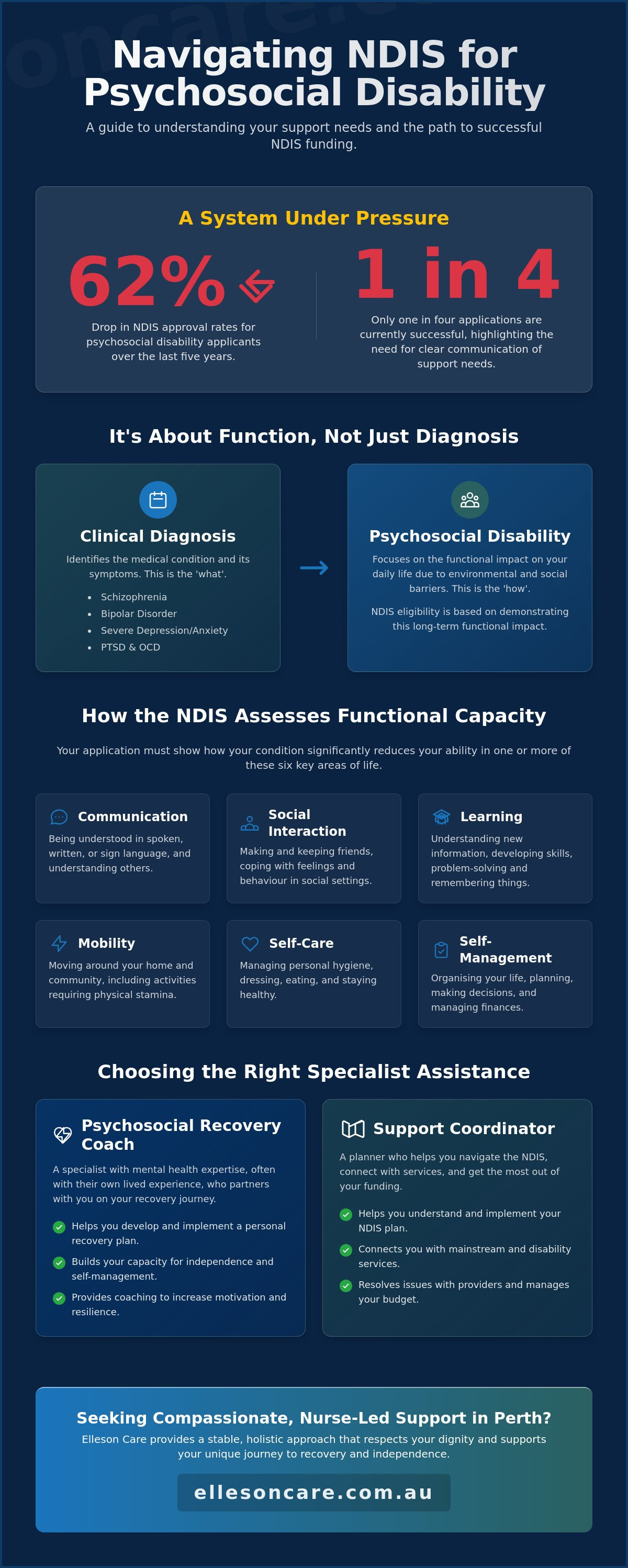
Did you know that NDIS approval rates for applicants with a psychosocial disability have dropped by 62 per cent over the last five years, with only one in four applications currently being successful? This statistic reflects the immense challenge you may face when trying to communicate how a mental health condition impacts your ability to manage daily tasks. It's natural to feel overwhelmed by a system that often feels clinical and detached from your lived experience. You deserve a partner who recognises your dignity and understands that your needs go beyond a medical diagnosis.
We've designed this guide to help you find clarity amidst the complexity of the 2026 NDIS reforms. You'll learn how the shift toward functional capacity assessments affects your funding and how to articulate your support needs to assessors with confidence. We'll also explore the latest NDIS pricing arrangements for recovery coaching and support coordination, providing a roadmap to access high-quality clinical and disability services. If you're seeking a local Perth provider that values a person-centred approach, this article will show you how to find a steady, reliable team to walk alongside you.
Key Takeaways
- Understand the critical distinction between a clinical diagnosis and a psychosocial disability to help you communicate your functional support needs more effectively to assessors.
- Identify the six functional domains used by the NDIS to evaluate eligibility, ensuring your application accurately reflects real-world impacts on your social interaction and self-management.
- Gain a clear understanding of the essential 'Evidence of Psychosocial Disability' form and how to collaborate with your clinician to provide the necessary documentation for a successful application.
- Distinguish between the roles of Psychosocial Recovery Coaching and Support Coordination to select the specialist assistance that best aligns with your personal goals for independence.
- Learn how a nurse-led, holistic approach in Perth can provide a sense of stability and dignity for both participants and their families through compassionate clinical support.
What is Psychosocial Disability? Defining the Functional Impact
The social model of disability shifts our perspective from a medical diagnosis to the lived experience of the individual. In Australia, a psychosocial disability is defined by the interaction between a person’s mental health condition and the social, economic, and environmental barriers they encounter. While a clinical diagnosis identifies symptoms, the concept of disability identifies the functional impact on your daily life. It's often a hidden journey. You might feel capable and engaged on a Tuesday, yet find the prospect of leaving your home entirely overwhelming on a Wednesday. This fluctuating nature makes the condition unique; it requires a support system that is flexible enough to respond to your changing needs while maintaining your personal dignity.
Acknowledge that these barriers are not a reflection of your character or strength. Instead, they are the result of how your condition affects your ability to participate in a society that isn't always designed with your needs in mind. By focusing on the functional impact, we can move away from clinical labels and toward practical, compassionate solutions that help you reclaim your independence.
The Difference Between Mental Health and Psychosocial Disability
It's vital to recognise that having a mental health condition doesn't automatically mean you have a psychosocial disability. Many people live with anxiety or depression while maintaining high levels of functional independence and community engagement. However, for some, these conditions lead to impairments that are permanent or likely to be permanent. Consider the difference between episodic anxiety and a disability that prevents someone from entering a supermarket, catching a bus, or managing their own finances. The NDIS specifically requires evidence that the condition significantly reduces your functional capacity across various life domains over the long term, rather than just during acute episodes.
Common Conditions Associated with Psychosocial Disability
Several conditions are frequently associated with this type of disability, though the NDIS prioritises how you function rather than the name of your diagnosis. These may include:
- Schizophrenia and schizoaffective disorders
- Bipolar affective disorder
- Severe and persistent depression or anxiety
- Obsessive-compulsive disorder (OCD)
- Post-traumatic stress disorder (PTSD)
A trauma-informed approach is essential when discussing these conditions. Many individuals with a psychosocial disability have experienced significant life trauma, which can deeply influence how they interact with healthcare systems and support workers. Providing clinical support that respects this history is a core part of ensuring safety. We focus on the impact your history and condition have on your daily life, ensuring that your support plan is as unique as your own story.
The Functional Impact: How Psychosocial Disability Affects Daily Life
Understanding the functional impact of a psychosocial disability requires looking beyond clinical symptoms to the practical realities of daily life. The National Disability Insurance Scheme (NDIS) assesses eligibility based on six specific functional domains. These domains examine your capacity for communication, social interaction, learning, mobility, self-care, and self-management. For many individuals, the challenge isn't a total absence of these skills, but rather the inconsistent ability to apply them. Barriers such as reduced stamina or impaired concentration can make simple household maintenance feel insurmountable. A person might have the physical ability to clean their home, but the cognitive load of the task during a period of low mental health can lead to significant domestic neglect.
The NDIS for psychosocial disability framework acknowledges that these limitations are often episodic. Your support needs might be minimal one week and intensive the next. This unpredictability often leads to social isolation. Maintaining consistent employment or stable relationships becomes difficult when your capacity fluctuates without warning. When 65,300 NDIS participants are currently navigating life with a primary psychosocial disability, it's clear that these challenges require a nuanced, professional response rather than a one-size-fits-all approach.
Social and Community Participation Barriers
In a vibrant city like Perth, public spaces should be accessible to everyone. However, for those with psychosocial challenges, sensory overload or heightened anxiety can make a trip to the local shopping centre or a walk through the CBD feel threatening. Difficulties with social cognition, such as misinterpreting social cues or struggling to regulate emotions in public, can create a sense of profound alienation. Professional support acts as a bridge, offering a steady presence that helps you navigate these environments safely until community re-entry feels manageable again.
Self-Management and Daily Living Challenges
Executive function acts as the command centre for the brain. It governs how we organise appointments, manage medications, and plan our day. When this is impaired, life can feel chaotic and overwhelming. For older Australians or those with complex needs, the principles of in-home aged care Perth provide a useful model for maintaining independence through structured, nurse-led support. A lack of routine often exacerbates symptoms, creating a cycle of distress that is hard to break alone. Establishing a predictable environment is a core step toward stability. If you feel that managing your daily routine is becoming unmanageable, exploring specialised NDIS support services can provide the consistency you need to thrive.
Accessing the NDIS for Psychosocial Disability Support
Entering the National Disability Insurance Scheme requires meeting specific access requirements. You must be aged under 65, live in Australia as a citizen or permanent resident, and demonstrate that your disability is likely to be permanent. For a psychosocial disability, the challenge often lies in proving that your support needs are "substantial" and "lifelong" despite the episodic nature of mental health conditions. The NDIS prioritises functional capacity over a medical label. This means your application should focus on how your condition prevents you from completing daily tasks, such as managing your own self-care or interacting safely in the community.
The "Evidence of Psychosocial Disability" form is the most critical document in this process. Section 2 of this form must be completed by a clinician, usually a psychiatrist or a General Practitioner. It is essential that this professional describes your "bottom line" functioning. They should detail what you are capable of on your most difficult days rather than your best ones. For individuals over the age of 65 who may not be eligible for the NDIS, the support at home program provides a vital alternative pathway for receiving clinical and domestic assistance within the aged care system.
Gathering Clinical Evidence
A comprehensive report from a Registered Nurse or a Psychologist can provide the clinical weight your application needs. These professionals use standardised assessments, such as the LSP-16 or WHODAS, to provide an objective measure of functional decline. These scores help NDIS assessors understand the severity of the barriers you face. Carers can also contribute by keeping a "carer diary" for several weeks. This record helps track the fluctuating nature of your symptoms, ensuring that the need for "on-call" or flexible support is clearly documented.
Preparing for Your NDIS Planning Meeting
Your planning meeting is an opportunity to articulate goals that focus on agency and independence. Instead of simply listing services, describe the outcomes you wish to achieve. You might set a goal to "increase my social confidence to attend local community groups independently." It's also the time to decide between Psychosocial Recovery Coaching and standard Support Coordination. Recovery coaches have specific mental health expertise and focus on building your resilience and hope. Ensure your plan includes specific provisions for "high-need" days. This ensures that when your capacity drops, your funding is flexible enough to provide the extra care required to keep you safe at home.
Psychosocial Recovery Coaching vs. Support Coordination
Distinguishing between Support Coordination and Psychosocial Recovery Coaching is essential for ensuring your NDIS plan reflects your actual needs. While both roles aim to improve your quality of life, they operate through different lenses. Support Coordination focuses on the logistical architecture of your plan. It's designed to help you navigate the provider landscape, manage the technical aspects of your funding, and ensure your services are delivered as intended. This role is primarily about connection and management, ensuring the various parts of your support system work together efficiently.
In contrast, Psychosocial Recovery Coaching is a specialised mental health support that prioritises agency and hope. This service is specifically designed for individuals with a psychosocial disability who want to take a more active role in their own recovery journey. A unique feature of this role is the option for a coach with 'lived experience' or a 'clinically qualified' background. This ensures that the person walking alongside you has a profound, first-hand understanding of the complexities of mental health, providing a level of empathy that goes beyond administrative assistance.
What Does a Recovery Coach Actually Do?
A Recovery Coach works with you to build a personal recovery plan that sits alongside your NDIS plan. This document is highly individualised, focusing on your strengths and your vision for a meaningful life. They provide coaching to increase your resilience, helping you develop the self-advocacy skills needed to navigate the broader community. They also act as a vital link between your NDIS supports and clinical mental health services, such as your GP or hospital discharge teams, ensuring that your medical and social care are perfectly aligned.
Choosing the Right Support for Your Goals
Deciding which support to request depends on the complexity of your situation. If you primarily require help with logistics and connecting to providers, Support Coordination may be sufficient for your needs. However, if you have complex mental health challenges and want a partner who can help you build long-term resilience, a Recovery Coach is often the better choice. Having a nurse-led team oversee these interactions provides an additional layer of safety and clinical oversight, ensuring that your dignity is always respected. If you would like to discuss which support model best fits your circumstances, our team is here to help you explore our specialised NDIS support services.
Holistic Care in Perth: The Elleson Care Approach
Supporting someone with a psychosocial disability requires more than just ticking boxes on a support plan. It requires a deep understanding of the person behind the diagnosis. At Elleson Care, our nurse-led philosophy ensures that every participant is treated with the highest level of professional clinical oversight and personal warmth. We adopt a family-centred approach, recognising that primary carers and family members also need stability and reassurance to thrive. By integrating clinical nursing standards with daily disability support, we create a cohesive environment where every aspect of your well-being is considered. Our focus remains on delivering culturally sensitive, person-centred care that respects the individual's autonomy and comfort at every stage of their journey.
Nurse-Led Clinical Oversight
Having a Registered Nurse involved in your care ensures that vital aspects of health, such as medication management and physical well-being, are never overlooked. Our leadership team brings over 22 years of clinical experience to the management of complex mental health behaviours. This professional expertise allows us to maintain a "safety first" environment, providing peace of mind for both participants and their families. We focus on evidence-based practices that respect your personal dignity while ensuring your clinical needs are met with precision. This steady, reliable presence is especially important for those navigating the fluctuating nature of mental health challenges.
Your Local Perth Partner in Recovery
As a Western Australian-owned provider, we possess an intimate understanding of the local Perth health landscape. We don't just provide support within the home; we actively organise community access to help you re-engage with your local area at a pace that feels safe for you. Whether it's attending a local community centre or visiting a favourite park, we walk beside you as you rebuild your social confidence and independence. Our deep roots in the WA community mean we can connect you with the right local resources and networks effectively. If you're ready to start a journey toward a more independent life, Contact Elleson Care today to discuss your personalised psychosocial support plan.
Reclaiming Your Agency and Independence
Living with a psychosocial disability requires a support system that values your personal dignity as much as your clinical safety. We've explored how shifting the focus from a medical diagnosis to your functional capacity can unlock the NDIS supports you deserve. Whether you're navigating the complexities of a new application or seeking a recovery coach who truly understands your lived experience; you don't have to manage this process alone. A steady, professional partnership can help you overcome the social barriers that once felt insurmountable.
As a West Australian owned and operated provider, we take pride in offering a nurse-led approach that prioritises your long-term stability. Our team is led by Registered Nurses with over 22 years of experience in complex NDIS and clinical care, ensuring that your physical and mental well-being are always managed with the highest ethical standards. We invite you to Book a Consultation with our Perth Nurse-Led Team to discuss a personalised plan that respects your autonomy. You have the strength to build a meaningful life, and we are here to provide the reliable, expert support you need to make that vision a reality.
Frequently Asked Questions
Is psychosocial disability permanent?
To access the NDIS, a psychosocial disability must be considered permanent or likely to be permanent. This means that even with optimal clinical treatment, the functional impact on your life is expected to continue for the long term. While mental health recovery is a journey of hope and agency, the NDIS requires evidence that the resulting disability significantly reduces your capacity to manage daily activities throughout your life.
Can I get NDIS funding for depression or anxiety?
You can receive NDIS funding if your depression or anxiety leads to a significant and permanent functional impairment. The scheme focuses on how the condition affects your ability to communicate, socialise, or manage your self-care rather than the medical diagnosis itself. If your condition prevents you from participating in the community or maintaining a household, you may meet the eligibility criteria for professional support.
What is a Psychosocial Recovery Coach?
A Psychosocial Recovery Coach is a specialist professional who works with you to build resilience and self-advocacy skills. They focus on fostering hope and agency, helping you take more control over your life and your NDIS plan. These coaches often have lived experience or clinical qualifications, allowing them to provide a unique level of empathy while collaborating closely with your broader mental health team.
How do I prove my psychosocial disability to the NDIS?
Proving a psychosocial disability requires providing the NDIS with evidence of how your condition impacts your daily functioning. You'll need a clinician, such as a psychiatrist or GP, to complete the Evidence of Psychosocial Disability form. This documentation should highlight your support needs on your most difficult days, using standardised assessments like the WHODAS to provide an objective measure of your functional challenges.
What is the difference between mental illness and psychosocial disability?
Mental illness refers to a clinical diagnosis and the medical symptoms you experience. In contrast, a psychosocial disability describes the social and functional barriers that arise from that illness. While many people live with a mental health condition, a disability is recognised when that condition significantly limits your ability to perform daily tasks, maintain relationships, or participate in the community safely.
Can I have both a Support Coordinator and a Recovery Coach?
The NDIS typically funds either a Psychosocial Recovery Coach or a Support Coordinator, as their roles often overlap. A Recovery Coach is usually preferred for those with primary mental health needs, as they offer specialised expertise in recovery-oriented practice. If you have complex needs that span multiple sectors, you should discuss which role best aligns with your personal goals during your planning meeting.
What happens if my mental health condition is episodic?
The NDIS recognises that mental health conditions are often episodic, meaning your support needs will fluctuate from week to week. To qualify for funding, you must demonstrate that the disability is likely to be permanent despite these fluctuations. Your evidence should focus on the ongoing need for support and the reality of your functional capacity during periods when your symptoms are most severe.
How can a nurse-led provider help with psychosocial disability?
A nurse-led provider offers a high standard of clinical oversight that ensures your physical and mental health are managed together. Registered Nurses bring extensive experience in managing complex behaviours and medication regimes, providing a sense of safety for you and your family. This approach ensures that your daily disability support is backed by professional expertise, prioritising your personal dignity and long-term stability.


