
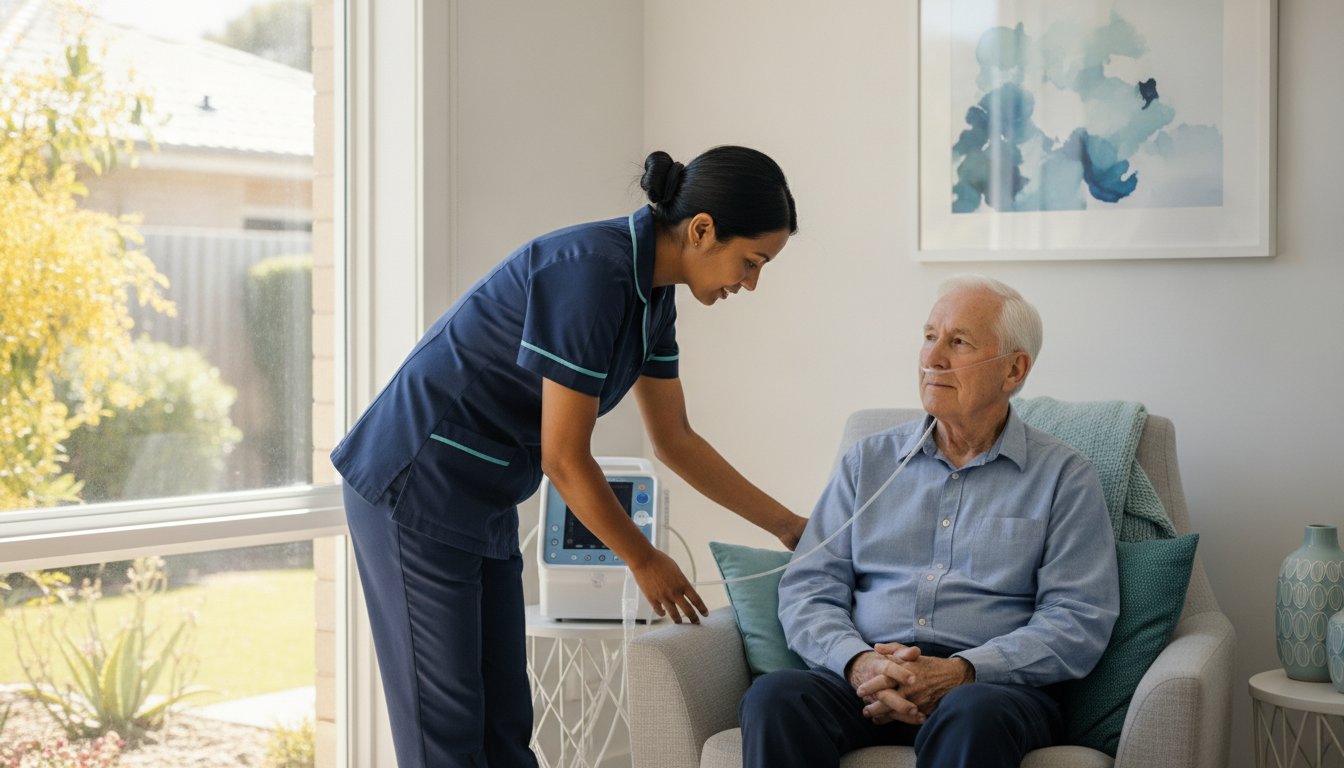
After weeks of enduring sterile corridors and the constant hum of hospital machinery, the prospect of bringing a ventilator-dependent family member home often brings a mix of relief and profound anxiety. You want the dignity and comfort of a familiar environment for your loved one, yet the fear of technical equipment failure or the perceived lack of specialised nursing staff can make the search for ventilator support services at home WA feel like an insurmountable task. It's exhausting to navigate the complexities of NDIS requirements or the new Support at Home program while your primary focus is simply on keeping your family member safe and comfortable.
We understand that a successful transition requires more than just equipment; it requires a partnership built on clinical excellence and genuine empathy. This guide demonstrates how professional, nurse-led care provides the hospital-grade oversight necessary to manage complex respiratory needs safely in a domestic setting. You'll gain a clear understanding of the current funding pathways available through WA Health and the Commonwealth, alongside the peace of mind that comes from robust clinical governance. We'll outline the essential steps for a secure transition, ensuring your home becomes a place of healing rather than a source of stress.
Key Takeaways
- Learn how the 'Home First' model in Western Australia facilitates a safe transition from hospital to home, prioritising your loved one's dignity and comfort.
- Understand the vital role of registered nurses in providing clinical governance and oversight for high-risk respiratory procedures within a domestic setting.
- Discover how to access funding for complex health needs through the NDIS or Aged Care packages to ensure your clinical care is fully supported.
- Identify the essential requirements for preparing your residence, including emergency backup systems, for professional ventilator support services at home WA.
- Explore the benefits of partnering with a West Australian owned provider led by experienced clinicians who understand the local healthcare landscape.
Understanding Ventilator Support Services at Home in Western Australia
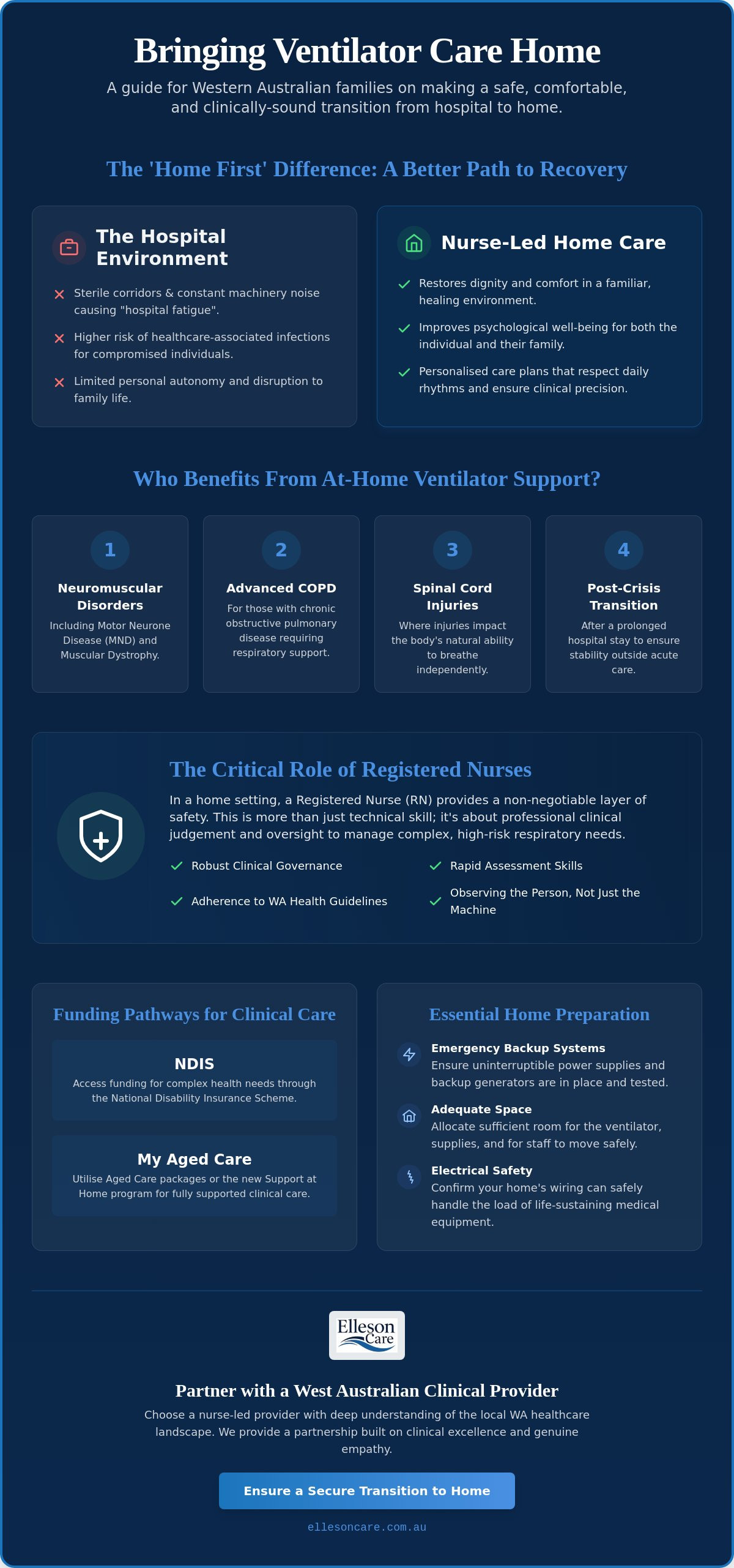
For many families in Western Australia, the transition from a clinical hospital setting to the comfort of one's own residence represents a significant milestone in the journey of chronic care. Mechanical ventilation is a sophisticated, life-sustaining intervention that uses a machine to assist or replace spontaneous breathing. While this was once restricted to intensive care units, advances in technology and clinical practice now allow this high-level support to be delivered safely within a domestic environment. This shift is part of a broader "Home First" initiative across the WA health landscape, which recognises that individuals often recover better and maintain a higher quality of life when they are surrounded by their loved ones.
Choosing ventilator support services at home WA involves more than just selecting a provider; it is about establishing a clinical partnership. There's a vital distinction between basic home care and specialised clinical ventilator support. While standard aged care or disability services might focus on domestic tasks or personal grooming, specialised respiratory care requires rigorous clinical governance. It involves the management of complex equipment, the monitoring of oxygen saturation levels, and the ability to respond immediately to physiological changes. Families increasingly choose this path because it offers a level of dignity and personal autonomy that a hospital ward simply cannot replicate.
Who Requires At-Home Ventilator Support?
The need for home-based ventilation often arises from conditions that impact the body's natural ability to breathe independently. This includes individuals living with neuromuscular disorders such as Motor Neurone Disease (MND) or Muscular Dystrophy, where muscle weakness affects respiratory function. It's also a critical service for those with advanced chronic obstructive pulmonary disease (COPD) or those who have sustained spinal cord injuries. Additionally, patients who have experienced a prolonged hospital stay following a respiratory crisis may require a structured transition period using home-based support to ensure they remain stable outside of the acute care system.
The Benefits of Home-Based Clinical Care
The advantages of receiving clinical care at home are profound, particularly regarding psychological well-being. Being in a familiar environment reduces the emotional exhaustion and "hospital fatigue" that often accompanies long-term medical stays. From a clinical perspective, home care significantly lowers the risk of healthcare-associated infections, which are a constant concern in hospital settings for those with compromised respiratory systems. By developing a personalised care plan, a nursing team can respect the family's daily rhythm while ensuring that every clinical requirement is met with precision and empathy. This approach fosters a sense of stability and peace of mind for both the individual and their primary carers.
The Role of Registered Nurses in Complex Respiratory Care
In a home environment, the presence of a Registered Nurse (RN) provides a critical layer of safety that technology alone cannot offer. High-risk clinical procedures require more than just technical proficiency; they demand the nuanced judgement and rapid assessment skills that come with professional nursing registration. By implementing robust clinical governance, RNs ensure that every aspect of care is documented, audited, and aligned with evidence-based practices. This professional oversight follows the WA Health guidelines for home ventilation, ensuring that the standards of care delivered in your living room remain as high as those found in a Perth hospital.
Providing effective ventilator support services at home WA requires a delicate balance between managing life-sustaining machinery and maintaining the individual's personal comfort. RNs act as the vital link between these two worlds. They don't just monitor the ventilator; they observe the person, noting subtle changes in skin colour, energy levels, or breathing patterns that might indicate a need for clinical adjustment. Families often find that engaging professional clinical support allows them to step back from the role of technical operator and return to being a supportive spouse, parent, or child.
Specialised Nursing Tasks for Ventilator Patients
Managing a ventilator-dependent patient involves several high-stakes clinical responsibilities. RNs are trained in meticulous tracheostomy management and sterile suctioning techniques to prevent respiratory infections. They take responsibility for monitoring oxygen saturation levels and adjusting ventilator settings exactly as prescribed by the treating specialist. Crucially, they lead emergency response planning, ensuring that every member of the household knows how to troubleshoot equipment alarms or manage power outages with confidence and calm.
A Holistic Family Approach to Healthcare
A Registered Nurse serves as a central coordinator within the Perth healthcare network, liaising directly with GPs, respiratory specialists, and allied health professionals. This ensures that the care plan remains cohesive and responsive to the patient's evolving needs. Beyond the clinical tasks, RNs provide essential emotional support to prevent the "carer burnout" that so often affects families managing complex needs. We recognise that Western Australia is home to diverse communities; therefore, our approach prioritises culturally sensitive care that respects the unique values and traditions of every family we serve.
Funding Pathways: NDIS and My Aged Care for Ventilator Support
Securing the necessary financial resources is often the most daunting aspect of transitioning a loved one to home-based care. In Western Australia, several distinct pathways exist to ensure that ventilator support services at home WA remain accessible and sustainable for families. Whether you're navigating the National Disability Insurance Scheme (NDIS), the aged care system, or veteran support, understanding how to categorise clinical nursing needs is the first step toward a stable care arrangement. These systems are complex, yet they are designed to provide the high-level oversight required for respiratory stability.
NDIS Funding for Ventilation Support
For NDIS participants, mechanical ventilation is typically funded under the "Complex Health Support" category. This involves meeting specific NDIS requirements for ventilator support, which fall under "High Intensity Daily Personal Activities." Because these tasks carry significant clinical risk, the NDIS requires that they be delivered by staff who have received appropriate training and oversight from a Registered Nurse. If a participant's respiratory condition changes, it's vital to request a plan review to ensure clinical hours reflect the current level of need. Support Coordinators are invaluable in this process; as of the 2025-26 period, Level 1 Support Coordination rates have increased to $80.06 per hour, reflecting the specialised advocacy required to manage these complex plans.
Aged Care and Private Options
The landscape for older West Australians changed significantly in November 2025, when the Support at Home program replaced the previous Home Care Packages. For those with Level 3 or 4 funding, these resources can be directed toward clinical nursing to manage home ventilation. A major update is scheduled for 1 October 2026, when the Australian Government will fully fund personal care services under the Support at Home program, removing out-of-pocket costs for those specific services within an approved plan. Until then, many families manage their care through a combination of government subsidies and income-tested fees, which are subject to a lifetime cap of $84,571.66 as of March 2026.
Veterans in WA may also access specialised assistance through the Department of Veterans' Affairs (DVA), which offers pathways for clinical nursing and equipment. Regardless of the primary funding source, the role of the nursing team is to provide the clinical evidence needed to justify these essential hours of care. By aligning with WA Health's community transition programmes, families can create a seamless link between hospital discharge and long-term, home-based stability. This structured approach ensures that the focus remains where it belongs: on the comfort and well-being of your family member.
Preparing Your Perth Home for High-Level Clinical Support
Preparing your residence for high-level clinical care is a collaborative process that transforms a familiar living space into a safe, functional environment. It's about more than just moving furniture; it's about creating a dedicated 'Care Zone' that balances life-sustaining medical needs with the warmth of a family home. When arranging ventilator support services at home WA, a professional nursing team should conduct a thorough clinical environment assessment to ensure your home can support the necessary technology without compromising your loved one's dignity or the family's daily life.
The goal of this preparation is to foster stability and reduce the stress of managing technical equipment. By organising clinical supplies and equipment storage for easy access, you allow the nursing staff to focus their full attention on the patient. This methodical approach to the physical environment mirrors the steady, disciplined nature of long-term clinical support, providing a sense of order and safety for everyone in the household.
Essential Equipment and Space Requirements
A functional care space requires careful organisation to accommodate the ventilator, suction machines, and spare oxygen cylinders. This area must be large enough to allow nurses to move freely around the bed, ensuring they can perform clinical tasks with ergonomic ease. Adequate lighting is essential for monitoring skin integrity and equipment settings, while proper ventilation helps maintain a comfortable temperature and air quality. We recommend a centrally located room that allows the patient to remain part of the household activities while still providing the quiet needed for rest.
- Equipment Clearance: Ensure at least one metre of space around the bed for clinical access.
- Clinical Storage: Use organised, labelled containers for consumables like suction catheters and tracheostomy kits.
- Power Access: Multiple dedicated power points are required to avoid the use of extension cords and power boards.
- Energy Efficiency: Constant medical equipment usage can increase utility costs; families may explore Energy Efficient Upgrades to help mitigate these expenses while maintaining safety.
Safety and Emergency Protocols
Reliable power is the backbone of safe home ventilation. In Western Australia, it's essential to register your household with Western Power for 'Life Support' priority status. This ensures you're notified of planned outages and prioritised during unexpected network repairs. Your nursing team will help you establish a 24-hour emergency contact list and a clear protocol for equipment failure, including battery checks and the placement of backup oxygen. Regular maintenance schedules for all machinery must be strictly followed to prevent technical issues before they arise.
Creating this safe clinical environment is a vital step in the transition from hospital to home. If you're ready to discuss how to adapt your living space for professional care, you can enquire about our clinical support services today. By planning ahead, you ensure that the focus remains on comfort and quality of life rather than technical hurdles.
Why Choose a Nurse-Led WA Provider for Ventilator Care?
Selecting a healthcare partner for complex respiratory needs is a decision rooted in trust. For families in Western Australia, there is a distinct advantage in choosing a provider that is both locally owned and clinically led. A Western Australian operated service understands the specific nuances of the local health system, from Perth's metropolitan hospital networks to regional support structures. At Elleson Care, this local knowledge is backed by over 22 years of registered nursing experience at the leadership level. This ensures that every decision made regarding ventilator support services at home WA is grounded in deep clinical expertise and a genuine commitment to the community we serve.
Our approach is fundamentally person-centred. We recognise that while the ventilator is a medical necessity, it shouldn't define the individual's life. We prioritise care that supports your loved one's personal goals and lifestyle, whether that means facilitating family gatherings or simply ensuring a peaceful, uninterrupted night's sleep. By combining clinical excellence with family warmth, we create a supportive environment where patients feel seen as individuals, not just as clinical cases. This steady, reliable presence provides the foundation for long-term stability and comfort at home.
Our Clinical Nursing Excellence
We maintain high standards through a rigorous staff selection process, ensuring every nurse in our team possesses the technical skill and emotional intelligence required for complex care. We understand that inviting health professionals into your home is a significant adjustment; therefore, we prioritise consistent care teams to build familiarity and trust. You won't have to explain your routine to a new face every day. For added peace of mind, families have direct access to our nursing management, ensuring that any concerns or changes in condition are addressed with professional urgency and care.
Getting Started with Home Ventilator Support
The journey toward home-based care begins with a comprehensive initial consultation and clinical assessment. This process is designed to be thorough yet supportive, ensuring we understand every requirement before the transition occurs. We work closely with hospital discharge teams to facilitate a seamless handover, managing the logistics so you can focus on welcoming your family member back to their own environment. To explore how our team can support your specific needs, you can learn more about our specialised nursing services. We're here to provide the expert guidance and compassionate care your family deserves during this significant transition.
Creating a Sustainable Path Home for Your Loved One
Transitioning from a hospital environment to the comfort of home is a profound step toward restoring a sense of normalcy and personal dignity. As we've explored, the success of this journey relies on more than just equipment; it requires a foundation of rigorous clinical governance and a compassionate, person-centred approach. By securing professional ventilator support services at home WA, you ensure that every technical and medical requirement is managed with the precision and expertise your family deserves. Understanding the funding pathways through the NDIS and Aged Care systems, combined with thorough home preparation, transforms a complex challenge into a manageable and safe reality.
Elleson Care is a West Australian owned and operated provider, led by Registered Nurses with over 22 years of specialised experience. As a registered NDIS and Aged Care provider, we're committed to delivering clinical excellence that prioritises the quality of life for every individual we serve. We're here to walk this path with you, providing the steady, reliable support needed to maintain stability and peace of mind in your own home. Book a clinical consultation with our Registered Nurses today to discuss how we can facilitate a safe and supportive transition for your loved one. You don't have to navigate this complex landscape alone.
Frequently Asked Questions
Can a person on a ventilator live at home safely in WA?
Yes, individuals requiring mechanical ventilation can live safely at home in Western Australia when supported by a professional clinical team. Success depends on a combination of reliable equipment, a prepared environment, and oversight by registered nurses who manage the technical and physiological aspects of care. This model allows for a higher quality of life while maintaining hospital-grade safety standards within a familiar domestic setting.
Does the NDIS cover the cost of ventilator support services?
The NDIS provides funding for ventilator support services at home WA under categories such as High Intensity Daily Personal Activities. Because mechanical ventilation is classified as a complex health need, the scheme requires that support is delivered or supervised by qualified clinical staff. We recommend discussing these requirements with your Support Coordinator to ensure your plan includes adequate hours for professional nursing oversight and staff training.
What happens if there is a power outage while using a ventilator at home?
Safety during a power outage is managed through a combination of technical backups and rigorous emergency protocols. All home ventilators are equipped with internal batteries; we also ensure that external backup batteries and manual ventilation equipment are always accessible. Additionally, we assist families in registering for 'Life Support' priority status with Western Power, which ensures you're notified of planned outages and prioritised during network repairs.
How many hours of nursing care are typically required for ventilator support?
The number of nursing hours required is determined by an individual's specific clinical needs and the level of risk involved. According to WA Health clinical consensus, a ventilator-dependent patient is defined as someone requiring ventilation for at least 16 hours per day. Your clinical team will conduct a thorough assessment to recommend a care schedule that ensures safety while respecting your family's lifestyle and privacy.
Do I need to modify my home before starting ventilator support services?
Major structural modifications aren't always necessary, but specific environmental adjustments are essential for safety. This includes ensuring there is sufficient space for the ventilator and suction equipment, as well as reliable access to multiple power points. Our nursing team conducts a clinical environment assessment to identify any necessary changes, such as improving lighting or ensuring there is adequate storage for sterile consumables and backup oxygen cylinders.
What is the difference between CPAP, BiPAP, and mechanical ventilation support?
CPAP and BiPAP are forms of non-invasive ventilation that use a mask to provide air pressure, often for sleep apnoea or milder respiratory issues. Mechanical ventilation is a more complex, life-sustaining intervention that can be delivered non-invasively or invasively via a tracheostomy. Unlike standard CPAP, mechanical ventilation requires higher levels of clinical monitoring and professional nursing oversight due to the critical nature of the support provided.
Can Elleson Care help with the transition from hospital to home?
We specialise in facilitating a seamless transition from the hospital to the home environment. Our Registered Nurses collaborate directly with hospital discharge teams, respiratory specialists, and allied health professionals to ensure a cohesive handover. We manage the clinical logistics and staff training before your loved one arrives home, allowing you to focus on their emotional well-being and recovery during this significant change.
Is 24/7 nursing care available for ventilator patients in Perth?
Yes, round-the-clock nursing care can be arranged for individuals with high-risk clinical needs who require constant monitoring. Whether 24/7 support is necessary depends on the patient's stability and the requirements outlined in their NDIS or Aged Care support plan. We work with families in Perth to develop sustainable rosters that provide the necessary level of clinical safety while maintaining a steady, supportive presence in the home.


