
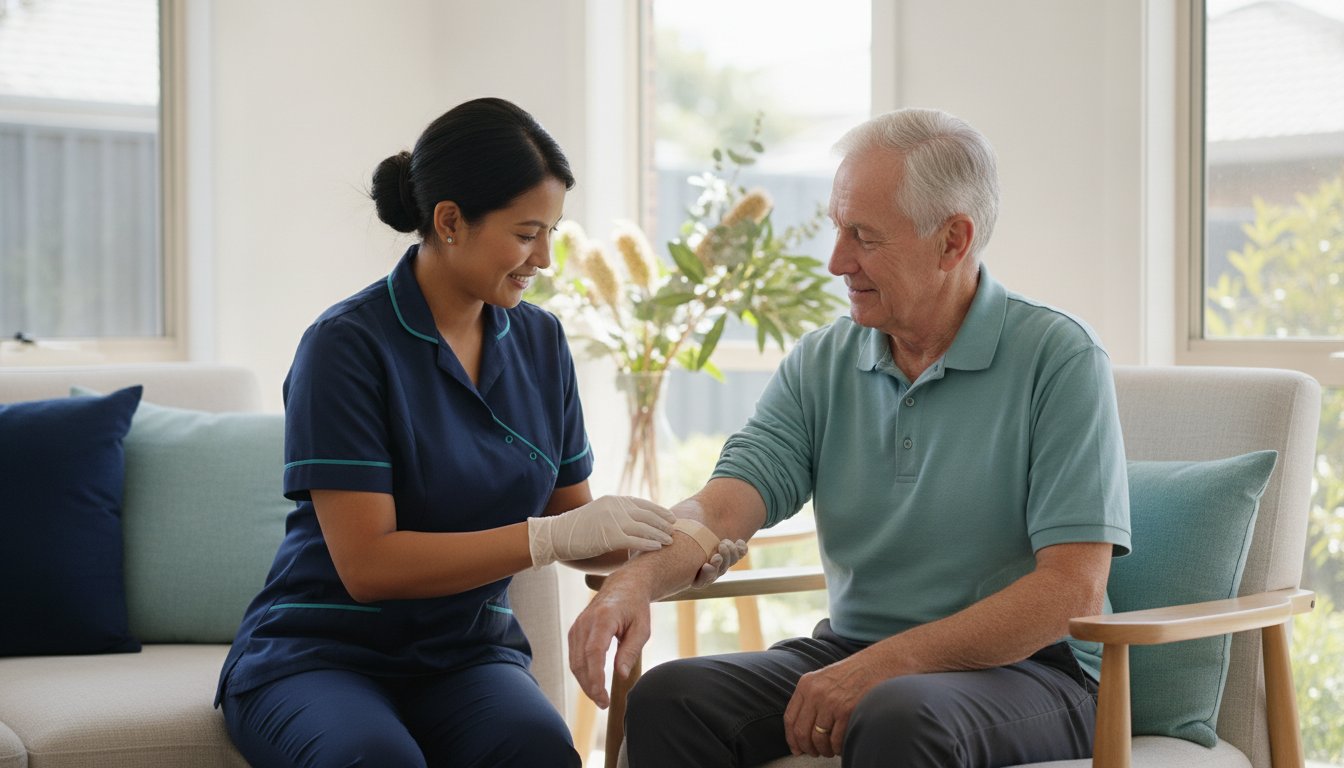
The moment a hospital discharge planner mentions the transition home, the initial relief of leaving the ward is often replaced by a heavy sense of uncertainty. While you're eager to return to familiar surroundings, the reality of managing complex recovery needs without the immediate support of a clinical team can feel daunting. It's common to worry about the risk of a fall or whether you'll be able to manage specialised wound care and medication schedules correctly. Understanding how to arrange post-hospital care Perth residents can trust is the first step toward replacing that anxiety with a clear, clinical-grade plan for recovery.
We understand that navigating the intersection of My Aged Care, the NDIS, and private funding can be confusing, especially when you're already under significant stress. This guide provides a straightforward roadmap to organising professional home support that ensures a smooth, safe transition from the hospital ward to your own front door. You'll learn how to secure the expertise of a nurse-led team, giving your family the peace of mind that comes from knowing every aspect of your health is being monitored by compassionate experts who prioritise your safety and dignity above all else.
Key Takeaways
- Initiate the planning process well before discharge to ensure your home is properly equipped and a professional support team is ready for your arrival.
- Discover exactly how to arrange post-hospital care Perth families can trust by requesting a formal meeting with hospital discharge planners or social workers.
- Understand the diverse funding pathways available in Western Australia, including the Transition Care Programme (TCP), NDIS support, and immediate private care options.
- Prioritise a holistic recovery by combining clinical nursing services, such as wound management, with essential domestic assistance for a balanced transition.
- Choose a local, nurse-led provider to benefit from clinical governance and deep expertise within the Perth health system, ensuring the highest standards of safety and dignity.
What is Post-Hospital Care and Why is it Essential in Perth?
Post-hospital care is a specialised clinical and domestic support system designed to bridge the gap between a hospital ward and independent living. Typically spanning the first 2 to 12 weeks after discharge, this period is critical for ensuring a patient regains their strength without suffering a setback. In the Perth context, discharge procedures at major facilities like Fiona Stanley Hospital or St John of God (SJOG) often move quickly to manage bed capacity. This makes it vital to understand how to arrange post-hospital care Perth families can rely on before the patient even leaves the ward. The primary goal is to prevent hospital readmission, a significant concern for Perth seniors who wish to maintain their independence. By choosing a nurse-led model, you ensure that clinical oversight guides every decision, providing a level of safety that domestic assistance alone cannot offer.
The Risks of an Unmanaged Transition
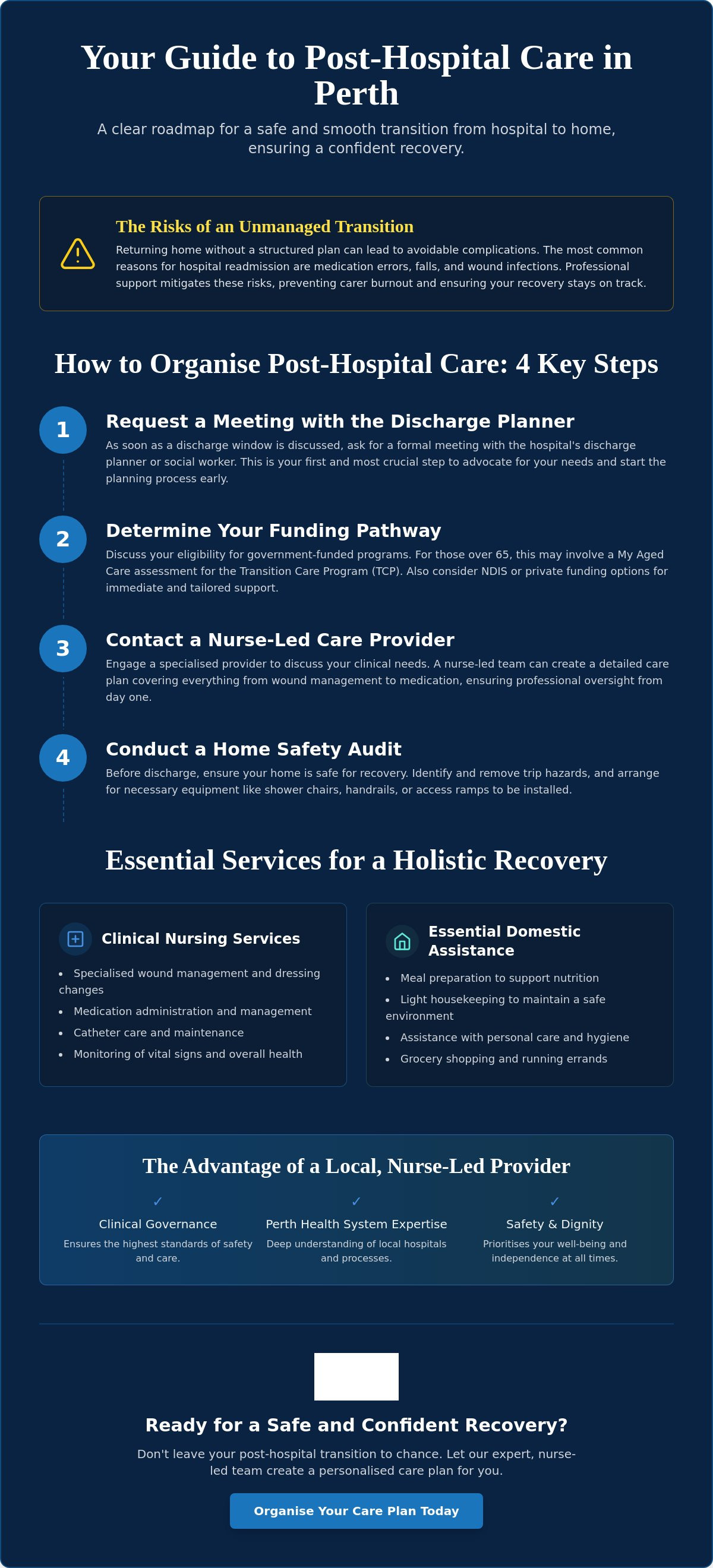
Returning home without a structured plan often leads to avoidable complications. Medication errors, falls, and wound infections are the most frequent reasons patients find themselves back in an emergency department within days of discharge. While families often want to provide this support themselves, the physical and emotional toll frequently leads to carer burnout. This is particularly true when managing complex needs like catheter care or post-surgical dressings. Professional nursing services mitigate these risks by providing expert monitoring and clinical intervention in the comfort of your own home, ensuring that the recovery process remains on track.
Short-term vs. Long-term Recovery Goals
It's helpful to distinguish between rehabilitation, which focuses on regaining specific skills, and maintenance, which ensures a safe environment while healing occurs. Transitional care provides the necessary clinical support to prevent a temporary health setback from turning into a permanent need for residential aged care. For those recovering from major surgery, the timeline often focuses on intensive wound care and mobility for the first month. In contrast, recovery from a serious illness might require longer-term monitoring of vital signs and nutrition. Knowing how to arrange post-hospital care Perth services allows you to tailor this timeline to your specific clinical requirements, ensuring a steady, methodical path back to health.
How to Arrange Post-Hospital Care: A Step-by-Step Guide
The transition from a hospital bed to your own home shouldn't be a rushed event. To ensure a safe and dignified return, the process of learning how to arrange post-hospital care Perth families can rely on must begin while you or your loved one are still on the ward. Waiting until the day of discharge creates unnecessary stress and significantly increases the risk of a clinical setback. By taking a proactive approach, you can ensure that clinical support, domestic modifications, and funding are all aligned before the patient arrives at their front door.
Following a structured sequence of steps ensures that every clinical and safety requirement is met:
- Step 1: Request a formal meeting with the hospital discharge planner or social worker as soon as a discharge window is discussed.
- Step 2: Determine if a My Aged Care assessment is required to access the Transition Care Program (TCP), which provides short-term support for those over 65.
- Step 3: Contact a specialised provider like Elleson Care to discuss private or NDIS-funded clinical needs, ensuring a nurse-led team is ready to step in.
- Step 4: Conduct a comprehensive home safety audit to address trip hazards and install necessary equipment like shower chairs or ramps.
The Role of the Hospital Discharge Planner
A discharge planner is your primary advocate within the hospital system. Their role is to coordinate the logistics of your exit, but they often work under intense pressure to manage bed capacity. You must be proactive in these discussions. Ask specifically about your eligibility for government-funded transition care and ensure the 'Discharge Summary' is finalised before you leave. This document is a clinical lifeline. It contains your diagnosis, treatment history, and updated medication list. Confirm that it will be sent to both your GP and your chosen home care provider. If you feel the discharge is premature, don't hesitate to voice your concerns regarding safety at home.
Coordinating with Your Perth GP
Securing a GP appointment within 72 hours of returning home is a clinical gold standard for recovery. This visit serves as a vital safety net where your doctor can perform a medication reconciliation. This involves cross-referencing your pre-hospital medications with new hospital scripts to prevent dangerous interactions. Our team at Elleson Care prioritises this collaboration, as our nurses often work directly with local Perth doctors to monitor recovery progress and report any subtle changes in health. If you are feeling overwhelmed by these clinical requirements, speaking with a care coordinator can help streamline the process and ensure no detail is overlooked.
Funding Pathways for Post-Hospital Support in WA
Navigating the financial landscape of recovery is often the most stressful aspect of the discharge process. In Western Australia, funding typically falls into three primary categories: Commonwealth-funded aged care, the National Disability Insurance Scheme (NDIS), or private self-funding. Understanding these options is a vital component of knowing how to arrange post-hospital care Perth residents can access without delay. While government subsidies provide essential support for many, the eligibility criteria and assessment timelines vary significantly between programmes. As we move through 2026, the integration of the Support at Home program has streamlined how many seniors receive clinical assistance, yet it's important to identify which specific pathway fits your immediate recovery needs.
For younger patients under the age of 65, the NDIS remains the primary vehicle for post-hospital clinical support. If a hospital stay has resulted in a new disability or a significant change in functional capacity, you may be eligible for NDIS-funded nursing care. This ensures that clinical requirements, such as complex wound management or ventilation support, are managed by qualified professionals. Regardless of your age, the goal is to ensure that financial barriers don't compromise the quality of your clinical oversight during those first few weeks at home.
The Transition Care Programme (TCP) Explained
The Transition Care Programme is a specific bridge designed for older Australians who are ready to leave the hospital but still require a high level of support to regain their independence. To access this, you must be in a hospital bed and receive an assessment from the Aged Care Assessment Team (ACAT). This programme is strictly time-limited, usually providing up to 12 weeks of low-intensity therapy, nursing support, and personal care. It's often a precursor to longer-term Home Care Packages, helping you transition safely while your permanent support plan is finalised. In Perth, the daily fee for TCP at home is approximately $15.01, making it an affordable clinical safety net.
Private Post-Hospital Care: The "No-Wait" Option
Many families choose private or self-funded care to bypass restrictive government eligibility criteria or lengthy waitlists. This "no-wait" option is particularly valuable when a hospital discharge happens unexpectedly and immediate support is required. Private care offers unparalleled flexibility, allowing you to choose your own hours and specific nursing tasks without the constraints of a government assessment. This model also allows you to combine clinical top-up care with existing respite care in Perth, ensuring that family carers receive the break they need while a professional nurse-led team manages the patient's technical medical needs. This dual approach provides a comprehensive safety net that prioritises both the patient's recovery and the family's well-being.
Essential Services for a Safe Home Recovery
A successful transition from hospital to home requires a holistic approach that balances high-level clinical intervention with essential domestic support. Recovery is rarely a linear process; it involves both the technical management of a medical condition and the practical restoration of daily routines. Understanding exactly what services to include when researching how to arrange post-hospital care Perth residents can rely on ensures that no aspect of your well-being is overlooked. This comprehensive support structure is designed to reduce physical strain while maintaining your personal dignity during the most vulnerable weeks of healing.
A well-rounded care plan typically incorporates the following essential services:
- Clinical Nursing: Expert management of post-surgical wounds, administration of injections, and regular monitoring of vital signs to detect early signs of deterioration.
- Personal Care: Respectful assistance with showering, dressing, and grooming, ensuring safety in wet areas where the risk of falling is highest.
- Domestic Assistance: Support with meal preparation, light cleaning, and laundry to allow your body the rest it needs to repair.
- Transport: Reliable transit to follow-up appointments at Perth specialist clinics, ensuring you never miss a critical check-up due to mobility or driving restrictions.
Complex Clinical Care at Home
For many patients, recovery involves more than just observation; it requires the active management of technical medical needs. Complex clinical care is the management of life-sustaining equipment and invasive medical procedures by a Registered Nurse. This includes specialised support for catheter care, ventilator management, and oxygen therapy. Having an RN oversee these tasks at home significantly reduces the risk of infection and hospital readmission. Our team ensures that these invasive procedures are handled with the same clinical precision found in a hospital ward, but within the comfort of your own environment. If you require this level of specialised support, you can contact our nurse-led team to discuss your specific clinical requirements.
Allied Health and Rehabilitation
Physical recovery often requires the expertise of allied health professionals, such as physiotherapists and occupational therapists. These specialists focus on restoring mobility and ensuring your home environment is fit for purpose. Home care providers play a crucial role in this process by coordinating with these therapists to implement daily exercise regimes and monitoring progress. This collaboration often extends to the hire of specialised equipment. Whether you need a hospital bed, a hoist, or specific mobility aids, having these items professionally installed before you arrive home is a vital step in the recovery journey. This integrated approach ensures that your home is transformed into a safe, rehabilitative space that supports your long-term independence.
Choosing a Local Nurse-Led Provider in Perth
Selecting a local care partner is about more than just proximity; it is about clinical accountability and a deep understanding of the Western Australian health system. A provider with strong roots in the community understands the specific discharge protocols of Perth hospitals and can respond rapidly as your clinical needs evolve. When researching how to arrange post-hospital care Perth families often find that a nurse-led model offers a level of safety that domestic-only agencies cannot match. This "nurse-led" difference ensures that clinical governance is at the heart of every decision, providing a structured environment where Registered Nurses oversee all aspects of your recovery, from medication management to complex wound care.
Choosing a provider that understands how to arrange post-hospital care Perth residents deserve means looking for a partner that balances clinical rigour with human warmth. At Elleson Care, our 22 years of specialised nursing experience provide a stable foundation for families navigating the uncertainties of post-hospital life. We prioritise person-centred care, ensuring that your recovery plan is not a generic checklist but a bespoke strategy that respects your individual lifestyle, home environment, and personal goals. This steady, reliable presence allows you to focus on healing while we manage the technicalities of your clinical support.
Evaluating Perth Care Agencies
When you begin interviewing potential providers, it is vital to ask specific questions to gauge their clinical standards. You should ask if their services are directly led by Registered Nurses and how they manage clinical emergencies after hours. It is also essential to verify their NDIS registration and aged care compliance to ensure they meet rigorous national standards. A family-centred approach is equally important; your chosen provider should have clear protocols for keeping your loved ones informed and involved in every stage of the recovery journey. This transparency builds the trust necessary for a successful long-term partnership.
Getting Started with Elleson Care
Our process begins with a comprehensive initial clinical assessment conducted in your home. This allows us to understand your physical requirements, safety risks, and personal preferences before we create a bespoke recovery plan. We are deeply committed to maintaining your dignity and safety through professional clinical standards that never lose sight of the human touch. If you are ready to secure a safe, clinical-grade transition home, you can organise a consultation with an Elleson Care Registered Nurse today to discuss your specific needs and timeline.
Securing Your Path to a Safe Recovery at Home
Returning home after a hospital stay should be a time of healing, not a period of stress and clinical risk. By initiating your planning early and understanding the various funding pathways available in Western Australia, you ensure that your transition is guided by professional expertise rather than chance. The most effective recoveries involve a holistic balance of clinical nursing and domestic support, all coordinated through a nurse-led framework that prioritises your personal dignity and long-term independence.
Knowing how to arrange post-hospital care Perth residents can trust gives your family the stability they need during a challenging time. As a WA owned and operated provider led by Registered Nurses with 22+ years of experience, we specialise in complex clinical care and NDIS support tailored to your unique recovery goals. We're here to provide the steady, disciplined, and compassionate presence required for a clinical-grade recovery in the comfort of your own environment. Book a Nurse-Led Post-Hospital Assessment today to ensure your transition home is handled with the highest standards of safety and care. You don't have to navigate this journey alone.
Frequently Asked Questions
How soon can post-hospital care start in Perth?
Private post-hospital care can start immediately upon your discharge from the ward. While government-funded programmes like the Transition Care Programme require assessments that may take several days to process, private services allow for a seamless transition. If you are researching how to arrange post-hospital care Perth families can access urgently, engaging a private nurse-led provider ensures clinical support is ready the moment you arrive home.
Can I get post-hospital care if I am under 65?
Yes, patients under the age of 65 can access professional clinical support through the NDIS or private self-funding. If your hospital stay is related to a permanent disability or has caused a significant change in your functional capacity, you may be eligible for NDIS-funded nursing. Many younger patients also choose private care for short-term surgical recovery to ensure they have professional wound management and monitoring during the initial weeks of healing.
What is the difference between Transition Care and Support at Home?
The Transition Care Programme (TCP) is a short-term, intensive bridge designed specifically for the first 12 weeks after a hospital stay to help you regain independence. In contrast, the Support at Home programme provides long-term, ongoing assistance for seniors who need help to live safely in their own environment. TCP is a rehabilitative model focused on recovery, while Support at Home is a maintenance model for permanent aged care needs.
Will my private health insurance cover home nursing in WA?
Coverage for home nursing depends entirely on your specific private health insurance provider and policy tier. Some Western Australian insurers offer "Hospital in the Home" benefits or limited subsidies for post-surgical nursing visits under certain "Extras" or "Gold" hospital covers. It is essential to contact your insurer before your procedure to confirm which clinical services they will subsidise and whether they require a referral from your treating specialist.
Do I need a referral from the hospital to hire a private nurse?
You do not need a formal referral or a doctor's order to engage a private nurse-led care provider. Unlike government-funded pathways that require a hospital social worker or ACAT assessment, private care can be organised directly by the patient or their family. However, our clinical team will always request a copy of your hospital discharge summary to ensure our care plan aligns with the medical instructions provided by your surgeon or physician.
What happens if my care needs change during my recovery?
Clinical care plans are dynamic documents that our Registered Nurses review and adjust as your recovery progresses. If your health improves rapidly or you experience a complication that requires more intensive monitoring, we modify your support schedule accordingly. This flexibility is a core part of how to arrange post-hospital care Perth residents find most effective, as it ensures you always receive the exact level of clinical oversight required for your current condition.
Can Elleson Care help with wound dressing after surgery?
Yes, professional wound management is one of our primary clinical services. Our Registered Nurses are highly experienced in managing post-surgical sutures, staples, and specialised dressings to prevent infection and facilitate proper healing. By having a nurse manage your wound care at home, you reduce the risk of clinical complications that could lead to a hospital readmission, providing peace of mind for both you and your family.
Is post-hospital care available in all Perth suburbs?
Our nurse-led post-hospital support is available across the entire Perth metropolitan area, spanning from Joondalup through to the southern suburbs. Being a locally owned and operated WA provider, we maintain a deep knowledge of the regional health landscape and can respond quickly to needs throughout the city. We bring clinical-grade support directly to your front door, ensuring you can recover in the comfort and privacy of your own home regardless of your suburb.


