
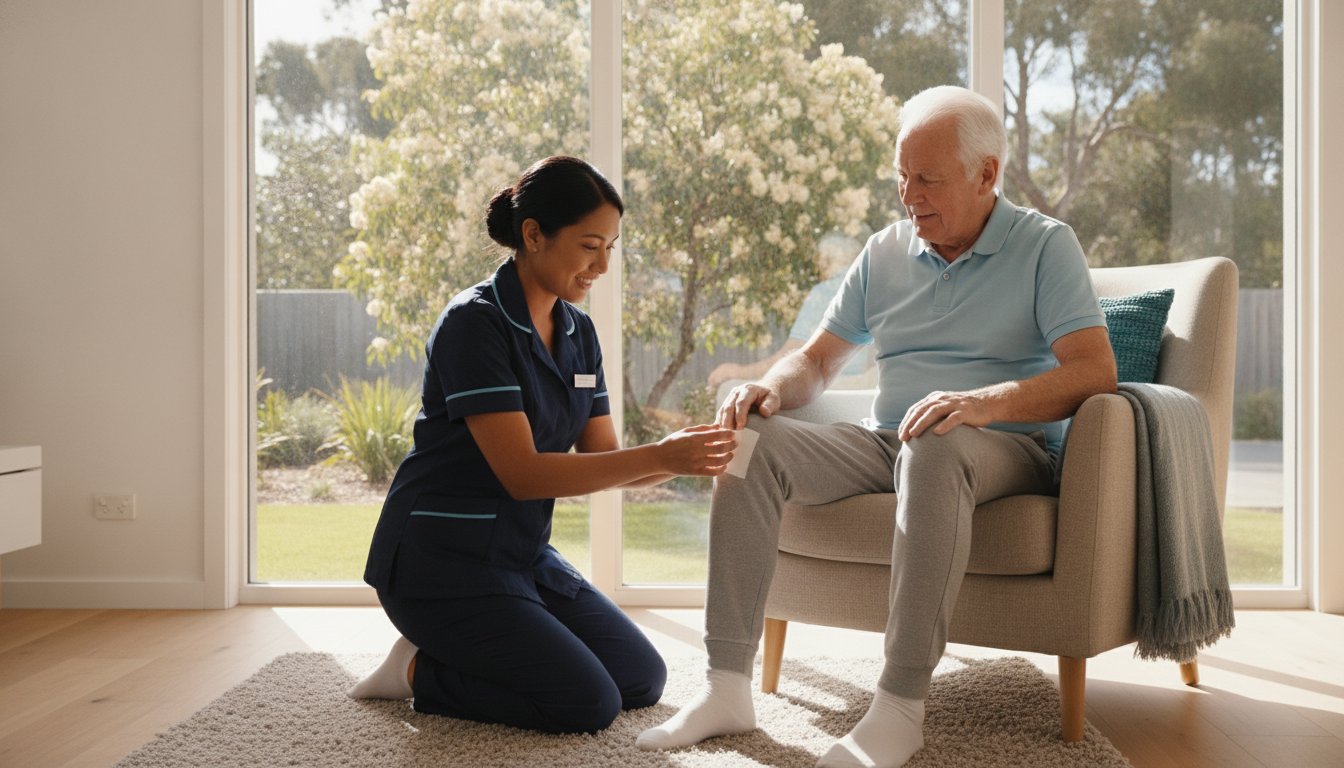
What if the most critical part of your surgical journey isn't the operation itself, but the first forty eight hours after you cross your own doorstep? For many Perth families, the transition from the highly structured environment of a hospital to the "discharge fog" of home is deeply unsettling. You want to focus on healing, yet the reality of managing complex wound dressings and intricate medication plans can feel like an overwhelming burden to carry alone. Professional nursing care after surgery at home provides the clinical expertise and steady reassurance needed to bridge this gap, ensuring your recovery is both safe and efficient.
We understand that the fear of post-operative complications is a heavy weight for any household. This guide explores how nurse led support, often funded through the new Support at Home program, helps you manage clinical risks while regaining your independence in the comfort of your own surroundings. You will discover how expert monitoring and personalised care plans can transform a stressful recovery into a period of quiet, steady progress toward health.
Key Takeaways
- Learn how professional nursing care after surgery at home minimises the risk of hospital-acquired infections and prevents avoidable readmissions.
- Understand the critical clinical tasks Registered Nurses perform, from complex wound management to the careful balance of post-operative medication.
- Discover the benefits of one-on-one professional attention that prioritises your personal dignity and comfort in a familiar environment.
- Identify the various funding pathways available to Western Australians, including the new Support at Home program and NDIS clinical support.
- Gain a step-by-step guide on how to organise your transition with hospital discharge planners to ensure support is ready before you return home.
What is Post-Operative Nursing Care at Home?
Post-operative nursing care at home is a specialised form of clinical support provided by Registered Nurses within your own residence. It begins the moment you leave the hospital ward. The primary focus is to safeguard your recovery by maintaining wound integrity and preventing complications that often lead to hospital readmission. By bringing professional expertise into the domestic setting, we ensure that the high standards of hospital care continue without the stress of a clinical environment. It provides a bridge between the acute hospital setting and your long-term independence.
This model of care encompasses more than just medical tasks. It provides a comprehensive safety net that covers acute clinical needs alongside assistance with daily living. Recovering at home often yields superior outcomes because patients tend to experience better sleep quality and higher levels of personal comfort. Additionally, the home environment significantly reduces the risk of hospital-acquired infections, such as MRSA, which are more prevalent in crowded ward settings. Including professional post-operative care in your discharge plan allows you to heal in a space where you feel most secure. It's about creating an environment where healing is the only priority.
The Critical 48-Hour Window
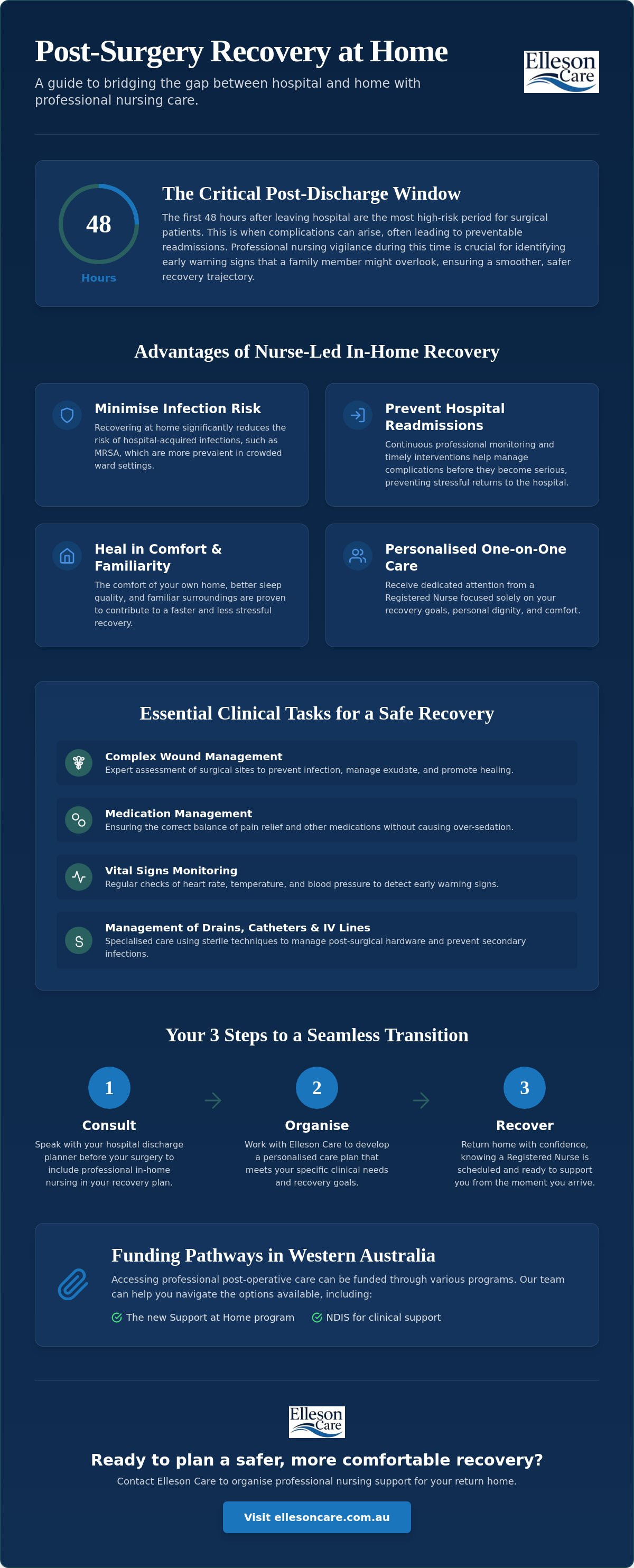
The first forty eight hours after leaving the hospital are objectively the most high-risk period for surgical patients. This is when the effects of anaesthesia fully wear off and the body begins the intensive inflammatory response required for healing. A Registered Nurse plays a vital role during this time by monitoring vital signs and identifying early warning signals, such as subtle changes in heart rate or temperature, that a family member might naturally overlook. The transition gap is the period where most preventable readmissions occur. Having professional eyes on your recovery during these initial days can be the difference between a smooth trajectory and a return to the emergency department.
Clinical vs. Domestic Support
Effective nursing care after surgery at home requires a delicate balance between clinical intervention and domestic assistance. Clinical nursing involves technical tasks like complex wound management and intravenous medication administration. Personal care, on the other hand, focuses on supporting your dignity through assistance with showering, meal preparation, and mobility. Elleson Care integrates these two streams of support for a seamless recovery experience. We believe it's essential to have a Registered Nurse oversee the entire care plan. This ensures that even non-clinical tasks are performed with your specific surgical recovery goals in mind, providing a level of safety that domestic-only care simply cannot match.
Essential Nursing Tasks for a Safe Recovery
Safe recovery relies on more than just rest. It requires a disciplined clinical approach to ensure every aspect of your healing is progressing as expected. Professional nursing care after surgery at home transforms your residence into a controlled recovery environment where clinical risks are managed with precision. This oversight is particularly important for complex procedures where the margin for error is slim. Our nurses don't just provide a presence; they provide a protective layer of clinical vigilance that family members aren't trained to offer.
Professional wound management is perhaps the most visible task, yet it's often the most misunderstood. A nurse doesn't simply change a dressing. They conduct a thorough assessment for surgical site infections (SSIs), looking for subtle signs of erythema, unusual exudate, or malodour. Early intervention in wound care can prevent a minor irritation from becoming a systemic complication. Similarly, medication management is a delicate science. We ensure your pain relief is balanced so you remain comfortable enough to participate in rehabilitation services, without the heavy sedation that increases fall risks.
Monitoring extends to systemic health as well. We provide regular checks for signs of Deep Vein Thrombosis (DVT) or respiratory issues that can arise from reduced mobility. If your surgery involved post-surgical hardware, such as drains or catheters, our nurses manage these using strict sterile techniques to prevent secondary infections. This level of technical care is essential for maintaining the integrity of the surgical site and ensuring a steady path toward health.
Specialised Clinical Support
Some recoveries require higher intensity interventions that go beyond standard check-ups. This includes managing intravenous (IV) antibiotics or fluid therapy to maintain hydration and fight infection. For patients with new abdominal surgeries, we provide stoma support and essential education to help you gain confidence in self-management. We also offer ventilator and oxygen support for those with complex respiratory needs. Our clinical support ensures these high-level tasks are performed with the same rigour you would expect in a hospital ward.
Assistance with Daily Living (ADLs)
Healing happens in the small movements of daily life. Safe transfer techniques are critical. We guide you in getting in and out of bed or a car without straining your sutures or compromising your balance. Personal hygiene support is also provided, ensuring you stay refreshed while keeping surgical sites completely dry. Nutrition and hydration are equally vital. We monitor your intake because specialised, high-protein diets are often required to provide the building blocks for tissue repair. Nursing care after surgery at home ensures these fundamental needs are met with dignity and professional care.
The Benefits of Choosing In-Home Care in Perth
Choosing nursing care after surgery at home offers distinct advantages that a busy hospital ward simply cannot replicate. While hospitals are essential for the acute phase of surgery, the recovery phase often flourishes in a more controlled, personal setting. One of the most significant clinical benefits is the drastically reduced risk of hospital-acquired infections, such as MRSA. By remaining in your own environment, you are not exposed to the diverse range of pathogens often present in communal clinical spaces. This protective measure is a cornerstone of a safe recovery.
Beyond infection control, the level of personalised attention is unparalleled. Hospital staff operate under strict ward ratios, meaning their time is divided among many patients with varying needs. In-home care provides a one-on-one relationship where your nurse is focused solely on your progress. This continuity of care ensures that the same professional team understands your specific history and can detect even the slightest deviation from your expected recovery path. The psychological impact of this stability is profound. Being in your own bed, with your own routine and the presence of family or pets, fosters a sense of normalcy that accelerates the healing process.
Lowering Hospital Readmission Rates
A primary goal of post-operative support is to ensure you don't need to return to the hospital. Early intervention is the key. A home nurse acts as a clinical advocate, identifying minor issues before they escalate into emergencies. They maintain a direct line of communication with your Perth-based surgeon or GP, ensuring that any concerns are addressed within the context of your overall health plan. Professional oversight can reduce the likelihood of 'bounce-back' hospitalisations. This proactive management keeps your recovery on track and provides a clear, documented history of your progress for your medical team.
Emotional Peace of Mind for Families
The transition home often places a heavy 'carer burden' on family members. Most relatives are not trained in clinical observation or wound management, which can lead to significant anxiety. Professional nursing care relieves this pressure, allowing family members to focus on providing emotional support rather than clinical tasks. We provide a steady point of contact for anxious relatives, answering questions with clinical authority and empathy. This establishes a sense of routine and stability during what is often a very stressful time for the entire household.
How to Organise and Fund Post-Surgery Care in WA
Organising nursing care after surgery at home is a process that is best managed with foresight and clear communication. The transition from hospital to home is most successful when the clinical safety net is already in place before you are discharged. To achieve this, we recommend five essential steps for Perth families. First, consult your surgeon or hospital discharge planner at least two weeks before theatre. This ensures your medical team is aligned with your home care goals. Second, identify your specific funding pathway. Whether you are using NDIS, DVA, or a Home Care Package, knowing your budget allows for a more realistic care plan. Third, contact a local provider such as Elleson Care for a preliminary assessment. This allows us to understand your clinical needs and home environment. Fourth, customise your care plan based on the specific procedure. For instance, orthopaedic recovery often focuses on mobility and pain management, while cardiac recovery may require intensive monitoring of vitals. Finally, ensure your home is 'recovery ready' with necessary aids like shower chairs or temporary ramps.
Funding Pathways: NDIS, DVA, and Aged Care
Navigating the financial side of recovery can feel complex, but several pathways exist to support Western Australians. NDIS participants can often utilise 'Core Supports' to fund post-operative nursing if it relates to their disability needs. For our Perth veterans, DVA (Department of Veterans' Affairs) nursing services provide a dedicated stream of clinical support. Many seniors also utilise their funding to access temporary high-needs clinical care, which is particularly relevant under the current Support at Home program guidelines. If you are unsure which pathway applies to your situation, we can help you explore your funding options to ensure you receive the support you deserve.
Preparing Your Home Environment
A safe clinical recovery is only possible in a safe physical environment. Before you return home, it's vital to remove common trip hazards such as loose rugs or electrical cords. These small obstacles can lead to significant setbacks during the early stages of recovery when your balance may be compromised. We often suggest setting up a 'recovery station' on the ground floor. This avoids the need for stairs and keeps all your essentials, from medications to hydration, within easy reach. Ensuring easy access for visiting nursing services is also important. A clear, well-lit entry and a dedicated space for clinical tasks allow your nurse to focus entirely on your care, ensuring every visit is efficient and effective. Taking these steps before your surgery date provides the stability needed for a calm and focused healing period.
Why Elleson Care is Perth's Choice for Post-Op Support
Elleson Care stands as a trusted partner for families seeking nursing care after surgery at home. We bring a high level of clinical authority tempered with genuine human warmth to every household we serve. Our leadership team consists of Registered Nurses with over 22 years of clinical experience, ensuring that every care plan is built on a foundation of evidence-based practice. Being West Australian owned and operated gives us a unique advantage. We understand the specific nuances of the Perth healthcare landscape and maintain strong professional relationships with local hospital systems. This local knowledge allows us to facilitate a seamless transition from the ward to your living room, ensuring no critical clinical information is lost in the process.
We take a holistic approach that extends beyond the surgical site. While managing your clinical needs is our priority, we also recognise the emotional toll recovery takes on the entire family unit. We don't just treat the wound; we support the person and their loved ones. By coordinating directly with your hospital discharge team, we ensure that the bridge between hospital protocols and home independence is stable and secure. It is this combination of technical proficiency and advocacy that makes us a reliable presence during your recovery journey.
Our Person-Centred Care Philosophy
Our philosophy is rooted in the belief that every individual deserves to be treated with profound respect. We tailor our support to meet your specific cultural needs and personal preferences, ensuring that your daily routine remains as familiar as possible. Maintaining dignity and autonomy is a core component of the in-home aged care process. Our team facilitates the practicalities of daily living so you can dedicate your energy entirely to the healing process. It's about providing the right level of help at the right time, always delivered with a kind and disciplined hand.
Ready to Plan Your Recovery?
The most effective recoveries are those planned well in advance. Booking a pre-surgery consultation allows us to identify potential challenges and establish a clinical roadmap before you even enter the theatre. This proactive step significantly reduces the "discharge fog" and stress often felt on the day you leave the hospital. We work in a multi-disciplinary way, coordinating closely with your GP and allied health team to ensure every aspect of your health is monitored. If you are preparing for an upcoming procedure, contact Elleson Care today to discuss your post-surgery nursing needs and discover the peace of mind that comes with professional, nurse-led support.
Securing Your Path to Full Independence
The transition from a hospital ward to your own front door marks a significant milestone in your recovery, but it shouldn't be a journey you take alone. By choosing professional nursing care after surgery at home, you ensure that clinical safety and personal comfort go hand in hand. We have explored how expert monitoring in those first critical days prevents complications and how tailored support through NDIS, DVA, or Aged Care funding makes this high-level care accessible for Perth families.
As a West Australian owned and operated provider, Elleson Care is dedicated to upholding the highest standards of clinical integrity. Our nurse-led team brings over 22 years of experience directly to your bedside, providing the specialised oversight necessary for a steady and dignified healing process. We are here to act as your clinical advocates, bridging the gap between hospital protocols and your long-term well-being. If you are preparing for an upcoming procedure, we invite you to book a clinical consultation for your post-surgery recovery. Taking this step today ensures your home is a place of true healing tomorrow. We look forward to supporting your return to health.
Frequently Asked Questions
Does Medicare cover private nursing care at home after surgery?
Medicare typically does not provide direct funding for private in-home nursing services. While it covers essential clinical treatments within the public hospital system, post-discharge support is usually funded through other pathways. These include the Commonwealth’s Support at Home program for seniors, NDIS plans, or Department of Veterans’ Affairs (DVA) arrangements. Some private health insurance policies may also offer rebates for short-term nursing care after surgery at home, depending on your level of cover and the specific procedure performed.
How long does post-operative nursing care usually last?
The duration of support is entirely dependent on the complexity of your procedure and your individual healing rate. For minor surgeries, professional oversight might only be necessary for the first seven to ten days to manage wound integrity. However, major orthopaedic or cardiac recoveries often require a more extended period of clinical monitoring, sometimes spanning several weeks. We work with you to adjust the frequency of visits as you regain your strength and independence.
Can I use my NDIS funding for nursing care after a hospital stay?
NDIS participants can certainly utilise their funding for post-operative nursing if the support is deemed reasonable and necessary for their disability management. This clinical support typically falls under 'Core Supports' or 'Health Related Disability Supports'. It is important to discuss your upcoming surgery with your NDIS coordinator or plan manager early to ensure your budget is allocated correctly, allowing for a seamless transition from the hospital ward back to your home environment.
What is the difference between a Registered Nurse and a support worker for post-op care?
The primary difference lies in the level of clinical training and the scope of practice. A Registered Nurse (RN) is a university-educated professional qualified to perform complex clinical tasks such as wound debridement, medication titration, and acute symptom monitoring. A support worker provides essential assistance with daily living, such as showering and meal preparation. For a safe recovery, we recommend a nurse-led model where an RN oversees the entire care plan to ensure clinical safety.
What should I do if I think my surgical wound is infected at home?
You should contact your nurse, GP, or surgeon immediately if you observe signs of infection such as increased redness, warmth, or unusual discharge from the wound. Early detection of a surgical site infection (SSI) is critical to preventing hospital readmission. If you have professional nursing care after surgery at home, your nurse will perform a clinical assessment of the site during every visit, identifying subtle warning signs before they become serious medical emergencies.
Can Elleson Care help with transport home from the hospital in Perth?
Elleson Care focuses on providing clinical and personal support rather than acting as a dedicated transport service. However, we play a vital role in the transition process by coordinating with hospital discharge planners to ensure someone is ready to receive you at home. Our team can be present at your residence the moment you arrive to assist with settling you in, managing your initial medications, and ensuring your environment is safe.
Do I need a referral from my surgeon to start home nursing care?
A formal referral is not a legal requirement for private nursing services, but it is highly beneficial for your recovery. Having a clear line of communication between your surgeon and your home nursing team ensures that your care plan follows the specific clinical protocols intended for your procedure. We prefer to work closely with your medical team to ensure that every task we perform supports the long-term goals set by your surgical specialist.
What surgeries most commonly require professional home nursing?
Procedures involving significant physical trauma or complex wound management most frequently require professional support. This includes total hip or knee replacements, spinal surgeries, and major abdominal or cardiac operations. Additionally, any surgery that requires the use of post-operative drains, catheters, or intravenous antibiotics usually necessitates the technical expertise of a Registered Nurse. These cases carry a higher risk of complications that professional monitoring can help mitigate, ensuring a more predictable path to health.


