

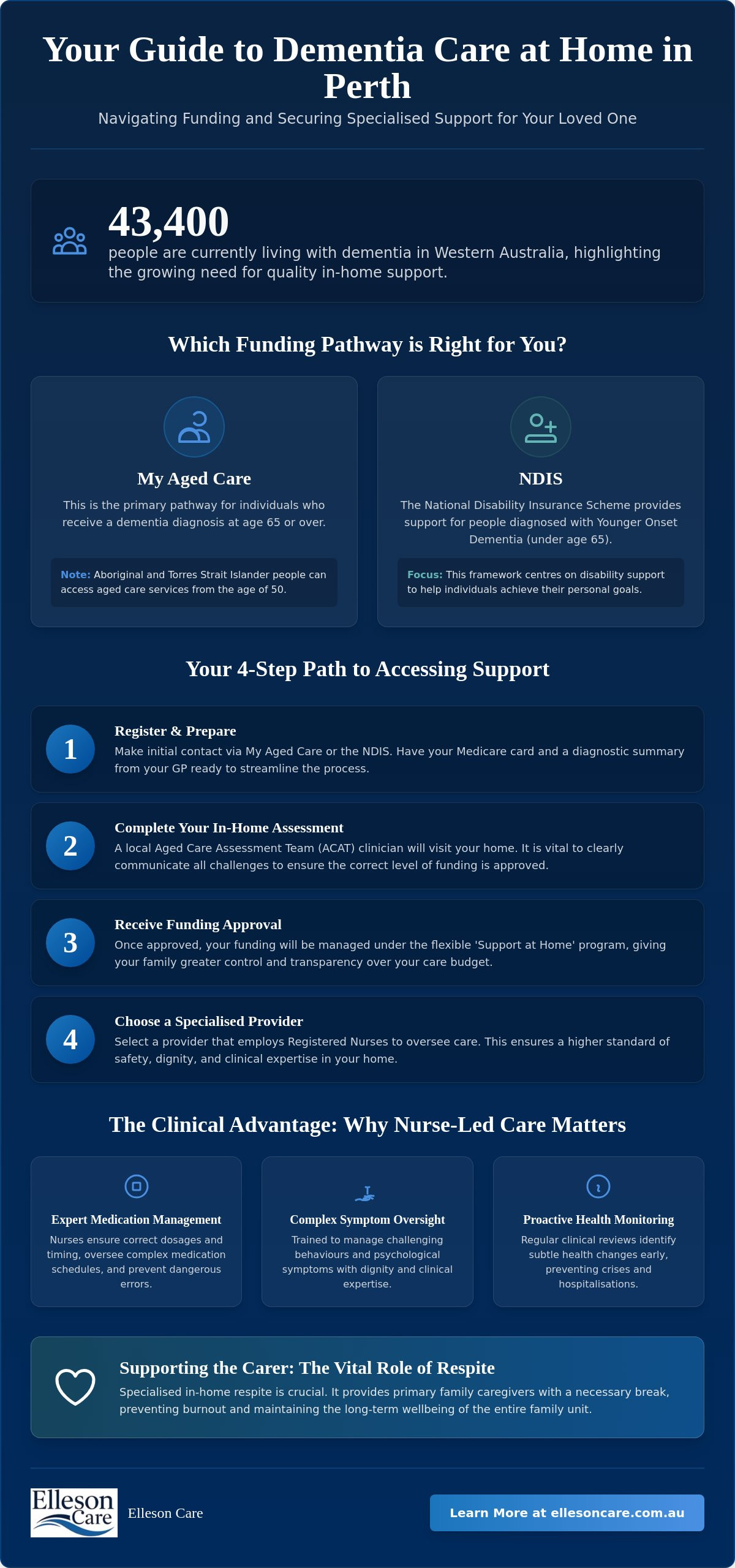
With an estimated 43,400 people currently living with dementia in Western Australia, the pressure on families to provide high-level clinical support at home has never been more intense. Many families feel a profound sense of duty to avoid residential facilities, yet they often struggle with the practicalities of accessing dementia care at home Perth while navigating the confusion between My Aged Care and NDIS pathways. It's a heavy burden to carry alone, particularly when you're worried that home-based support might not be medical enough to manage late-stage symptoms.
We recognise that you want more than just a visitor; you need a partner who understands the clinical nuances of cognitive decline. This guide offers a clear roadmap to help you secure specialised, nurse-led support that maintains your loved one's dignity without sacrificing your own health to carer burnout. You'll learn how to navigate the new Support at Home program funding and understand how professional clinical oversight can be integrated into a domestic setting. We'll show you how to build a sustainable care environment that provides both expert medical safety and the enduring peace of mind your family deserves.
Key Takeaways
- Navigate the distinct differences between Ageing-Related and Younger Onset Dementia to ensure your family accesses the correct federal funding pathway.
- Follow a clear, professional roadmap for accessing dementia care at home Perth by correctly preparing for your face-to-face My Aged Care or NDIS assessment.
- Understand the clinical benefits of Registered Nurse oversight for managing complex behavioural symptoms and medication requirements safely within a domestic setting.
- Recognise the vital role of specialised in-home respite in preventing carer burnout and maintaining the long-term wellbeing of the primary family caregiver.
- Learn how a local, nurse-led approach provides a higher standard of safety and dignity for families navigating the challenges of progressive cognitive decline.
Understanding the Dementia Care Landscape in Perth
The experience of Dementia in Australia is deeply personal, yet the systems designed to support it often feel clinical and detached. In Western Australia, approximately 43,400 people are currently living with dementia, a figure that requires a robust and integrated response from both state health services and federal funding bodies. For families across the Perth metropolitan area, from the northern suburbs to the Peel region, the first challenge is often simply knowing where to turn for help. The landscape is changing rapidly, shifting away from institutionalised care toward a model that prioritises clinical safety within the comfort of your own home.
Local Aged Care Assessment Team (ACAT) professionals act as the essential bridge in this process. These Perth-based clinicians visit your home to evaluate specific needs, ensuring that the level of funding matches the clinical reality of the diagnosis. This local expertise is vital because it respects the "person-centred" approach that West Australians value. By maintaining a familiar routine in a known environment, we can significantly reduce the distress and confusion often associated with cognitive decline. When you begin the process of accessing dementia care at home Perth, you aren't just looking for a service; you're looking for a way to preserve a way of life.
My Aged Care vs. NDIS: Which Pathway is Yours?
Eligibility for funding is primarily determined by age and the timing of the diagnosis. Most Australians will access support through My Aged Care once they reach 65. However, for those diagnosed with Younger Onset Dementia, the NDIS provides a different framework focused on disability support for individuals under 65. It is also important to note that Aboriginal and Torres Strait Islander people can access aged care services from the age of 50. Identifying the correct pathway early is crucial, as the NDIS and Aged Care systems have different assessment criteria and reporting requirements. Choosing the wrong stream can lead to significant delays in receiving clinical nursing support.
The Support at Home Program in 2026
The transition to the Support at Home program represents the most significant reform to Australian aged care in decades. This new model, which fully replaced Home Care Packages in late 2025, offers a more flexible, budget-based approach to care. For Perth families, this means greater transparency regarding service costs and more direct control over how clinical funds are spent. We strongly recommend seeking a face-to-face assessment as early as possible. Proactive planning prevents the "crisis-driven" decisions that occur when a primary carer becomes overwhelmed, allowing for a smoother transition to professional nurse-led support before a hospitalisation or emergency occurs.
Step-by-Step: How to Access Dementia Support Funding
Securing financial support is the most critical hurdle for families. The process begins with a formal registration through My Aged Care for those over 65, or the NDIS for younger individuals. This initial contact triggers the assessment process, which is essential for accessing dementia care at home Perth. You'll need your Medicare card and a summary of the diagnosis from your GP or geriatrician ready before you call. Once registered, a local assessor will contact you to arrange a visit to your home to determine your specific clinical and domestic requirements.
Choosing a provider is the final step once your funding is approved. It's vital to select an organisation that demonstrates a deep understanding of clinical dementia care rather than just general domestic assistance. You should look for providers who employ Registered Nurses to oversee care plans, as they can identify subtle changes in health that a general support worker might miss. Regular reviews of these care plans ensure the support evolves alongside the progression of the condition, keeping your loved one safe as their needs become more complex.
Preparing for Your ACAT Assessment
The face-to-face assessment is your opportunity to advocate for the level of care your loved one truly requires. It's helpful to have a list of current medications and a diary of recent behavioural changes ready for the clinician. Many families fall into the trap of presenting the "best version" of their loved one during the visit. Instead, you must clearly communicate what happens on the most difficult days, such as episodes of wandering, confusion, or nocturnal distress. Having a family member or a professional advocate from the Carer Gateway present can provide the emotional support needed to speak candidly about these challenges without feeling like you're betraying your loved one's dignity.
Navigating Home Care Package Levels
While families have traditionally navigated Home Care Package levels 1 through 4, the current Support at Home program has expanded this into eight distinct classification levels to provide more granular support. Level 1 and 2 classifications remain focused on basic domestic assistance, but for those with advanced dementia, classifications equivalent to the old Level 3 and 4 are essential. These higher tiers provide the necessary budget for specialised nursing hours and vital assistive equipment. If you're currently on a lower level and notice a decline in safety or health, you can request a re-assessment to move to a higher tier. If you're unsure which level applies to your current situation, speaking with the team at Elleson Care can help clarify the clinical requirements for each stage of support.
The Clinical Advantage: Why Nurse-Led Dementia Care Matters
Dementia care is often framed as a social service, focusing primarily on companionship and light domestic help. While these elements are important for quality of life, they don't address the medical complexities that arise as cognitive decline progresses. Accessing dementia care at home Perth requires a higher level of clinical vigilance to manage symptoms like "sundowning," where confusion and agitation increase during the late afternoon and evening. Registered Nurses bring a level of expertise that goes beyond basic caregiving, allowing them to monitor medication efficacy and identify early signs of infection that could otherwise lead to a hospital admission.
Clinical oversight is particularly vital when managing co-morbidities. Many individuals living with dementia also navigate chronic conditions such as diabetes, hypertension, or complex wound care needs. A nurse-led approach ensures that these health issues aren't sidelined. By having professional medication administration and monitoring, families can rest assured that dosages are correct and potential side effects are managed proactively. This clinical safety net allows your loved one to remain in a familiar environment while receiving a standard of care typically reserved for a hospital setting.
Specialised Nursing Interventions
As the condition moves through different stages, nursing services must adapt to meet changing physical requirements. For clients with limited mobility, professional wound management and pressure injury prevention become essential to maintaining skin integrity and comfort. In Western Australia, patients over 65 with dementia account for over 11,000 hospital bed days per month. High-quality clinical assessments at home are the most effective way to reduce these numbers, as nurses can treat minor health concerns before they escalate into emergencies. This proactive stance preserves the individual's dignity and prevents the distress caused by unnecessary transfers to busy emergency departments.
A Holistic Approach to Wellbeing
True clinical excellence integrates medical safety with a focus on daily wellbeing. This involves coordinating with allied health professionals, such as physiotherapists and occupational therapists, to maintain physical strength and home safety. Simple adjustments to nutrition, hydration, and sleep hygiene can significantly reduce the frequency of behavioural outbursts. Creating a "dementia-friendly" environment is also a key part of this strategy. By improving lighting, removing trip hazards, and establishing clear visual cues, we can help your loved one navigate their home with greater confidence. This holistic view ensures that every aspect of the home environment supports cognitive health and emotional stability.
Supporting the Carer: Respite and Family Wellbeing
Caring for a loved one with dementia is an act of profound devotion, but it is also physically and emotionally taxing. The role of a primary carer is often a 24-hour commitment that leaves very little room for personal wellbeing or rest. While the focus is naturally on the person living with the condition, the health of the family unit is equally vital to a successful long-term care strategy. Recognising the early signs of carer burnout, such as persistent fatigue, social withdrawal, or a sense of being overwhelmed by clinical tasks, is the first step toward building a sustainable support system.
Accessing dementia care at home Perth isn't just about clinical tasks for the patient; it's about providing the primary carer with the space to breathe. Free services like the McCusker Nurse Service offer invaluable navigation support for local families, but hands-on clinical respite provides the physical break needed to prevent burnout. By building a "care circle" that incorporates professional nursing support, you ensure that no single person carries the entire weight of responsibility. This professional intervention allows you to step back from being a "medical provider" and return to your role as a daughter, son, or spouse, which is essential for maintaining your own mental health.
In-Home Respite: Keeping Routines Intact
For many individuals living with cognitive decline, the familiarity of their own home provides a sense of security that is easily shattered by a move to a residential respite centre. In-home respite care in Perth allows these vital daily routines to remain undisturbed. Having a Registered Nurse visit the home means that complex clinical needs are met while the primary carer takes a necessary "recharge" period. Whether you need a few hours to attend your own medical appointments, catch up on sleep, or simply enjoy a quiet afternoon, these sessions are tailored to your family's specific schedule. This consistency reduces the "transfer trauma" and confusion often associated with temporary residential stays.
Education and Advocacy for Perth Families
Confidence often comes from knowledge and the right support network. Part of a nurse-led approach involves coaching family members in de-escalation techniques that help manage challenging behaviours with grace and patience. We believe in the "Compassionate Expert" model, where our clinicians share their expertise to empower you in your caregiving journey. Beyond the home, we encourage families to connect with local Perth support groups and dementia-friendly communities to share experiences and reduce the sense of isolation. If you feel you are reaching the limits of what you can manage alone, contact our clinical team to discuss how professional respite can support your family's wellbeing.
Elleson Care: Your Partner in Specialist Dementia Support
Elleson Care stands as a local pillar for families who prioritise clinical integrity alongside personal comfort. As a West Australian owned and operated organisation, we hold a deep commitment to the families of Perth. We understand that the process of accessing dementia care at home Perth is about more than just filling a roster; it is about finding a reliable partner who respects the history and personality of the individual. Our approach is fundamentally holistic. We ensure that we treat the person behind the diagnosis while providing a stable, familiar presence through consistent caregiving teams. This consistency is the bedrock of trust, allowing our clients to feel safe with familiar faces who understand their specific preferences and needs.
The Elleson Difference: Clinical Excellence at Home
Our leadership is rooted in over 22 years of clinical nursing experience, a foundation that informs every care plan we develop. This level of expertise is essential for bridging the gap between hospital-grade medical safety and the warmth of a family home. At Elleson Care, our Registered Nurses oversee all clinical support services, ensuring that dignity and safety are never compromised. Whether we are providing NDIS support services or aged care services, our commitment to culturally sensitive and person-centred care remains absolute. We focus on evidence-based practices that promote stability and reduce the distress often associated with cognitive changes. We believe that professional nursing shouldn't feel clinical or cold. Instead, it should provide a quiet, steady confidence that empowers the whole family.
Start Your Journey with a Local Expert
Navigating the complexities of the Australian health system can be daunting, particularly when your family is already under significant stress. We offer more than just nursing; we provide advocacy and guidance through the entire application process. Our Perth-based clinical team can assist you in understanding the requirements for My Aged Care or NDIS funding, ensuring you receive the classification level that reflects your true needs. By booking an initial consultation, you can gain a clear understanding of how professional oversight can be integrated into your loved one's daily life without disrupting their sense of independence. We work alongside you to create a sustainable environment where clinical needs are met with kindness and professional discipline. Our goal is to ensure you feel fully informed and respected throughout every stage of your journey.
Contact Elleson Care today to discuss a tailored dementia support plan
Creating a Sustainable Future for Your Family
Choosing to support a loved one through cognitive decline is a journey of immense love and significant challenge. By understanding the funding landscape and the clinical benefits of professional nursing, you can move away from the stress of crisis-driven decisions toward a structured, reliable care environment. When you begin the process of accessing dementia care at home Perth, you are choosing to prioritise your loved one's familiar surroundings while ensuring their complex medical needs are met with precision and dignity.
As a WA owned and operated provider with over 22 years of clinical experience, we specialise in the complex home care requirements that late-stage dementia demands. Our nurse-led leadership ensures that every care plan is technically proficient and fundamentally kind, providing the stability your family needs. You don't have to carry the burden of care alone; professional support is available to protect both your loved one's wellbeing and your own. Take the first step toward a more sustainable care routine today.
Speak with a Registered Nurse about Dementia Support in Perth
Frequently Asked Questions
How do I get an ACAT assessment for dementia in Perth?
You can initiate an ACAT assessment by registering with My Aged Care online or by calling their national helpline. A referral from your GP can also provide the necessary clinical context to help the assessors understand the urgency of your situation. Once you are registered, a local Perth-based assessor will contact you to arrange a face-to-face evaluation in your home. This assessment is the essential first step in determining your eligibility for government-subsidised support through the Support at Home program.
Can I get dementia care at home if I only have a Level 2 Home Care Package?
You can access support with a Level 2 package, but the funding may be insufficient to cover the intensive clinical nursing often required for advanced symptoms. While this level provides basic domestic assistance and social support, it rarely covers daily professional nursing oversight. If you find your loved one's needs are increasing, you should request a re-assessment to move to a higher classification level. This ensures you have an adequate budget for accessing dementia care at home Perth that includes specialised clinical interventions.
What is the difference between a dementia support worker and a Registered Nurse?
A Registered Nurse provides clinical leadership and medical management that a support worker is not qualified to deliver. While support workers assist with daily living tasks and companionship, nurses manage complex symptoms like "sundowning" and oversee professional medication administration. Having a nurse-led team means that subtle changes in health or skin integrity are identified early, significantly reducing the risk of emergency hospitalisations. This clinical oversight is vital for maintaining medical safety as the condition progresses through different stages.
Is there specific NDIS funding for younger-onset dementia in Western Australia?
Yes, individuals diagnosed with dementia before the age of 65 can access support through the National Disability Insurance Scheme (NDIS). In Western Australia, the NDIS focuses on providing supports that help younger people maintain their independence and continue participating in their community. This pathway is distinct from the aged care system and requires specific evidence of how the diagnosis impacts daily functioning. It provides a vital safety net for the estimated 2,900 people living with young onset dementia across the state.
How long is the waitlist for dementia-specific home care in Perth?
Wait times for government-funded packages can vary, often ranging from several months to over a year depending on the required level of support. While you wait for a Support at Home budget to be assigned, you can choose to access private clinical services to ensure safety isn't compromised. Accessing dementia care at home Perth through private funding allows you to start professional nursing support immediately. This proactive approach prevents the family from reaching a point of crisis while waiting for government administrative processes to conclude.
Can dementia care at home prevent my loved one from going into a nursing home?
In-home clinical care can significantly delay or even prevent the need for residential aged care by managing complex symptoms within a familiar environment. By establishing a nurse-led routine, families can manage behavioural and medical needs that might otherwise trigger a move to a facility. The goal of professional home care is to provide a high level of clinical safety while allowing your loved one to retain their personal dignity. Maintaining a known routine in a familiar setting is often the best way to reduce confusion and distress.
What local Perth resources are available for dementia carers?
Perth families can access several local supports, including the McCusker Nurse Service, which offers free education and navigation assistance for carers in the metropolitan area. The Carer Gateway provides a central point for respite services and emotional support specifically for West Australians. Additionally, local support groups and dementia-friendly communities offer opportunities for social connection and shared experience. These resources help build a robust "care circle" that supports the wellbeing of the primary family caregiver alongside the individual living with dementia.
Does Elleson Care provide 24/7 nursing support for advanced dementia?
You should discuss your specific scheduling requirements with our clinical team to determine the most appropriate level of support for your family's situation. While we specialise in high-level clinical support and aged care services, the frequency and duration of nursing visits are tailored to each individual's care plan and funding budget. We focus on providing consistent, professional oversight that ensures safety during the most challenging periods of the day. Our Registered Nurses work with you to create a sustainable roadmap for managing advanced dementia care at home.


