

Family care can be essential, but the NDIS generally treats help from relatives as unpaid informal support. A family member may be paid only in exceptional circumstances, with written approval before providing support. If you’re asking, “Can I pay my family to be my carer under the NDIS?”, the usual answer is no.
It’s understandable to want support from someone you already trust, particularly when care is personal or suitable services are difficult to access. This guide explains when paid support from a family member may be approved, why the NDIS usually restricts these arrangements, and what a request needs to demonstrate.
You’ll also learn how unpaid family help can work alongside professional support, keeping the participant’s needs and goals central while relatives contribute in ways that suit them.
Key Takeaways
- Paid support from a relative is an exception, and written approval is needed before the arrangement begins.
- Explain why the arrangement is necessary, how it supports the participant’s goals and why other suitable support options aren’t appropriate.
- Keep in mind that everyday family assistance is generally treated as informal support, not paid NDIS support.
- Consider how professional services can address specific support needs while family members continue to provide suitable unpaid help.
Can a Family Member Be an NDIS Support Worker?
The NDIS generally expects relatives and friends to provide informal, unpaid support. A family member may be paid only in exceptional circumstances, with written NDIA approval. If you’re asking, “Can I pay my family to be my carer under the NDIS?”, the key issue is approval, not simply whether funding is available.
Approval for Paid Family Support
Approval allows a relative to provide defined, paid support as a formal support worker. The NDIA considers each request individually. Explain why the arrangement is necessary, how it supports the participant’s goals, and why other reasonable options aren’t suitable. Include relevant professional evidence and explain how the arrangement will be reviewed or transitioned. Obtain written approval before paid work starts.
Limits on Paying Relatives
Informal support is help from family, friends or community members that is reasonably expected without payment. Everyday help from family is often treated as informal support rather than paid formal support. A relative’s role must involve clearly defined support, not ordinary household tasks or emotional support alone. A family member who lives with the participant and is financially dependent on them cannot be hired as their support worker.
Eligibility and Worker Preferences
The NDIS generally expects paid support to come from professional providers or independent support workers. A relative seeking paid work must meet the training and eligibility requirements for a formal worker. For an agency-managed plan, an approved family member must also meet applicable NDIS registration requirements. A support coordinator can help identify gaps and suitable options that align with the participant’s goals.
Rates, Funding and Review Requests
Being related doesn’t determine a support worker’s rate. Payment must be for approved formal support and managed within the participant’s plan funding. To request approval, explain the need, the participant’s goals, why other options aren’t suitable, and provide professional evidence. If you’re considering whether you can pay your family to be your carer through the NDIS, remember that written approval must come first. After a refusal, possible next steps include requesting an internal review or applying to the Administrative Appeals Tribunal.
Circumstances where family payments may be approved
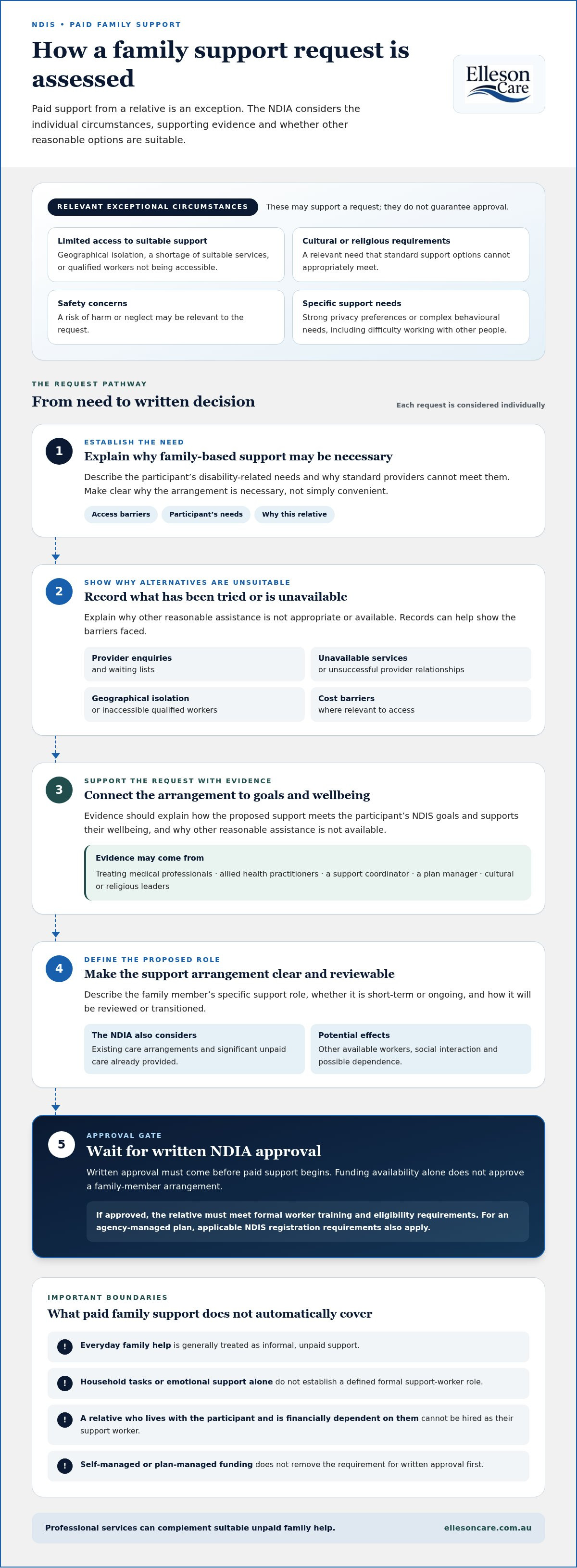
The NDIA considers paid family support in exceptional circumstances, not as a replacement for ordinary informal care. Written approval is required before a family member starts providing paid support under the NDIS plan.
Exceptions may include geographical isolation, a shortage of suitable support services, cultural or religious requirements, or a risk of harm or neglect. A participant’s strong privacy preferences may also be relevant, particularly if a family member can respect them and other options are unsuitable. Complex behavioural needs, including difficulty working with other people, may also be considered.
Explain the participant’s disability-related needs and why standard providers can’t meet them. Evidence should show how the arrangement supports the participant’s NDIS goals and wellbeing, and why other reasonable assistance isn’t available. Relevant evidence may come from treating medical professionals, allied health practitioners, a support coordinator, a plan manager, or cultural or religious leaders.
Make the request specific. Describe the family member’s proposed role, whether it is short-term or ongoing, and how it will be reviewed or transitioned. The NDIA also considers existing care arrangements, significant unpaid care already provided, other available workers, and possible effects on social interaction or dependence.
Keep records showing barriers to other support, such as provider enquiries, waiting lists, unavailable services, unsuccessful provider relationships, geographical isolation or cost barriers. For example, a family member’s availability in a remote community may be relevant if qualified workers aren’t accessible. These details help demonstrate why family-based assistance is necessary, rather than simply convenient.
Written NDIA approval must come before paid support begins. A participant can discuss evidence and support options with a coordinator, while professional NDIS support services may complement suitable unpaid family help.
Reasons family members generally cannot be paid
The NDIS generally treats help from relatives and friends as informal support, expected without payment. This reflects the everyday practical and emotional assistance often provided within family relationships, rather than a formal support-worker role. Family members include parents, siblings, partners, children and close relatives directly related to the participant.
Paying a relative can blur the boundaries between family life and paid support. Household help or emotional encouragement alone, for example, doesn’t establish a formal support arrangement. The NDIS expects funded support to be clearly defined, accountable and delivered to an appropriate standard. A family member who lives with the participant and is financially dependent on them cannot be hired as their support worker.
A relative may understand the participant’s communication, privacy preferences, cultural needs and routines. These benefits don’t automatically make payment appropriate. The NDIA also considers whether paid family support could increase dependence or reduce social interaction. Professional workers can offer a separate relationship and help participants access support beyond their immediate family.
Self-managed or plan-managed funding doesn’t remove the requirement to get approval before engaging a family member as a paid supporter. The NDIA must approve the arrangement in writing first. For agency-managed plans, the approved worker must also meet applicable NDIS registration requirements.
Employment can affect family relationships and bring practical responsibilities. Before proceeding, consider tax and employment obligations, training, performance management, accountability, clear role boundaries and backup support. Weigh the family member’s health, other commitments and career goals against changing support needs. For example, relying on one relative without backup may make the arrangement difficult to sustain if their circumstances change.
These considerations help distinguish a formal paid role from informal family care. The central question is whether the arrangement meets the participant’s support needs while maintaining appropriate standards and healthy relationships.
Combining family help with professional services
Family members and professional providers can contribute different forms of disability support. In an NDIS plan, clear roles help coordinate practical assistance, therapeutic learning and family involvement without treating every family task as paid work.
A relative might share communication preferences or help the participant prepare for appointments and transport. They can also learn about disability awareness, manual handling, mobility assistance and communication strategies. These skills can support safer, more informed informal care at home. Family training can support a relative’s role, but doesn’t make their assistance paid NDIS support.
Professional support can address needs that call for a defined service. For example, a support worker may assist with daily living, while an allied health professional provides therapy. Physiotherapists, occupational therapists and speech pathologists can each contribute to different goals. A support coordinator can help connect a participant with suitable providers and organise how supports work together.
Consider a participant who needs help with daily routines and therapeutic learning. A family member may offer familiar communication and encouragement, while a professional worker supports daily living tasks. An allied health practitioner can focus on therapy. If a family member is approved as a paid support worker, document their formal duties separately from ordinary family help.
Clear boundaries matter. Set out who provides each type of assistance, how information is shared, and what happens when someone is unavailable. Review the arrangement as the participant’s disability support needs or goals change. This can preserve valued family involvement while giving professional support a distinct, accountable role.
For support that complements family involvement, explore NDIS support services suited to the participant’s needs.
An NDIS plan can describe family members’ informal assistance alongside professional services, but ordinary family tasks and family training aren’t paid NDIS support. If a family member is approved as a paid support worker, document their formal duties separately from their usual family help.
Elleson Care: Aged Care Services
Elleson Care can help participants and families consider how professional support may complement informal family care. Its NDIS Support Services and Clinical Support can contribute to a broader arrangement shaped around the participant’s needs.
This may be useful when relatives provide familiar day-to-day assistance while professional services support other disability-related needs. Clear roles help families distinguish informal assistance from professional support. Any request to pay a family member must still follow the NDIA approval process.
If you’re considering how professional support could fit alongside family help, contact Elleson Care to discuss your needs.
Plan a support arrangement that can adapt
Use your next planning conversation to clarify what support would help the participant live with greater choice and independence. Consider which responsibilities family members can sustain, what the participant wants to manage themselves, and where a consistent professional relationship could help. These priorities may change as circumstances, goals and support needs develop.
If you’re still asking, “Can I pay my family to be my carer under the NDIS?”, focus the discussion on the participant’s needs and the evidence for the proposed arrangement. A clear account of what works, what remains difficult and what the participant wants to achieve can make the next conversation more focused.
Elleson Care can be part of that conversation as you consider support that respects the participant’s preferences and family relationships. Contact Elleson Care to discuss your support and consider a way forward that feels practical and person-centred.
Frequently Asked Questions
What is informal support?
Informal support is unpaid assistance from family, friends or people in a participant’s community. It may include a relative helping with meal preparation, a friend accompanying someone to an appointment, or community members offering practical help. This is part of everyday relationships, not a paid professional service. Planning discussions can identify where informal assistance ends and formal support may be needed.
Need Help Navigating Family-Provided Supports?
A support coordinator can help map out who provides each type of assistance and where needs remain unmet. For a participant in Perth, this could mean listing family help with daily routines separately from professional support for personal care or community access. Bring a clear description of the participant’s goals and current arrangements to the discussion. This can make gaps and possible next steps easier to identify.
Can NDIS participants pay family members to provide support or care?
Sometimes, but paying a family member is an exception and requires written NDIA approval before the paid arrangement begins. Managing the plan yourself or through a plan manager doesn’t remove that requirement. For example, a participant shouldn’t treat regular help from a relative as paid support just because funding is available. The request needs to explain the participant’s needs and why the arrangement is necessary.
Which family members can be paid as NDIS support workers?
Parents, siblings, partners, children and close relatives may be considered, but no relationship automatically qualifies someone for paid work. The NDIA assesses the proposed arrangement in the participant’s circumstances. A relative must provide defined formal assistance and meet the eligibility and training requirements for a support worker. For agency-managed funding, the approved family member must also meet applicable NDIS registration requirements.
What NDIS rules apply to paying a family member who lives with the participant?
A family member who lives with the participant and is financially dependent on them cannot be hired as their support worker. Living arrangements and financial circumstances may be relevant when considering a family member’s role. Describe the living arrangements and proposed worker’s role accurately in any request. Written approval is still required before a family member provides paid support.
What are the tax, employment, insurance and conflict-of-interest risks of hiring a family member under the NDIS?
Consider tax and employment responsibilities, performance management, accountability, and clear boundaries between the family relationship and the paid role. Define formal duties separately from ordinary family help; the material gives no specific insurance guidance.


