

The cost of post-hospital support in Mount Lawley depends on the clinical tasks involved, how often and how long support is needed, and any travel or funding arrangements. Costs are determined for each person and provided after a quote request. A single figure cannot reflect the different needs people have when returning home from hospital.
It’s understandable to want a clear idea of costs while making sure the right support is in place. Recovery may involve practical help, clinical care, or both. Any support plan should fit the person’s discharge instructions and daily routine.
This guide explains the main factors that affect costs, how to assess provider credentials and which care options may help during recovery. It also shows how to organise support around a discharge plan, so you can make informed decisions with confidence.
Key Takeaways
- Understand how the type, frequency and duration of care can shape post-hospital support costs.
- Use a provider’s relevant credentials and experience to assess whether their clinical support suits your recovery needs.
- Match mobility assistance and rehabilitation support to the person’s abilities, home routine and recovery goals.
- Use discharge instructions to organise follow-up care, daily support and a safe transition home.
Care availability and scheduling
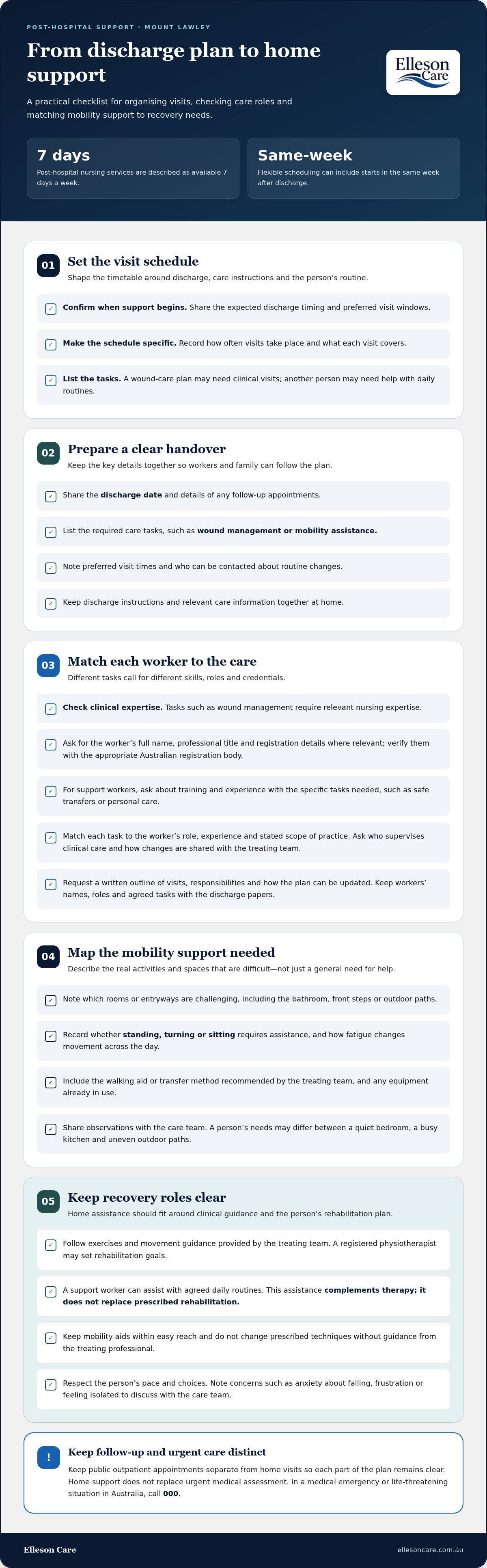
Plan support around the discharge date, the person’s care instructions and the tasks needed at home. The schedule should state when visits begin, how often they take place and what each visit covers. For example, someone returning home with a wound-care plan may need clinical visits, while another person may need help with daily routines.
Post-hospital nursing services are described as available 7 days a week, with flexible scheduling that can include same-week starts after discharge. To arrange visits, set out the expected discharge timing, care tasks and preferred visit windows. This gives the support team practical information for building a schedule around recovery and household routines.
Mount Lawley Hospital became part of East Metropolitan Health Service on 01 September 2026. Patients already receiving care there can continue attending existing appointments and receiving planned treatment at the time of the transition. East Metropolitan Health Service coordinates public outpatient follow-up care at Mount Lawley Hospital after 1 September. If an existing referral has not received an update, check with the hospital or referring clinician rather than assume the appointment was cancelled.
Before the first visit, prepare a brief handover to help workers understand the care plan:
- Share the discharge date and any follow-up appointment details.
- List the care tasks, such as wound management or mobility assistance.
- Note preferred visit times and who can be contacted about routine changes.
- Keep discharge instructions and relevant care information together at home.
For example, a person discharged on Friday can use this handover to organise support for the weekend and clarify how planned follow-up fits the home schedule. Keep public outpatient appointments separate from home visits so each part of the plan remains clear. Home support does not replace urgent medical assessment. In a medical emergency or life-threatening situation, call 000 in Australia, according to the Australian Government.
Choosing and checking provider credentials
For post-hospital support in Mount Lawley, match each worker’s credentials to the care required. Clinical tasks such as wound management require relevant nursing expertise, while help with everyday routines calls for different skills. Ask who will provide each type of support and how their experience relates to the person’s discharge plan.
Check professional details before care begins. Ask for the worker’s full name, professional title and registration details where relevant. Verify these with the appropriate Australian registration body, and make sure they identify the person who will attend. For a support worker, ask about training and experience with the specific tasks needed, such as safe transfers or personal care.
Use a simple comparison process when reviewing a provider:
- Write down the clinical and daily support tasks listed in the discharge plan.
- Match each task with the worker’s role, experience and stated scope of practice.
- Ask who supervises clinical care and how changes are communicated to the treating team.
- Request a written outline of visits, responsibilities and the process for updating the plan.
For example, if someone returns home with a dressing plan and reduced mobility, clarify who will manage wound care and who will assist with movement. These are separate needs. Clear role descriptions help families understand what each worker will do and whom to contact with routine care questions.
In Western Australia, community-based care may involve several workers over the recovery period. Keep their names, roles and agreed tasks with the discharge papers. This record helps family members follow the plan and share accurate information when appointments or care needs change.
Choose a provider whose approach respects the person’s preferences and explains clinical support in plain language. To explore clinical care information relevant to recovery at home, review the available service details alongside the discharge plan.
Mobility and rehabilitation support
Everyday movements can feel different after surgery, illness or a fall. Identify the specific activities that need support, such as standing from a chair, walking to the bathroom or managing the front steps. A clear list helps align practical assistance with the person’s rehabilitation plan.
Follow the exercises and movement guidance provided by the treating team. A registered physiotherapist may set rehabilitation goals, while a support worker can assist with agreed daily routines. These roles are distinct: home assistance should complement therapy, not replace prescribed rehabilitation. For example, note whether someone needs help clearing a path before practising a short indoor walk.
Before arranging mobility assistance, record which tasks at home feel difficult and what equipment is already in use. Include details such as:
- Which rooms or entryways are challenging to reach.
- Whether standing, turning or sitting requires assistance.
- How fatigue changes movement across the day.
- Which walking aid or transfer method the treating team has recommended.
Share these observations with the relevant care team. Someone who moves safely in a quiet bedroom may still need support in a busy kitchen or on uneven outdoor paths. Practical details help shape suitable assistance and identify where the home routine may need adjustment. Keep mobility aids within easy reach, and do not change prescribed techniques without guidance from the treating professional.
Recovery also involves confidence and emotional wellbeing. Anxiety about falling or frustration with slower movement can affect someone’s willingness to practise everyday tasks. Respect their pace, offer choices and note concerns to discuss with the care team. Mental health needs may also shape the support approach, particularly if the person feels isolated during recovery.
Clinical Support can address nursing needs as part of a broader recovery plan. For people using NDIS Support Services, connect mobility assistance with their existing goals and approved supports. A practical plan links each task to the person’s abilities, preferences and the treating team’s guidance.
Post-hospital recovery and discharge planning
A written discharge plan connects hospital instructions with home routines, follow-up care and practical assistance. Before the person returns home, discuss who will coordinate each task.
Post-discharge support options
Post-discharge support in Mount Lawley may include clinical nursing, help with daily activities and mobility assistance. Match each task to the discharge instructions, whether it involves wound care, personal routines or moving safely around the home. For NDIS participants, support may include help with daily routines, mobility or clinical needs. Align requested assistance with the participant’s plan and agreed recovery goals.
Before discharge, write down the person’s key care tasks, appointment details and support preferences. Share this information with everyone involved in the transition so each person understands their role. Keep the plan accessible at home and update it when instructions change. It gives family members and workers a practical reference for coordinating daily support.
Hospital transition and rehabilitation services
Mount Lawley Hospital’s public services include rehabilitation, geriatric care and outpatient care. East Metropolitan Health Service coordinates public outpatient follow-up care there after 1 September. Hospital-in-the-home is a separate care model; discuss whether it forms part of the person’s discharge arrangements with the treating team. Don’t assume that outpatient appointments and home-based care are interchangeable.
For a smoother transition, keep the discharge summary, medication instructions and follow-up details together. Note who is responsible for each appointment or rehabilitation activity. If the person has an existing referral but has not received an update, follow up with Mount Lawley Hospital or the referring clinician rather than assuming the appointment was cancelled.
Community health services and support groups
Community-based support can help people maintain routines and social connections during recovery. Ask the discharge team about relevant local health services and peer support groups, then consider how each option fits the person’s needs, transport and energy levels. A group focused on a particular health experience may offer connection, while clinical concerns should remain part of the person’s care plan.
Write down the names and contact details of recommended services, alongside the purpose of each referral. Discuss practical barriers, such as getting to an appointment or attending a group, while planning the transition home. To discuss recovery needs and post-hospital support options, take the discharge instructions and care priorities into the conversation.
Elleson Care: Aged Care Services
Elleson Care supports people who need clinical care or practical assistance after returning home from hospital. Its Aged Care Services, NDIS Support Services and Clinical Support address different needs, depending on the person’s circumstances and recovery plan.
For example, someone needing nursing care after discharge may benefit from Clinical Support, while an older person who needs help with daily routines may consider Aged Care Services. NDIS Support Services may suit participants whose needs relate to their disability. Share the discharge plan and care priorities when discussing next steps, so the support can be considered in context.
Contact Elleson Care to discuss post-hospital support and the care needed for your situation.
Plan a considered next step
As recovery continues, consider how support should change with the person’s needs. A short written list of priorities can keep future conversations focused: what assistance matters most, what the person wants to manage independently and what would make home more comfortable. This keeps their preferences at the centre of decisions.
For post-hospital support in Mount Lawley, consider how the discharge plan, personal goals and available support fit together. Elleson Care provides Aged Care Services, NDIS Support Services and Clinical Support for different care needs. Share the person’s priorities and relevant care information when discussing suitable support.
If you’re ready to explore a next step, contact Elleson Care to discuss support. A calm conversation can help you organise the questions you want answered and consider the way forward with care.
Frequently Asked Questions
How much does it cost?
Costs depend on the care required and how support is arranged. Elleson Care provides a price after a quote request, based on factors such as the type of assistance, visit frequency, duration and travel arrangements. For a useful estimate, describe the tasks needed, expected schedule and relevant funding arrangements. This clarifies what the requested support involves.
Is there an at-home nurse near me in Mount Lawley, Perth?
Perth residents can enquire about in-home nursing through Elleson Care’s Clinical Support. Registered nurses provide clinical care, including wound management and medication administration. When describing the need, explain the care task and any hospital instructions, such as dressing care after a procedure. This helps establish whether nursing support suits the person’s situation and recovery needs.
What aged care in-home support is available in Mount Lawley?
In-home aged care can assist with personal care, domestic tasks and community access. For example, someone may need help with showering, getting ready for an appointment or maintaining daily routines at home. Elleson Care’s Aged Care Services provide personalised in-home support. Describe which activities have become difficult and note the person’s preferences, so support can be planned around their independence and comfort.
What if something goes wrong?
If a situation is a medical emergency or life-threatening, call 000 in Australia, according to the Australian Government. For a non-emergency concern, record what happened, when it began and any change from the person’s usual condition. Follow the discharge instructions and contact the treating team about care concerns. Keep essential details, such as current medicines and hospital paperwork, available for that conversation.
What should patients watch for during the transition?
Look for gaps between discharge instructions and the support arranged at home. Check, for example, that appointment details, medication directions and wound-care instructions are clear and accessible to the person providing assistance. Note new concerns or changes in daily function, including when they occur. Sharing clear observations with the treating team gives them useful context.
Which home nursing and personal care providers serve Mount Lawley?
Elleson Care provides Clinical Support, Aged Care Services and NDIS Support Services for people in Perth. Clinical Support addresses nursing needs, while aged care can help with personal care and daily living. NDIS support is shaped around participants’ goals and requirements. To discuss a suitable option, describe whether the need is clinical, personal or related to an NDIS plan.


