

Your care rights are part of the care you receive, not a favour to be granted. In Australia, the Aged Care Act 2024 began on 1 November 2025, and its Statement of Rights sets out what older people can expect when seeking or accessing government-funded aged care. Registered providers must explain the Statement and help older people understand it.
It’s understandable to want clear answers when care decisions feel complex or you’re unsure whether your preferences are being heard. The legal rights of elderly people in care include support to make and communicate their own decisions, and the right to care in a safe, respectful environment.
This article explains what a rights-based approach means, how the Aged Care Act affects rights, and what providers must explain. It also covers how a supporter or advocate can help someone understand options, raise concerns and take part in care decisions.
Key Takeaways
- Understand how a rights-based approach keeps an older person’s dignity, preferences and participation central to care.
- Learn what changed when the new Aged Care Act began and how its Statement of Rights applies to funded aged care.
- Know what providers must explain, and how a registered supporter can help someone express their own decisions.
- Find out how advocacy can help you raise concerns, understand options and take the next step if care rights aren’t being respected.
What does a rights-based approach to aged care mean?
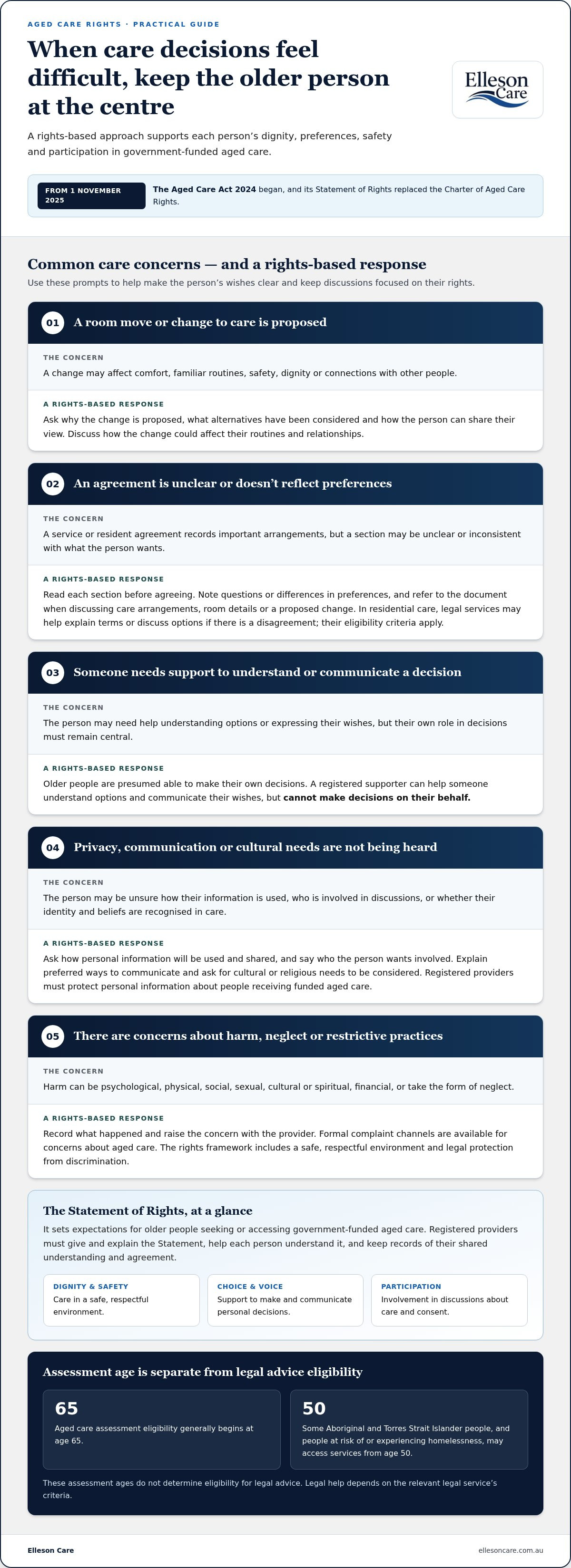
Older people receiving Australian aged care have rights to dignity, respect, safety and involvement in decisions. The Statement of Rights sets expectations for people seeking or accessing government-funded aged care.
Rights in funded aged care
A rights-based approach treats the older person as an individual with preferences and a voice, not simply as a recipient of services. Under Australia’s Aged Care Act 2024, the Statement of Rights replaced the Charter of Aged Care Rights on 1 November 2025. It matters because care should support a person’s choices, identity and participation.
For example, a person can express preferences about daily routines and how they communicate with care workers. Aged care assessment eligibility begins at 65; some people, including Aboriginal and Torres Strait Islander people and people at risk of or experiencing homelessness, can access services from 50. These assessment ages do not determine eligibility for legal advice, which depends on the legal service’s criteria.
Service and resident agreements
A service or resident agreement records important arrangements between the person receiving care and the service. It gives the person and their representative a document to refer to when discussing what has been agreed, such as care arrangements, room details or a proposed change.
Before agreeing, read each section and note anything unclear or inconsistent with the person’s preferences. In residential aged care, legal services may help explain agreement terms or discuss options when a disagreement arises. Eligibility for legal help is separate from aged care assessment eligibility, so check the relevant service’s criteria.
Changes to rooms and care
Room changes, leaving a facility and decisions to end care can affect a person’s comfort, routines and support. The Statement of Rights provides a basis for discussing these changes with the person, including their effects on safety, dignity and participation.
Ask why a change is proposed, what alternatives have been considered and how the person can share their view. For example, someone facing a room move can explain how it may affect familiar routines or connections with others. If care may end, clarify the reasons, timing and practical arrangements, then keep written notes of discussions and decisions.
Care decisions, consent and privacy
Under Australia’s Aged Care Act, older people are presumed able to make their own decisions. A registered supporter can help someone understand options and communicate their wishes, but cannot make decisions on their behalf. The person remains central to discussions about care and consent.
Privacy is part of respectful care. The Australian Government says registered providers must protect personal information about people receiving funded aged care services. A person can ask how their information will be used and shared, and say who they want involved in discussions. These steps help keep care decisions personal and information handled respectfully.
Rights-based aged care under the new Aged Care Act
Australia’s Aged Care Act 2024 began on 1 November 2025. Its Statement of Rights establishes expectations for older people accessing government-funded care.
Rights under the Aged Care Act
The Statement of Rights explains what older people should expect when seeking or receiving funded aged care. It matters because these rights sit alongside other legal protections, including privacy and freedom from discrimination.
Under the Act, older people are presumed able to make their own decisions. Eligibility for an aged care assessment generally begins at 65; some Aboriginal and Torres Strait Islander people, and people at risk of or experiencing homelessness, may access services from 50. These thresholds can help families understand when to explore an assessment.
Oversight and protection from harm
The Act sets out a rights framework for safe, respectful aged care and a way to raise concerns. Abuse can be psychological, physical, social, sexual, cultural or spiritual, financial, or take the form of neglect.
Protections include the right to a safe, respectful environment and legal protection from discrimination. If you are concerned about abuse, neglect or restrictive practices, record what happened and raise it with the provider. You can raise concerns about aged care through formal complaint channels.
Visitors, communication and support
Older people have the right to be treated with respect and to take part in decisions about their care. This includes communicating with people they choose and receiving care that recognises their cultural identity and personal beliefs.
For example, a resident can explain their preferred way to communicate or ask for cultural or religious needs to be considered in their care. If access to visitors or communication becomes a concern, describe the impact and ask the provider to discuss a suitable arrangement.
Appointing a guardian or attorney
Guardianship and power of attorney arrangements let a person plan who may support or make certain decisions if needed. The legal documents and appointment rules vary between Australian states and territories, so the relevant process depends on where the person lives.
In Western Australia, clarify which decisions an appointed person may handle and record the older person’s wishes while they can express them. A registered supporter under the Aged Care Act helps someone make and communicate decisions but has no decision-making authority. This distinction helps families identify the appropriate support.
Provider responsibilities to explain rights
Under Australia’s Aged Care Act, registered providers must make the Statement of Rights understandable. This helps older people know what to expect and take part in discussions about their care.
Providers must give and explain the Statement, help each older person understand it, and keep records of their shared understanding and agreement. These responsibilities apply to registered aged care providers delivering funded services. The provider must do more than hand over a document: the person needs an opportunity to understand what the Statement means for their care.
A useful discussion connects the Statement with a real care situation. For example, someone could ask how their preferences will be considered when staff plan support, or how to raise a concern. The provider’s explanation should help the older person relate their rights to the service they receive.
To make the conversation practical, the older person or someone supporting them can:
- Ask the provider to explain any part of the Statement that is unclear.
- Describe a care preference or concern and ask how it relates to their rights.
- Ask what understanding or agreement the provider will record.
These are useful questions, not extra legal requirements. A supporter can help the person understand and communicate their wishes, but under the Aged Care Act, a registered supporter has no decision-making authority. The older person remains central to the discussion.
Providers also have privacy responsibilities. The Australian Government says registered providers must protect personal information about people receiving their funded aged care services. During a discussion involving personal details, the person can ask how that information will be protected and who will be involved.
If an explanation feels incomplete, note what remains unclear and raise it with the provider. Recording the question, response and agreed understanding can help both the older person and provider refer back to the same discussion.
Aged care advocacy
Advocacy can help an older person understand choices, express preferences and raise concerns about care. An advocate listens to the person’s wishes, helps organise information and supports communication with a provider.
In Australia, it’s usually helpful to raise aged care concerns early, starting with the provider. Describe the issue, when it happened and what change would address it. For example, someone concerned about missed support can record dates and explain how the gap affects daily care. Keep copies of messages and note responses to create a clear record for follow-up.
If a concern remains unresolved, the Older Persons Advocacy Network can help people seeking support to make an aged care complaint. Call 1800 700 600 to reach the Aged Care Advocacy Line. My Aged Care can be called on 1800 200 422 about concerns involving a registered supporter.
In Western Australia, Elder Rights WA provides community education about older people’s rights and how to safeguard them. Legal Aid WA delivers this free service with support from the Department of Communities. Advocates can help someone express their wishes, while complaint channels address concerns about care or support arrangements.
Before a discussion, the older person can decide what they want help with, who may attend and what information may be shared. They can also prepare a brief note of the concern and the outcome they hope to achieve. This keeps the conversation focused on their priorities.
For support with care needs, explore aged care support options.
Elleson Care: Aged Care Services
Elleson Care provides Aged Care Services for older people who need support shaped around their individual needs and preferences. Its person-centred approach offers practical care support for families while respecting the rights and choices discussed in this guide.
Clinical Support includes post-hospital care, wound management, palliative care and ventilator support. NDIS Support Services are available for people seeking disability support. These services address care needs, but do not replace independent legal advice or aged care advocacy.
If you’re considering support, think about the care needs involved and what matters most to the older person. You’re welcome to visit ellesoncare.com.au to contact Elleson Care.
Take a confident next step
Understanding the legal rights of elderly people in care can help families approach difficult conversations with greater clarity. Start with one concern or care priority, and consider who the older person wants involved. Keeping their wishes at the centre makes the next conversation more personal and focused.
Advocacy and care support serve different purposes. An advocate can help someone communicate concerns and understand options, while practical care services support day-to-day needs. If you’re considering care for yourself or an older family member, discuss the needs and preferences that matter most with Elleson Care.
Contact Elleson Care to discuss support. A considered next step can help you move forward with the older person’s choices and dignity in focus.
Frequently Asked Questions
Can someone help me to understand my rights?
Yes. An aged care advocate can help you understand your options, prepare questions and communicate your wishes. The Older Persons Advocacy Network’s Aged Care Advocacy Line is 1800 700 600. Before a meeting, note the decision you need explained and the outcome that matters to you. You can also ask someone you trust to attend and take notes, with your agreement.
What are my rights?
The legal rights of elderly people in care include being treated with respect, having a say in decisions and receiving care in a safe environment. You can ask how your personal information is handled and raise concerns about your care. If an arrangement doesn’t reflect your preferences, explain what needs to change and ask for the response in writing.
What should I do if I have concerns?
Start by clearly describing the concern to the aged care provider, including what happened and what response you’re seeking. Note dates, conversations and written replies. For example, if a planned support task was missed, record how it affected your daily routine. If the issue remains unresolved, an advocate can help you understand complaint options.
What are the rights of residents under the Australian Aged Care Act and Charter of Aged Care Rights?
The Statement of Rights is the current rights framework under the Aged Care Act 2024; it replaced the Charter of Aged Care Rights on 1 November 2025. The former Charter name may still appear in older paperwork. If a document refers to it, ask the provider to explain how the current Statement applies to the care being discussed.
How can residents raise complaints with an aged care provider or the Aged Care Quality and Safety Commission?
Residents can first raise an issue with their provider, explaining what happened, its impact and the change they want. Keep copies of responses. If the concern remains unresolved, you can ask about formal complaint options. An advocate can help organise information and support the resident to communicate their concerns during the process.
What are the rules for aged care fees, contracts, refunds, and financial transparency in Australia?
Residential aged care has fees, so read the agreement carefully before signing. Ask for a written explanation of each charge, when it applies, how payments are handled and what refund terms apply if the arrangement ends. Compare the agreement with statements as they arrive, and query differences in writing. Keep copies of contracts, invoices and responses for reference.


