

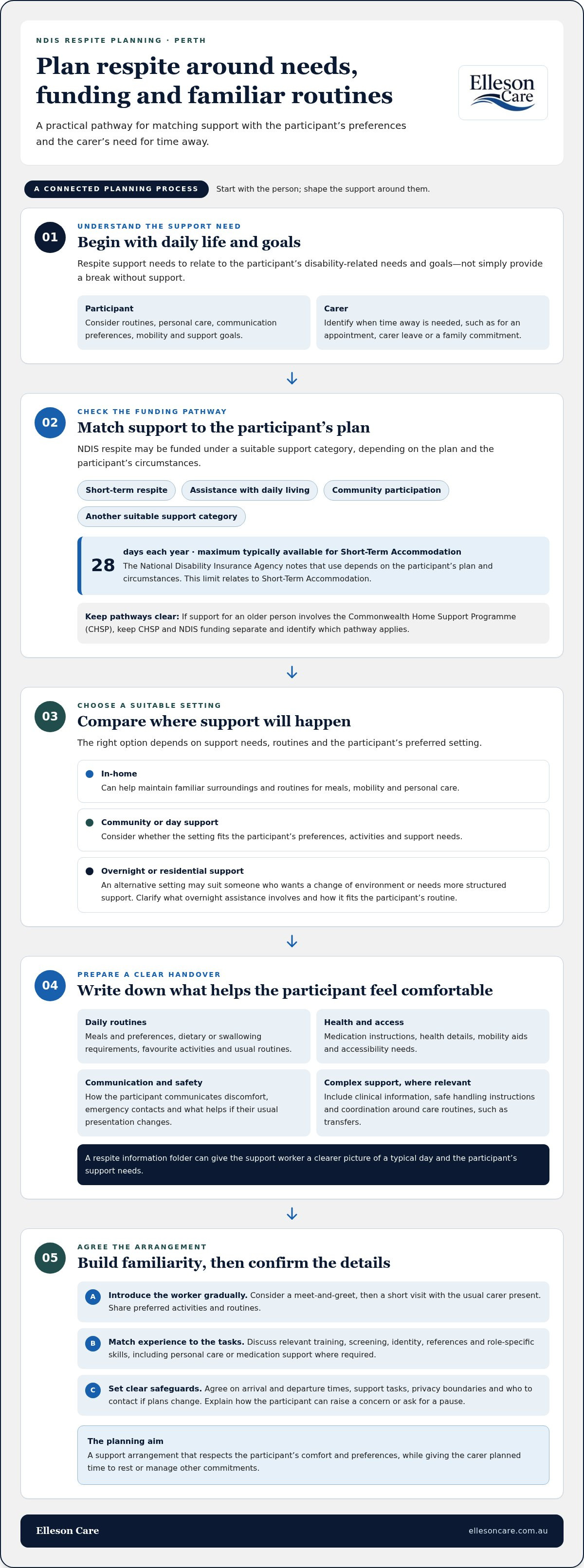
Respite funding isn’t tied to just one setting. In-home respite care through the NDIS in Perth may be funded under short-term respite, assistance with daily living, community participation or another suitable support category. For Short-Term Accommodation, the National Disability Insurance Agency says funding is typically available for a maximum of 28 days each year, with use depending on the participant’s plan and circumstances.
Choosing in-home respite care under the NDIS can be difficult when support needs, familiar routines and carer responsibilities all matter. This guide explains how NDIS funding may apply to respite, what to consider when choosing support, and how in-home care compares with community, day, overnight and residential options. It also outlines what to prepare when planning support, so you can make decisions that respect the participant’s preferences and give carers time to rest.
Key Takeaways
- NDIS respite may be funded under short-term respite, assistance with daily living, community participation or another suitable support category.
- In-home support can help a participant keep familiar routines, while community, day and overnight options offer different settings for support and a break for carers.
- According to the National Disability Insurance Agency, Short-Term Accommodation is typically funded for a maximum of 28 days annually, with use depending on the participant’s plan and circumstances.
- Compare options by considering the participant’s routines, personal care, communication preferences, mobility and support goals.
- Planning the support arrangement around the participant’s comfort and the carer’s need for a break can help make respite more useful for everyone.
Why Families and Carers Need Respite Support?
NDIS respite gives carers time away while the participant continues to receive support. Assistance may take place at home or in another suitable setting. In-home NDIS respite in Perth can help maintain familiar routines and surroundings. For example, a support worker could assist with personal care while a family carer attends an appointment.
A participant may access NDIS-funded in-home respite or short-term accommodation if their plan includes suitable funding. Respite may be funded under short-term respite, assistance with daily living, community participation or another appropriate support category. The support needs to relate to the participant’s disability-related needs and goals, rather than simply provide a break without support.
Location affects how support fits into daily life. At home, a worker can follow established routines for meals, mobility and personal care. An alternative location may suit a participant who wants a change of environment or needs more structured support. For a City Beach respite-home arrangement described as providing 24/7 support, clarify what overnight assistance involves and how it matches the participant’s routine.
Plan practical details for either setting, including meals, medication and accessibility. Write down meal preferences, dietary or swallowing requirements, medication instructions, mobility aids and access needs. A respite information folder can also include health details, emergency contacts, routines and favourite activities. This gives the support worker a clear picture of a typical day and what helps the participant feel comfortable.
Some participants need high-intensity or complex medical support alongside daily assistance. Planning may require clear clinical information, safe handling instructions and coordination around care routines. For example, explain how to assist with transfers, recognise how the participant communicates discomfort and respond to changes in their usual presentation. The support should reflect the person’s actual needs.
Families may also encounter Commonwealth Home Support Programme (CHSP) funding when arranging support for an older person. Keep CHSP and NDIS funding separate in planning conversations, and identify which pathway applies to the person and the support they need. This helps avoid assuming that respite can be funded through the wrong programme.
Respite can be regular or arranged for a specific period, such as during carer leave or a family commitment. Planning ahead gives the participant time to become familiar with the worker or setting. A short introduction visit, followed by a discussion of routines and support needs, can make the transition easier.
Benefits of respite for participants and carers
A planned respite period gives carers time to rest, attend appointments or manage family responsibilities. For example, during a scheduled afternoon break, a carer could visit a relative while a support worker assists the participant with daily living. Regular breaks can make caring responsibilities easier to organise and help families protect time for other commitments.
Carer wellbeing matters. Ongoing responsibilities can leave little time for sleep, personal appointments or social connection. A planned support arrangement can create predictable time away instead of relying on a last-minute break. Families might schedule respite around a regular commitment, such as a medical appointment or family visit, and agree in advance on the tasks the worker will cover.
Time apart can also support family relationships. A carer could visit another family member, attend an event or spend time with other children, knowing the participant has support in place. During that time, the participant can continue familiar activities, such as preparing a preferred meal or following an established evening routine.
For participants, respite can be a chance to practise independence with support nearby. A worker might encourage someone to choose clothes, prepare part of a meal or take part in a preferred activity. Tailor these daily living tasks to the person’s abilities, communication preferences and goals. The right setting can also give the participant space to build confidence at a comfortable pace.
Introducing a new support worker gradually can help the participant feel more at ease. Start with a meet-and-greet, then consider a short visit with the usual carer present. Share practical details, such as how the participant communicates discomfort, their preferred activities and their medication routine. A familiar activity can offer a natural way to begin building rapport.
In Western Australia, match a respite worker’s training and experience to the tasks they’ll perform. Discuss relevant screening, identity, references and role-specific skills, including personal care or medication support where required.
Home support also needs clear safeguards. Agree on arrival and departure times, support tasks, privacy boundaries and who to contact if plans change. Record relevant health information and emergency contacts, and explain how the participant can raise a concern or ask for a pause. A written handover can reduce misunderstandings between the family and worker.
Planning these details can make respite more consistent with the participant’s needs. Explore NDIS support planning as a next step in considering suitable support.
In-home, day, overnight and residential respite options
NDIS respite in Perth can take place at home, in the community or in suitable short-term accommodation. The right option depends on the participant’s support needs, routines and preferred setting.
Flexible respite options in Perth
In-home support can help with personal care and daily routines while the participant stays in familiar surroundings. Day programs offer activities and support outside the home, while overnight respite can cover support needs as a carer rests. Short-Term Accommodation provides a temporary stay in a different setting. Each option can be planned around the participant’s goals, support tasks and comfort.
Alternatives to in-home respite include community-based support, centre-based day programs, overnight stays and Short-Term Accommodation. According to the National Disability Insurance Agency, Short-Term Accommodation is typically funded for a maximum of 28 days annually, with use depending on the participant’s plan and circumstances.
NDIS respite may involve assistance with daily living, community participation or another suitable support category. A support coordinator can help match the participant’s needs and preferences to available options. For example, someone who values familiar routines may prefer support at home, while a participant seeking a change of environment may consider short-term accommodation.
Comparing in-home respite providers
When comparing NDIS in-home respite providers in Perth, first list the support tasks, then assess how each arrangement meets them. Consider personal care, overnight assistance, meals, transport, community access and staff experience. Ask how routines are planned and how the provider communicates with the participant and family. A written comparison keeps the decision focused on the participant’s needs and preferences.
Rates for in-home respite depend on the relevant support item and delivery circumstances, not one universal rate. The price of a specific arrangement depends on its tasks, timing, duration and accommodation, and is provided after a quote request.
To arrange respite through an NDIS plan, identify the relevant funding category and describe the support required. Record the participant’s daily routines, goals, personal care needs and preferred setting. If current funding does not reflect those needs, prepare this information for a plan review and explain how the requested support relates to the participant’s disability and goals. A coordinator can help organise the information for that discussion.
In Perth, respite arrangements can adapt as needs change. A participant might begin with in-home support, then consider a day program or overnight stay as confidence and goals develop. Comparing each option against the same practical needs helps identify which respite services best suit the participant and carer.
Choosing in-home, community, day-program or residential respite
Choose respite by matching the setting and support tasks to the participant’s routines, preferences and goals. In Perth, support may take place at home, in the community or in suitable short-term accommodation.
Start with the participant’s daily routine. Note when they need personal care, meal support, mobility assistance or help communicating choices. For example, someone who feels settled at home may prefer a worker to help with their usual morning routine. A participant seeking more social contact may value supported community activities. Choose a setting that supports participation without adding avoidable disruption.
Community participation can make respite part of the participant’s own goals, rather than simply a break from home. Consider activities they already enjoy, such as visiting a local library, meeting a friend or attending a social group. Include transport and the support needed to take part. A familiar destination can ease the transition, while a new activity may help the participant build confidence.
Compare each option against the support required. In-home respite can maintain familiar routines; community support can assist with outings; a day program offers activities away from home; and overnight or residential respite provides support in another setting. For each option, note the participant’s communication preferences, meal needs, mobility support and any safety concerns. This creates a consistent basis for comparing the choices.
- Routine: Record the usual sequence for meals, personal care, rest and activities.
- Preferences: Include how the participant communicates choices and which activities they enjoy.
- Support tasks: Specify personal care, daily living assistance, community access or overnight support.
- Transition: Plan an introduction visit or familiar activity before a new setting or worker begins.
- Communication: Agree how updates, changes to plans and concerns will be shared with family.
For in-home and community respite in Perth, give the provider a clear picture of the participant’s needs before support starts. A written handover can cover routines, medication information, mobility, meals, communication and emergency contacts. Agree on who will assist with each task and how the participant can express discomfort or request a change. These steps help keep support aligned with the person’s preferences.
Review the arrangement after a meaningful change, such as a new activity, altered routine or move to overnight support. Ask the participant what worked, what felt difficult and what they would change. Family observations can add context, but the participant’s communication and choices should guide any adjustments. This keeps respite responsive as their interests and support needs develop.
Meaning and purpose of NDIS respite care in Perth
In-home respite care under the NDIS means a support worker assists a participant at home while their usual carer takes a break. Funding may come from short-term respite, assistance with daily living, community participation or another suitable support category.
Respite arrangements should meet the participant’s needs and support their daily life while giving carers time away from their caring role. In Perth, support may take place at home, in the community or through short-term accommodation.
Purpose of NDIS respite care
Respite is intended to give carers a planned break while the participant continues receiving disability-related support. For example, a worker might assist with a meal, personal care or a familiar activity while a family carer attends an appointment. The arrangement works best when it respects the participant’s comfort and choices, rather than treating the break as separate from their usual support needs.
Short-Term Accommodation (STA) is often discussed alongside NDIS respite, but support can also take place at home or in the community. Consider the purpose of each arrangement: a home visit can preserve familiar routines, while an overnight stay may offer a change of setting and more structured support.
In-home respite under the NDIS
At home, a support worker can assist with agreed daily living tasks in the participant’s familiar surroundings. A practical handover might explain communication preferences, meal routines, mobility assistance and activities the person enjoys. This helps the worker fit support to the participant’s day rather than impose a new routine.
Funding should align with the participant’s plan and the support being delivered. Record the tasks, timing and purpose of the arrangement, then discuss how they relate to the participant’s disability support needs. A plan manager or support coordinator can help clarify how the relevant funding category applies.
Respite may also help a participant maintain relationships and pursue personal goals. For instance, a worker could support a visit with friends or an outing that helps the participant build confidence. The carer might use that time to visit family or rest. Agree on the activity, transport needs and communication plan before support begins.
A holiday or overnight arrangement needs different preparation from a short home visit. Note the support required throughout the stay, including meals, personal care, medication routines and community access. Let the participant’s preferences guide the setting and activities. Clear planning helps keep support purposeful, whether the goal is a carer break or greater independence.
For help considering NDIS support options and how they relate to respite, discuss support for respite planning.
Elleson Care: Aged Care Services
Elleson Care provides NDIS Support Services, alongside Aged Care Services and Clinical Support. For families in Perth considering respite, these services can be relevant when daily support needs, health considerations or ageing-related care overlap. Clinical Support can address health needs as part of the care picture, while NDIS Support Services focus on disability support. Start by outlining the participant’s routines, goals and required assistance, then discuss how these needs relate to the support available. Contact Elleson Care to discuss your support needs.
Take the next step towards a workable support plan
Turn your priorities into a clear support brief. Note what the participant wants to continue doing, where they feel most comfortable and which parts of their routine need assistance. Include the carer’s availability and any changes that would make support easier to coordinate. This gives planning a practical starting point centred on the participant’s choices.
If you’re considering in-home NDIS respite care in Perth, Elleson Care provides NDIS Support Services, Aged Care Services and Clinical Support. These services may be relevant when disability support, ageing-related needs or clinical considerations shape the care discussion. Start with the individual’s circumstances and the support they want to work towards.
Share your priorities and explore the next step with Elleson Care about respite support. A considered plan can help make room for the participant’s goals while supporting a more sustainable caring arrangement.
Frequently Asked Questions
What are the funding options for accessing respite?
NDIS respite may be funded through short-term respite, assistance with daily living, community participation or another suitable support category. The appropriate option depends on the support being delivered and how it relates to the participant’s plan. For example, personal care assistance at home differs from support to take part in a community activity. Review the plan’s funding categories and available budget before arranging support.
Can I access respite if I have Parkinson's disease?
A person with Parkinson’s disease may access NDIS-funded respite if their plan includes funding for suitable disability-related support. The diagnosis alone does not show what assistance they need. Describe practical impacts, such as help with dressing, mobility, meals or communication, and explain how respite would support daily life. This helps connect the requested arrangement with the participant’s needs and goals.
Can I still go to work or other commitments?
Yes. Respite can provide support while a family carer attends work, an appointment or another commitment. Before support begins, share the participant’s routine, required tasks and the times they need assistance. For example, a handover could explain how they prefer to start the morning and what help they need before the carer leaves. Plan the arrangement around the participant’s needs and available NDIS funding.
Can my support worker/family stay with me?
Yes. A family member can stay if that suits the participant and the planned arrangement. Discuss everyone’s role before support starts, including which tasks the respite worker will assist with and what the family member would like to continue doing. For example, a relative might stay during an initial visit while the participant becomes familiar with the worker. The participant’s comfort and choices should guide the arrangement.
Can NDIS funding be used for in-home respite care in Perth?
Yes. NDIS funding can support respite at home if the participant’s plan includes a suitable support category. In-home support can address disability-related needs while the participant remains in familiar surroundings. Before arranging it, identify the tasks required, such as personal care or daily living assistance, and relate them to the participant’s plan. Keep a clear record of the agreed tasks and how they support the participant’s goals.
Which NDIS funding category pays for in-home respite care?
There is no single category for every in-home respite arrangement. Funding may sit under short-term respite, assistance with daily living, community participation or another suitable support category, depending on the support provided. For example, help with a personal care routine differs from assistance to take part in a community activity. Describe the tasks and purpose clearly when reviewing how the plan’s funding applies.


