

More providers don’t automatically mean more coordinated care. Coordinating multiple care providers means bringing health and community support together around a person’s needs, preferences and shared goals. It involves communication, practical planning and review, so care stays connected between appointments.
When chronic illness and mental health needs overlap, keeping track of appointments, advice and care plans can be difficult. You should not have to manage every connection alone. Understanding how coordinating multiple care providers works can clarify the roles of professionals, family and other personal supports.
This article explains what care coordination involves, when it can help and how providers can work together over time. It covers shared goals, communication and progress reviews, as well as how personal support can make care more consistent and manageable.
Key Takeaways
- Clarify who is leading coordination and which provider is responsible for each part of the care plan.
- Set shared goals that reflect the person’s priorities and the day-to-day realities of chronic illness and mental health.
- Use regular updates and progress reviews to keep providers aligned as needs or circumstances change.
- Include trusted family, carers and community support where appropriate, while keeping the person’s preferences central.
What is care coordination?
Care coordination deliberately organises services and communication around a person’s needs. It can bring GPs, mental health clinicians, nurses, support workers and family members together, with each contributing a defined part of a shared plan.
Patient-centred care and autonomy
Person-centred care plans services around the individual’s needs, preferences and priorities. The person remains involved in decisions instead of receiving a plan shaped only by providers’ routines. For example, someone managing chronic pain may prioritise better sleep and returning to daily activities. Providers can build those aims into the plan and review whether the support is helping. The person’s choices guide which care is relevant.
Consent and privacy in care coordination
A practical approach to consent is to explain what information will be shared, with whom and why, then record the person’s agreement. Share only information relevant to the agreed care plan, such as a medication change that a treating clinician needs to know about. The person can ask questions, set boundaries and revisit their preferences as circumstances change. These steps protect privacy and clarify how information supports consistent care across services.
Clear responsibilities make providers accountable. A shared plan can specify who updates medication information, follows up a referral and reviews progress with the person. If a GP changes treatment, relevant clinicians need an agreed way to receive the update. Defining roles reduces duplicated tasks and gaps between appointments. Coordination works best when providers share goals and know which actions they are responsible for.
Physical health also needs attention when alcohol and other drug (AOD) support is involved. AOD workers should give greater priority to physical health, considering the years of life lost in this population. A joined-up plan can include medication for conditions such as diabetes or high blood pressure, alongside mental health support. Healthy eating, physical activity and sleep may also be part of holistic care. This keeps physical health in view rather than treating it as separate from recovery.
Care coordination for chronic illness and mental health
Chronic illness and mental health needs can affect one another, so support may involve a GP, mental health clinician, nurse and community services. Coordinating multiple care providers connects their work to the person’s priorities. For example, a plan for someone living with diabetes and depression can account for physical health appointments, emotional wellbeing and the practical demands of treatment. Shared goals keep care focused on everyday outcomes, not just separate provider tasks.
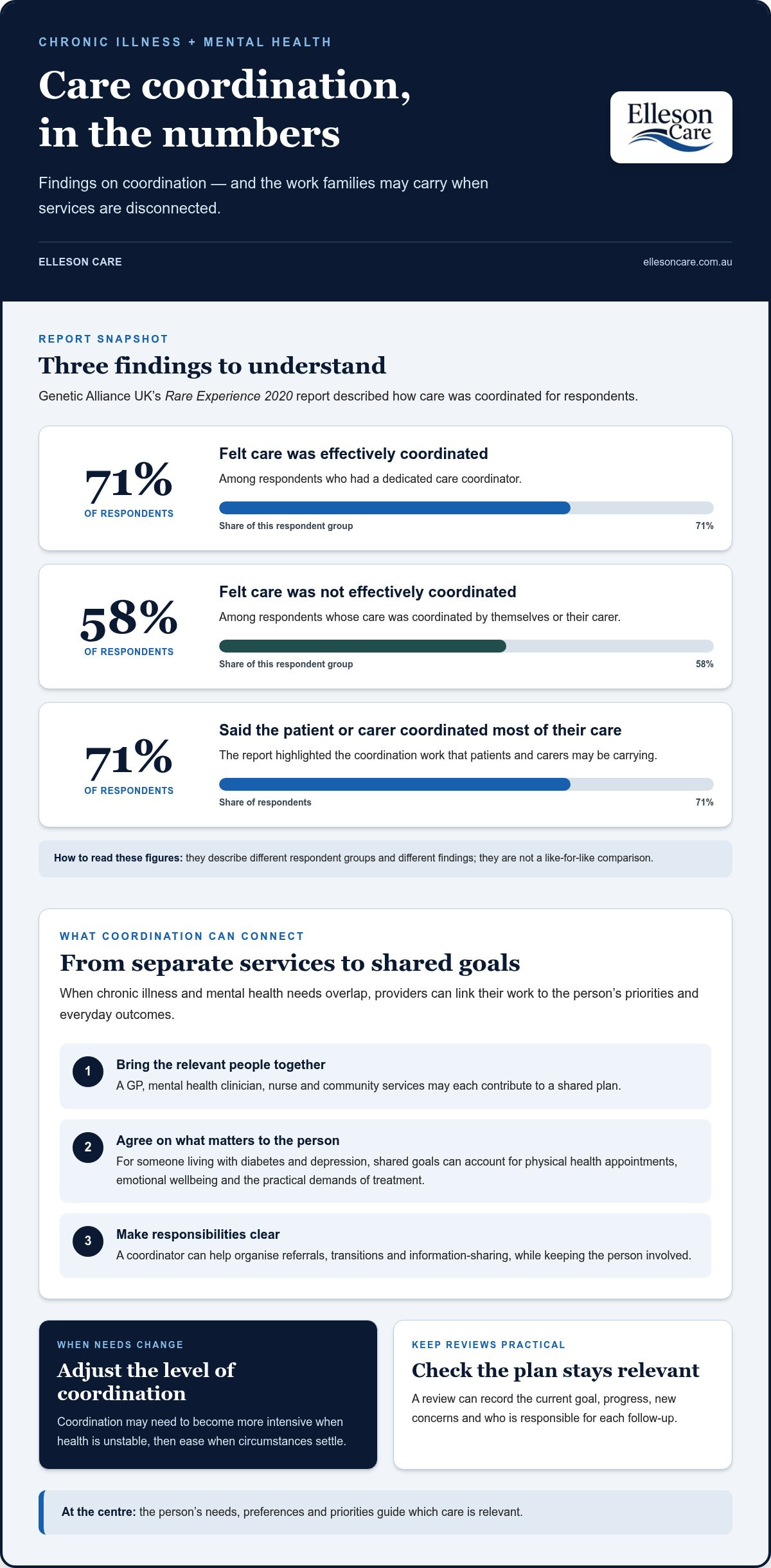
Genetic Alliance UK’s Rare Experience 2020 report found that 71% of respondents with a dedicated care coordinator felt their care was effectively coordinated. In contrast, 58% of respondents whose care was coordinated by themselves or their carer felt it was not effectively coordinated. The report also found 71% said the patient or carer coordinated most of their care. These findings illustrate the work families can carry when services are disconnected. A coordinator can help organise referrals, transitions and information-sharing, while keeping the person involved.
Chronic pain shows why multidisciplinary support can matter. Pain may interact with movement, deconditioning, stress, poor sleep, workplace strain and reduced confidence. A GP or pain clinician can consider the overall health picture, while relevant practitioners address movement or daily activities. For instance, fear of movement may make exercise difficult. A coordinated discussion can identify that barrier and shape practical support. Each discipline should contribute to a shared, relevant goal, rather than adding appointments without a clear purpose.
People living with multiple chronic conditions may have complex care needs that change over time. Coordination may need to become more intensive when health is unstable, then ease when circumstances settle. A useful plan reflects what matters most to the person, identifies relevant providers and links clinical care with community support. In Australia, the Integrated Team Care program aims to improve health outcomes for Aboriginal and Torres Strait Islander people with chronic conditions through better access to coordinated, multidisciplinary care. This collaborative approach can support continuity across services.
For practical support alongside complex health needs, explore support for ongoing care needs.
Communication and progress reviews across providers
Shared treatment goals, clear updates and regular reviews help connect care across services. Hospital discharge and the move to community support need particular attention because responsibilities can change during the transition.
Sharing updates and reviewing progress
Communication involves relevant providers exchanging updates, discussing referrals and reviewing progress against agreed goals. Access to several services alone does not guarantee coordinated care. A GP, mental health clinician and support worker can discuss the case to identify changes and clarify who will follow up. Reviews should check whether the plan still reflects the person’s needs and daily life. Clear treatment updates also help prevent providers from working towards conflicting priorities.
A practical review can record the current goal, progress, new concerns and who is responsible for each follow-up. For example, a clinician can share a treatment change with the GP and relevant community providers. Care coordinators often receive informal, workplace-based training from experienced professionals with related training. Consistent communication helps the team maintain a shared understanding between appointments.
Transitions from hospital to community care
A transition plan links hospital treatment with the support a person needs after returning to the community. Ongoing conditions still need attention after discharge. The plan can list follow-up appointments, medication information, relevant contacts and the provider responsible for each action. Accurate medication records and pharmacist reviews can support continuity when an older person moves between hospital and residential aged care.
For an older person, the team can clarify who maintains medication records and who follows up a referral. The Aged Care Quality Standards’ Outcome 3.4 requires planned and coordinated care, including where multiple providers, family members and carers are involved. Defined responsibilities make handovers more useful and help prevent important information from being lost between services.
Community living can also depend on coordination between disability support and health services. In Con’s case, a social worker applied for an NDIS package to increase support for community living. His support team included a cleaner and support worker who visited daily and took him to medical appointments, with a care coordinator overseeing support. This example shows how practical assistance can connect access to appointments with everyday needs.
For NDIS support, shared goals can link provider tasks to outcomes that matter to the participant, such as attending appointments or maintaining community living. Regular reviews can identify changing needs and whether the agreed support still fits.
Engaging professional and non-professional services
Care may involve clinicians, community services, family members and carers working together. Coordination costs depend on the type and intensity of support, and are provided after a quote request; funding pathways vary by person and program.
Sequencing services around patient needs
Sequencing means arranging support in an order that suits the person’s needs and priorities. Starting every service at once can create unnecessary appointments or competing demands. If a straightforward health issue is responding well, one clinical discipline may be enough at first. Where needs overlap, relevant providers can agree which support should begin first and what should follow.
For example, someone recovering after hospital care may need clinical follow-up before adding community activities. A support worker can help with practical routines while treatment continues. Timing can change as needs change. Services do not all need to start on the same day; a shared plan can show how each contributes to everyday outcomes.
Care coordination resources and services
A care coordinator or case manager helps assess needs, plan support and connect a person with relevant services. Coordination does not mean one professional provides every service. Instead, the coordinator can facilitate referrals and help the person, clinicians and community organisations stay connected.
Families and carers can keep a medicines list and emergency contact list accessible. These practical resources clarify who to contact and what information may be needed. A coordinator can work with the person to identify suitable community resources and support self-management goals.
In Australia, care coordination is available to specific groups with complex needs and multiple service providers. The Integrated Team Care program aims to improve health outcomes for Aboriginal and Torres Strait Islander people with chronic conditions through better access to coordinated, multidisciplinary care. Funding depends on the relevant program and the person’s circumstances.
Explore support for coordinated care needs to consider professional support alongside family and community involvement.
Elleson Care: Aged Care Services
Elleson Care provides Aged Care Services for people who need support alongside ongoing health needs. Its Clinical Support includes nursing care such as wound management, post-hospital care and palliative care. NDIS Support Services can also form part of a person’s broader support, alongside relevant health professionals and personal carers.
These services can help when clinical needs affect daily routines or when support at home needs to work alongside other care. The person’s needs and preferences remain central to planning, with family or carers involved where appropriate. Elleson Care’s support can complement a broader care arrangement without replacing the roles of other providers.
To discuss support for your care needs in Perth, contact Elleson Care.
Make your next care conversation count
Coordinating multiple care providers can feel more manageable when the next conversation has a clear purpose. Before your next appointment, note the issue causing the most difficulty in daily life, such as keeping track of follow-ups or managing changing support needs. Raise that priority and ask how it can be reflected in the care plan. This gives the person receiving care, their family or carer, and relevant professionals a practical place to begin.
Progress does not require changing every part of a support arrangement at once. A focused conversation can clarify which concern needs attention first and who should be involved. As circumstances change, the person’s preferences can continue to guide decisions about their support.
If you would like to discuss care and support needs with Elleson Care, contact the team about support options. A considered next step can help you move forward with greater clarity and confidence.
Frequently Asked Questions
What skills do you need?
Care coordinators need clear communication, organisation, relationship-building skills and knowledge of local services. They should listen carefully, explain information in plain language and help resolve differences without sidelining the person’s preferences. In Perth, familiarity with local health and community pathways can help connect people with relevant support. Careful record-keeping also helps track referrals, agreed actions and follow-up responsibilities.
What does coordinating multiple care providers involve in Australia?
In Australia, coordinating care means aligning health and community support with a person’s needs, rather than treating each appointment separately. It may involve a GP, specialist, mental health clinician, allied health professional and informal carer. For someone in Perth managing chronic illness, the practical focus is continuity: relevant providers understand the plan and how their contribution supports everyday wellbeing.
Who is responsible for coordinating care between providers in Australia?
Responsibility is shared across the care team, with a named coordinator helping connect its different parts. The lead can depend on the setting and the person’s needs: a community social worker or case manager may coordinate practical links, while a senior nurse may lead in residential aged care. Each treating professional remains responsible for their own clinical decisions and agreed follow-up, with the person and their chosen carer involved.
How can I create a shared care plan with multiple providers?
Start by asking the person which outcomes matter most, then involve providers whose input relates to those priorities. Record current concerns, agreed actions, who will carry them out and how the person can raise a change. For example, a plan addressing fatigue could set a daily activity goal and note which clinician will review its effect. Keep an accessible copy and update it when needs change.
How can care providers share medical information securely in Australia?
Providers can share information more safely by confirming the recipient, using their organisation’s approved secure communication method and sending only details relevant to care. The person should understand what is being shared and with whom, and consent should be recorded where appropriate. Avoid sending health records through public or shared accounts. If information goes to the wrong recipient, notify the sender promptly so they can respond.
How do GPs, specialists, hospitals and allied health providers coordinate care?
GPs can connect care by receiving specialist findings, hospital discharge information and allied health recommendations, then considering relevant updates in ongoing management. Specialists contribute assessment and treatment advice; hospitals communicate changes and follow-up needs; allied health providers report functional goals and progress. In Australian aged-care multidisciplinary teams, GPs can lead coordination and support clear communication so each service understands its role.


