

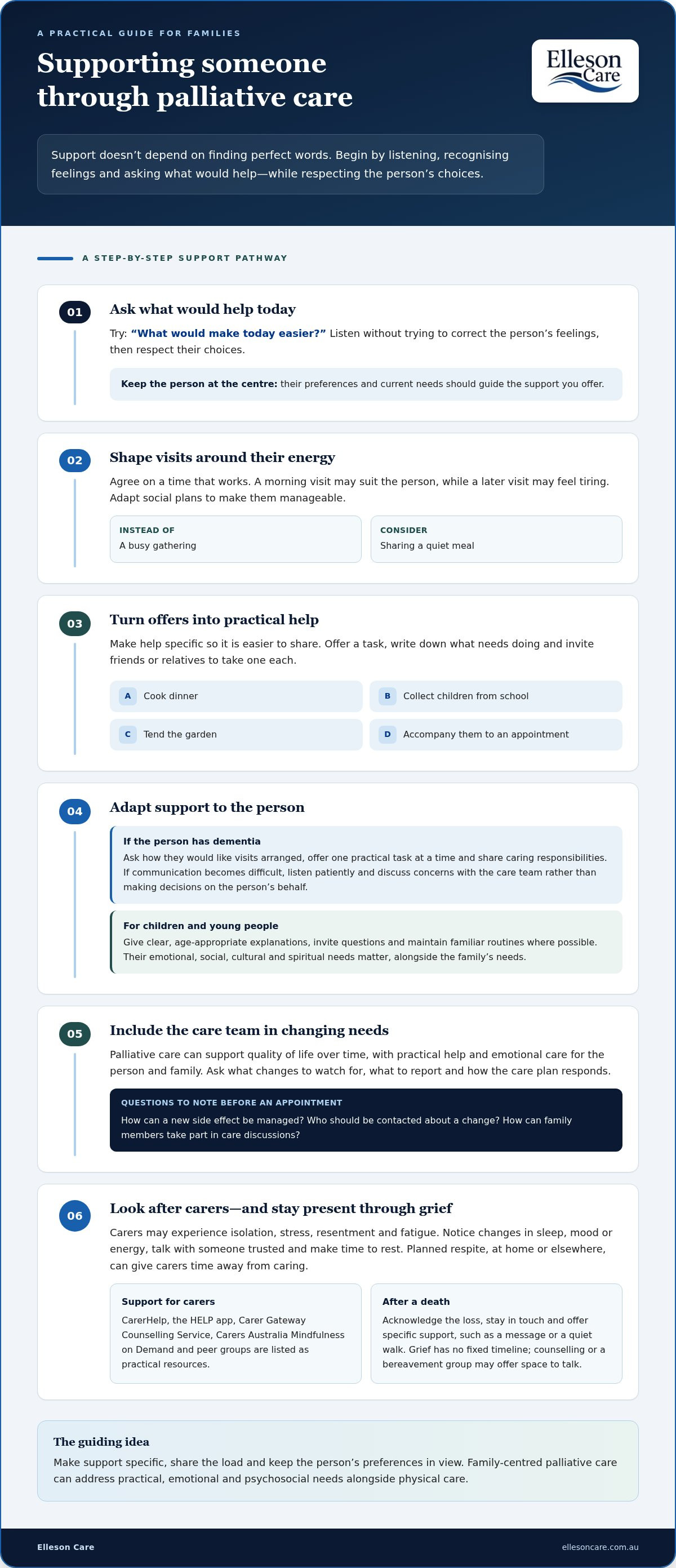
Support does not depend on finding the perfect words. Emotional support for families in palliative care often begins with listening, recognising the person’s feelings and asking what would help, while respecting their choices. Palliative care is family-centred: it can support practical, emotional and psychosocial needs alongside physical care.
It can be difficult to know what to say or do when someone you love is living with a life-limiting illness. Spending time together, adapting visits to their energy and helping with everyday tasks can ease isolation and share the load. Your wellbeing matters, too. Accepting help and making time to rest can help you sustain your support.
This article explains how to support a loved one in ways that respect their preferences, what family-centred palliative care can involve, and how families can find support through grief and bereavement. It also covers open conversations and practical help, so you can decide on a next step, whether you’re supporting someone now or adjusting after a death.
Key Takeaways
- Make support specific by agreeing on practical tasks, visit timing and who can share the caring responsibilities.
- Family meetings can help loved ones discuss care preferences, changing needs and concerns together.
- Grief has no fixed timeline; counselling or a bereavement support group may offer space to talk.
- Palliative care can support quality of life over time, with practical help and emotional care for the person and family.
1. How can I support my friend/family member?
Start with a direct question: “What would make today easier?” Listen without trying to correct the person’s feelings, then respect their choices. A morning visit may suit them, while a later one feels tiring, so agree on a time that works. Friends and family can also adapt social plans, such as sharing a quiet meal instead of attending a busy gathering.
Make practical help specific. Offer to cook dinner, collect children from school, tend the garden or accompany someone to an appointment. Carers can write down tasks and invite relatives or friends to take one each. My Aged Care notes that carers may experience isolation, stress, resentment and fatigue. Notice changes in your sleep, mood or energy, discuss concerns with someone you trust and make time to rest. Planned respite, at home or elsewhere, can give carers time away from caring.
When supporting a person with dementia, centre their preferences and current needs. Ask how they would like visits arranged, offer one practical task at a time and share care responsibilities with other family members. If communication becomes difficult, listen patiently and discuss concerns with the care team instead of making decisions on the person’s behalf.
Children and young people also need support when a family member receives palliative care. Offer clear, age-appropriate explanations, invite their questions and maintain familiar routines where possible. Palliative care can address a child’s emotional, social, cultural and spiritual needs, as well as the family’s needs.
After a death, acknowledge the loss and stay present. Grief has no fixed timeline. Families may access counselling or a bereavement support group, and palliative care can include grief support. Many people adapt over time, but support can provide space to talk when needed.
For emotional support for families in palliative care, practical resources include CarerHelp, the HELP app, Carer Gateway Counselling Service and Carers Australia Mindfulness on Demand. Peer groups can also connect carers with people who understand similar experiences and share coping strategies.
2. Grief and bereavement
Grief can begin before a death, as a person’s illness or condition changes. In Australia, there’s no right or wrong way to feel as someone approaches the end of life. Sadness, anger, relief, fear or numbness may arise at different times, and family members can respond differently. Recognising these varied reactions makes it easier to talk without comparing experiences or expecting everyone to grieve alike.
Bereavement support may include counselling, a support group or conversations with health professionals involved in palliative care. Counselling offers space to discuss the loss, changes in family roles and difficult feelings. A group can connect someone with others who understand bereavement through a similar experience. Palliative care can include counselling and grief support for patients and families, so raise this need with the care team while support is being arranged.
Are palliative care family counselling and support services free in Australia? There isn’t one fee that applies to every family. Whether counselling is free depends on the service and its funding arrangement. Ask about any charges and available support before attending.
After a death, friends can offer specific, ongoing support: acknowledge the person who died, express sympathy and stay in touch. A message or invitation for a quiet walk may be easier to accept than a general offer to help. Grief has no fixed timeline. Many people adapt over time without formal bereavement support, but counselling or a group can offer extra space to talk when wanted.
Family members may need different kinds of support, shaped by culture, relationships and their role during the illness. If distress makes daily responsibilities harder, discuss this with a health professional and describe what has changed. For families also managing complex care needs, clinical support for palliative care can be part of the wider conversation about care and wellbeing.
3. What is Palliative Care?
Palliative care aims to improve quality of life for people and families living with an illness that can’t be cured. It may be provided for years, not only during someone’s final days. Its aim is neither to shorten life nor to make it longer. Instead, health professionals work with the person to address physical symptoms and psychosocial needs, including emotional wellbeing.
Support can change as a condition progresses. A person may need help managing nausea or exhaustion, while family members need information about changing care needs. A palliative care service can explain which symptoms to watch for, which changes to report and how the care plan responds. Before appointments, write down questions, such as how to manage a new side effect or whom to contact about a change.
Practical help with caring tasks can ease pressure on family carers. It may include guidance about care tasks, clear communication with health professionals or help organising routines around the person’s preferences. Identify which tasks cause the most stress, then discuss what support would make them more manageable. Practical support works best when it reflects both the person’s needs and the carer’s capacity.
How do palliative care support options differ between hospitals, hospices and home care in Australia? The setting determines where care is delivered and how support is coordinated, while the focus remains on quality of life. In every setting, the person’s symptoms and preferences, along with family needs, help shape the care plan.
Ask the palliative care service to explain the practical and emotional support available in that setting. For example, ask how symptom changes are managed, how family members can join care discussions, and whether counselling or grief support is available. These conversations clarify what to expect and help identify concerns early.
Care can support the family before and after a death, not just treat the person who is ill. Counselling gives relatives space to discuss distress, changing roles or grief. Raise these needs with health professionals as part of conversations about the person’s care.
4. Family-centred palliative care
Family-centred palliative care recognises the person and those they consider family. This may include relatives, a partner, chosen family, friends or pets, guided by the person’s wishes. Care planning considers family members’ needs alongside the needs of a person with a life-limiting illness. The person’s preferences determine who is involved, rather than assumptions about biological relationships.
Family meetings provide a structured way to share concerns and understand the care plan. They can be arranged proactively and may help when palliative care begins, a condition progresses, treatment stops or needs change. Nurses can ask whom the person wants present. A meeting may include family, the GP and relevant health professionals, helping everyone understand decisions and next steps.
These conversations can make room for different views. One family member may be concerned about comfort, while another focuses on treatment choices or caring responsibilities. The team can clarify the person’s wishes, explain options and identify what needs further discussion. Sharing information can reduce misunderstandings and support decisions that reflect the person’s values.
Culturally safe care means asking what matters to the person and family instead of making assumptions. A Torres Strait Islander family may want to discuss cultural needs, family participation or who should attend meetings. Interpreters or cultural liaison officers can support communication when needed. Families can also tell health professionals how they prefer to discuss care and receive information.
The practical takeaway is to make family involvement explicit: ask the person whom they want included, agree on how updates are shared, and revisit those preferences as needs change. For care that includes clinical needs and family context, explore clinical support.
Elleson Care: Aged Care Services
In Perth, Elleson Care provides clinical support, including palliative care, for people living with complex health needs. This may suit families seeking nursing support that takes a person-centred approach. Its aged care services and NDIS support services can also help people whose needs relate to ageing or disability.
Families in Perth can consider Elleson Care when clinical input is needed as part of a broader care plan that keeps the person’s preferences central. Registered nurses lead the support, with a holistic approach that considers the person and their family. The right support depends on individual needs and circumstances.
For a conversation about care needs, contact Elleson Care or visit ellesoncare.com.au.
Choose one next step that feels manageable
A plan for emotional support for families in palliative care can start with one conversation. Consider what feels most difficult today, then write down the question or support need you want to raise. You might discuss a change in care, your own capacity or how to include someone in a family conversation. A clear starting point can make a complex situation feel more manageable.
You don’t need to resolve every concern at once. Sharing what matters to you can help shape support around your family’s circumstances and the person’s preferences. If you’re ready to discuss care needs with Elleson Care, contact Elleson Care for support.
Taking one thoughtful step matters. Support can make space for care, connection and time together.
Frequently Asked Questions
How can I support my friend/family member?
Ask what kind of involvement they want, then follow their lead. They may prefer one trusted person to attend appointments, share updates or take notes for later. With the person’s agreement, ask who else can join conversations. Needs and preferences can change, so revisit the arrangement rather than assuming an earlier decision still works.
What can you do to show you care?
Show care through steady, respectful contact that doesn’t require a response. Send a brief message to say you’re thinking of them, then let them choose whether to reply. Remember meaningful dates or ask whether they’d like company for an appointment. Follow through on what you offer, and accept “not today” without taking it personally.
What can you do?
Choose one useful action that eases a specific pressure. You could help organise questions for the next care discussion, take a relative’s children to an activity or coordinate updates with the person’s permission. If you’re a carer, tell someone you trust which responsibility is hardest to manage. A clear request helps others offer support that fits.
What can you say to the family?
Use simple, honest words such as, “I’m sorry this is happening,” or “I’m here to listen.” You can acknowledge the person who died by using their name and sharing a memory, if that feels appropriate. Avoid trying to explain the loss or insisting the family stay positive. Ask what would help, then respect the answer.
What is Palliative Care?
Palliative care supports quality of life for people living with an illness that cannot be cured. It addresses symptoms and the person’s emotional and social needs while also supporting family members. It can be provided alongside care for the illness and isn’t limited to the final days of life. The person’s goals and preferences guide the support offered.
What is psychosocial care?
Psychosocial care considers how illness affects a person’s emotional wellbeing, relationships and daily life. A health professional might discuss anxiety, social isolation or changes in family roles alongside physical symptoms. Support can reflect what matters to the person, including their relationships and routines. This broader approach helps families understand needs that may not be visible through physical symptoms alone.


