

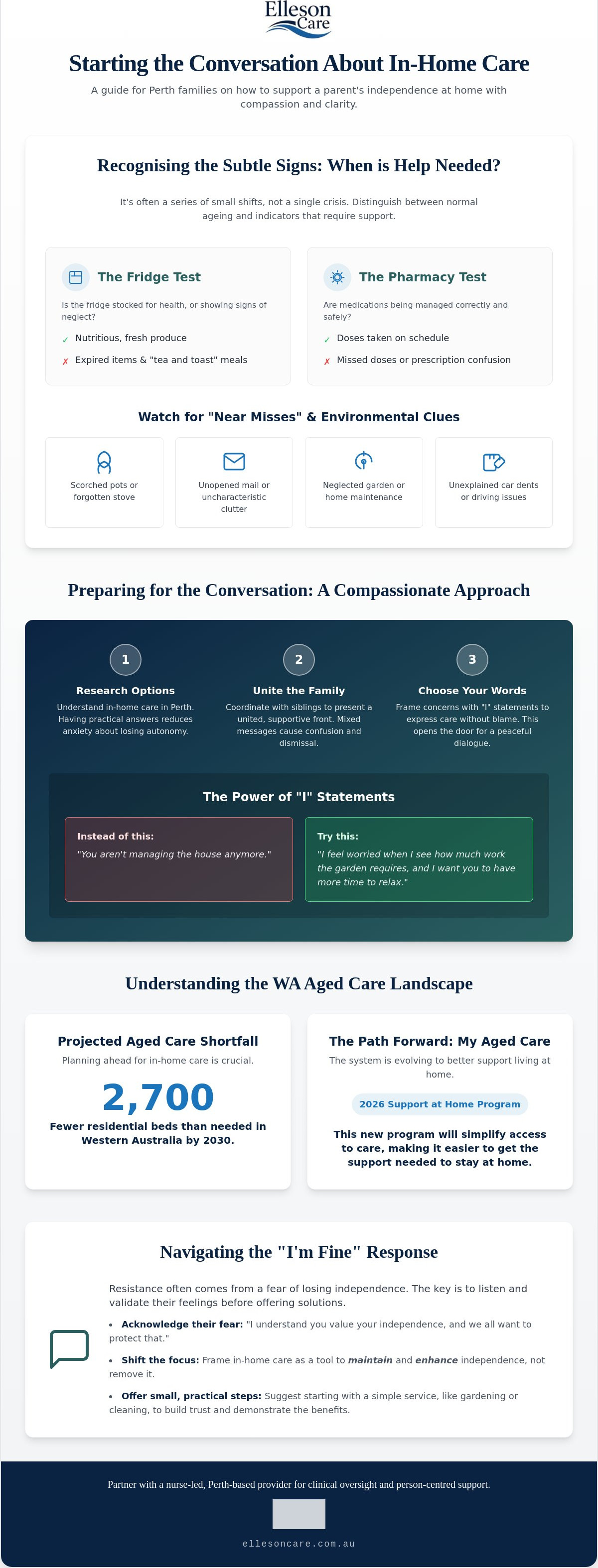
What if the conversation you're dreading most is actually the key to keeping your mum or dad in their own home for years to come? Many Perth families view the discussion about aged care as a loss of freedom, but it's actually a strategic way to protect it. It’s completely natural to feel a heavy sense of guilt or fear that they'll react with anger when you raise the topic. You want what's best for them, yet the complexity of the Support at Home program and the projected shortfall of up to 2,700 residential beds in Western Australia by 2030 can make the next steps feel incredibly daunting.
This guide will show you how to talk to a parent about needing help using empathy and practical strategies that prioritise their dignity above all else. You'll learn how to navigate the delicate transition to in-home support, understand the current ACAT assessment process, and gain clarity on the latest My Aged Care requirements. By the end of this article, you'll have a clear, peaceful plan to ensure your loved one remains safe, supported, and independent in the comfort of their own home.
Key Takeaways
- Identify the difference between typical ageing and clinical red flags through practical checks of nutrition and medication compliance.
- Master how to talk to a parent about needing help by coordinating with family members and choosing a quiet, respectful setting for the conversation.
- Navigate resistance by acknowledging the emotional fear of losing independence before shifting the focus to practical, supportive solutions.
- Learn the essential steps for registering with My Aged Care and understand how the 2026 Support at Home program simplifies access to care in WA.
- Discover the benefits of partnering with a nurse-led, Perth-based provider to maintain a high standard of clinical oversight and person-centred support.
Recognising the Subtle Signs: When Does a Parent Actually Need Help?
Identifying the right moment to step in is rarely about a single, dramatic crisis. It's usually a series of small, quiet shifts that suggest the current living situation is no longer sustainable without support. Understanding the nuances of elderly care involves distinguishing between the natural, slower pace of ageing and clinical indicators that require professional intervention. While a parent might take longer to walk to the letterbox, noticing they have stopped socialising entirely or are neglecting basic home maintenance suggests a deeper need for assistance.
A practical way to assess the situation is through the "Fridge and Pharmacy" test. This is a non-intrusive method to gauge how well a loved one is managing their daily requirements. Open the fridge and look beyond the surface. Is it filled with nutritious, fresh produce, or is there a pattern of expired items and "tea and toast" meals? Similarly, check their medication. Missed doses or confusion regarding their prescription schedule can lead to significant health complications. These tangible observations provide a factual foundation for when you eventually decide how to talk to a parent about needing help.
You should also remain alert to "near misses" within the home environment. These are subtle warnings that safety is being compromised. Common examples include:
- Scorched pots or pans indicating they have forgotten the stove was on.
- Uncharacteristic clutter or piles of unopened mail.
- A garden that was once a source of pride now becoming overgrown and neglected.
- Unexplained dents on the car or difficulty navigating familiar Perth roads.
Physical and Clinical Red Flags
Physical changes often manifest before a parent is willing to admit they are struggling. Look for unexplained bruising or skin tears that appear slow to heal; these can be signs of frequent stumbles or balance issues. You might notice a decline in personal hygiene or that they are wearing the same clothes for several days in a row. Significant weight loss is another critical indicator, often resulting from a lack of energy to prepare meals or a loss of appetite linked to underlying clinical needs.
Cognitive and Emotional Indicators
Cognitive decline can compromise safety in ways that are difficult to manage alone. Forgetting to lock the front door at night or leaving taps running are serious red flags that suggest a loss of situational awareness. Emotionally, you may observe increased agitation, uncharacteristic mood swings, or signs of deep-seated loneliness. If a parent expresses feelings of hopelessness or withdraws from their usual social circles, it is a sign that their well-being is at risk. Recognising these indicators early is the first step in learning how to talk to a parent about needing help before a preventable accident occurs.
Preparing for the Conversation: The Compassionate Expert Approach
Once you’ve identified that your loved one requires extra support, the focus shifts to preparation. Entering this discussion without a clear plan often leads to heightened emotions and defensive reactions. Success lies in your ability to present a calm, informed, and unified perspective. Before you sit down to talk, it’s vital to research the available options for in-home aged care in Perth. Having this knowledge allows you to answer practical questions about how support actually works, which can significantly lower a parent's anxiety about losing their autonomy.
A critical step in preparing for how to talk to a parent about needing help is organising a "united front" with your siblings or other close family members. Mixed messages from different children can cause confusion and allow a parent to dismiss valid concerns. You should hold a preliminary meeting with family to ensure everyone agrees on the primary goals and the level of care required. This prevents the conversation from devolving into a debate between siblings, which only adds stress to the parent you are trying to support.
When you are ready to speak, use "I" statements to frame your concerns. Instead of saying, "You aren't managing the house anymore," try saying, "I feel worried when I see how much work the garden requires, and I want to make sure you have more time to relax." This shift in language removes the element of blame and focuses on your desire for their well-being. If you find the logistics of these family dynamics difficult to navigate, consulting with a clinical care expert can provide the professional perspective needed to keep the conversation productive.
Setting the Stage for Success
The environment where you hold this talk is just as important as the words you use. Select a neutral, quiet place where your parent feels most comfortable, usually their own living room. Avoid times of high stress, such as immediately after a doctor's appointment or during a busy holiday. Keep the circle small; a large group can feel like an intervention, which often triggers a fight-or-flight response. Ensure all distractions, like the television or mobile phones, are switched off so your parent feels heard and respected throughout the process.
Reframing the Support Narrative
Help should never be presented as a loss of independence. Instead, reframe the introduction of a carer as "outsourcing the chores" to make more room for the things they actually enjoy. Explain that the new Support at Home program is specifically designed to provide the exact level of help needed to keep them in their own home for as long as possible. By focusing on clinical safety as a neutral, evidence-based reason for support, you move the conversation away from personal "failure" and toward a proactive strategy for a high quality of life.
Navigating Resistance: Handling the "I am Fine" Response
When a parent insists they are "fine" despite obvious challenges, it’s rarely about stubbornness. Instead, it’s usually a defensive response to the fear of losing their identity, their autonomy, and the home they love. Understanding how to talk to a parent about needing help means looking past the surface-level resistance to find the vulnerability beneath. Validating these feelings is a necessary first step; you must acknowledge their lifelong independence before you can discuss how to protect it. By affirming that your goal is to support their choices rather than take them away, you create a safer emotional space for a productive dialogue.
If the conversation reaches a stalemate, a "trial period" can be an effective way to lower the stakes. Rather than committing to a permanent schedule, suggest a short-term respite care arrangement. This allows your parent to experience the benefits of support without feeling as though they have signed away their freedom. It’s also vital to recognise the difference between a gradual decline and an immediate risk. While you might back off if the issue is merely a messy spare room, you must persist if there is a clinical safety concern, such as unmanaged medical conditions or a high risk of falls. Knowing how to talk to a parent about needing help involves knowing when to be patient and when to be firm for their own protection.
Addressing Common Objections
Many Perth seniors fear having a "stranger in the house" or worry that accepting help is the first step towards a nursing home. You can address these concerns by clarifying that professional in-home support is actually the best alternative to residential care; it’s the very thing that keeps them out of a facility. Emphasise that they will have consistent, familiar carers who respect their privacy and routine. It’s also helpful to remind them that My Aged Care funding, such as Home Care Packages, is a right they have earned as an Australian taxpayer, designed specifically to help them age with dignity in place.
Clinical Authority as a Tool
Sometimes, the most effective way to navigate resistance is to step back and let a neutral third party lead the way. A recommendation from a GP or a Registered Nurse carries a level of clinical authority that family members often lack. This shifts the focus from a personal disagreement to a professional health requirement. By highlighting specific medical needs, such as wound management or clinical support after a hospital stay, you make the need for help objective rather than subjective. Consistent clinical oversight prevents avoidable hospital admissions by identifying and managing health risks before they escalate into emergencies.
The WA Aged Care Roadmap: My Aged Care and the 2026 Support at Home Program
Understanding the regulatory landscape in Western Australia is essential for turning a difficult conversation into a concrete plan of action. On 1 November 2025, the Australian Government introduced the Support at Home Program, which replaced the previous Home Care Packages and Short-Term Restorative Care systems. This new framework was designed to provide more flexible, clinical support for seniors who wish to remain in their own homes. Knowing how to talk to a parent about needing help involves being able to explain these changes clearly, reassuring them that the system is now more responsive to their specific health requirements.
The first practical step for any Perth family is registering with My Aged Care. This creates a formal record and triggers the assessment process required to access government funding. It's important to distinguish between domestic assistance, such as cleaning or gardening, and clinical nursing needs. While basic help is valuable, the new system prioritises clinical oversight to manage chronic conditions and prevent hospitalisation. From 1 October 2026, personal care services like showering and dressing are fully funded by the government for all participants, which can be a significant relief for families currently struggling to provide this care themselves.
The Assessment Process in Perth
Once registered, your parent will undergo an assessment by the Aged Care Assessment Team (ACAT). To prepare, you should have a comprehensive list of their current medications, contact details for their GP, and a clear history of any recent health incidents. We strongly recommend that a family member is present during this visit to act as an advocate. During the assessment, it is necessary to describe your parent's "worst day" rather than their best. Seniors often try to put on a brave face for assessors, but an accurate description of their daily struggles ensures they receive the appropriate classification and funding level.
Navigating Funding and Waitlists
The Support at Home program now features eight classification levels, with annual funding ranging from $11,795 for Level 1 up to $78,106 for Level 8. While the Commonwealth Home Support Programme (CHSP) remains separate for now, it is scheduled to be integrated into the unified system no earlier than 1 July 2027. Higher classification levels are specifically designed to fund complex nursing services, ensuring that those with significant clinical needs can stay home safely. If you are feeling overwhelmed by the application process, speaking with a specialist in Aged Care Services can provide the clarity you need to move forward with confidence.
Partnering with Elleson Care: A Holistic Family Approach to Support
Once you have navigated the initial hurdles of how to talk to a parent about needing help, the focus naturally shifts to finding a provider that aligns with your family’s values. Elleson Care operates as a nurse-led, WA-owned, and family-operated service, ensuring that clinical authority is always balanced with genuine human warmth. We understand that you aren't just looking for someone to perform tasks; you’re looking for a partner who prioritises your parent’s dignity while restoring your own peace of mind. By choosing a provider with deep roots in the Perth community, you ensure that the support provided is culturally respectful and specifically tailored to the local aged care landscape.
One of the most significant challenges for Perth families is the unintentional shift in roles, where children find themselves acting as primary medical coordinators rather than sons or daughters. This caregiver burden can strain relationships and lead to burnout. Our approach is designed to reverse this trend. We take on the clinical complexities and daily support requirements, allowing you to return to your primary role as a loving family member. A professionally developed care plan ensures that every intervention is evidence-based and respectful of your parent's autonomy, providing a stable foundation for their continued independence at home.
Clinical Excellence at Home
Our team provides access to Registered Nurses with over 22 years of specialised experience in managing complex clinical needs. This expertise allows us to offer comprehensive wound management, catheter care, and ventilator support directly in the home environment. By maintaining rigorous health monitoring, we are often able to identify and manage minor clinical shifts before they escalate into hospital emergencies; this ensures a higher standard of safety for your loved one. Having a professional clinical eye on your parent’s well-being provides the reassurance that their health is being managed with the highest level of integrity.
Your Next Steps with Elleson Care
We invite you to book a free initial consultation to discuss your family’s unique circumstances and clinical requirements. Our Perth-based team is available to provide immediate guidance on the My Aged Care transition, helping you navigate the Support at Home program with ease. We pride ourselves on offering culturally sensitive care that respects the diverse backgrounds of the Western Australian community. Contacting us is a proactive step in ensuring that the lessons learned on how to talk to a parent about needing help are translated into a sustainable, high-quality care arrangement that benefits the entire family.
Securing a Safe and Independent Future for Your Loved One
Ensuring your parent remains safe and independent at home requires a blend of clinical foresight and emotional intelligence. By recognising subtle physical or cognitive red flags early and preparing for family discussions with a unified approach, you move closer to a sustainable care plan. Navigating the complexities of the latest Support at Home program doesn't have to be a solitary burden for Perth families. It's a journey that's best taken with professional guidance and a focus on long-term well-being.
Learning how to talk to a parent about needing help is a profound act of advocacy that preserves their dignity while providing you with essential peace of mind. At Elleson Care, we bring over 22 years of clinical experience to every family we serve. As a West Australian owned and operated provider, we specialise in complex clinical nursing and NDIS support, ensuring a high standard of professional oversight that remains deeply personal and respectful of individual autonomy.
We're here to support you through every stage of this transition. To begin developing a personalised plan that respects your parent's choices, Book a Compassionate Care Consultation with Elleson Care today. Taking this step ensures your loved one receives the expert, nurse-led care they deserve within the comfort of their own home and community.
Frequently Asked Questions
How do I know if my parent needs a Home Care Package or just a bit of help?
The distinction depends on the complexity and frequency of their requirements. If they only need occasional assistance with heavy cleaning or gardening, basic community support may be sufficient. However, if they struggle with daily activities like showering, medication management, or have chronic clinical conditions, they likely require a formal assessment. Knowing how to talk to a parent about needing help involves identifying these clinical needs early to ensure they receive the correct level of government funding.
What is the Support at Home Program and how does it affect Perth residents in 2026?
The Support at Home Program is the unified system that replaced Home Care Packages on 1 November 2025. For Perth residents in 2026, this means access to eight distinct classification levels of funding. A significant change occurs on 1 October 2026, when personal care services become fully government-funded for all participants. This transition simplifies how clinical and domestic support is delivered, making it easier for seniors to receive professional nurse-led care while remaining in their own homes.
What should I do if my parent refuses to have an ACAT assessment?
If a parent refuses an assessment, it's often best to pause and address the underlying fears regarding their loss of autonomy. You might suggest a "health check" rather than a formal assessment, or involve their GP as a neutral third party to explain the clinical benefits. Emphasising that an ACAT visit is the primary way to secure funding for the very services that keep them out of residential facilities can sometimes alleviate their resistance.
Can I use NDIS funding and Aged Care funding at the same time for my parent?
No, individuals generally cannot receive funding from both the NDIS and the Aged Care system simultaneously. Once a person turns 65, they typically remain with the system they are already using or transition into the Aged Care framework. If your parent is over 65 and requires new support, they must apply through My Aged Care. We can provide guidance on which system best serves their specific clinical or disability-related needs during this transition.
How much does in-home aged care cost in Western Australia?
The cost of care varies based on your parent's financial situation and the specific level of support required. While the government provides substantial funding through the Support at Home program, some individuals may be asked to pay a basic daily fee or an income-tested care fee. You should check the current caps and thresholds provided by My Aged Care, as these are indexed twice yearly to reflect changes in the pension and the broader cost of living.
Is it better to hire a private carer or go through a registered nursing agency in Perth?
A registered nursing agency provides a higher standard of clinical oversight and accountability than private carers can typically offer. Agencies manage all insurance, police checks, and ongoing professional training, ensuring your parent is supported by qualified experts. For families learning how to talk to a parent about needing help, the security of a nurse-led team provides peace of mind that complex health needs will be managed with clinical expertise and reliability.
What happens if my parent’s health suddenly declines while waiting for a package?
If a sudden decline occurs, you should contact My Aged Care immediately to request an urgent reassessment or a prioritised referral. In Western Australia, hospitals also have social workers and transition care programs that can provide short-term support following an acute health episode. It's essential to have a clinical partner who can advocate for your parent's needs and help bridge the gap while waiting for permanent funding to be approved and commenced.
Does Elleson Care provide clinical nursing support for DVA (Department of Veterans’ Affairs) clients?
Yes, we provide specialised clinical nursing support for veterans through DVA-funded programs. Our team is experienced in delivering high-quality, nurse-led care that respects the unique service history and health requirements of veterans in Perth. Whether it is wound care, medication management, or chronic disease support, we ensure our DVA clients receive the respectful and professional clinical attention they have earned through their service to the country.


