

A refusal of help doesn’t always mean your parent is unwilling to accept support. It may reflect concerns about independence, privacy or losing control. If they can make their own decisions and aren’t in immediate danger, respect their choice, listen without pressure and leave room to revisit the conversation. That’s a calm, practical starting point for what to do when a parent refuses help.
It’s understandable to feel worried when everyday tasks are becoming harder for your parent. But pushing for a quick decision can make them feel their choices are being taken away, even when you’re trying to keep them safe.
This article explains why an ageing parent may resist help and how to talk about support while protecting their dignity. Learn how to start with their concerns, offer manageable choices and introduce home care gradually, keeping them involved in decisions about their own life.
Key Takeaways
- Start with a private, unhurried conversation and listen for the concerns behind the refusal before suggesting solutions.
- Introduce support gradually, beginning with a manageable task or short trial rather than changing several routines at once.
- Frame home care around what matters to your parent and how support could help them continue doing things their way.
- Offer a small number of clear options and let your parent have a meaningful say in who helps and what that help involves.
- Respect their decisions when they can make them and aren’t in immediate danger, while staying attentive to changes in their needs.
1. Why Do Ageing Parents Refuse Help?
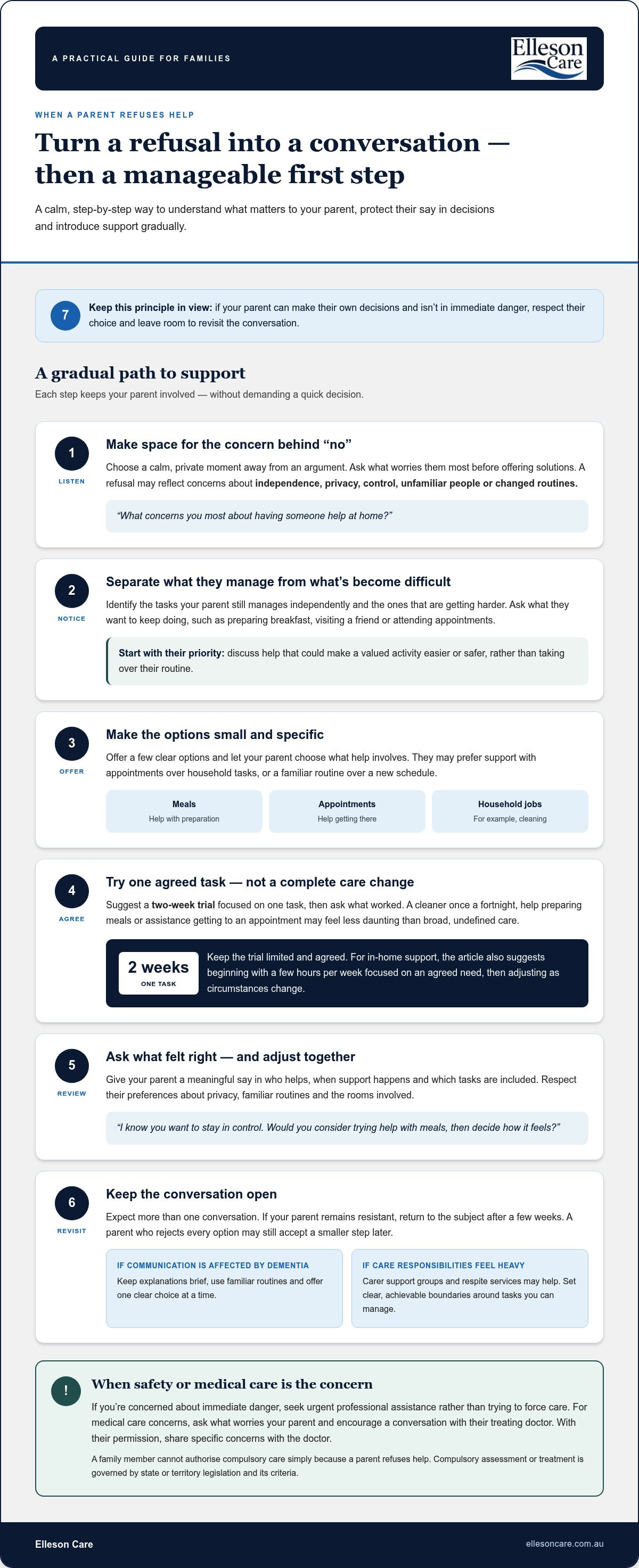
A parent may decline assistance because it feels like a loss of privacy, control or independence. They may also worry about unfamiliar people entering their home, changing routines or discussing personal care. Start by identifying what your parent still manages independently and which tasks have become difficult. A calm, private conversation, away from an argument, can reveal what is behind the refusal.
Introduce support in small, practical steps rather than proposing a complete change in care. For example, offer a two-week trial focused on one agreed task, then ask what worked. A cleaner once a fortnight, help preparing meals or assistance getting to an appointment may feel less daunting than broad, undefined care. If meal preparation is being neglected, discuss the risk of malnutrition without blame.
Use gentle, specific language: “I know you want to stay in control. Would you consider trying help with meals, then decide how it feels?” Offer a few care options and let your parent choose. They may prefer help with appointments over household tasks, or a familiar routine over a new schedule. Expect more than one conversation. If they remain resistant, return to the subject after a few weeks.
Under Australian mental health laws, compulsory assessment or treatment is governed by state or territory legislation and its criteria. A family member cannot authorise compulsory care simply because a parent refuses help. If you’re concerned about immediate danger, seek urgent professional assistance rather than trying to force care yourself.
If an elderly parent refuses medical care in Australia, ask what worries them and encourage a conversation with their treating doctor. When they can make their own decisions and aren’t in immediate danger, respect their choice. With their permission, share specific concerns with their doctor and keep communication open.
To seek an ACAT assessment, explain its purpose and invite your parent to take part. Contact My Aged Care together to discuss assessment arrangements. If your parent refuses, don’t present the assessment as compulsory. Note the concerns prompting your request and revisit the discussion later.
Family carers can seek support through carer support groups and explore respite services to help manage caring responsibilities. Set clear, achievable boundaries, such as agreeing which appointments you can attend or tasks you can manage. A parent’s refusal doesn’t mean you must carry every responsibility alone.
For in-home support, begin with a few hours per week focused on an agreed need, then adjust as circumstances change. If dementia is affecting communication or daily routines, keep explanations brief, use familiar routines and offer one clear choice at a time. A parent who rejects every option may still accept a smaller step later. Keep listening and leave the conversation open.
2. Reframing home care as a way to maintain independence
Home care can protect the parts of daily life your parent values rather than replace them. Start with an activity they want to keep doing, such as preparing breakfast or visiting a friend. Then discuss what assistance could make it easier or safer. This shifts the conversation from what your parent can no longer manage to how they can continue making their own choices.
For example, if driving has become stressful, transport support may help your parent keep attending appointments or seeing friends. The goal isn’t to take over their schedule, but to preserve access to the places and people that matter to them. Ask, “What would you like to keep doing each week?” Their answer offers a practical starting point for discussing care options.
Some parents fear losing privacy when someone enters their home. Give them control over details such as the tasks, timing and rooms involved. They might prefer help with heavier household jobs while managing personal routines themselves. Explain who will be present and what the assistance involves, then give them space to consider it.
Financial concerns can make home care feel uncertain. Avoid guessing at costs or making broad promises. Instead, clarify which task your parent wants help with and what arrangements they would feel comfortable discussing. If they receive Australian aged care support, explain that the Support at Home Program began on 1 November 2025. Some everyday services under the program involve a co-contribution, so their circumstances and support plan matter.
Respecting independence also means accepting a clear “no” when your parent can make their own decisions and isn’t in immediate danger. You can still raise a specific concern without making demands. For instance, say, “I’m worried the trip to your appointment is becoming tiring. Would you consider transport help for that visit?” The decision stays with your parent.
Notice whether support could also ease mental strain. A parent who spends energy managing laundry, shopping or transport may have less time for rest and social contact. Ask which responsibility feels most tiring, then discuss a limited form of assistance around that task. If they want to explore what respectful, person-centred support can involve, support that works around their preferences may help inform the discussion.
3. Keeping the older person involved in care decisions
Resistance often reflects what help seems to threaten, rather than opposition to every kind of support. An ageing parent may fear losing independence, privacy or control over familiar routines. Take that concern seriously: ask what independence means to your parent, then use their answer to guide the discussion.
Invite your parent to describe what is behind their refusal before suggesting a solution. Try, “What concerns you most about having someone help at home?” They may worry about a stranger entering their bedroom, being judged for a cluttered kitchen or losing the choice of what to eat. Acknowledge the concern, then ask what might make assistance feel more acceptable.
Involve your parent in defining the problem, not just choosing from options prepared by relatives. For example, if managing medication is becoming difficult, ask which part is causing trouble: opening packaging, remembering doses or organising repeats. Their answer can help identify support they might accept. It also avoids assuming that one difficulty means they want others to take over every task.
Make decision-making practical by agreeing on the details together. Discuss which tasks matter to your parent, when help fits their routine and what they prefer to handle privately. If family members disagree, clarify openly who can manage which tasks. A shared plan reduces confusion and gives your parent a clearer role than simply receiving decisions made by others.
Ageing can bring changes in health, mood and confidence, but refusal alone doesn’t explain why someone is struggling. Depression, anxiety and fears about ageing may contribute to resistance. Ask what changes your parent has noticed, such as feeling worried about appointments or avoiding activities they once enjoyed. If they’re open to it, discuss these observations with their doctor and involve them in the conversation.
When your parent can make their own decisions, their choice deserves respect, even when you disagree. Ask permission before sharing concerns with relatives or professionals, and explain what information you intend to discuss. If they decline one option, ask whether another form of help might feel different. Keeping the conversation open supports trust and makes future decisions a partnership.
Keep the next conversation focused on understanding rather than persuasion. Ask what feels uncomfortable about the proposed help, listen without correcting their answer, and leave room for your parent to explain what might feel more acceptable. Asking about their concerns can make the conversation less confrontational and keep their priorities at the centre.
An older parent who can make their own decisions cannot be forced to accept help simply because they refuse it. The aim is to offer choices while preserving a genuine say. If the refusal may be connected to depression, anxiety or fears about ageing, acknowledge that possibility without treating it as a diagnosis. Approaching decisions as a partnership can help sustain trust.
4. Including a parent in decisions and offering choices
Start with a practical decision your parent wants to make, such as arranging transport to an appointment. Ask permission to discuss it, then listen without correcting their first response. Older adults may feel respected when their children offer choices instead of decisions already made. Try, “Could we look at a couple of ways to make that trip easier?” This invites discussion without implying that your parent has lost control.
Offer a few genuine care options, each with a clear difference. Your parent might choose between arranging a driver one morning a week, asking a relative for transport or continuing their current routine for now. Explain what each option involves, then give them time to consider it. Don’t present your preferred choice as the only reasonable answer. Choice matters only when declining an option remains possible.
Use language that suggests rather than instructs. Instead of “You need someone to clean”, try, “Would you consider having a cleaning company visit once a week?” This gives your parent something concrete to accept, reject or change. They may prefer a different day, a shorter visit or help with one room. Ask what would make the arrangement comfortable, and note their preferences before discussing next steps.
For family decisions, discuss openly who can manage which responsibilities. One child might handle appointment reminders while another helps organise transport. Ask your parent what involvement they welcome, and don’t assume siblings should decide first. Clarifying roles can reduce misunderstandings about meals, visits and household tasks. Keep agreed responsibilities simple enough for everyone to follow, then revisit them if circumstances change.
If your parent rejects every option, separate the immediate concern from the wider care discussion. Focus on one upcoming appointment rather than asking them to accept ongoing assistance. Ask, “What would make this appointment easier for you?” Their answer may suggest another arrangement, such as changing the travel plan or asking someone they trust. Respect a refusal and keep future choices open without repeatedly pressing for an answer.
After a decision, check that your parent still feels comfortable with the arrangement. Ask what is working and what they would change, rather than treating their agreement as permanent. If they choose a weekly cleaner, for example, discuss which tasks matter most and whether the visit suits their routine. This keeps the arrangement responsive to their preferences. Your role is to support their decisions, not take ownership of them.
5. Reasons ageing parents refuse help
A refusal often protects something important to your parent. Someone who has managed a household for decades may experience help with cooking as a judgement on their competence. A person who values privacy may worry about a worker entering personal spaces. These reactions can look stubborn from the outside, but may express a need to preserve identity, dignity or control over daily life.
Fear of becoming a burden can also shape a parent’s response. They may decline assistance because they worry about taking up their children’s time, even when family members want to help. Ask what they’d prefer to manage themselves and what feels hardest. Your parent might accept support with a difficult appointment while still wanting to prepare their own meals.
Past experiences matter. A parent who once felt rushed or unheard during a health appointment may distrust unfamiliar people offering care. Ask whether a previous experience has influenced their view. Listen for specific concerns, such as discomfort discussing personal care or fear that someone will make decisions without them. Acknowledging the experience can open a more useful conversation than repeating why you think help is needed.
Emotional changes can contribute to resistance, too. Depression, anxiety and fears about ageing may make everyday tasks feel overwhelming or new arrangements difficult to accept. Notice changes in routine, such as your parent stopping a valued social activity or avoiding calls about appointments. Raise what you’ve observed without labelling them, then ask how they’ve been feeling and what support would feel acceptable.
Practical concerns may sit beneath an apparently firm “no”. Your parent could worry about who will visit, what they will do or whether help will disrupt a familiar routine. Clarify the concern before responding. Ask, “Is it the visit, the task or not knowing who will come that worries you?” Their answer may point to concerns about privacy, trust, cost or timing.
Family dynamics can intensify the emotional response. If several children raise care concerns at once, a parent may feel outnumbered and become less willing to talk. Choose one family member to begin a calm conversation, and agree beforehand to listen rather than argue. If the refusal continues, keep a simple record of specific changes, such as missed appointments or difficulty managing medication. Concrete examples help keep future discussions focused on wellbeing, not blame. To discuss respectful support for an older person, explore aged care support.
Elleson Care: Aged Care Services
Elleson Care’s Aged Care Services can help families explore support when daily tasks or health needs become harder to manage. Its person-centred approach keeps the older person’s preferences and dignity central to care decisions. Clinical Support may also suit nursing needs, including post-hospital care, wound management and palliative care.
Consider discussing support when family conversations are difficult to resolve or your parent has clinical care needs. A family member can share the concerns they’ve noticed and the type of help being considered, while keeping the parent involved wherever possible. Contact Elleson Care or visit ellesoncare.com.au to discuss support for your family.
Let the next conversation begin with their priorities
The next step doesn’t need to settle every question about care. Choose one unresolved concern, then ask your parent what outcome would feel acceptable. A written note of their preferences can help family members keep future conversations consistent and avoid reopening decisions already made. If they’re not ready to discuss support, agree when you might gently raise the subject again.
Knowing what to do when a parent refuses help also means recognising when your family could benefit from experienced support. Elleson Care offers Aged Care Services, NDIS Support Services and Clinical Support. These services may be relevant when an older person needs ongoing support or clinical care, with their preferences kept central to the discussion.
For a considered conversation about your family’s situation, contact Elleson Care to discuss support. Your parent’s choices can remain part of the process, one decision at a time.
Frequently Asked Questions
Why Do Ageing Parents Refuse Help?
Ageing parents may refuse help because support can feel like a threat to privacy, control or identity. A parent might worry that accepting help with meals will change family routines or invite judgement about their home. Ask what the proposed assistance means to them rather than assuming the reason. Their answer can distinguish concerns about the task from worries about unfamiliar people or changing routines.
Why Do Elderly Resist Help?
Older people may resist because they fear dependence, feel anxious about change or have had an uncomfortable experience with care. A parent might reject personal assistance but accept help organising transport because the options feel different to them. Ask what specifically they dislike. A clear answer can help your family understand the concern and avoid treating every refusal as a rejection of all support.
What if They Still Say No?
If your parent still says no, respect their decision when they can make it and aren’t in immediate danger. You can continue offering practical support without turning each visit into a debate. For example, ask whether they’d like you to pick up groceries during your usual shop. If you’re considering what to do when a parent refuses help, note specific changes and raise them calmly in a later conversation.
Carer support and respite services in Australia for families with a parent refusing help
Family carers can seek support through carer support groups and explore respite services. Setting clear, achievable boundaries can also help manage caring responsibilities.
How to assess whether a parent who refuses help has decision-making capacity Australia
If your parent can make their own decisions and isn’t in immediate danger, respect their refusal. A family member cannot force care simply because they refuse help. If you’re concerned about immediate danger, seek urgent professional assistance.


