

Finding in home nursing care Perth families can discuss with confidence starts with understanding what support a person needs and what matters to them at home. Nursing may address clinical needs while helping someone remain comfortable and respected in familiar surroundings. Families often want to know what a nurse can do, how nursing differs from personal or household assistance, and how support can fit around the person’s routines and preferences.
This guide explains the types of clinical support that may be delivered at home, what information can help shape a useful discussion, and how nursing can work alongside support with daily living. Understanding these differences can make it easier to describe care needs and consider the next steps.
Elleson Care provides registered-nurse-led clinical support, including post-hospital care, wound and catheter care, medication administration, palliative support, ventilator and oxygen support, and pressure injury management. Its person-centred, evidence-based approach considers the individual’s needs, dignity and independence. The sections ahead explain what home nursing may involve and how to prepare to discuss support in Perth.
Key Takeaways
- In home nursing care Perth can be tailored to a person’s clinical needs, preferences and home circumstances, rather than treated as a fixed package.
- Knowing the difference between clinical nursing, personal care and domestic assistance helps families describe the support they are considering.
- Before discussing care, gather information about current needs, relevant clinical instructions and the person’s routines and preferences.
- Nursing needs can change over time. Consider support in light of the person’s current circumstances and alongside any daily living assistance they need.
- Elleson Care provides registered-nurse-led clinical support in Perth with a person-centred, evidence-based approach.
What does in-home nursing care in Perth involve?
In-home nursing care is clinical support delivered in a person’s home by qualified nurses. It can address health needs at home, rather than requiring every part of care to take place in a clinic or hospital. Receiving appropriate nursing support in familiar surroundings may feel more comfortable for some people and can help care fit around their daily routines. The type and arrangement of support depend on the person’s clinical needs, preferences and home circumstances.
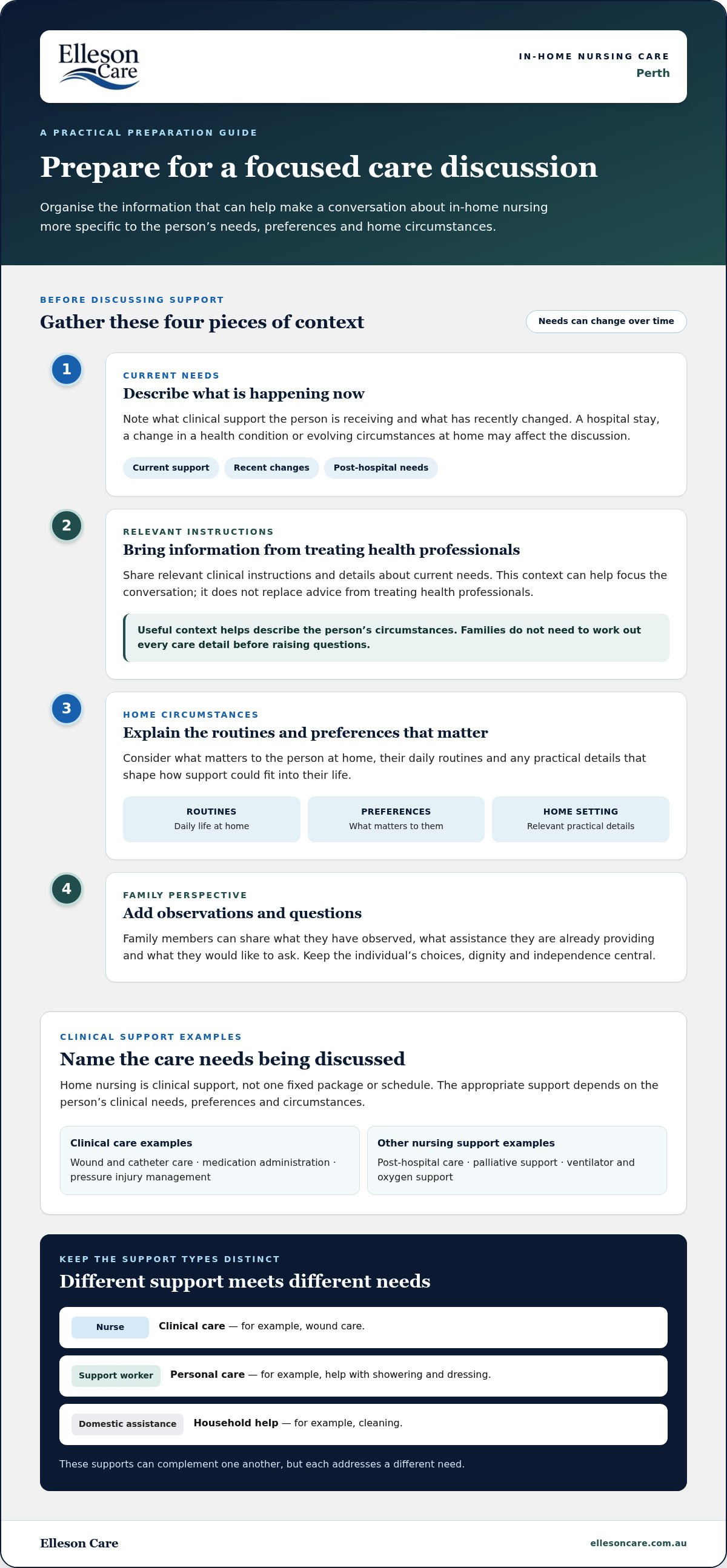
The phrase in home nursing care Perth can refer to a range of clinical needs, not one standard service or schedule. Nursing is also distinct from personal care and domestic assistance. For example, a nurse may provide wound care, a support worker may help with showering and dressing, and domestic assistance may include cleaning. These supports can complement one another, but each addresses a different need.
For a general overview of the role of nurses and services delivered at home, see Home health care. The practical details of an individual’s support should reflect their health circumstances and preferences.
What needs can a nurse support at home?
Clinical nursing may include wound management, catheter care and medication administration. It can also include pressure injury management, with support shaped around the person’s needs. Palliative support may form part of care at home, with attention to comfort, dignity and the individual’s wishes. These are examples of clinical support, not a fixed package: the appropriate care depends on the person and their circumstances.
Some people have more specialised support needs. Elleson Care’s registered-nurse-led clinical support includes ventilator and oxygen support, as well as post-hospital care. When discussing support, families can share relevant clinical instructions and explain the person’s day-to-day circumstances. This context helps focus the discussion on the individual, rather than assuming a service list alone describes their care needs.
Who may consider nursing support at home in Perth?
Older people, NDIS participants and their families may consider in-home nursing when clinical needs are part of the support picture. For example, someone returning home after a hospital stay may need nursing support as they continue receiving care in familiar surroundings. Needs vary, so an arrangement that suits one person may not suit another.
Consider both the clinical tasks involved and how support should fit into the person’s life. What matters to them at home? What assistance are family members already providing? Have their needs changed? Sharing this context can make a discussion about care more specific while keeping the person’s dignity, choices and independence in view.
How in-home nursing care can respond to changing clinical needs
Clinical needs can change. A person may need different nursing support after a hospital stay, when a health condition changes, or as their circumstances at home evolve. Their preferences and home environment matter too. A suitable arrangement takes these factors into account instead of assuming the same support or schedule will work for everyone over time.
Person-centred clinical support considers an individual’s health needs, preferences and home circumstances, and takes changes in those needs into account.
For families considering in home nursing care Perth, it helps to explain what is happening now and what has changed. Notes from appointments, relevant clinical instructions and the person’s own priorities can give useful context for a discussion about support.
Clinical support after a hospital stay
Returning home after a hospital stay can raise questions about what clinical support may be needed. Post-hospital care can be part of the discussion, alongside the person’s everyday circumstances and preferences. Families can share relevant information provided during care, such as instructions or details about current needs.
This information can help focus a conversation about support. It does not replace advice from treating health professionals, and families do not need to work out every care detail before raising questions.
Support for ongoing or complex care needs
Ongoing needs may involve wound, catheter or pressure injury management. A person may also need medication administration or support relating to palliative care, ventilation or oxygen. These examples describe areas of clinical support, not a standard bundle or a set schedule. The person’s circumstances and relevant clinical information guide the discussion.
Support can also be considered in light of what matters most to the person, including comfort, privacy and dignity. Family members may have helpful insight into routines and preferences, while the individual’s choices remain central to planning.
When discussing changing needs, it may help to organise information under a few headings:
- Current needs: What clinical support is the person receiving, and what has recently changed?
- Relevant instructions: What information from treating health professionals should inform the discussion?
- Home circumstances: Which routines, preferences or practical details are important to the person?
- Family perspective: What have family members observed, and what questions would they like to raise?
These details can make a conversation more focused without requiring families to decide the care plan themselves. Elleson Care provides registered-nurse-led clinical support with a person-centred, evidence-based approach. If you are considering Elleson Care’s clinical support, the person’s current needs and preferences are a practical starting point for discussing care.
In-home nursing care is different from everyday home support
Home care is a broad term, and not every service delivered at home is clinical nursing. Nursing focuses on health-related care. Personal care assists with daily activities, while domestic assistance helps with household tasks. Understanding the difference can help families describe the support they are considering and see how different types of help might fit together.
For example, medication administration or wound management is clinical support. Help with dressing is personal care, while cleaning is domestic assistance. Each can contribute to a person’s comfort and daily life, but they address different needs. The appropriate support depends on the individual’s circumstances, preferences and care requirements.
| Type of support | Main focus | Example |
|---|---|---|
| Clinical nursing | Health-related care provided by a nurse | Medication administration or wound management |
| Personal care | Assistance with everyday activities | Help with dressing or showering |
| Domestic assistance | Practical help with household tasks | Cleaning or other home tasks |
This distinction matters because in home nursing care Perth does not describe every kind of help someone might receive at home. A person may need clinical support, assistance with daily activities, household help, or a combination. These supports are not interchangeable, and needing one does not automatically mean someone needs the others.
When is nursing support different from personal care?
Nursing addresses clinical needs. Medication administration and wound management are examples of clinical care. Personal care, by contrast, helps with activities such as dressing or showering. Both can be valuable, but they involve different kinds of support. The appropriate arrangement depends on the person’s needs and the assistance required.
How can clinical and daily support work together?
Some people may benefit from nursing alongside support with daily activities; others may need only one type of assistance. Clinical support addresses health-related needs, while daily living support can help with routines and practical tasks. If both are relevant, considering them together can give families a clearer picture without assuming that every person needs both.
Elleson Care provides aged care, NDIS support and registered-nurse-led clinical care. These services relate to different parts of a person’s support needs and can be considered in light of their circumstances. Aged care support may be relevant for an older person, while NDIS support may be part of the picture for an NDIS participant. The person’s needs and preferences remain central when considering appropriate support.
How to prepare for in-home nursing care in Perth
A little preparation can make a discussion about nursing support clearer. You do not need to have every answer or prepare a formal care plan first. Start with what is happening now, what matters to the person and what you want to understand about possible support. This gives the conversation a practical starting point while keeping the person’s choices central.
If a health concern is urgent or needs emergency medical attention, routine home care is not a substitute for appropriate urgent or emergency services.
What information helps shape a useful care discussion?
Before discussing in home nursing care Perth, gather information that describes both the clinical needs and everyday life. Include the person in the conversation as much as they wish, and share family or carer observations with their consent. A short written list can help if there are several concerns to cover.
- Current concerns: Note what support is needed now, what has changed and which questions the person or family would like to raise.
- Clinical information: Gather relevant care instructions or other details from treating health professionals, where available.
- Priorities and preferences: Record what matters to the person, the support they want and any preferences about privacy or how assistance is provided.
- Daily routine: Note usual activities and routines that may help support fit comfortably into the person’s day.
- Communication: Explain how the person prefers information to be shared, including whether they want a family member or carer involved.
- Practical access: Mention relevant details about reaching the home and the areas where support may be needed.
The notes do not need to be exhaustive. Their purpose is to help explain the person’s situation, not to replace clinical instructions or require family members to decide what care should be provided.
How to discuss funding and support arrangements
Funding pathways can differ depending on whether a person is accessing aged care or NDIS support. The processes, eligibility and arrangements are not interchangeable, so identify which pathway is relevant before discussing how support may be organised. Keep questions about funding distinct from the person’s clinical needs so neither is overlooked.
For older Australians exploring government-funded in-home aged care, the Support at Home program in 2026 may be relevant. Program guidance and individual circumstances can affect how support is arranged, so use current official information when considering eligibility or funding. NDIS participants should consider their own support arrangements and relevant plan information. Do not assume one funding pathway or care arrangement applies to everyone.
Once you have gathered the person’s priorities, relevant clinical information and practical home details, you can begin a more focused discussion about support. Discuss nursing support with Elleson Care as a step towards considering care that respects the individual’s needs and preferences.
Elleson Care’s person-centred nursing support in Perth
Elleson Care is a West Australian owned and operated provider of aged care, NDIS support and clinical care, with a local focus on Perth. Its clinical support is led by registered nurses and guided by a person-centred, evidence-based approach. The person’s clinical needs are considered alongside their preferences, home circumstances and what matters to them in daily life.
The team brings over 20 years of combined experience across nursing, healthcare, NDIS management and risk management. That experience informs a considered approach, while each person’s situation remains individual. Rather than treating a service list as a care plan, the team considers the support being discussed and how it relates to the person’s life at home.
Clinical care delivered with dignity and respect
Clinical knowledge matters, as does the person’s experience of care. A person-centred approach makes room for individual preferences, privacy and independence in conversations about support. Where the person wishes, family perspectives can also provide insight into routines and concerns. Elleson Care takes a holistic approach to the person and their family context without promising a particular health outcome.
Evidence-based care provides a considered foundation for clinical support. This means taking the person’s circumstances seriously and keeping their choices and comfort in view as needs are discussed. Clinical requirements are one part of life at home. Respectful care also means listening to what the individual values and communicating in a way that supports their involvement.
Discuss your support needs with Elleson Care
For individuals and families in Perth, describing the current situation is a useful starting point. Outline the clinical concerns, what the person wants from support and any relevant instructions or preferences. Families can share observations where the person is comfortable with their involvement. These details help make the discussion specific to the individual, rather than based on assumptions.
Elleson Care provides clinical support within its aged care and NDIS services, led by registered nurses and guided by a person-centred, evidence-based approach. The company headline is Person-Centred Care Services, reflecting its focus on respectful support shaped around each person’s circumstances.
If you are considering nursing support at home, you can discuss your circumstances with Elleson Care. Explore nursing services in Perth to understand the support available and raise the questions that matter to you and your family.
Take the next step towards support shaped around the person
A useful next step is to turn what you have learned into a conversation about the person’s priorities: what support matters now, what they want to maintain in daily life and what may need to adapt if their circumstances change. This keeps decisions grounded in the individual’s voice and makes it easier to discuss in home nursing care Perth in practical terms.
Elleson Care is a West Australian owned and operated provider offering registered-nurse-led clinical support. Its team brings over 20 years of combined experience across nursing, healthcare, NDIS management and risk management. This experience is paired with a person-centred approach that respects individual preferences and family context.
To discuss in-home nursing support in Perth, contact Elleson Care. Share the person’s current needs, preferences and any relevant clinical information to begin a focused conversation about support.
Frequently Asked Questions
What nursing services can be provided at home in Perth?
Home nursing may include clinical support such as medication administration, wound and catheter care, pressure injury management, palliative support, and ventilator or oxygen support. Elleson Care also provides post-hospital care. The appropriate support depends on the person’s clinical circumstances and relevant care information. For example, a family planning support after discharge can note the instructions they received and the questions they want to discuss with the nursing team.
Can NDIS funding cover nursing support at home?
NDIS funding may cover nursing support when it relates to a participant’s disability support needs and is funded in their plan. It is not automatic for every nursing service or participant. Consider the participant’s support goals and plan details, and keep relevant clinical information available when discussing their needs. Elleson Care provides NDIS support and clinical care, so participants and families can discuss how nursing support relates to their circumstances.
Does Medicare pay for in-home nursing care in Australia?
Medicare does not automatically cover privately arranged home nursing simply because care is delivered at home. Coverage depends on the service and applicable Medicare rules. Before making financial decisions, check current information with Medicare or Services Australia and discuss the person’s circumstances with their treating health professional. This can help distinguish Medicare-funded services from aged care or NDIS funding, which follow separate arrangements.
Do I need a GP referral for in-home nursing care?
A GP referral is not a universal requirement for every in-home nursing arrangement. Whether one is needed can depend on how care is organised and any relevant funding or clinical requirements. A referral or written clinical instructions may still help explain the person’s needs and current care. If the person has a treating GP, families can ask for relevant information to support a clear discussion about nursing care.
Can in-home nursing support begin after a hospital stay?
Yes, post-hospital nursing support at home can be discussed as part of planning ongoing care after a hospital stay. Families can gather discharge information, medication details and any wound-care or other clinical instructions provided to them. Sharing these details helps explain the support being considered. Home nursing does not replace hospital discharge planning or advice from the treating team, and urgent medical concerns require appropriate urgent services.
How does aged care funding apply to nursing support at home?
For eligible older people, the Australian Government’s Support at Home program is the current in-home aged care system. Under current program rules, eligible clinical care, including nursing, is government-funded without a participant contribution. Eligibility and funding arrangements depend on the person’s circumstances and assessment. Check current guidance through My Aged Care or the Department of Health and Aged Care before making decisions about funding.
Can family members be involved in planning in-home nursing care?
Yes, family members can contribute observations and questions, with the person’s consent and involvement guided by their preferences. For example, a relative might describe changes noticed in a daily routine or help the person keep track of questions for the nurse. The person receiving care should remain central to decisions. Sharing information respectfully can help the discussion reflect both their wishes and relevant family context.


