

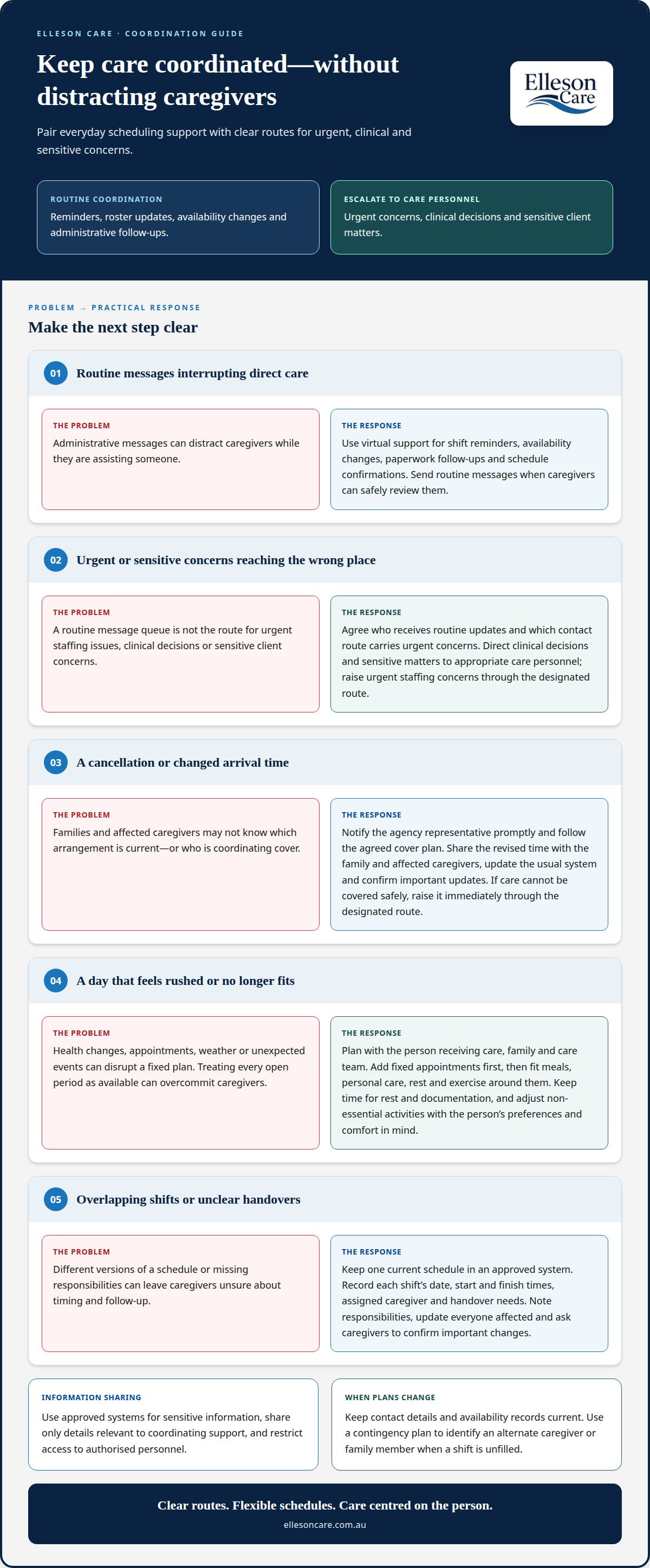
A virtual assistant can help with managing caregiver schedules and communication by handling routine reminders, schedule updates and follow-ups. Direct urgent concerns, clinical decisions and sensitive client matters to the appropriate care personnel. Keep schedules flexible enough to accommodate changes in a person’s health, appointments or daily needs.
It’s understandable to want organised communication that doesn’t distract caregivers while they’re providing care. Clear expectations help everyone distinguish routine messages from matters that need prompt attention, and know who is responsible for each concern.
This article explains how virtual support can help with everyday coordination, when to escalate an issue and how to plan schedules with the person receiving care, their family and care team. It also covers practical ways to make updates clear and plans easier to adapt as needs change.
Key Takeaways
- Use virtual support for routine reminders, schedule updates and follow-ups, while keeping caregivers focused on the person in their care.
- Set clear communication routes so clinical decisions, sensitive concerns and urgent situations reach the appropriate care personnel.
- Plan schedules with the person receiving care, family members and caregivers, then review them as needs and routines change.
- Make handover notes clear and useful by recording relevant updates, responsibilities and follow-up actions in an approved system.
1. Can a virtual assistant help with caregiver communication?
Yes. A virtual assistant can coordinate routine communication, giving caregivers more time for direct care. Tasks may include sending shift reminders, recording availability changes, following up on paperwork and confirming schedule updates. For example, when a caregiver requests a shift adjustment, the assistant can record the change in the approved scheduling system and send confirmation. Templates for reminders and documentation requests also help keep messages clear and consistent.
Send routine messages when caregivers can safely review them, rather than while they’re assisting someone. A reminder about next week’s appointment can go through an approved communication platform; an urgent concern must follow the care team’s escalation process. Use secure, approved systems for sensitive information and restrict access to authorised personnel. Keep contact details and availability records current to reduce unnecessary follow-up.
Allow schedules to flex around changes in health, weather and unexpected events. Leave room to move a non-essential activity if a person feels tired or an appointment runs late. For instance, shorten an outing while keeping a preferred activity at home. Discuss adjustments respectfully and consider the person’s preferences and comfort.
Make routines more manageable by listing essential activities first, then agreeing on realistic timings with the person and care team. If a morning feels rushed, group tasks by location or prepare needed items beforehand. Include time for rest and documentation instead of treating every open period as available for another task. This helps caregivers avoid overcommitting and gives the day a steadier pace.
When managing caregiver schedules and communication, look for recurring delays and points of confusion. A virtual assistant can organise routine updates and flag unanswered administrative requests for follow-up. The care team can then decide whether a reminder, timing adjustment or clearer assignment would help, without compromising the person’s choice or comfort.
2. Caregiver communication expectations and escalation
If a caregiver cancels, notify the appropriate agency representative promptly and follow the agreed cover plan. Share the revised arrival time with the family and affected caregivers, then record the change through the usual process. If care cannot be covered safely, raise the concern immediately through the designated contact route.
Agree on communication expectations before a shift begins. Specify who receives routine roster updates, how caregivers report availability changes, and which contact route carries urgent concerns. A caregiver who cannot attend should communicate as early as possible, explain the shift affected, and avoid accepting another commitment until their availability is clear. Families can then understand what is changing and who is coordinating cover.
Separate administrative messages from concerns that require professional judgement. A virtual assistant may pass on a roster query, but clinical decisions and sensitive client concerns belong with appropriate care personnel. Urgent staffing issues also need a clear escalation route, rather than being left in a routine message queue. Caregivers shouldn’t be expected to respond to administrative messages while providing care if doing so would distract from their responsibilities.
When a schedule changes, update the appropriate system, notify affected caregivers, confirm important updates and document the change under agency procedures. For example, if a regular visit moves because an appointment runs late, tell the caregiver the revised time and confirm they received the update. Keep contact details and availability records current so messages reach the right person. A consistent process also helps families distinguish confirmed arrangements from proposed changes.
Prepare a contingency plan with alternate caregivers and family members who may provide cover. Keep healthcare providers’ contact numbers and instructions for medication, meals and safety routines accessible to authorised people. If a caregiver feels unwell or has concerns, they should tell their health professional they provide care and discuss relevant symptoms. Families seeking help with changing support needs can explore care support information.
3. Collaborative schedule planning with clients, families and PSWs
Plan the schedule with the person receiving care, family members and care team. Begin by discussing the person’s preferences, essential support needs and regular commitments. Add fixed appointments first, then fit meals, personal care, rest and exercise around them. This gives everyone a chance to identify practical conflicts before shifts are agreed.
In Australia, share care schedules and health information through approved systems, restricting access to authorised personnel. Share only details relevant to coordinating support, and avoid sending sensitive information through informal group chats. Agree who can view updates and where the current schedule is kept, so family members and caregivers know which version to follow.
To prevent missed or overlapping shifts, record each shift’s date, start and finish times, assigned caregiver and handover needs. Update one shared schedule when arrangements change, notify everyone affected and ask caregivers to confirm important updates. Check that outgoing and incoming shifts connect appropriately. If a shift is unfilled, use the contingency plan to identify an alternate caregiver or family member.
Make responsibilities clear as well as timings. For example, note who is supporting a scheduled appointment and who will tell the family if plans change. Use a shared calendar or approved scheduling system as the single source of current information. In a multi-caregiver arrangement, a colour-coded view can distinguish shifts, responsibilities or the person’s preferences. Keep labels simple and explain them to everyone using the schedule.
Review the plan regularly with the person, family and care team. Ask whether the timing still suits the person’s physical and emotional needs, and whether activities feel rushed or tiring. A new appointment or changed routine may call for adjustments. Discuss the reason, agree on a revised arrangement, update the schedule and notify affected caregivers. Regular collaboration helps keep responsibilities and expectations aligned.
4. What information should be included in caregiver handover notes?
A useful handover note helps the next caregiver continue support without relying on memory. Record the date, shift time and names of the outgoing and incoming caregivers. Summarise planned activities, completed tasks and outstanding responsibilities. For example, note whether a planned appointment took place or needs rescheduling. Keep the wording factual, concise and easy to scan.
Include relevant changes to the person’s usual routine, preferences or support needs. A note might say that lunch was later than usual or that the person chose to rest instead of walking. Describe what happened and when, without adding assumptions or diagnoses. Record the person’s expressed preferences respectfully to support continuity and dignified care.
Make follow-up actions clear by stating what needs attention, who is responsible and which communication route to use. If a family member needs an update about a changed appointment, record the action and whether it has been completed. Keep urgent concerns separate from routine handover notes, and direct them promptly to the appropriate care personnel rather than leaving them for the next shift.
Use approved systems for handover records, with access limited to authorised personnel. Keep sensitive information relevant to coordinating care and avoid copying it into informal messages. Follow the organisation’s documentation procedures, including how to record schedule changes and administrative follow-ups. A consistent format helps caregivers find key details quickly and reduces confusion between shifts.
Before finishing a note, check that it identifies the shift, records meaningful updates, and names any outstanding action. The incoming caregiver should be able to distinguish completed tasks from items requiring follow-up. For complex care needs, speak with a care team about support that helps keep communication aligned.
Elleson Care: Aged Care Services
Elleson Care provides Aged Care Services for people and families seeking support with ongoing care needs in Perth. When coordinating schedules, communication and changing routines becomes difficult to manage alone, person-centred support can help make care more organised. Elleson Care also provides NDIS Support Services and Clinical Support, including nursing support for needs such as wound management and post-hospital care.
Choose support that reflects the person’s needs, preferences and care arrangements. Clear communication between the person, family and care team can help keep support aligned as circumstances change. For guidance on care support, visit ellesoncare.com.au.
Make your next care-planning step manageable
A more workable care routine doesn’t require a complete overhaul. Start by identifying one point of friction, such as unclear shift changes or a handover that leaves questions unanswered. Then agree on a practical adjustment with the person receiving care and those supporting them. A shared priority gives everyone a clear place to begin.
Over time, managing caregiver schedules and communication can become a more considered process, shaped around the person’s preferences and changing needs. Reviewing what works, and what needs to change, helps families make decisions with greater clarity. If you’d like to discuss care support for your circumstances, contact Elleson Care.
Small, collaborative steps can help create a steadier experience for everyone involved.
Frequently Asked Questions
Can a virtual assistant help with caregiver communication?
Yes, a virtual assistant can handle clearly defined administrative tasks, such as preparing routine updates and tracking unanswered messages. For example, they can note that a roster change is awaiting confirmation and pass the outstanding item to the responsible staff member. Leave clinical judgement, sensitive concerns and urgent decisions to the appropriate care personnel. This division keeps administrative follow-up organised and responsibilities clear.
What are time management strategies for caregivers?
Use a short planning review to identify essential tasks, appointments and personal commitments before the week begins. Group errands by location and leave time around appointments for travel or delays. For example, check household supplies while preparing a shopping list rather than making separate trips. Caregivers can also agree with family members on specific tasks to share, while protecting time for rest and necessary documentation.
Why is caregiver communication important in a home care agency?
Consistent communication helps an agency identify gaps between the support a person needs and what caregivers understand. A caregiver’s observation, such as a repeated difficulty with a daily task, can give the appropriate personnel useful context for review. Clear records also help prevent conflicting instructions across shifts. When staff know where to raise questions, they can resolve routine issues without relying on informal messages or assumptions.
What tools help manage caregiver schedules and shift changes?
Scheduling software can display assigned shifts, while a secure communication platform supports messages about changes. Task management systems help track follow-ups, and approved document tools keep relevant records together. Choose one main schedule as the current reference and make sure authorised users can access it. For example, avoid keeping separate calendars that could show different shift times after an update.
How can families coordinate schedules across multiple caregivers?
Agree on one family contact to coordinate updates and reduce parallel instructions. Give each caregiver access to the current schedule through an agreed system, and make responsibilities clear for appointments, household tasks and family updates. If relatives use separate calendars, choose one as the master record and copy changes across promptly. Regular conversations with the person receiving care help ensure the arrangement still suits their preferences.
How should caregivers communicate urgent updates and emergencies?
Caregivers should use the agreed urgent contact route instead of putting a time-critical concern in a routine message queue. State what happened, when it began, the person’s current situation and any action already taken. Direct clinical concerns to the appropriate care personnel, and follow the established emergency plan for immediate risks. A brief written record can support follow-up once the urgent communication is complete.


