

In Perth, meal preparation services for seniors can mean meals delivered to the home or practical help preparing food there. Access to meal support through the Commonwealth Home Support Program, Support at Home or Transition Care depends on an aged care assessment and eligibility.
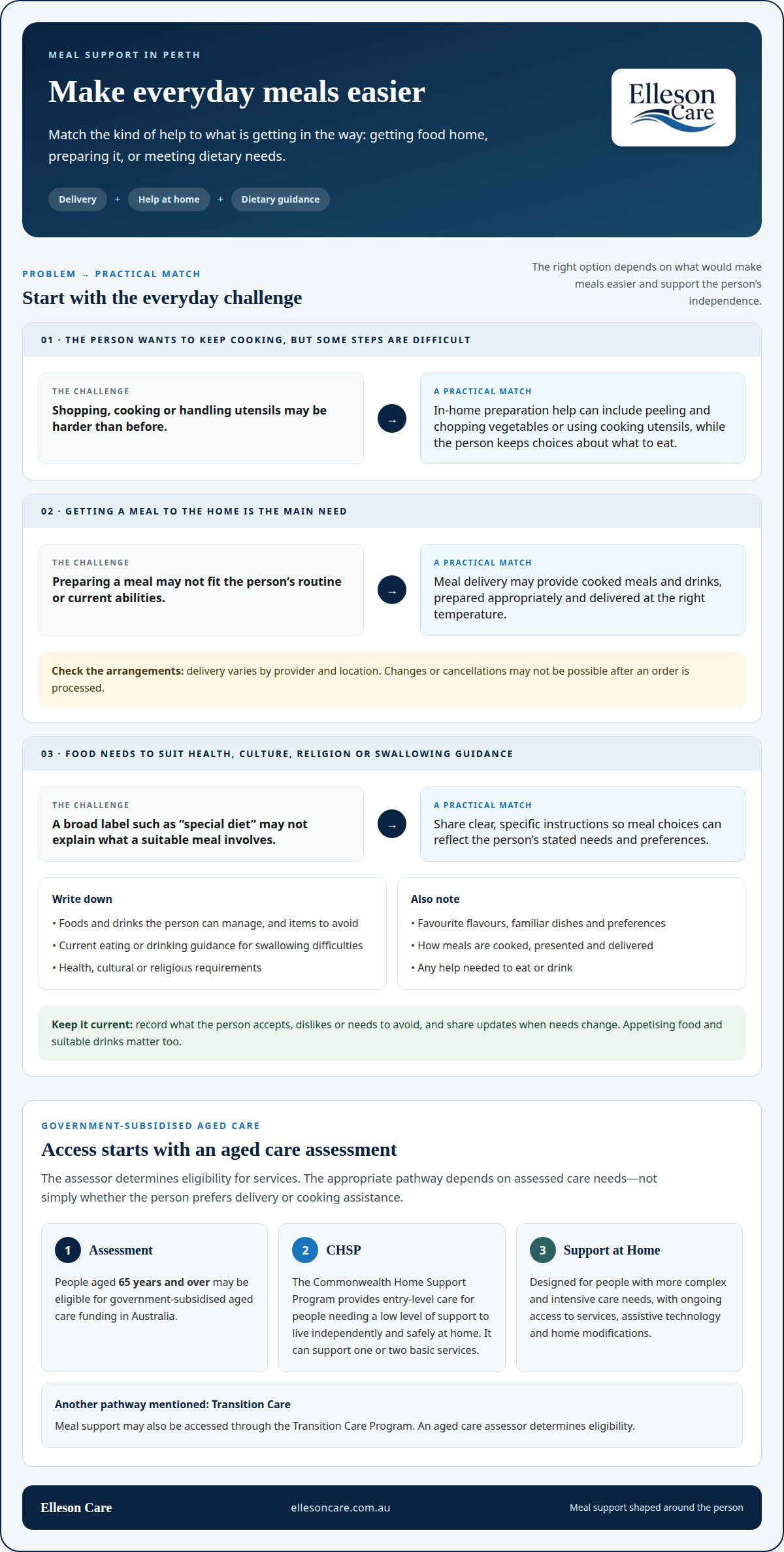
The right option depends on what would make everyday meals easier. Delivery can suit someone who needs food brought to their home, while in-home help can assist with tasks such as peeling and chopping vegetables or using cooking utensils. Meal support may also account for health, cultural or religious needs, including swallowing difficulties.
This guide explains how to access meal support in Perth, what the options may involve and how to communicate dietary needs. It also distinguishes government-funded pathways from practical help at home, helping you consider what best supports the person’s independence, comfort and ability to eat well.
Key Takeaways
- People aged 65 years and over may be eligible for government-subsidised aged care funding in Australia, according to the Australian Government Department of Health, Disability and Ageing.
- Consider whether meal delivery or help preparing food at home better fits the person’s daily needs and independence.
- Share dietary requirements and swallowing difficulties when arranging meal support so food and drinks can be suited to the person’s needs.
- For diabetes, low-sodium diets or allergies, identify the specific dietary needs that meal support should address.
How to get healthy home-cooked meals delivered in Perth?
In Perth, begin by considering whether delivered meals or help preparing food at home better suits the person’s routine. A service may provide cooked meals and drinks, prepared appropriately and delivered at the right temperature. Meal options may also address health, cultural, religious or other needs.
For government-subsidised aged care, eligibility begins with an assessment. People aged 65 years and over may be eligible for government-subsidised aged care funding in Australia, according to the Australian Government Department of Health, Disability and Ageing. The assessment determines approval to access aged care services. The Commonwealth Home Support Program provides entry-level care for people needing a low level of support to live independently and safely at home, according to the same department.
Before arranging delivery, note the person’s dietary requirements and usual meal preferences. Include whether meals need to suit a health condition, religious practice or cultural preference, and whether drinks are needed. Share these details when discussing meal options to clarify what can be prepared and delivered.
- List foods the person enjoys, such as soft-cooked vegetables or familiar dishes.
- Record requirements linked to health, culture or religion.
- Note delivery arrangements that matter, such as whether someone can receive meals in person.
What food safety and nutrition standards should seniors check when choosing a meal service? Ask how meals and drinks are prepared, transported and delivered at the right temperature. Find out how the menu supports healthy eating and whether options reflect the person’s dietary needs.
Are there risks or drawbacks to meal delivery and in-home meal preparation for older people? Delivery arrangements vary by provider and location. Changes or cancellations may not be possible after an order is processed. Aged care meal services don’t cover ingredient costs, takeaway delivery or meals for other people in the home.
Compare delivery with in-home preparation by identifying which tasks are difficult, such as shopping, cooking or handling utensils. This gives families a practical starting point for choosing support that fits everyday life.
Food for special diets and swallowing difficulties
Meal support may include food prepared for swallowing difficulties and other needs. The aim is to provide safe, appetising food and drinks that help a person eat well and stay hydrated. A familiar meal, for example, may need a different preparation approach to suit swallowing needs.
Start with the person’s current dietary guidance. Note the foods, drinks and preparation details they have been advised to follow, then share those instructions when arranging meals. Include practical preferences, such as favourite flavours, foods to avoid and any religious or cultural requirements. Clear details help define what a suitable meal means for that person.
- Describe the swallowing difficulty and any eating or drinking guidance already provided.
- List foods and drinks the person can manage, alongside items they need to avoid.
- Explain preferences, such as familiar dishes or ingredients that make meals more appealing.
- Ask how the service adapts cooking and presentation to meet those stated needs.
Dietary needs may relate to health, culture or religion. Someone may need meals suited to a health condition or dishes that respect their cultural practices. Give specific examples rather than relying on a broad label. “Avoid this ingredient” or “prepare this dish without that component” is clearer than simply saying “special diet”.
For someone with swallowing difficulties, appetising food matters alongside suitability. Food that looks and tastes appealing may be more inviting, and drinks also need consideration because aged care meal support can include appropriately prepared drinks. Ask how meals are cooked, presented and delivered, and explain whether the person needs help to eat or drink.
Keep a simple record of what works. Note meals the person accepts, textures or flavours they dislike, and any changes in their needs. Share updates with those arranging meal support so future choices reflect current guidance, not outdated preferences. Ongoing communication helps tailor meals and maintain a comfortable routine at home.
In-home meal preparation assistance
In-home meal preparation can help when cooking becomes difficult but the person wants to continue eating at home. Assistance may include peeling and chopping vegetables or using cooking utensils. These practical tasks support meal preparation while leaving choices about what to eat with the person.
Identify the exact steps that are challenging. Someone may be able to choose a recipe but need help preparing vegetables, handling utensils or organising ingredients. A clear task list helps shape support around the person’s abilities and routine. It also distinguishes hands-on preparation from delivery, where cooked food arrives ready to serve.
In Australia, the Commonwealth Home Support Program can support one or two basic services. According to the Australian Government Department of Health, Disability and Ageing, it provides entry-level care for people needing a low level of support to live independently and safely at home. Support at Home is designed for people with more complex and intensive care needs, with ongoing access to services, assistive technology and home modifications.
Meal support may be accessed through the Commonwealth Home Support Program, Support at Home or the Transition Care Program. An aged care assessor determines eligibility. The appropriate pathway depends on the person’s assessed care needs, not simply whether they prefer cooking assistance or meal delivery.
- Write down which preparation tasks need help, such as chopping vegetables or using utensils.
- Record the person’s preferred meals, usual routine and any dietary instructions.
- Consider whether occasional preparation assistance or delivered meals better fits the household.
- Discuss how the person can remain involved, such as selecting ingredients or choosing the meal.
In-home help can preserve familiar routines, but suitable ingredients still need to be available. Delivery may reduce preparation tasks, while assistance at home can help with specific cooking steps. Compare the options with the person’s abilities, preferences and assessed support needs to clarify what to do next.
Which Perth meal services cater for diabetes, low-sodium diets, allergies, or other dietary needs?
For diabetes, a low-sodium diet or an allergy, begin with the person’s specific food requirements. Meal services may support food prepared for health needs, but instructions differ from person to person. Note foods or ingredients to avoid, preferred meals and any preparation directions already provided. For example, “low sodium” is more useful when paired with the person’s individual guidance.
Share those details before choosing meals. Ask how menus identify ingredients, how substitutions are handled and how dietary instructions are passed to staff. For an allergy, name the ingredient and explain which foods or dishes need attention. For diabetes or sodium restrictions, provide the person’s current dietary guidance rather than relying on a broad menu label.
- List allergies and the specific ingredients the person needs to avoid.
- Record dietary directions for diabetes or low-sodium meals, using current guidance.
- Include cultural, religious and personal preferences, such as avoiding particular meats.
- Note swallowing difficulties or required food and drink preparation instructions.
A menu description alone may not show whether a meal suits an individual. Compare its ingredients and preparation details with the person’s needs. If the menu changes, review the choices and share any updated instructions. This matters for both delivered meals and food prepared at home, where ingredients and cooking methods can differ.
Aged care meal services may provide food prepared for swallowing difficulties and other needs. They can also support safe, appetising food and drinks to help people eat well and stay hydrated. Describe what the person can comfortably eat and drink, along with any guidance they follow. This gives meal planning a clear, practical starting point.
For support that considers dietary needs as part of care at home, explore aged care support as a next step.
Aged care meal services may prepare food around health needs, including swallowing difficulties, and support other dietary requirements. Ask how the service handles ingredient exclusions, substitutions and preparation instructions.
Elleson Care: Aged Care Services
Elleson Care provides Aged Care Services to help older people remain comfortable and independent at home. If meal-related needs are part of wider daily care, this may be a useful starting point for discussing support. Elleson Care also provides NDIS Support Services and Clinical Support for people whose needs involve disability support or clinical nursing.
Describe the person’s situation, including which daily tasks have become difficult and whether clinical needs affect their routine. This helps frame a conversation about suitable support while keeping the person’s preferences and dignity central.
For information about support options, contact Elleson Care or visit ellesoncare.com.au.
Take the next step towards suitable meal support
Choosing meal preparation services for seniors in Perth is an opportunity to consider how food fits into the person’s wider routine. Before taking the next step, note what matters most: confidence around meals, help with everyday care or support that accounts for changing needs. Their preferences can guide a conversation that respects their independence and circumstances.
Elleson Care can discuss how its care services may relate to someone’s support needs at home. Contact the team to talk through the situation and possible next steps, without pressure to decide straight away.
Contact Elleson Care to discuss meal support and take the next step at a pace that feels right for you and your family.
Frequently Asked Questions
How can I access this service?
To access meal preparation services for seniors in Perth through government-funded aged care, begin with an aged care assessment. The assessment determines whether someone is approved to receive aged care services. Eligible meal support may be accessed through the Commonwealth Home Support Program, Support at Home or the Transition Care Program. The Australian Government Department of Health, Disability and Ageing describes the Commonwealth Home Support Program as entry-level care.
Can the meals be left at the door?
Whether a delivery can be left at the door depends on the meal service and the person’s location. Give clear instructions when arranging meals, including where to leave the delivery and whether someone will be available to receive it. Confirm arrangements for the address, particularly if property access or collection needs coordination.
How can I pay?
Payment arrangements depend on how meal support is organised. For subsidised aged care, an assessment determines access to the relevant support pathway. Aged care meal services don’t cover general ingredient expenses, takeaway food delivery or meals for other people in the home. Before setting up a regular arrangement, distinguish the service from ingredient costs and clarify which expenses the person is responsible for.
How is this service delivered?
Meal support may involve cooked meals and drinks delivered to the home, or help preparing food there. In-home assistance may include peeling and chopping vegetables or using cooking utensils. The right format depends on whether the person needs ready-to-eat meals or practical help with particular kitchen tasks. Service arrangements also depend on the person’s assessed aged care support.
What areas do you deliver to?
Meal delivery areas depend on the service and the person’s location within Perth. Provide the full address when arranging meals, then discuss the arrangements for that location, including whether meals can be left at the door. For in-home support, both the service area and the person’s care needs shape the arrangement. Elleson Care has a local focus on Perth.
What meal preparation and meal delivery services are available for seniors in Perth, WA?
Meal preparation services for seniors in Perth may include delivered meals and drinks or in-home help with preparation. Aged care meal services may also support health, cultural, religious and swallowing-related needs. In Australia, the Commonwealth Home Support Program can support one or two basic services. An aged care assessment determines eligibility for these government-supported pathways.


