

NDIS assistance with daily life can fund disability-related support with personal care and everyday tasks, such as cleaning, laundry and meal preparation. It is generally funded under Core Supports when it aligns with a participant’s plan and goals, but funding is not automatic. It differs from Daily Living Skills, which focuses on building a person’s ability to do tasks more independently over time.
It can be hard to tell whether someone needs practical help with a task now or support to build skills for the future. Both may be useful. Understanding the difference helps clarify what each type of support is intended to achieve.
This guide explains which daily supports may be covered, what funding generally excludes, and how Assistance with Daily Life differs from Daily Living Skills. It also shows how support can fit a participant’s routines, needs and goals.
Key Takeaways
- Funding may assist with personal care and household tasks such as cleaning, laundry and meal preparation when these supports relate to disability-related needs and plan goals.
- Separate the cost of practical help from everyday expenses such as rent and groceries, which this funding does not cover.
- Consider whether the need is for assistance to complete a daily task or for support to build skills and greater independence over time.
- Use the plan’s Core Supports allocation and goals to understand how daily assistance may fit into a person’s support arrangements.
Does ADL funding cover household tasks like cleaning and meal preparation?
It can cover disability-related help with household duties, personal care and everyday routines. The Australian Bureau of Statistics says the NDIS largely supports people under 65 years with permanent and significant disability.
Household tasks and meal preparation
Household task support means practical assistance with duties such as cleaning, laundry and meal preparation. It matters when disability makes these tasks difficult to manage independently, affecting a person’s home environment and daily routine. The 0120 item code covers household tasks, including cleaning, yard work and meal preparation or delivery. For example, a support worker may assist with preparing a meal or keeping frequently used areas tidy.
Meal preparation support can involve practical help with preparing food, rather than paying for the food itself. A participant might need support to plan a simple meal, use kitchen equipment safely, or complete washing and cleaning tasks. The support should relate to their disability and everyday needs, rather than replace ordinary household contributions from others in the home.
Daily routines and household skills
Daily routine support can help a participant manage regular activities, from morning personal care to evening preparation. Assistance can be arranged for the times when showering, grooming or household tasks are most difficult. For example, a support worker might help someone follow a morning routine before the day begins, then assist with laundry later.
Support can help complete a task, build household skills, or combine both approaches where appropriate. A participant might get help preparing lunch while practising each step, from gathering ingredients to cleaning up. This can make daily tasks more manageable while respecting the person’s preferences and independence.
If daily support needs are not adequately funded, participants can discuss their needs and goals with a Support Coordinator and ask about a plan review. Specific examples, such as missed meals or difficulty keeping up with laundry, can show how a funding gap affects everyday life.
What is NDIS Assistance with Daily Life?
Assistance with Daily Life can fund practical help with personal activities affected by disability. Support needs to relate to the participant’s circumstances and align with their NDIS goals.
Disability-related personal care
Disability-related personal care means assistance with everyday activities a participant cannot manage independently because of their impairment. Appropriate support can help them complete essential tasks while respecting their choices and privacy.
Item code 0107 covers daily personal activities, including help with personal hygiene, eating and moving safely. For example, assistance might involve setting up toiletries, supporting a person during dressing, or helping them eat safely. According to Sydney Children's Hospitals Network, the NDIS is responsible for supports needed when impairment affects functional capacity and daily activities.
Personal care in daily routines
Personal care in a daily routine means fitting support around the activities a participant needs to complete throughout the day. This can help make self-care more manageable, especially when a person’s disability affects how they move, dress or maintain personal hygiene.
Support can follow a participant’s usual preferences, such as getting dressed before breakfast or preparing for bed in the evening. The aim is to assist with the activity, not take over choices the person can make. A clear routine also helps support workers understand which tasks need assistance and how the participant prefers to receive it.
In the NDIS Price Guide, Assistance with Daily Life is listed under support category 01. NDIS funding for these supports must relate to disability and align with the participant’s goals. It can sit alongside help with household tasks, while personal care remains focused on activities such as hygiene, eating and safe movement.
Claims should reflect the support provided and its connection to the participant’s plan and goals. Keep clear records of assistance, such as help with dressing or personal hygiene, and how it relates to the participant’s daily needs.
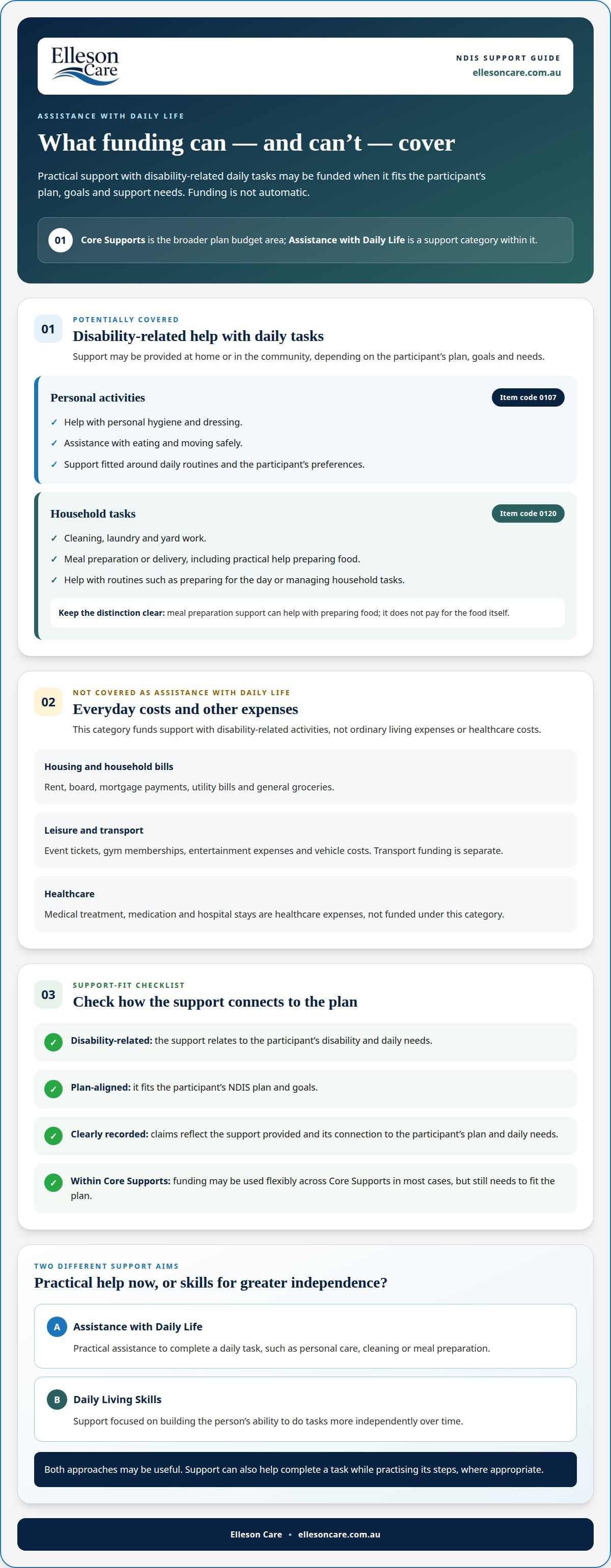
What Assistance with Daily Life funding covers
Assistance with Daily Life can fund disability-related help with everyday tasks at home or in the community. What is covered depends on the participant’s NDIS plan, goals and support needs.
Everyday costs excluded from funding
Everyday costs are ordinary living expenses, not support to complete disability-related activities. Knowing the difference helps participants understand what funding may cover and which costs remain their responsibility.
Rent, board, mortgage payments, utility bills and general groceries are not covered as Assistance with Daily Life costs. Event tickets, gym memberships and entertainment expenses are also outside this category. Vehicle costs are not covered here, and transport funding is separate. Medical treatment, medication and hospital stays are healthcare expenses, not funded under this category.
Daily Life assistance and Core Supports
Core Supports is a broader budget area in an NDIS plan, and Assistance with Daily Life is a support category within it. The category describes the kind of help, while Core Supports identifies where the funding sits in the plan.
In most cases, participants can use funding flexibly across Core Supports as their needs change, in line with their plan. This does not mean funding can be used for any purpose: supports still need to fit the plan. Assistance may cover personal activities, household tasks, or help managing appointments and community activities.
This support is relevant to NDIS participants with approved Core Supports funding whose goals or daily needs align with the category. Funding is not automatic. It is assessed against individual needs and goals, must relate to disability, and must meet reasonable and necessary criteria.
The amount of support depends on a participant’s needs and plan funding, from a few hours a week to more regular assistance. The NDIS Pricing Arrangements and Price Limits sets maximum prices providers can charge for services in this category. Meal delivery and linen services can only be claimed when they are named in the participant’s plan.
Assistance with Daily Life compared with Daily Living Skills
The key difference is whether support helps complete a task or builds the capacity to do it more independently. Assistance with Daily Life provides practical help with everyday activities. Daily Living Skills focuses on developing a participant’s skills and confidence over time.
For example, a participant might need a support worker to help prepare dinner because their disability affects their ability to do it safely. That is practical assistance with an immediate daily activity. If their goal is to learn meal planning, practise kitchen tasks and build confidence preparing dinner, Daily Living Skills may be a better fit. The purpose of the support matters.
The same distinction applies to household routines and appointments. Help organising a week or managing an appointment may address an immediate need. Capacity-building support would instead focus on practising planning skills, such as recording appointments in a calendar and preparing what to bring. The participant’s NDIS goals help show which outcome the support is intended to advance.
Independence does not have to mean doing every activity without help. A participant may build skills in one part of a routine while still needing hands-on assistance with another. For instance, they might practise choosing clothes and dressing, but need direct support with a task affected by their disability. The supports have different purposes, even within the same routine.
To identify the better fit, describe the daily activity, the assistance currently needed and the intended outcome. Is the priority completing the task, learning how to do more of it, or a combination over time? This distinction can make plan goals and support discussions more specific. For help understanding NDIS support for daily activities, explore the available support options.
Elleson Care: Aged Care Services
Elleson Care provides NDIS support in Perth for people with disability-related needs, including assistance with everyday activities. Its person-centred approach helps participants and families discuss support in the context of their circumstances and goals.
When disability support also involves clinical care, Elleson Care provides Clinical Support. Aged Care Services offer in-home support for people whose needs relate to ageing. These services can be a helpful next step when considering support beyond what NDIS funding may cover.
Contact Elleson Care to discuss your support needs and the assistance you are seeking.
Shape support around the person’s priorities
A useful first step is to describe what a good day looks like for the participant. Note which activities they want to manage themselves, where assistance would help, and what they hope to work towards. These details make conversations about NDIS assistance with daily life more personal and practical, rather than focused only on a task list.
Bring those priorities into conversations about support and goals. A participant may value privacy during personal care, a predictable routine, or enough assistance to take part in household life. Their preferences help define what respectful support means to them and what would make daily activities more manageable.
Elleson Care can discuss support needs with individuals and families and help them consider a suitable next step. Contact Elleson Care to discuss support in a calm, considered way, and take the next conversation at a pace that feels right.
Frequently Asked Questions
What does ADL cover?
ADL funding can cover support with daily activities affected by disability, such as personal care, cooking or household upkeep. A participant might need help preparing ingredients, using kitchen equipment or completing a task safely. Funding is for the assistance, not ordinary purchases such as groceries. The participant’s plan and disability-related needs determine which activities are relevant.
Who uses ADL funding?
NDIS participants use this funding when their plan includes approved Core Supports for daily assistance matching their disability-related needs and goals. For example, a participant who needs help managing personal activities may use an allocated support for that purpose. It isn’t automatically included in every plan. The NDIS largely supports people under 65 years with permanent and significant disability, according to the Australian Bureau of Statistics.
Can this support be used in my home?
Yes. Assistance with Daily Life can be provided at a participant’s home. A support worker might help with a morning routine, meal preparation or a household task made difficult by disability. Support may also take place in the community, depending on the activity and plan. For participants in Perth, consider which locations and tasks align with their funded needs.
Do I need a specific goal for this support?
Yes. Support must relate to the participant’s disability and align with goals in their NDIS plan. A goal does not need to list every task, but it should make the intended outcome clear. For example, a goal about managing daily routines can provide context for help getting ready for the day. Linking the support to a relevant goal helps explain its purpose.
Does ADL support include help with community access and transport?
Daily assistance can include help getting to appointments or taking part in community activities, such as using public transport with a support worker. The worker’s assistance is different from paying vehicle costs, which are not covered under this category. Transport funding is in a separate NDIS category. The participant’s plan and the activity’s purpose help determine how support applies.
How do I access Assisted Daily Living?
Start by reviewing the NDIS plan for approved Core Supports and goals related to daily support needs. The participant can then engage a provider and develop a support plan that sets out their needs and goals. In Perth, an NDIS Local Area Coordinator or Support Coordinator can discuss questions about allocated funding. Keep the proposed tasks and intended outcomes clear.


