
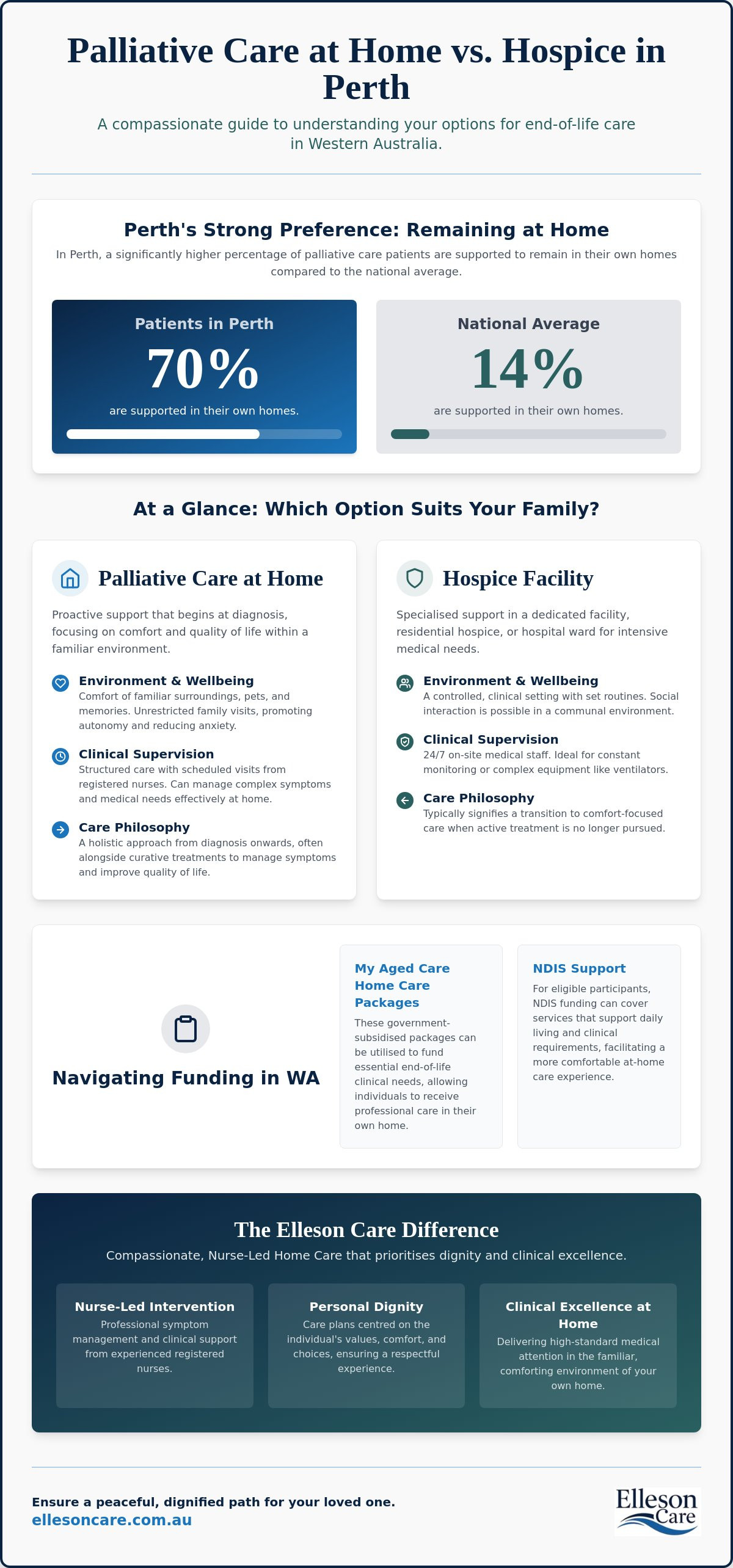
Did you know that in Perth, 70% of palliative care patients are supported to remain in their own homes until the very end? This statistic is significantly higher than the national average of 14%, reflecting a strong local preference for comfort and familiarity during life's final chapters. However, deciding between palliative care at home vs hospice Perth remains one of the most significant and emotionally taxing choices a family will ever make.
It is natural to feel torn between the clinical security of a facility and the emotional warmth of a familiar bedroom. You might worry about whether pain can be managed safely at home or feel concerned about the practicalities of navigating the WA health system. We realise that your priority is ensuring a peaceful, dignified experience that allows you to remain a supportive family member rather than just a primary carer.
This article explores the clinical and emotional differences between home-based support and hospice facilities to help you make an informed, compassionate choice. We will examine how professional nursing interventions and funding pathways like My Aged Care can provide a dignified path for your loved one in Perth.
Key Takeaways
- Understand the distinction between holistic palliative support and dedicated hospice facilities to identify the most appropriate level of care for your family's needs.
- Learn how to evaluate clinical requirements and home safety modifications to ensure your loved one remains secure and comfortable in a familiar environment.
- Explore how professional symptom management and nurse-led intervention address the complexities of palliative care at home vs hospice Perth.
- Demystify the funding process by understanding how to utilise My Aged Care Home Care Packages and NDIS support for essential end-of-life clinical needs.
- Discover the benefits of choosing a local, nurse-led service that prioritises personal dignity and clinical excellence within the comfort of your own home.
Defining Palliative Care at Home vs Hospice Care in Perth
Distinguishing between these two paths is the foundation of a clear and compassionate care plan. In the Western Australian health system, these terms represent distinct approaches to a shared goal: maintaining the highest possible quality of life for as long as possible. Understanding the nuances of palliative care at home vs hospice Perth allows you to align professional medical support with your loved one's personal values and comfort.
Many families feel an immediate sense of overwhelm when these options are first discussed. It is helpful to view these services not as a binary choice, but as a spectrum of support that adapts to the changing needs of the individual. In Perth, the landscape of care is shifting toward models that prioritise the person's environment as much as their clinical treatment, ensuring that dignity remains the central focus of every intervention.
Palliative Care: Support from Diagnosis Onwards
Palliative care is a proactive, multi-disciplinary clinical speciality that begins at the point of diagnosis for a life-limiting illness. It is a common misconception that this support is limited to the final days of life. According to the globally recognised definition of What is Palliative Care?, this field focuses on relieving symptoms such as pain, nausea, and breathlessness. It works in tandem with other medical treatments to ensure the individual remains as active and comfortable as their condition allows.
- Addressing physical symptoms while continuing curative or life-prolonging treatments.
- Providing psychological and spiritual guidance for the individual and their Perth-based family network.
- Utilising early clinical intervention to improve long-term comfort in a residential setting.
Hospice: The Role of Dedicated Facilities in WA
In Perth, hospice care traditionally describes specialised support provided in a dedicated facility, a residential hospice, or a specialised hospital ward. These environments are designed for individuals whose medical needs require 24-hour clinical monitoring or sophisticated equipment that may be difficult to manage in a standard domestic setting. While the term often signifies the transition from active treatment to purely comfort-focused care, the "hospice philosophy" remains centred on the person's total well-being.
The way Western Australians approach end-of-life care is evolving. We are moving away from a facility-first mindset as advanced community nursing becomes more accessible. Many families now realise that the intensive clinical support once exclusive to a hospital can be delivered in their own lounge room. This shift ensures the individual remains in an environment of their choosing, surrounded by their own memories, while still receiving evidence-based medical attention that meets the highest professional standards.
Side-by-Side Comparison: Which Option Suits Your Family?
Choosing between palliative care at home vs hospice Perth involves more than just a preference for location. It requires an honest assessment of your loved one's clinical needs and your family's ability to support them. While both paths aim to alleviate suffering, the structure of support differs significantly. Making the right choice depends on balancing medical requirements with the emotional benefits of a familiar environment.
Clinical Intensity and Medical Supervision
In a hospice facility, your loved one has access to 24/7 on-site medical staff. This environment is highly controlled, making it suitable for those requiring constant monitoring or complex interventions such as ventilator support and advanced wound care. At home, care is typically structured around scheduled nurse visits. However, nurse-led home care provides a vital middle ground. By integrating professional clinical support into the home, families can manage sophisticated medical needs without the immediate necessity of moving to a facility.
Environment and Emotional Wellbeing
The 'Home Advantage' is a powerful factor for many Perth families. Being surrounded by familiar sights, sounds, and even family pets can significantly reduce anxiety for someone in the final stages of life. Unlike communal facilities with set routines, home care allows for unrestricted visiting hours and a pace of life dictated by the individual. Maintaining this sense of autonomy is a core benefit of in-home aged care Perth, ensuring that the person remains the author of their own story for as long as possible.
Before making a final choice, consider the practicalities of the physical space. Can the bedroom accommodate a hospital bed? Is there room for mobility aids? Navigating the WA Health System can help you understand the resources available for home modifications and equipment hire. It is also essential to weigh the family's capacity. Providing end-of-life care is an act of profound love, but it can be physically and emotionally exhausting. Balancing your desire to keep them at home with the need for professional respite ensures that you can remain a present, supportive family member rather than a primary carer.
Managing Complex Symptoms: Can Home Care Match a Facility?
The most significant concern for families considering palliative care at home vs hospice Perth is almost always pain management. There is a common misconception that high-level clinical intervention is only possible within the walls of a hospital or a dedicated hospice unit. However, modern community nursing has evolved to ensure that complex symptoms can be managed effectively in a residential setting. Your loved one does not have to sacrifice clinical safety to remain in their own bed.
Effective symptom management involves a collaborative approach between your family and a dedicated clinical team. This often includes regular consultations with Perth-based specialists from tertiary centres like Fiona Stanley Hospital or Sir Charles Gairdner Hospital. By working closely with these institutions and your local General Practitioner, a nurse-led home care team ensures that medication regimes are precise and responsive. This level of coordination provides the same peace of mind found in a facility, allowing the focus to remain on comfort rather than clinical logistics.
Professional Nursing Interventions at Home
When medical needs escalate, advanced nursing services bring specialised expertise directly to the home. Registered Nurses are trained to manage sophisticated equipment that was once reserved for intensive care environments. This includes the administration of subcutaneous medications via syringe drivers, catheter care, and complex wound management. For those with respiratory challenges, ventilator and oxygen support can be seamlessly integrated into a Perth bedroom, maintaining a high standard of care without the sterility of a ward.
Clinical excellence at home also extends to preventative measures. Bed-bound individuals require meticulous pressure injury prevention to maintain skin integrity and avoid unnecessary discomfort. Professional nurses implement rigorous repositioning schedules and use specialised pressure-relieving equipment to ensure the individual's dignity is preserved. This proactive approach is essential for Defining Palliative Care as a proactive discipline that prioritises the person's total well-being over the simple management of a condition.
The Multi-Disciplinary Team Approach
Symptom management is rarely just about physical pain. It encompasses psychological, social, and spiritual support for both the individual and their family. A multi-disciplinary team often includes Occupational Therapists and Physiotherapists who adapt the home environment for safety and ease of movement. This holistic strategy ensures that every aspect of the person's comfort is addressed, from the physical layout of the room to the emotional support required to navigate grief.
Accessing these diverse services is made easier through the Support at Home Program, which helps WA families coordinate clinical and allied health needs. By integrating these funding pathways with professional nursing, you create a robust support network that mirrors the comprehensive care of a hospice facility. This ensures that the choice of home care is never a compromise on quality, but rather a commitment to a personalised and dignified experience.
Funding and Logistics: Navigating the WA Health System
Understanding the financial landscape is often the most stressful part of deciding between palliative care at home vs hospice Perth. The Western Australian health system offers several pathways to support families, yet the overlap between different funding bodies can feel overwhelming. Whether you are accessing government subsidies or utilising private resources, the goal remains the same: ensuring your loved one receives high-tier clinical care without delay.
For many Perth families, the journey begins with My Aged Care. If your loved one already has a Home Care Package (HCP), these funds can be redirected to prioritise palliative requirements, such as specialised nursing or equipment hire. In cases where a condition is deteriorating rapidly, you can request an urgent reassessment to move to a higher level of funding. For those under 65, the NDIS may provide support if the palliative needs intersect with a permanent disability, while the Department of Veterans' Affairs (DVA) provides specific pathways for Perth veterans and their families. Ultimately, the choice of palliative care at home vs hospice Perth often depends on how quickly these funding streams can be activated to meet immediate clinical needs.
Accessing the Support at Home Program in 2026
As of 2026, the Australian Government has transitioned to the unified Support at Home Program, designed to simplify the experience for Perth seniors. This system replaces older models with a more transparent approach to service delivery. Navigating the My Aged Care portal remains a requirement, but professional agencies can often assist you in documenting the clinical necessity of your request. This ensures that the funding reflects the true complexity of the care required, particularly when managing end-of-life symptoms in a residential setting.
The Role of Respite in Palliative Care
Choosing home-based support is a profound commitment that requires a sustainable plan for the entire family. Utilising respite care Perth is essential to prevent carer burnout and maintain the quality of the home environment. Respite isn't just a break; it's a clinical necessity that can range from daytime assistance to overnight nurse monitoring. Professional providers can help you organise emergency respite if your circumstances change suddenly, ensuring your loved one is never without expert supervision. If you need help navigating these funding options, you can contact our clinical team for a confidential discussion about your specific situation.
The Elleson Care Difference: Compassionate Nurse-Led Home Care
Elleson Care is a West Australian owned and operated team deeply rooted in the Perth community. Our leadership brings over 22 years of clinical expertise to every care plan, ensuring that your family is supported by professionals who understand the local health landscape. When weighing up palliative care at home vs hospice Perth, the deciding factor is often the quality of the relationship between the clinical team and the family. We prioritise a holistic approach that honours individual dignity and cultural needs, ensuring that every person feels seen, heard, and respected.
We believe that caring for a person with a life-limiting illness means caring for their entire support network. Our team doesn't just manage clinical tasks; we provide a steady, reliable presence for family members who are navigating their own emotional journeys. This person-centred approach ensures that the care provided is as unique as the individual receiving it, fostering an environment of safety and personal peace during a challenging time.
Clinical Excellence at Home
Clinical standards should never be compromised when care moves into a residential setting. Our commitment to evidence-based practices ensures that even the most complex needs, such as ventilator support or post-hospital recovery, are managed with high-tier professional precision. We maintain transparent communication with your existing specialists, acting as a clinical bridge between the home and the hospital. This collaborative model ensures that medical safety remains the foundation of the comfort we provide, allowing you to focus on spending quality time together.
Starting Your Journey with Confidence
Transitioning from a Perth hospital back to the home can be a period of significant anxiety for everyone involved. We facilitate this process by conducting thorough initial assessments that reflect your loved one's specific wishes and medical requirements. By building a care plan that is truly person-centred, we provide a sense of stability and predictability. Our goal is to ensure that the transition is seamless, professional, and fundamentally kind. If you are ready to explore how we can support your family's unique needs, contact our Registered Nurses today for a compassionate consultation.
Embracing a Path of Comfort and Certainty
Deciding between palliative care at home vs hospice Perth is a deeply personal journey that requires a balance of clinical foresight and emotional consideration. You now understand that choosing to remain at home doesn't mean compromising on medical safety or professional oversight. With the right nurse-led support, even the most complex symptoms can be managed effectively in a familiar environment where personal dignity remains the priority. Navigating the Western Australian health system and funding pathways like My Aged Care becomes a much clearer process when you have a partner who understands the local clinical landscape.
Elleson Care is a West Australian owned and operated service led by Registered Nurses with over 22 years of experience. We specialise in complex clinical and DVA care, ensuring that every family receives the expert advocacy and high-tier support they deserve. If you're ready to discuss the specific needs of your loved one, please book a clinical consultation with our Perth nursing team.
You don't have to walk this path alone. We're here to provide the steady, professional guidance your family needs to move forward with confidence and peace.
Frequently Asked Questions
Is palliative care only for people who are dying?
No, palliative care is not restricted to the final days of life. It provides holistic support from the moment of diagnosis for any life-limiting condition. This approach focuses on symptom management and quality of life while you may still be receiving active treatments. Early intervention ensures that physical and emotional needs are addressed long before the terminal phase begins.
Can I stay at home in Perth if I need 24/7 clinical nursing?
Staying at home is entirely possible even with high clinical needs. While many people believe 24/7 care requires a facility, private nursing services can provide around-the-clock clinical support in your own residence. This ensures medical safety and continuous monitoring while allowing you to remain in a familiar environment. It's about bringing the hospital's level of expertise into your lounge room.
How do I get a referral for palliative care at home in Western Australia?
You can obtain a referral through your General Practitioner or a hospital specialist. They will assess your clinical needs and coordinate with the WA specialist palliative care services. If you are seeking private support, you can also contact a nurse-led agency directly to discuss your options. They can help you understand how their services integrate with your existing medical team.
Will my NDIS plan cover palliative care services?
NDIS funding can cover certain palliative supports if they relate directly to your permanent disability. While the NDIS does not typically fund clinical end-of-life medical care, it can cover personal care, community access, and assistive technology that improves your comfort. You should discuss these needs during your plan review to ensure your goals reflect your current health requirements.
What happens if my loved one's condition changes suddenly at home?
Professional home care providers implement clear emergency protocols for sudden clinical changes. This typically includes access to on-call support from a Registered Nurse who can provide immediate advice or arrange an urgent visit. Having a comprehensive care plan in place ensures that you know exactly who to call and what steps to take if symptoms escalate unexpectedly at any hour.
How much does private palliative care cost in Perth compared to a hospice?
The cost of palliative care at home vs hospice Perth varies depending on your eligibility for government subsidies. Public hospice care is generally government-funded with minimal out-of-pocket expenses. Home-based care can be funded through Home Care Packages or NDIS, though private nursing fees apply if you choose to self-fund for immediate or supplementary support beyond your allocated budget.
Can Elleson Care work alongside my hospital doctors at Fiona Stanley or Sir Charles Gairdner?
We regularly collaborate with specialists at major Perth hospitals to ensure clinical continuity. Our Registered Nurses maintain open communication with your existing medical team to follow established treatment plans and manage complex medications. This partnership ensures that the high standard of care you receive in a hospital setting is maintained once you return to the comfort of your home.
What is the difference between palliative care and end-of-life care?
Palliative care is a broad discipline that can span months or even years, focusing on quality of life throughout a serious illness. End-of-life care is a specific subset of this support provided during the final weeks or days of life. Understanding this distinction helps families access the right level of assistance and clinical intervention at each stage of their journey.


