

You have finally gathered everyone around the dining table in Cottesloe, but the silence feels heavier than the actual decision. It is a common scene for many Western Australian families who know they need to talk about the future but fear the conflict it might spark. Initiating family meetings about aged care decisions is rarely easy, as it often brings up long-standing sibling dynamics and a deep-seated fear of upsetting a parent who values their independence.
We recognise that you are likely managing the complexities of the My Aged Care system alongside the emotional weight of ensuring Mum or Dad feels respected. This guide will show you how to facilitate productive, stress-free meetings that ensure your loved ones receive the best possible care while maintaining family harmony. We will outline how to build a consensus among siblings, explore professional support options available in Perth, and establish a clear plan that prioritises your parent's comfort and personal dignity.
Key Takeaways
- Understand how structured family meetings about aged care decisions facilitate a transition from crisis management to proactive, dignified planning.
- Learn to organise a calm environment for discussion by choosing neutral locations and identifying a primary convener to guide the conversation.
- Master empathetic strategies to engage reluctant parents and resolve sibling disagreements while maintaining long-term family harmony.
- Evaluate the practical differences between ageing-in-place and residential options, including a clear understanding of Home Care Package levels in Western Australia.
- Identify how professional clinical assessments help transform family consensus into a stable, evidence-based care plan that prioritises your loved one's well-being.
Why Structured Family Meetings are Essential for Aged Care Success
Transitioning from a reactive stance to proactive planning begins with formalising family meetings about aged care decisions. For many Perth families, the need for support often becomes apparent gradually, yet the conversation is frequently delayed until a fall or a medical event forces a choice. By shifting the focus from crisis management to structured, forward-thinking dialogue, you create a sense of stability for everyone involved. This methodical approach ensures that decisions are made with clarity rather than under the duress of an emergency room waiting area.
Structured meetings serve as a vital safeguard against the decision paralysis and sibling resentment that can fracture families. When roles are unclear or information is shared inconsistently, misunderstandings naturally arise. A formal meeting allows every family member to voice their concerns and capacities openly, which prevents one person from feeling unfairly burdened. This process often incorporates the professional principles of Geriatric care management, which emphasises a comprehensive assessment of the individual's environment and health. By introducing a nurse-led perspective early on, you add clinical weight to family observations, transforming subjective worries into an objective, evidence-based care framework.
The Emotional Benefits of Early Dialogue
Initiating these conversations early significantly reduces the "guilt factor" that adult children often carry. It is common to feel as though you are taking over a parent's life, but proactive family meetings about aged care decisions ensure the senior remains the central stakeholder in their own journey. When Mum or Dad is involved in the planning while they are still healthy, they feel empowered and respected. You aren't "managing" them; you are partnering with them to protect their future autonomy. Establishing this baseline of health now also makes it much easier to identify subtle changes in their condition as they age.
Avoiding the Crisis-Driven Decision
Making significant care choices during a hospital discharge is one of the highest-risk scenarios for any family. In these moments, options are often limited by immediate availability rather than personal preference or long-term suitability. A calm, structured meeting held today can prevent the stress of these "emergency" decisions and may save thousands in avoidable costs associated with rapid-response care. These early discussions build a reliable foundation for in-home aged care in Perth, allowing you to secure the right support services before a crisis occurs. This foresight ensures that the focus remains on quality of life and personal dignity rather than just physical safety.
How to Organise and Prepare for an Effective Family Meeting
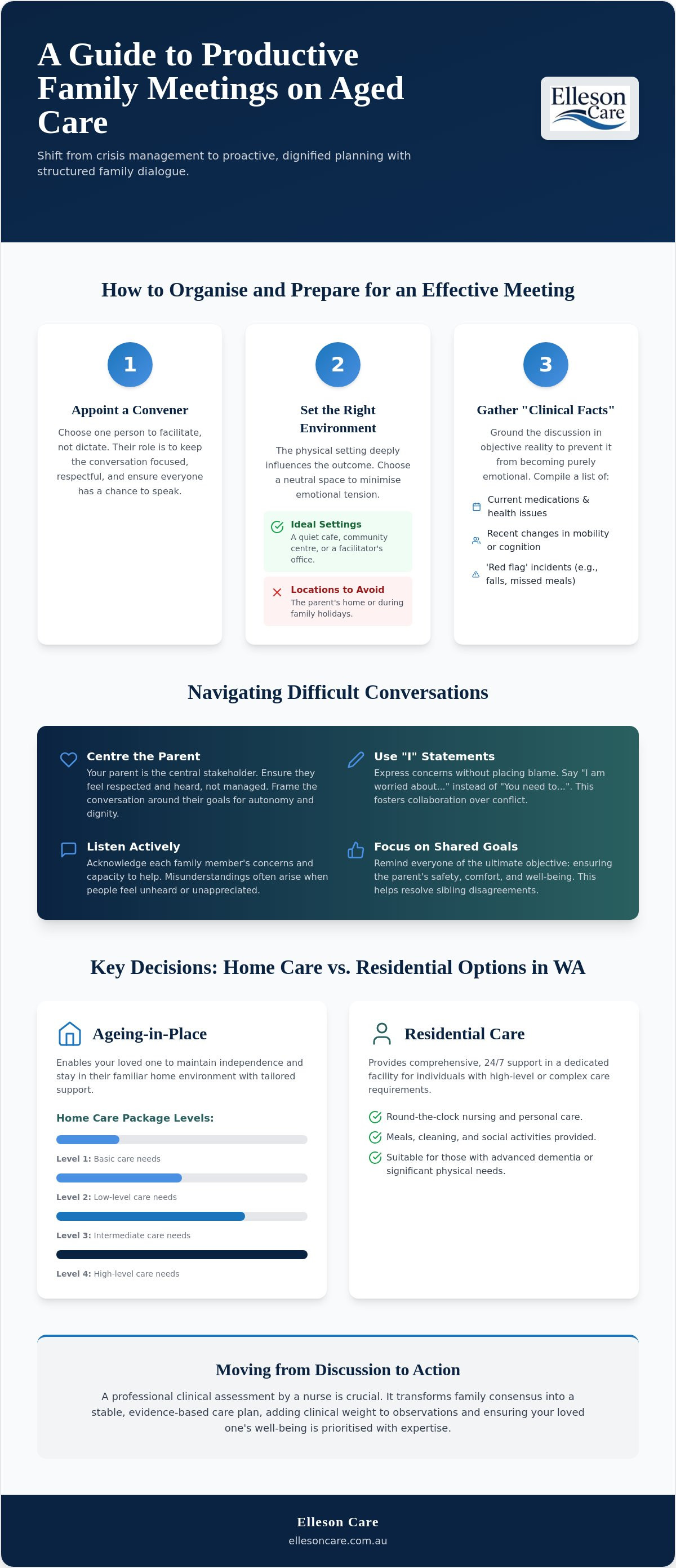
Preparation transforms a potentially stressful encounter into a constructive dialogue. To ensure family meetings about aged care decisions remain productive, you must first identify a "convener." This individual acts as a facilitator rather than a sole decision-maker, ensuring the conversation stays focused and respectful. Gathering objective data before the meeting begins is essential to keep the discussion grounded in clinical reality rather than just emotional perception.
Gathering the "Clinical Facts" Beforehand
Before the group meets, compile a comprehensive list of current health challenges. This list should include a review of medications, recent mobility changes, and specific "red flag" incidents such as minor falls or missed meals. Understanding the Support at Home Program eligibility criteria will also help you determine what level of government assistance might be available for your loved one. Aligning your preparation with a clinical guide to family care conferences ensures that your meeting follows established professional standards. This provides a sense of clinical authority that can calm high-running emotions. If you find the medical details overwhelming, seeking professional clinical support can provide the clarity your family needs to move forward.
Setting the Right Environment
The physical setting of your meeting deeply influences its outcome. While the family home in Subiaco or Joondalup might feel comfortable, it can sometimes trigger defensive reactions or old childhood hierarchies. A neutral, quiet location often works best to keep everyone on equal footing. Timing is equally critical; morning sessions are generally more effective for seniors who may experience increased fatigue or cognitive decline as the day progresses. Ensure the space is private and free from interruptions, allowing for a "safe space" where each person can speak without being spoken over.
Once gathered, follow a gentle agenda to maintain focus and prevent the conversation from drifting into past grievances. It is helpful to distinguish clearly between "must-haves," such as clinical safety and medication management, and "nice-to-haves," like proximity to a specific social club or park. Finally, document every decision made and assign follow-up tasks with specific deadlines. This creates accountability and ensures that the momentum generated during the meeting leads to tangible improvements in your loved one's care and well-being.
Managing Conflict and Navigating Difficult Conversations
Conflict is a natural, albeit challenging, element of family meetings about aged care decisions. These discussions often resurface decades of family history, making it difficult to remain focused on the present clinical needs of a parent. It is helpful to remember that most disagreements stem from a place of deep concern and love, even when they manifest as frustration or stubbornness. Approaching these conversations with a commitment to empathy rather than "winning" an argument creates a much safer environment for everyone involved.
When addressing a "reluctant parent" who insists they are perfectly fine, the language you choose is vital. Instead of listing their failures or limitations, use "I" statements to express your own feelings. For example, saying "I feel worried about your safety when I see you struggling with the stairs" is far more effective than "You can't manage the stairs anymore." This shift in phrasing removes the element of blame and invites your parent to participate in a solution rather than defending their independence. If the conversation reaches a stalemate, aligning your family with the official supported decision-making framework can provide a structured, legally recognised path forward that respects your parent's autonomy.
Handling Sibling Rivalry and Disagreement
Sibling dynamics often become strained during these meetings, particularly when there is a disparity in financial capacity or time. The "primary carer" living in Perth often feels the daily weight of support, while an "out-of-town" sibling might only see the parent during their best moments. To de-escalate these heated emotional moments, keep the focus firmly on the shared goal: the best possible outcome for your parent. Recognise the contributions of each sibling, whether they are providing physical care, financial management, or emotional support from a distance. If consensus feels impossible, bringing in a neutral third party, such as a Registered Nurse, can provide the objective clinical perspective needed to break decision paralysis.
The "Dignity of Risk" vs. Safety Concerns
A significant point of tension in many families is the balance between a parent's desire for independence and the family's need to ensure their safety. It is important to understand the concept of "dignity of risk" when navigating these choices. In the context of Western Australian aged care standards, dignity of risk refers to an individual's right to make informed choices about their own life and take risks, even if those choices may result in personal harm. Clinical assessments provide an essential middle ground here. They offer an objective measure of what is safe while still honouring the senior's right to live a life that feels meaningful and self-directed. By focusing on evidence-based care needs, families can move away from emotional guesswork and towards a plan that ensures both safety and personal dignity.
Key Decisions to Address: Home Care vs. Residential Options in WA
Once the emotional barriers are addressed, family meetings about aged care decisions must turn toward the practical choice between staying at home or moving into a residential facility. In Western Australia, the preference for ageing-in-place is growing, but it requires a realistic assessment of the current environment. You need to look beyond the sentimental value of a home and evaluate its physical suitability. This involves checking if the layout can accommodate mobility aids or if the bathroom requires significant modifications to remain safe.
Understanding the intensity of support required is the next logical step. The Australian system categorises home care into four levels, ranging from Level 1 for basic assistance to Level 4 for high-level clinical needs. During your meeting, it's helpful to compare the lifestyle impact of these levels against the alternative of a nursing home. If the family is unsure which path to take, arranging respite care in Perth can serve as an excellent trial run. This allows your loved one to experience professional support without the pressure of a permanent commitment.
The Benefits of Staying at Home in Perth
For many seniors, staying in their own community provides a sense of continuity that is vital for mental well-being. Maintaining connections in familiar suburbs like Cottesloe or Joondalup allows them to keep their local GP, visit their usual shops, and stay close to friends. The psychological impact of keeping pets and personal belongings shouldn't be underestimated, as these elements provide a sense of identity and safety. When families choose this path, personalised nursing services can bridge the clinical gap, ensuring that high-quality medical care is delivered in the comfort of the family home. If you are ready to explore how these services can support your family's specific needs, you can contact our clinical team for a detailed discussion.
Legal and Financial Logistics
The administrative side of aged care requires careful attention to Western Australian regulations. It is essential to discuss the status of an Enduring Power of Attorney (EPA) and Enduring Power of Guardianship. These documents ensure that if a parent's capacity diminishes, their financial and health preferences are already legally protected. You will also need to navigate the My Aged Care and Centrelink income assessments to determine how much the government will contribute to care costs. Preparing for the Aged Care Assessment Team (ACAT) visit is the final piece of the puzzle. This assessment is the formal "gatekeeper" for government-funded services, and having the family's documented observations ready will ensure the resulting care plan is as accurate and supportive as possible.
Moving from Discussion to Action with Nurse-Led Support
Reaching a consensus during family meetings about aged care decisions is a significant milestone, yet the true impact of these discussions is only felt when they are translated into a professional care framework. A clinical assessment serves as the most effective bridge between family dialogue and sustainable action. While family members provide the essential context of history and personal preference, a Registered Nurse offers the objective clinical lens required to identify specific health risks and support requirements that might otherwise be overlooked.
Our approach at Elleson Care prioritises a holistic, family-centred model where the senior's dignity remains the central focus. By involving clinical experts early, you ensure that the care plan is not just a list of tasks, but a dynamic strategy designed to evolve alongside your loved one’s changing needs. This coordination is particularly vital for families managing complex medical conditions or cognitive decline, where professional oversight provides a necessary layer of safety and stability for everyone involved. It allows siblings to return to being daughters and sons, rather than just care coordinators.
The Elleson Care Difference: A Compassionate Expert
Choosing a care provider is a decision based on trust and reliability. Elleson Care is defined by its nurse-led leadership, drawing on over 22 years of experience within the Western Australian healthcare sector. We provide a blend of personalised domestic assistance and sophisticated clinical support, ensuring that Perth families receive high-tier professional service that retains a deeply human touch. Our focus is always on maintaining independence at home, allowing seniors to live safely in their own environment while their families enjoy the peace of mind that comes from expert advocacy and evidence-based practices.
Your Immediate Checklist After the Meeting
To maintain the momentum generated during your family meetings about aged care decisions, it is helpful to follow a structured set of steps. These actions ensure that the needs identified by the family are addressed through official channels and professional support networks. Taking small, concrete steps prevents the "decision fatigue" that often follows emotional family discussions.
- Book an initial consultation: Engage a clinical care provider to conduct a professional assessment of your loved one’s health and home environment.
- Register with My Aged Care: If you haven't already done so, ensure your loved one is registered to begin the formal process for government-funded support.
- Schedule the next check-in: Set a date for the family to meet again in four to six weeks to review how the care plan is working and make any necessary adjustments.
Creating a Clear Pathway for Your Loved One’s Care
Navigating the transition to aged care is a journey that requires patience, empathy, and a commitment to shared understanding. By facilitating structured family meetings about aged care decisions, you replace the uncertainty of crisis management with a stable, proactive plan. You now have the tools to prepare the environment, manage difficult conversations with dignity, and weigh the clinical benefits of staying at home in Perth. The most important step now is to move from discussion to professional implementation to ensure your parent’s safety and autonomy.
As a West Australian owned and operated provider, we understand the local landscape and the unique needs of our community. Our nurse-led team brings over 22 years of experience to every clinical assessment, specialising in holistic, person-centred home care that prioritises the individual. We invite you to Book a Clinical Consultation with Elleson Care’s Registered Nurses to secure the expert guidance your family deserves. Taking this step today ensures your loved one receives the highest standard of support while maintaining the harmony and dignity of your family unit.
Frequently Asked Questions
How do I bring up the topic of aged care without upsetting my parents?
You should initiate the conversation by focusing on your own feelings and the desire to protect their future autonomy. Framing the discussion as a way to ensure their wishes are honoured prevents them from feeling like they are being "managed." It's helpful to start these talks early, well before a health crisis occurs, so the dialogue feels like a natural part of family planning rather than an urgent intervention.
Who should be invited to a family meeting about aged care?
The senior parent should always be the central attendee, provided they have the cognitive capacity to participate. You should also include all adult children and any significant carers who are currently involved in the parent's daily life. In some instances, inviting a trusted family friend or a professional advocate can help maintain a balanced and respectful atmosphere for everyone involved.
What happens if my siblings and I cannot agree on a care plan?
Introducing a neutral clinical assessment is the most effective way to break a deadlock between siblings. When family meetings about aged care decisions become stalled by personal opinions, an objective professional report shifts the focus back to evidence-based health needs. This clinical clarity often provides the common ground necessary to move forward with a plan that prioritises the parent's safety over family politics.
Is an ACAT assessment mandatory for in-home care in Perth?
A formal ACAT assessment is essential if you intend to access government-funded Home Care Packages in Western Australia. While families can choose to pay for private clinical support independently at any time, the ACAT process is the legal gatekeeper for federal subsidies. We recommend starting this process early, as waiting lists in the Perth metropolitan area can be significant.
Can we hire a professional facilitator for our family meeting?
Professional facilitation is a highly effective option for complex family meetings about aged care decisions. Engaging a Registered Nurse or a clinical expert provides a structured framework that ensures all health concerns are addressed without emotional bias. They act as a steady, knowledgeable presence who can answer technical questions about the My Aged Care system while keeping the family focused on practical outcomes.
How often should we hold these family care meetings?
You should aim to meet at least every six months or whenever a noticeable change in health or mobility occurs. Regular check-ins allow the family to adjust the care plan as needs evolve, ensuring that support remains relevant and effective. These scheduled discussions prevent small issues from escalating into major crises and keep all family members informed and aligned.
What documents should we have ready before the meeting starts?
Ensure you have the Enduring Power of Attorney, Enduring Power of Guardianship, and a comprehensive medication list on hand. It is also beneficial to have a written summary of any recent "red flag" incidents, such as falls or confusion. Having these clinical and legal facts ready ensures that your decisions are based on accurate information rather than assumptions or memory.
How do we handle a parent who refuses any form of help?
Acknowledge their right to independence while suggesting minor, practical supports that don't feel intrusive to their daily routine. Often, starting with basic domestic assistance or gardening is more acceptable than personal clinical care. This gradual approach allows the parent to build trust with a provider and see the benefits of support without feeling that their personal dignity is being compromised.


