

What if the clinical safety of a hospital ward could be seamlessly integrated into the comfort of your own living room? For many families, the transition to high-intensity support feels like a daunting leap into a world of technical jargon and constant worry about medical complications. You want your loved one home, but the weight of managing tracheostomy care or ventilator support without professional oversight is an exhausting burden to carry alone. It's natural to feel overwhelmed when the safety of a family member depends on specialised clinical skills that few support workers truly possess.
This guide simplifies the process of securing ndis complex care perth, offering a clear path toward safe, nurse-led clinical support that prioritises both medical excellence and your family's peace of mind. We will explore the updated 2026 pricing standards, the vital role of Registered Nurses in overseeing daily activities, and how to find a local provider that treats your family with the dignity they deserve. By the end of this article, you'll have the knowledge to move from a state of constant alert to a place of stable, professional care that reduces hospital readmissions and restores your sense of security.
Key Takeaways
- Learn how the NDIS defines High Intensity Daily Personal Activities and how this distinction ensures your funding meets specific clinical requirements.
- Discover the essential role of specialised ndis complex care perth in managing technical tasks like ventilator support and complex wound care within your own home.
- Understand the importance of Registered Nurse oversight and clinical governance in maintaining the highest safety standards for high-intensity supports.
- Identify the critical planning steps required for a seamless transition from a Perth hospital to a supported home environment.
- Gain a practical framework for evaluating NDIS providers based on their clinical experience, local ownership, and family-centred values.
What is NDIS Complex Care? Understanding High-Intensity Support
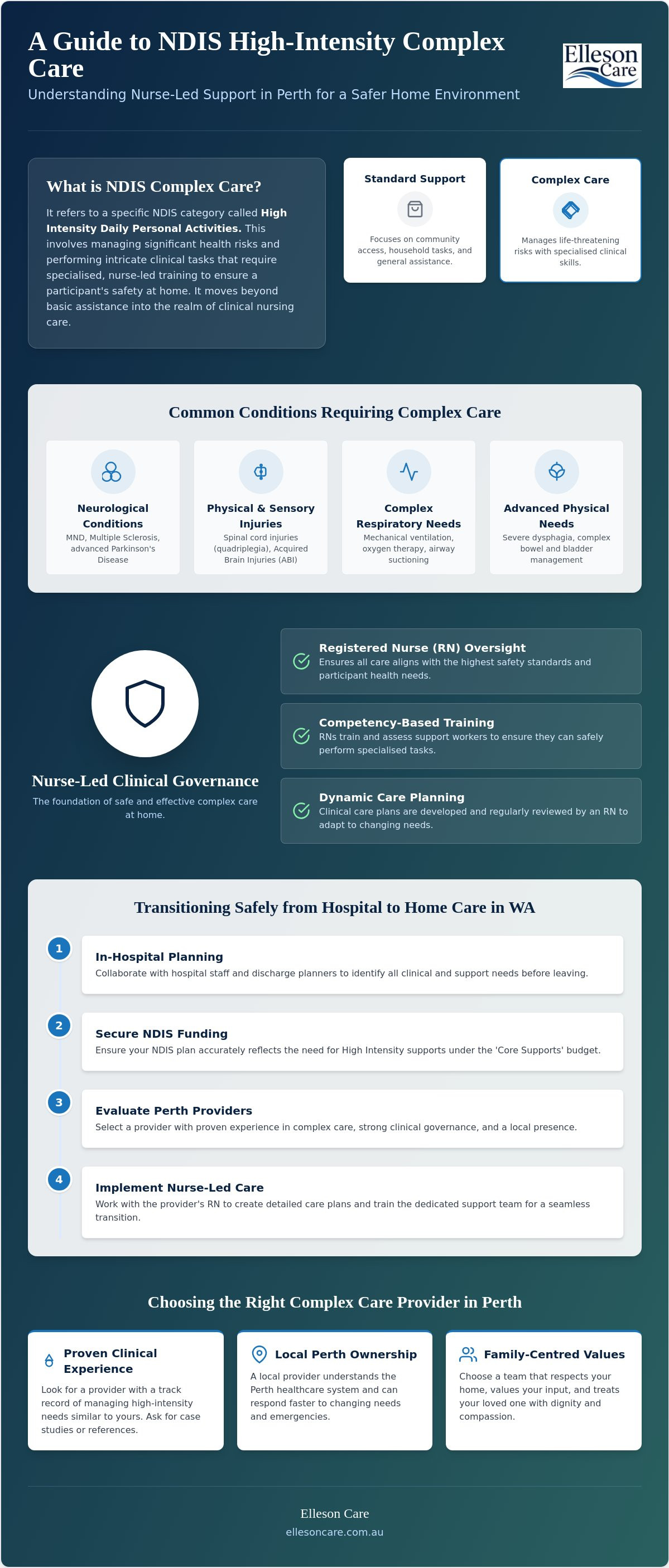
The term "complex care" refers to a specific category of clinical support known within the National Disability Insurance Scheme (NDIS) as High Intensity Daily Personal Activities. Unlike standard disability support, which might focus on community access or general household tasks, ndis complex care perth involves the management of significant health risks and the performance of intricate clinical tasks. These supports require a higher level of technical proficiency because the consequences of an error are often life-threatening. It's a level of care that moves beyond basic assistance and into the realm of clinical nursing.
Funding for these supports is typically allocated under the "Core Supports" budget, specifically within the "Assistance with Daily Life" category. When a participant's plan includes high-intensity support, the NDIA recognises that the individual requires staff with specialised training to remain safe at home. This isn't just about having more hours of care; it's about the clinical quality of those hours. The allocation reflects the increased risk profile and the need for a provider who can deliver rigorous clinical oversight alongside daily support.
High-Intensity Support Skills Descriptors
The NDIS Quality and Safeguards Commission sets out specific "Skills Descriptors" that act as a benchmark for quality. These descriptors ensure that support workers aren't just "familiar" with a task, but are objectively competent. For instance, if a participant requires enteral feeding or tracheostomy care, the provider must ensure their staff have undergone competency-based training. This training is usually led by a Registered Nurse who signs off on the worker's ability to perform the task safely. Choosing a provider that adheres strictly to these descriptors is the only way to ensure clinical safety in a home environment.
Common Conditions Requiring Complex Care
Many participants seeking ndis complex care perth live with progressive neurological conditions or significant physical injuries that require 24/7 monitoring. These conditions often involve the use of specialised medical equipment and daily clinical interventions. Common conditions include:
- Neurological conditions: Motor Neurone Disease (MND), Multiple Sclerosis (MS), and advanced Parkinson’s Disease.
- Physical and sensory injuries: Spinal cord injuries resulting in quadriplegia and Acquired Brain Injuries (ABI).
- Complex respiratory needs: Individuals requiring mechanical ventilation, oxygen therapy, or airway suctioning.
- Advanced physical disabilities: Conditions that lead to severe dysphagia (swallowing difficulties) or complex bowel and bladder management needs.
In these cases, the care team acts as a bridge between the hospital and the home. They provide a level of clinical oversight that protects the individual's health while honouring their desire for independence and personal dignity within their own community.
Essential Clinical Services: From Ventilator to Wound Management
Maintaining health and independence at home requires a sophisticated approach to clinical task management. For participants receiving ndis complex care perth, the home environment is transformed into a space where high-level medical support is delivered with the same rigour as a hospital setting, yet with the warmth and privacy of a domestic life. This transition is made possible through the use of specialised equipment and the implementation of robust clinical care plans. These plans are not static documents; they are dynamic frameworks developed and regularly reviewed by Registered Nurses to ensure every intervention remains aligned with the participant's evolving health needs.
Understanding how the NDIS works is the first step in accessing these vital clinical interventions. Once funding is secured, the focus shifts to the practicalities of daily safety. Delivering clinical care in the home requires a deep respect for a person's autonomy. It's about ensuring that while a participant may require significant medical support, their identity as an individual and their right to privacy are never overshadowed by their clinical requirements.
Respiratory and Nutrition Support
Managing chronic respiratory conditions involves more than just monitoring equipment. It requires a care team that is proficient in ventilator and oxygen management, including the ability to troubleshoot technical issues and respond to alarms with calm expertise. Tracheostomy care is another critical area where daily maintenance and strict emergency protocols are essential for preventing life-threatening complications. Similarly, enteral feeding through PEG or NGT systems requires careful management to ensure nutritional goals are met while minimising the risk of aspiration or infection. Every mealtime is approached with a focus on safety and the participant's comfort.
Continence and Skin Integrity
Maintaining skin integrity and managing continence are fundamental to preventing hospital readmissions. Professional nursing services play a vital role in wound care, utilising evidence-based practices to promote healing and prevent pressure injuries. This clinical oversight extends to complex bowel care and the management of urinary catheters, such as SPC or IMC systems. Additionally, the administration of medication, including subcutaneous injections and high-risk pharmaceuticals, is handled with meticulous attention to detail. If you are currently looking for a provider that prioritises these high standards, exploring nurse-led clinical support can offer the stability your family needs.
The Importance of Nurse-Led Clinical Governance in Perth
Clinical governance is the framework that ensures every aspect of your support is safe, effective, and continuously improving. For families seeking ndis complex care perth, this means having a structured system of accountability led by qualified health professionals. It is the invisible safety net that guarantees clinical standards are met every single day. Without this oversight, high-intensity supports can become fragmented, increasing the risk of medical errors or missed signs of health changes. Clinical governance transforms a collection of individual tasks into a cohesive, high-standard healthcare strategy.
Registered Nurse (RN) oversight is the cornerstone of this process. Having an RN at the helm of a care team provides a level of clinical intuition that standard disability support simply cannot match. With over 22 years of clinical nursing expertise, the leadership at Elleson Care understands that complex needs require constant vigilance. Nurses are trained to identify the subtle markers of clinical deterioration before they escalate into emergencies. This proactive approach is vital for managing ndis complex care perth, as it directly reduces hospital readmissions and ensures the participant remains stable and comfortable in their own home.
Supervision and Training of Support Staff
The safety of home-based clinical care relies on the "delegation of care" model. This is a formal process where a Registered Nurse trains and assesses support workers in specific medical tasks. The Allied Health Capability Framework provides a valuable benchmark for these clinical standards, ensuring that every worker possesses the necessary skills for complex support. Regular clinical audits and competency assessments are conducted to maintain these high standards. This ensures that every staff member entering your home is not just a general support worker, but a specialist trained in your specific medical requirements.
A Holistic Family Approach to Care
Professional support should never exist in a vacuum. It must consider the well-being of the entire household. High-intensity care often places an immense emotional and physical strain on family members, leading to significant carer burnout. By providing reliable, nurse-led interventions, we allow family members to return to their primary roles as partners, parents, or children, rather than acting as full-time medical coordinators. Integrating professional respite care perth into a long-term complex care plan offers families the necessary space to rest and recharge. This holistic view ensures that the support system is sustainable, ethical, and deeply respectful of the family unit's collective quality of life.
Transitioning Safely: From Hospital to Complex Home Care in WA
Returning home after a prolonged hospital stay is a significant milestone, yet it often brings a mix of relief and anxiety for families. In Western Australia, the path from a clinical ward to a home environment requires a structured approach to ensure safety isn't compromised during the move. A successful transition for ndis complex care perth depends on a clinical partnership that begins long before the participant leaves the hospital doors. It's about creating a reliable bridge between the acute care setting and the community, ensuring no detail is overlooked in the handover process.
This transition involves close collaboration between hospital social workers, NDIS planners, and your chosen care provider. The primary goal is to ensure that the high-intensity supports received in a clinical setting are replicated accurately in the home. Local providers who understand the Perth healthcare landscape can facilitate a smoother handover by attending discharge meetings and advocating for the necessary funding to cover complex clinical requirements. This collaborative effort ensures that the home environment is fully prepared to support the participant's medical stability from the moment they arrive.
Step-by-Step Discharge Planning
Planning should ideally begin several weeks before the anticipated discharge date to avoid last-minute complications. Following a structured sequence can significantly reduce stress for the family:
- Early engagement: Contact your NDIS complex care provider as soon as a discharge window is identified. This allows time to verify they have the clinical capacity for your specific needs.
- Equipment and modifications: Organise essential items like hospital beds, pressure-relieving mattresses, or ceiling hoists. These must be installed, tested, and approved for use before the participant arrives home.
- Staff shadowing: Arrange for your new support team to shadow hospital staff. This allows them to learn your specific routines and medical protocols in a supervised environment, ensuring a seamless transfer of knowledge.
Managing the First 48 Hours at Home
The first two days at home are often the most challenging as everyone adjusts to the new routine. You must ensure all medications and clinical consumables, such as feeding sets or catheter supplies, are stocked and ready for immediate use. A Registered Nurse should lead the initial settling period, conducting a final safety audit of the home environment and verifying that all equipment is functioning correctly. Establishing clear communication protocols during this window is vital. It ensures that family members know exactly who to contact if a clinical concern arises, providing the stability needed during this period of change. If you are currently planning a return home and need expert guidance, you can contact our Perth clinical team to discuss your transition plan.
Choosing the Right Complex Care Provider in Perth
Selecting a provider for ndis complex care perth is one of the most significant decisions a family will make. This choice requires moving beyond general disability support to examine the clinical foundations of the organisation. A provider's ability to manage high-intensity needs is directly linked to their clinical leadership and their understanding of the Western Australian health system. Choosing a West Australian owned and operated provider often leads to more responsive care, as the leadership is local and deeply familiar with the community hubs and hospital networks that participants rely on every day.
Local knowledge is a practical asset when navigating the complexities of the NDIS. A Perth-based provider has established relationships with social workers at major hospitals like Fiona Stanley or Sir Charles Gairdner and understands the specific challenges of accessing clinical consumables within the state. When you review a service agreement, it's vital to look for transparency regarding clinical oversight. The document should clearly outline how often clinical care plans are reviewed and what specific protocols are in place for managing clinical risks. A well-structured agreement should feel like a professional commitment to your safety and personal dignity.
Clinical Credentials Checklist
Before committing to a provider, it's essential to conduct a thorough evaluation of their clinical capacity. You shouldn't hesitate to ask direct questions about their operational standards:
- Registered Nurse oversight: Do they have Registered Nurses on staff to actively oversee the care team and perform regular clinical audits?
- Specialised experience: What is their specific experience with your medical condition, such as ventilator management or complex seizure protocols?
- Contingency planning: How do they handle staff absences or clinical emergencies? Is there a clear escalation path to a clinical lead if a participant's health changes?
The Elleson Care Difference
At Elleson Care, we believe that clinical authority must be balanced with human warmth. Our commitment to person-centred, nurse-led care is built on a foundation of over 22 years of clinical nursing expertise. We don't just provide a service; we build a steady, reliable presence in your home that prioritises your autonomy and well-being. By focusing on integrity and clinical excellence, we ensure that families can move forward with confidence, knowing their loved ones are in safe, professional hands. If you are ready to secure a higher standard of support, contact our Perth clinical team to discuss your complex care needs and learn how our local expertise can support your family's journey.
Building a Foundation of Safety and Dignity at Home
Providing high-intensity support is a profound responsibility that requires more than just standard assistance; it demands a dedicated clinical partnership. By prioritising nurse-led governance and meticulous discharge planning, your family can navigate the technicalities of ndis complex care perth with clarity and confidence. We've explored how specialised skills in ventilator and respiratory support, combined with a holistic family approach, create a sustainable environment where health and personal dignity are equally protected.
As a West Australian owned and operated provider led by Registered Nurses with over 22 years of clinical experience, Elleson Care is committed to delivering this high standard of professional service. We understand that every clinical task is a step toward greater independence for your loved one. If you're ready to transition toward a more secure and stable care arrangement, we invite you to book a consultation with our Registered Nurse clinical lead to discuss your specific requirements. You don't have to manage these complexities alone; professional, compassionate support is available to help your family thrive at home.
Frequently Asked Questions
What is the difference between complex care and standard NDIS support?
Complex care, officially known as High Intensity Daily Personal Activities, differs from standard support by the level of clinical risk involved. While standard support focuses on social inclusion and domestic tasks, complex care requires staff to perform technical medical interventions. These tasks must be overseen by a Registered Nurse to ensure safety. This distinction is critical for participants with health conditions that require constant monitoring or specific clinical procedures to remain stable at home.
Can I receive 24/7 clinical nursing care at home in Perth?
Yes, it's possible to receive 24/7 clinical support at home if your NDIS plan includes funding for high-intensity daily personal activities. This usually involves a dedicated team of support workers who have been trained in your specific clinical needs. For families seeking ndis complex care perth, this level of support provides a safe alternative to long-term hospitalisation, allowing for professional medical management within a familiar and comfortable domestic environment.
Does the NDIS fund Registered Nurses to provide care at home?
The NDIS does fund Registered Nurses to provide direct clinical care and oversight through the "Disability-Related Health Supports" category. Funding is typically provided for tasks that require the high-level skills of a nurse, such as complex wound management, medication administration, or the creation of clinical care plans. Additionally, nurses are funded to train and supervise support workers, ensuring that all delegated tasks are performed according to strict clinical standards.
How do I get high-intensity support funding in my NDIS plan?
Securing funding for high-intensity support requires comprehensive clinical evidence to be presented during your NDIS planning or review meeting. You will need reports from specialists, Occupational Therapists, or Registered Nurses that clearly document your clinical risks and the technical skills required to manage them. This evidence must demonstrate that without specialised intervention, your health and safety would be at significant risk, justifying the need for a higher level of funding.
What happens if my medical needs change or deteriorate?
If your medical needs change, your clinical care team will initiate a review of your current care plan to ensure it remains effective. Our Registered Nurses monitor for signs of clinical deterioration and can adjust support protocols or recommend a formal NDIS plan reassessment if your needs increase. This proactive approach ensures that your support remains responsive and that any new health challenges are managed before they lead to an avoidable hospital admission.
Is complex care available for both children and adults in WA?
Yes, clinical complex care is available to NDIS participants of all ages across Western Australia. Whether it's a child with a congenital condition or an adult with an acquired injury, the focus remains on delivering safe, high-intensity support tailored to the individual's life stage. Providers work closely with families to ensure that clinical interventions are integrated into the participant's daily routine, supporting their growth and independence at every age.
How are complex care support workers trained for medical tasks?
Support workers undergo rigorous, competency-based training specifically tailored to the participant's medical requirements. This process is led by a Registered Nurse who provides theoretical instruction and practical demonstrations of tasks like enteral feeding or airway management. Workers must successfully complete a supervised assessment to prove their proficiency. This ensures that every team member providing ndis complex care perth is fully qualified to manage the technical aspects of your clinical support safely.
Can complex care be delivered in a Supported Independent Living (SIL) setting?
High-intensity clinical care can be delivered within a Supported Independent Living (SIL) environment. Many participants living in shared or individual SIL arrangements require complex clinical support to maintain their health and independence. As of July 1, 2026, all SIL providers must be registered with the NDIS Quality and Safeguards Commission. This requirement ensures that clinical governance and safety standards are consistently met, regardless of the participant's living arrangements.


