

Choosing between a home care package vs chsp perth used to be a simple matter of hours, but in 2026, it's a vital decision about the clinical safety of your family home. With residential aged care occupancy in Greater Perth reaching 92%, many families feel a heavy weight of responsibility to ensure their loved ones remain safe and dignified without the need for an institutional facility. It's completely natural to feel overwhelmed by the recent transition to the Support at Home program or to worry if home-based care can truly handle a complex medical emergency.
This guide will help you navigate the new eight-level funding structure and the July 2026 price caps so you can make an informed choice with absolute confidence. You'll learn how to distinguish between basic support and the intensive, nurse-led clinical care that allows your parent to age in place safely. We will break down the Perth-specific funding landscape and provide a clear framework to ensure your loved one receives the high-standard, clinical-grade support they deserve.
Key Takeaways
- Understand the 2026 transition to the Support at Home program and how its new classification levels better reflect your loved one's specific clinical needs.
- Learn the vital distinctions between a home care package vs chsp perth to determine whether entry-level assistance or a coordinated, high-intensity care model is required.
- Discover how clinical-grade nursing at home can provide a safer, more dignified alternative to residential facilities through dedicated one-on-one attention.
- Identify the five key indicators that signal when specialised, nurse-led care is the most appropriate path for maintaining independence in Western Australia.
- Gain clarity on the new quarterly budget structures and government-funded clinical services that ensure high-quality care remains accessible and transparent.
The Fundamental Difference: Home Care Package vs CHSP in Perth
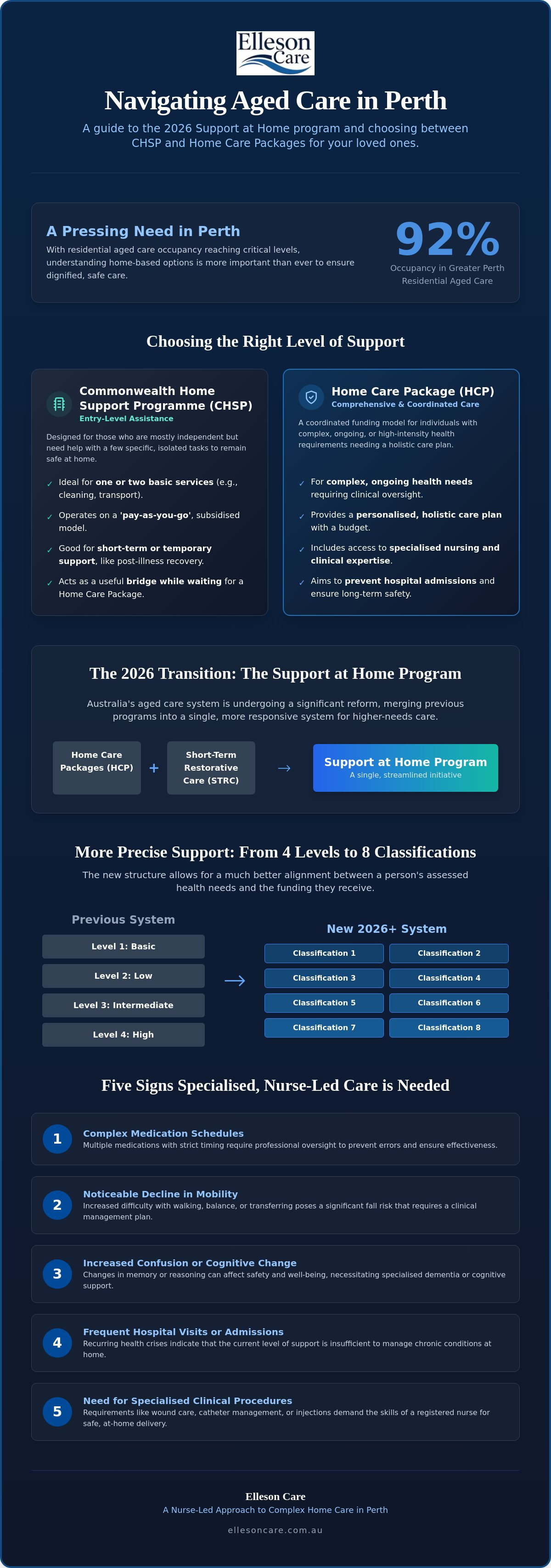
Understanding the distinction between a home care package vs chsp perth is the first step toward securing the right level of support for your loved one. The Commonwealth Home Support Programme (CHSP) is designed as entry-level assistance. It operates on a "pay-as-you-go" model, providing help with specific, isolated tasks such as cleaning or transport. In contrast, Home Care Packages (HCP) represent a more comprehensive, coordinated funding model for those with complex, ongoing health requirements. This distinction is vital for maintaining a senior's personal dignity while ensuring their safety within the familiar surroundings of their own home.
In Western Australia, many families find themselves starting with CHSP services while they wait for an HCP allocation. This is often a practical necessity due to current ACAT assessment wait times in the Perth metropolitan area, which can span several months. Securing an overview of aged care in Australia helps clarify that while CHSP offers a useful bridge, it rarely provides the clinical oversight required for long-term health stability. Transitioning between these models involves more than just a change in funding; it's about moving toward a system that treats the individual's well-being as a whole rather than a series of disconnected tasks.
Choosing the right path carries immense emotional weight. It's about more than just clinical safety; it's about respecting a person's desire to remain independent in the place they love. When a care model is selected with care, it provides a sense of stability for the entire family, replacing the fear of medical emergencies with a steady, reliable presence of professional support.
When is CHSP the Right Starting Point?
CHSP is often the most appropriate choice for seniors who remain largely independent but require a little extra help to stay safe. It's ideal if your parent only needs one or two basic services, such as a weekly shopping trip or transport to a medical appointment in Joondalup. Because the administrative burden is lower, services can often be organised quickly. It's also a flexible option for short-term restorative needs, such as recovering from a minor illness where temporary support is all that's required to regain independence.
The Move to a Home Care Package (HCP)
There comes a point where basic help no longer meets the needs of a vulnerable senior. You might notice declining mobility, increased confusion, or complex medication schedules that require professional oversight. Traditionally, the HCP system was structured into four levels, ranging from basic care at Level 1 to high-level clinical support at Level 4. Under the 2026 Support at Home reforms, these have been refined into eight classifications to better match funding to specific needs. A Home Care Package is essential when a senior requires a personalised, holistic care plan that incorporates specialised nursing and clinical expertise to prevent hospital admissions.
The 2026 Transition: How the Support at Home Program Changes Your Options
The landscape of aged care in Western Australia has undergone its most significant reform in decades. As of late 2025, the previous Home Care Packages (HCP) and Short-Term Restorative Care (STRC) programs have merged into a single, streamlined initiative known as the Support at Home program. For families weighing up a home care package vs chsp perth, this transition simplifies the journey toward long-term support. While the Commonwealth Home Support Programme (CHSP) remains a separate, entry-level tier in WA until at least July 2027, the new system for higher-needs care is designed to be more responsive and transparent.
The most notable change is the replacement of the old four-level package system with eight distinct funding classifications. This shift allows for a much more precise alignment between a senior's assessed health needs and the resources they receive. In the Perth health system, this means funding now follows the person more efficiently. If a loved one's condition changes, the eight-tier structure ensures they can move to a more appropriate level of support without the rigid barriers of the former system. This precision is especially beneficial for those requiring specialised clinical oversight to stay safe at home.
Navigating the New Funding Classifications
The 2026 system is designed to simplify access to vital services like clinical nursing and essential home modifications. One major advantage of the reform is that clinical care services now involve a $0 co-contribution from the care recipient, regardless of their income. This removes a significant financial hurdle for families managing complex health conditions. When exploring My Aged Care help at home options, it's important to remember that the "Means Test" still applies to non-clinical services, such as domestic assistance or social support. To understand how these changes specifically impact your family's planning, you can explore our comprehensive guide on The Support at Home Program in 2026.
Maximising Your Budget for Clinical Needs
With funding now allocated as a quarterly budget, prioritising clinical safety is the most effective way to ensure long-term independence. While domestic help is valuable, clinical-grade support prevents the health crises that often lead to hospitalisation. Perth families are increasingly choosing nurse-led providers to oversee high-classification budgets because they offer the expertise required to manage complex care plans. Transitioning from CHSP to the new Support at Home classifications involves a formal reassessment to ensure your funding matches your current health requirements. If you're navigating these changes for a parent, consulting with a specialised clinical care team can help you secure the right classification from the start.
Clinical Safety at Home: Can Home Care Match a Nursing Home?
Many families believe that residential facilities are the only option for managing high-intensity medical needs. This is a common misconception. When comparing a home care package vs chsp perth, the higher classification levels of the Support at Home program specifically provide for complex clinical oversight. In a Perth facility, staff often manage a 1-to-many ratio; however, home-based clinical care offers dedicated 1-on-1 attention. This focus ensures that a Registered Nurse is entirely present for your loved one, monitoring subtle changes that might be missed in a communal setting. This level of individualised care creates a safety net that is often more responsive than institutional models.
Ageing in place within a familiar Perth neighbourhood provides profound psychological stability. Staying at home allows a senior to maintain their routine, surrounded by the memories and comforts they've built over decades. This sense of belonging is a powerful contributor to overall well-being and recovery. It replaces the stress of a clinical institution with the calm of a private residence, which can lead to better health outcomes and a higher quality of life for the individual and their family.
Specialised Nursing: Ventilators, Wounds, and Palliative Care
Delivering high-level clinical support in a private residence is not only possible but often preferred for those with specific medical requirements. Specialised nursing agencies can safely manage complex needs such as ventilator support, chronic wound care, and palliative pathways within the home. Registered Nurses coordinate these high-intensity care plans, ensuring that every medical intervention is evidence-based and precise. For a deeper look at how these services are structured, you can refer to our Comprehensive Guide to Nursing Services in Perth. This level of oversight provides families with peace of mind, knowing that clinical safety is never compromised while their loved one remains in a comfortable environment.
Infection Control and Personal Dignity
A private home environment naturally offers lower cross-infection risks compared to communal living spaces. In a residence, the individual remains the "centre" of their world. They retain the dignity of eating, sleeping, and socialising on their own terms, rather than according to a facility's schedule. This model of care balances medical rigor with genuine human warmth. It's a steady, reliable presence that advocates for the person's comfort while maintaining the highest clinical standards. By choosing a nurse-led approach, you aren't just choosing a service; you're choosing a partner invested in your family's quality of life. This steady confidence ensures that the home remains a place of healing and personal autonomy.
Decision Framework: Five Signs Home Care is the Right Path
Determining the most appropriate support model involves more than just comparing a home care package vs chsp perth; it requires a clear assessment of your loved one's health and their desire for independence. While the Commonwealth Home Support Programme provides a helpful starting point, the transition to a higher level of care is often marked by specific indicators. Recognising these signs early ensures that your family can transition smoothly into the Support at Home program without compromising clinical safety or personal dignity.
There are five key signs that a coordinated home care model is the most sustainable path for your family:
- Consistent preference: Your loved one expresses a strong, ongoing desire to remain in their family home rather than moving to an institutional setting.
- Clinical specificity: Health needs, such as complex wound management or ventilator support, require the 1-on-1 attention that only a specialised nurse can provide.
- Modifiable environment: The residence can be safely adapted with hospital beds, rails, or ramps to meet high clinical standards.
- Carer sustainability: Family members are experiencing burnout and need professional support to maintain their own well-being.
- Funding eligibility: You have successfully secured a high-intensity classification through the Support at Home program.
If these signs are present, staying at home isn't just a preference; it's a medically viable and emotionally supportive reality. To ensure your loved one receives the highest standard of care, you may wish to consult with a team providing professional clinical support tailored to the Perth community.
The Role of the ACAT Assessment in Perth
The Aged Care Assessment Team (ACAT) review is a critical step for families in suburbs like Fremantle or Stirling. During this assessment, it's essential to be prepared and transparent about every clinical requirement. We recommend having a family advocate or a Registered Nurse present during the review to ensure that complex needs are accurately captured in the final report. This advocacy helps secure the correct funding classification from the outset, reducing the need for stressful reassessments later.
Respite Care: A Tool for Staying at Home Longer
Professional respite care is a vital strategy for preventing "crisis placements" into nursing homes. It allows primary carers to rest and recharge while ensuring their loved one continues to receive high-quality clinical oversight. By utilising in-home respite, you maintain the stability of the home environment while supporting the long-term health of the entire family unit. For a more detailed look at these services, please see our Respite Care in Perth: A Family Guide.
Elleson Care: A Nurse-Led Approach to Complex Home Care in Perth
Elleson Care stands as a dedicated local alternative for families navigating the choice between a home care package vs chsp perth. Instead of the institutional feel of a large facility, we offer a nurse-led model that prioritises the individual's comfort and clinical safety. With over 22 years of Registered Nurse leadership, our foundation is built on clinical excellence and a deep understanding of complex health needs. We don't just see a patient; we see a person within a family unit. Our "Family Approach" ensures that while the individual receives expert care, their loved ones are also supported, reducing the emotional burden often associated with long-term support.
Our services are comprehensive, spanning from basic domestic assistance to high-intensity clinical care. Whether your loved one requires help with daily tasks or specialised support like ventilator management and palliative care, our team is equipped to maintain the highest standards of safety at home. This breadth of capability allows families to stay with a single, trusted provider as their needs evolve through the different classifications of the Support at Home program. By maintaining this continuity, we ensure that the care plan remains consistent and responsive to any changes in health status.
Why Local Perth Expertise Matters
Being West Australian owned and operated gives us a unique perspective on the local health landscape. We understand the specific resources available within the Perth metropolitan area and maintain strong connections with local health networks. This local expertise ensures a level of continuity that global providers often struggle to match. We act as personalised advocates for our clients, helping them navigate the complexities of the My Aged Care system with steady confidence. Our deep roots in the community mean we are personally invested in the quality of life of the seniors we serve across Perth.
Taking the Next Step for Your Loved One
Choosing the right path for a parent or spouse is a profound decision rooted in love and a desire for their dignity. At Elleson Care, we are committed to a holistic view of well-being that balances medical rigor with genuine kindness. Our Registered Nursing team is available to conduct thorough clinical assessments, ensuring that every aspect of your loved one's health is considered in their care plan. This professional oversight provides the stability families need during times of transition. If you are ready to explore how a nurse-led model can provide a safer, more dignified alternative to residential care, we invite you to organise a personalised care consultation with Elleson Care today. We are here to be your steady, reliable partner in providing the high-standard support your family deserves.
Securing a Dignified Future for Your Loved One
Deciding between a home care package vs chsp perth is a significant milestone in your family's journey toward long-term stability. As we have explored, the 2026 Support at Home reforms provide a clearer path toward accessing high-intensity clinical support without leaving the comfort of a familiar neighbourhood. By prioritising a nurse-led model, you ensure that medical safety and personal autonomy go hand in hand; this allows your parent to age in place with the respect they deserve. It's about moving away from the "one-to-many" ratios of institutional facilities and toward a model where your loved one is the sole focus of a professional's attention.
Elleson Care is a West Australian owned and operated provider, led by Registered Nurses with over 22 years of clinical experience. We are specialists in high-intensity NDIS and Aged Care clinical support, bringing hospital-grade expertise directly into the home. Our team is here to provide the steady, reliable presence your family needs during these complex transitions. We invite you to Book a Clinical Consultation with our Perth Nursing Team to discuss your specific requirements. Together, we can create a sustainable care plan that ensures your loved one remains safe, comfortable, and truly at home.
Frequently Asked Questions
Is a Home Care Package cheaper than a nursing home in Perth?
Home-based support is generally more cost-effective than residential care, especially under the 2026 funding model. While residential facilities involve significant accommodation fees and means-tested care costs, clinical services within the Support at Home program now require a $0 co-contribution from the recipient. This ensures that high-quality nursing remains accessible without the financial burden often associated with institutional living in Western Australia.
Can I receive 24/7 clinical nursing care under the Support at Home program?
It's possible to receive high-intensity clinical oversight, though 24/7 support depends entirely on your specific classification and assessed medical needs. The Support at Home program's higher tiers are designed to provide the coordinated care necessary for complex conditions. Our Registered Nurses work closely with families to maximise these budgets, ensuring safety and professional monitoring are maintained within the familiar home environment.
What is the current wait time for an ACAT assessment in Perth?
Wait times for an ACAT assessment in the Perth metropolitan area can vary, but families should currently expect a period of several months between the initial application and the formal review. It's advisable to register with My Aged Care as soon as you notice a decline in independence. Starting with CHSP services can often provide a helpful bridge while you wait for your formal assessment and classification.
Can I switch from CHSP to a Home Care Package (Support at Home) classification?
You can transition from CHSP to a Support at Home classification if your health requirements change and become more complex. This process requires a formal reassessment by an ACAT professional to determine your new eligibility level. When comparing a home care package vs chsp perth, the move to a coordinated package is usually triggered when basic, task-oriented help is no longer sufficient to manage your clinical safety.
Does Elleson Care provide specialised support for ventilators and complex wounds?
Elleson Care specialises in high-intensity clinical support, including ventilator management and complex wound care for those living at home. Our team is led by Registered Nurses with over 22 years of experience in managing these specific medical requirements. We provide a safe, nurse-led alternative to residential facilities, ensuring that even the most complex clinical needs are met with professional rigor and compassionate attention.
How do I apply for aged care funding in Western Australia?
Applying for funding in Western Australia begins with a registration through the My Aged Care portal or contact centre. Once registered, you'll be referred for an assessment by a local Perth-based team, such as the Aged Care Assessment Team (ACAT). They visit your home to discuss your health requirements and determine which classification level best supports your desire to remain independent and safe.
What happens if my care needs increase while I am receiving home care?
If your care needs increase, you can request a review of your current funding classification to access more intensive support. The Support at Home program features eight levels of funding, allowing for a more precise adjustment as health conditions evolve. This flexibility ensures that your clinical oversight remains aligned with your requirements, helping to prevent the need for an unplanned move to a residential facility.
Can I choose my own nursing agency in Perth if I have government funding?
You have the legal right to choose your own provider, including specialised nursing agencies, once your government funding is approved. This consumer-directed approach allows Perth families to select a partner that aligns with their specific clinical requirements and personal values. Choosing a local, nurse-led agency ensures you receive personalised advocacy and a high standard of care tailored to the Western Australian health landscape.


