

Imagine the relief of bringing a loved one back to their own home in Perth, surrounded by familiar comforts, while knowing their complex clinical needs are expertly managed. For many Western Australian families, the transition to end-of-life care is often clouded by the stress of navigating NDIS palliative care services WA alongside the state health system. It's a deeply emotional period where the desire for personal dignity often clashes with the exhaustion of coordinating various medical and social supports.
We understand that the boundary between hospital-led healthcare and NDIS-funded disability support feels incredibly confusing when you're already under pressure. You shouldn't have to choose between clinical safety and the peace of being at home. This guide will clarify how NDIS funding supports palliative care in Western Australia, ensuring your family has a clear plan for professional, nurse-led support. We'll explore NDIS eligibility, the benefits of local clinical oversight, and how a dedicated WA-based nursing team can help your loved one maintain their independence and quality of life during this significant time.
Key Takeaways
- Clarify the distinction between state health services and NDIS funding to ensure your loved one receives comprehensive, dignified support at home.
- Master the process of including specific end-of-life goals in your plan to access NDIS palliative care services WA without compromising your current supports.
- Recognise the importance of nurse-led clinical care for managing complex needs like pain relief and medication administration in a home environment.
- Evaluate the benefits of partnering with a local, Western Australian-owned provider for more responsive coordination and a deeply personal level of care.
- Develop a plan that prioritises your loved one's autonomy while providing the professional stability your family needs during a challenging time.
What are NDIS Palliative Care Services in WA?
Seeking support during a life-limiting illness is a courageous step towards maintaining dignity and comfort. In Western Australia, NDIS palliative care services WA provide a vital framework for participants to remain in their own homes, surrounded by family, while receiving the specialised care they require. Palliative care is an approach that focuses on the relief of symptoms and the improvement of quality of life, rather than being limited to the final days of life. It's about living well, ensuring that every day is met with support that honours the individual's choices and autonomy.
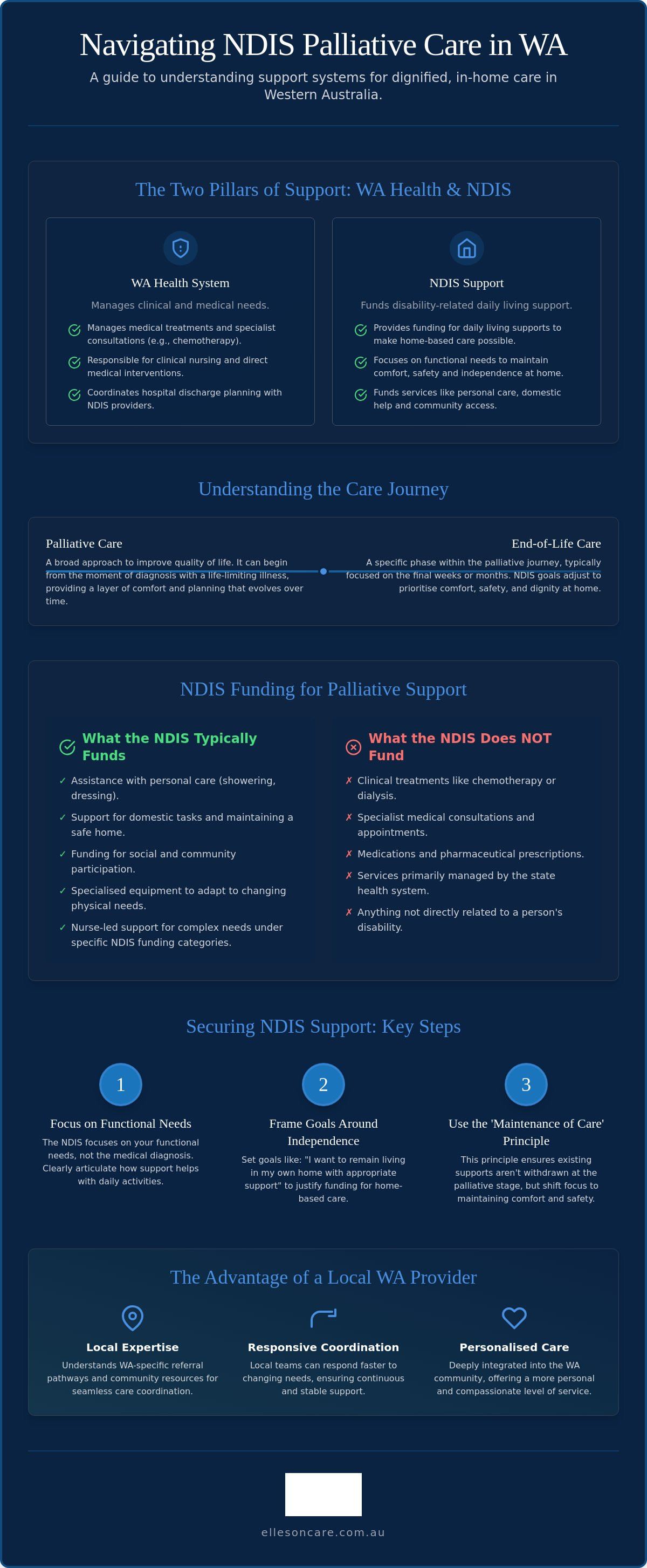
The NDIS plays a specific, supportive role in this journey. While the health system manages medical treatments, the NDIS funds the daily living supports that make home-based care possible. This includes assistance with personal care, social participation, and specialised equipment that adapts to changing physical needs. In Perth, we've seen a significant shift towards in-home support, as families seek to avoid prolonged hospital stays in favour of a more intimate, familiar environment. This transition allows for a level of personal peace that clinical settings often struggle to provide.
Palliative Care vs. End-of-Life Care: Knowing the Difference
It's a common misconception that palliative care is only for the very end. Palliative support can actually begin from the moment a person is diagnosed with a life-limiting condition. It provides a steady layer of comfort and planning that evolves over time. End-of-life care is a specific phase within this broader journey, typically occurring in the final weeks or months. As a participant's needs change, NDIS goals are often adjusted to prioritise comfort, safety, and the maintenance of personal dignity within the home.
The Western Australian Context: WA Health and NDIS
Navigating the boundary between clinical health services and disability support requires a clear understanding of the WA health landscape. In Western Australia, clinical nursing and medical interventions are primarily the responsibility of WA Health. However, NDIS palliative care services WA bridge the gap by providing the consistent, day-to-day support that hospitals cannot offer long-term. Local Perth hospitals often coordinate with NDIS providers during the discharge process to ensure a safe transition home. Choosing a WA-owned provider is essential here, as local experts understand the specific referral pathways and community resources unique to our state. This local knowledge ensures that care is not just professional, but also seamless and deeply integrated into the Western Australian community.
Navigating NDIS Funding for Palliative Support in Western Australia
Understanding how to access NDIS palliative care services WA begins with recognising that the NDIS focuses on your functional needs rather than the medical diagnosis itself. While the National Disability Insurance Agency (NDIA) generally views palliative care as a health responsibility, they remain responsible for disability-related supports that enable you to live at home. This is often managed through the 'Maintenance of Care' principle. This principle ensures that your existing supports aren't withdrawn simply because your health has reached a palliative stage. Instead, the focus shifts to maintaining your comfort and safety while preventing further functional decline.
When preparing for a plan review, it's vital to frame your goals around maintaining independence and social connection. You might include goals such as 'I want to remain living in my own home with appropriate clinical and personal support' or 'I want to maintain my current level of community engagement for as long as possible.' These goals provide the necessary justification for the NDIA to continue funding essential services under the current NDIS Pricing Schedule for 2026-27, which remains the framework for all plan allocations in Western Australia.
What the NDIS Will and Won't Fund
The division of responsibility between federal and state systems is clear but sometimes feels restrictive for families. The NDIS typically funds personal care, domestic help, and community access. It doesn't fund clinical treatments like chemotherapy or specialist medical consultations. However, many families find themselves in a 'grey area' where they need professional help to manage complex physical symptoms. This is where specialised nursing services become invaluable. They provide the clinical bridge needed to manage medications and wound care within the home environment, ensuring a higher standard of safety than standard support workers can provide.
Urgent Plan Reviews for WA Families
Health situations can change rapidly, often requiring more support than your current plan allows. If a participant's condition declines unexpectedly, you can request an urgent 'Change of Circumstances' review. To succeed, you'll need strong medical evidence from your WA-based specialists or the palliative team at your local hospital. The HealthyWA portal provides resources on how the state health system interacts with these services, which can help your medical team draft the right documentation. Working closely with an experienced support coordinator is the most effective way to expedite this process. They understand how to navigate the NDIA's internal systems to ensure your funding reflects your current reality.
If you're feeling overwhelmed by these administrative requirements, our team is here to help you navigate your palliative care options with confidence and clarity.
Essential Palliative Support Services for WA NDIS Participants
Providing comprehensive support at home involves a blend of clinical expertise and practical help. For those accessing NDIS palliative care services WA, the goal is to create a safe, stable environment where medical needs are met without turning the home into a hospital ward. This requires a coordinated approach that addresses physical comfort, personal hygiene, and the administrative burden of running a household during a health crisis. When these elements work together, the focus shifts from managing an illness to supporting a person's life.
Clinical nursing remains the cornerstone of high-quality palliative support. Registered nurses manage complex tasks like medication administration and pain management, ensuring that symptoms are controlled effectively and safely. They also oversee wound care and monitor for any subtle changes in a participant's condition. Alongside these clinical tasks, personal care services provide essential assistance with showering, dressing, and grooming. These tasks are performed with a deep respect for the individual's dignity, ensuring they feel cared for and respected in their most private moments.
Domestic assistance is equally important for maintaining a peaceful home. By taking over household chores and meal preparation, support teams allow families to focus on spending meaningful time together rather than being overwhelmed by daily tasks. Additionally, sourcing specialised equipment is a key part of palliative care in Western Australia. This might include hospital-grade beds, pressure mattresses to prevent skin breakdown, and mobility aids tailored to the Perth home environment, all of which are vital for maintaining comfort and safety.
Complex Clinical Support at Home
Some participants require more intensive interventions to stay safely at home. Our nurse-led teams are experienced in providing ventilator and oxygen support for those with respiratory complications. We also manage catheter care and enteral feeding to ensure nutritional and physical needs are met with professional precision. A significant focus is placed on pressure injury prevention. By implementing rigorous skin-care protocols and using specialised equipment, we protect the physical integrity of those who may have limited mobility, preventing avoidable hospital admissions.
Holistic Family and Emotional Support
Palliative care extends beyond the participant to include their entire support network. Counselling and grief support are vital for WA families navigating the emotional weight of a life-limiting illness. We also prioritise cultural safety, ensuring that the care provided respects the diverse traditions and obligations of Perth's multicultural communities. Social participation remains a priority as well. Whether it's facilitating visits from friends or supporting small outings, staying connected to the community helps maintain a sense of identity and purpose for as long as possible.
Choosing the Right Palliative Care Provider in Perth
Selecting a partner for end-of-life support is one of the most significant decisions a family will make. It requires finding a provider that balances clinical precision with a deeply personal touch. For families navigating NDIS palliative care services WA, nurse-led leadership is a vital consideration. When a provider is led by registered nurses, every aspect of care is viewed through a clinical lens, ensuring that safety and symptom management remain the highest priority. This professional oversight provides a level of stability that is essential when managing complex health needs at home.
Local, Western Australian ownership offers distinct advantages for coordination and responsiveness. A Perth-based team understands the specific pressures of the local health system and can often facilitate faster transitions from hospital to home. When you interview a potential provider, it's helpful to ask specific questions about their experience. You might ask how they handle after-hours clinical concerns, how they document changes in a participant's condition, or how they communicate with your existing GP and WA Health specialists. A reliable provider should demonstrate a clear, disciplined approach to inter-disciplinary coordination, ensuring that everyone involved in your loved one's care is aligned.
The Clinical Difference: Registered Nurses vs. Support Workers
It's important to understand the different roles within a care team. While support workers are invaluable for assisting with daily routines and social engagement, registered nurses are essential for high-risk clinical tasks. Nurses provide the expert oversight needed to manage ventilators, oxygen support, and complex medication regimes. This clinical leadership often prevents unnecessary hospital admissions by identifying and addressing health issues before they become crises. Having professional healthcare expertise available at home provides families with the peace of mind that their loved one is in safe, capable hands.
Transitioning from Hospital to Home in WA
The move from a hospital ward to the home environment requires careful preparation. We recommend working closely with hospital social workers at facilities like Sir Charles Gairdner or Fiona Stanley to create a detailed discharge plan. Part of this preparation involves ensuring that respite care perth is arranged, giving family caregivers the necessary breaks to sustain their own well-being. Setting up the home environment, including the installation of hospital beds or pressure mattresses, should be completed before the participant arrives. This ensures a seamless transition that focuses on comfort from the very first moment. If you're ready to discuss a transition plan, you can learn more about our local Perth nursing team and how we support families through this process.
Elleson Care: Compassionate, Nurse-Led Palliative Support in WA
When you partner with Elleson Care for NDIS palliative care services WA, you are choosing a team with over two decades of clinical experience in the local community. For more than 22 years, our registered nurses have led the way in providing high-tier clinical nursing and holistic support to Western Australian families. We understand that palliative care is a journey shared by the entire family, not just the individual. Our approach is designed to provide a steady, reliable presence that reduces the burden of coordination and allows you to focus on the moments that matter most.
Every participant we serve receives a customised support plan that prioritises their personal dignity and long-term goals. We don't believe in a one-size-fits-all model of care. Instead, we work closely with you to understand your specific needs, whether that involves complex clinical management or assistance with daily living. We maintain a strict commitment to the current NDIS standards and the evolving support at home program, ensuring our practices reflect the latest evidence-based healthcare requirements in Western Australia. This disciplined focus on quality ensures that our participants feel safe, informed, and respected at every stage of their care.
A Local Perth Team You Can Trust
As a West Australian owned and operated provider, we are deeply invested in the well-being of our local community. We aren't a distant national franchise; we are your neighbours, and we understand the specific nuances of the Perth healthcare landscape. One of the primary benefits of our service is the direct access you have to registered nurses for clinical decision-making. This ensures that any changes in health are addressed with professional authority and clinical speed. Our focus remains firmly on person-centred care, a philosophy that honours your choices and protects your autonomy within your own home.
Getting Started with Elleson Care
Beginning the journey with professional support is a straightforward and respectful process. We start with a comprehensive initial assessment that covers both your clinical requirements and your NDIS goals. This allows us to build a complete picture of the support needed to maintain your quality of life. We don't work in isolation; our nurses actively collaborate with your existing GP, hospital specialists, and wider support network to ensure a seamless experience. This coordinated effort is vital for providing the stability your family needs during a challenging time. If you are ready to explore a plan for dignified in-home support, contact our compassionate team for a confidential discussion today.
Planning for a Dignified Future at Home
Managing the complexities of disability and palliative care is a significant responsibility, yet it's one you don't have to carry alone. By understanding how to utilise NDIS palliative care services WA, your family can secure the clinical safety and domestic support necessary to prioritise quality of life. Whether you're managing complex clinical requirements or simply seeking a reliable partner for daily personal care, the right support structure ensures that your loved one's autonomy remains at the centre of every decision. This holistic approach allows you to step back from the role of coordinator and return to being a family member.
At Elleson Care, we bring a 22-year legacy of clinical excellence to every home we visit. As a Western Australian owned and operated provider led by registered nurses, we specialise in managing the intricate clinical needs often associated with palliative support. We're committed to providing a steady, professional presence that honours your family's unique journey and maintains the highest ethical standards of care. We invite you to Book a Compassionate Clinical Consultation with Elleson Care to discuss how our specialised NDIS nursing team can support your family's needs. You have the power to create a peaceful, dignified environment for your loved one, and we're here to walk that path with you.
Frequently Asked Questions
Is palliative care covered by the NDIS in Western Australia?
The NDIS funds disability-related supports that enable participants to live with dignity as they approach the end of life. While medical treatments are the responsibility of the state health system, NDIS palliative care services WA cover essential personal care, domestic assistance, and community access. This ensures your functional needs are met while clinical teams manage your medical condition. It's about providing the practical support required to remain at home rather than in a clinical setting.
Can I receive NDIS palliative care and WA Health services at the same time?
You can certainly access both systems simultaneously. In fact, a collaborative approach is often the most effective way to manage complex needs at home. WA Health provides clinical and medical interventions, such as specialist consultations and hospital-based treatments, while the NDIS provides the consistent, day-to-day support workers and equipment required for safe in-home living. This partnership ensures that both your medical and functional requirements are addressed in a coordinated manner.
What is the difference between palliative care and aged care support in WA?
Palliative care is a specialised support for individuals of any age living with a life-limiting condition, focusing on symptom management and quality of life. In contrast, aged care support is specifically for those over the age of 65, or 50 for Aboriginal and Torres Strait Islander people. While both may include end-of-life support, they are funded through different government streams and have distinct eligibility criteria based on age and functional requirements.
How do I add palliative care goals to my NDIS plan?
You can add these goals during a scheduled plan review or by requesting a 'Change of Circumstances' review if your health declines unexpectedly. It's best to frame these goals around maintaining your independence and comfort, such as "I want to remain living safely in my own home with appropriate clinical and personal support." Providing medical evidence from your WA specialists will help justify these adjustments and ensure your funding reflects your current reality.
Do I need a registered nurse for palliative care at home?
A registered nurse is often essential for managing complex clinical needs such as pain management, wound care, and medication administration. While support workers provide vital assistance with daily tasks, a nurse brings the clinical expertise required to monitor health changes and prevent unnecessary hospital admissions. This professional oversight is a core component of high-quality NDIS palliative care services WA, providing families with much-needed stability and peace of mind.
What happens to my NDIS funding if I need to move to a hospice in Perth?
If you move into a hospice or hospital, your NDIS funding for daily personal care usually pauses because these services are provided by the facility. However, your NDIS plan may still cover certain specialised equipment or specific supports that aren't provided by the clinical setting. It's important to discuss these transitions with your support coordinator to ensure your plan remains compliant with NDIA rules while you're receiving inpatient care.
How can Elleson Care help with the transition from hospital to home?
Our team coordinates directly with Perth hospital social workers and clinical teams to ensure a safe, seamless discharge process. We conduct thorough clinical assessments and help organise the necessary home modifications or equipment before you arrive. This proactive approach ensures that your home environment is ready to support your comfort and clinical needs from the moment you return, reducing the stress on your family during the transition.
Does NDIS fund palliative care equipment like hospital beds in WA?
The NDIS can fund specialised equipment such as hospital beds, pressure mattresses, and mobility aids if they are deemed reasonable and necessary for your functional support. These items are vital for preventing secondary complications like pressure injuries and for ensuring your safety at home. You'll generally need an assessment from a therapist to include these items in your plan, ensuring the equipment is tailored to your specific physical needs.


