

What if the most compassionate thing you can do for your family is to admit that you have reached your limit? In Western Australia, millions of people provide unpaid care, yet many of us feel a deep sense of guilt for wanting a moment of silence or a full night of sleep. If you are waking up with a heavy sense of dread or feeling isolated from your local community, you aren't failing; you are experiencing the physiological reality of managing caregiver burnout Perth families often face. It's important to acknowledge that your exhaustion isn't a lack of love, but a sign that the current situation is no longer sustainable for your own health or the safety of your loved one.
This guide provides a professional roadmap to reclaiming your well-being while ensuring your family member receives the highest standard of care. You will discover how to identify the subtle clinical signs of burnout and learn why professional respite is a medical necessity rather than a luxury. We will clarify the complexities of NDIS and My Aged Care funding for 2026 and introduce you to nurse-led support options right here in Perth that can help you move from a state of survival to one of stability and peace.
Key Takeaways
- Learn to recognise the subtle physical and emotional red flags of exhaustion before they impact your own health and the quality of care you provide.
- Discover practical, evidence-based strategies for managing caregiver burnout Perth families can implement immediately to restore daily balance.
- Understand how to navigate Western Australian respite systems and funding options to secure sustainable, professional support.
- Reframe respite care from a sense of guilt to a clinical necessity that ensures the long-term stability of your household.
- Explore how nurse-led clinical oversight provides the professional reassurance needed to manage complex care requirements safely.
Understanding Caregiver Burnout: Why Perth Families Reach Breaking Point
Caring for a loved one is a deeply personal commitment, but it often carries a silent, escalating cost known as Caregiver burden. This isn't just a bad day or a week of poor sleep. It's a profound state of physical, emotional, and mental exhaustion that occurs when the demands of caregiving exceed your personal resources. In the sprawling suburbs of Perth, from Joondalup to Mandurah, many families find themselves in the "sandwich generation." These individuals are simultaneously supporting ageing parents and growing children, often while managing their own careers. This dual pressure makes managing caregiver burnout Perth families experience a complex challenge, especially when the local cultural expectation to "soldier on" prevents people from seeking help until a crisis occurs.
The Australian mindset of "grit" and "resilience" is admirable, but it can be dangerous when applied to long-term clinical care. Many carers privately struggle with a cycle of guilt and resentment, feeling that they should be able to handle everything on their own. This isolation is often compounded by the physical distance between Perth’s residential hubs and specialised support services. When you stop prioritising your own basic needs, you aren't just risking your health; you are also compromising the safety and well-being of the person you love.
The Difference Between Daily Stress and Clinical Burnout
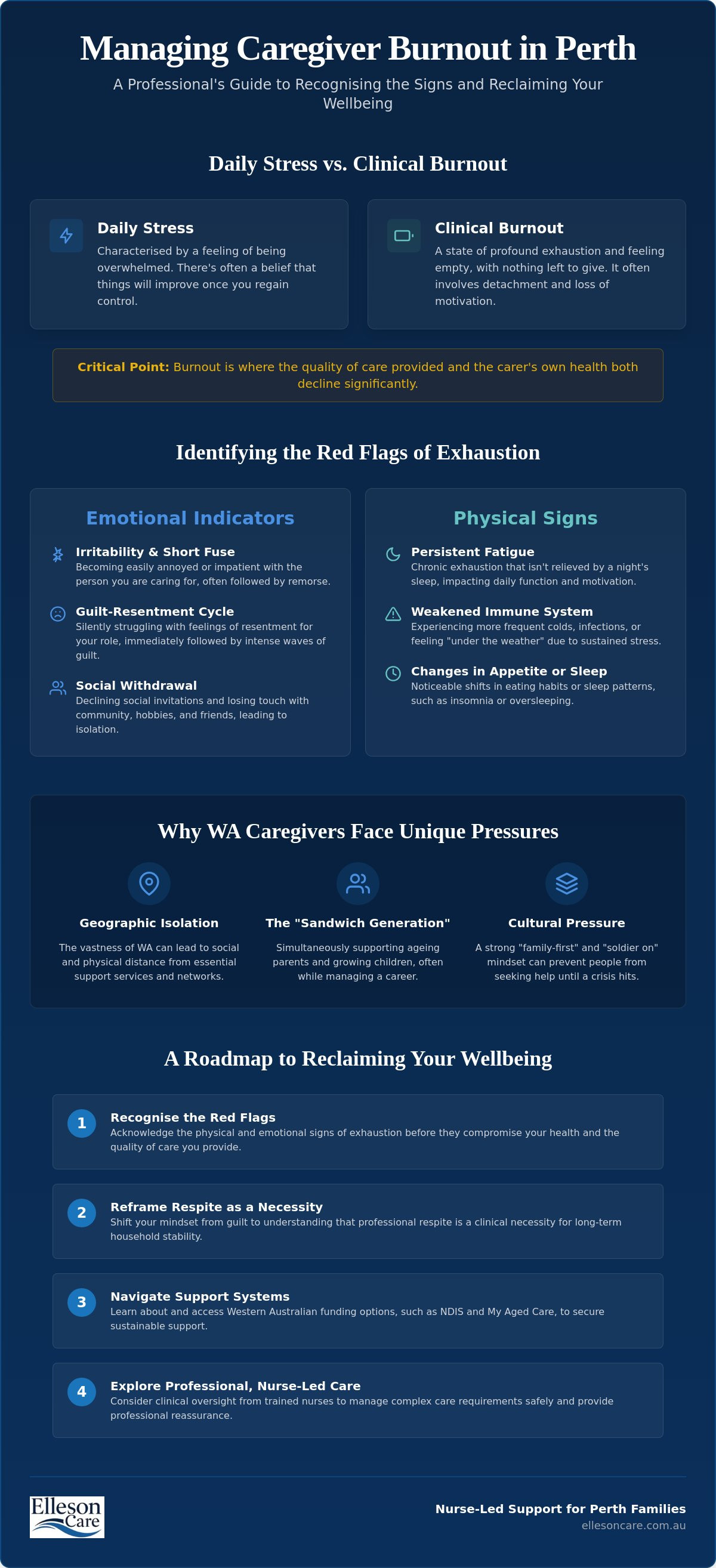
It can be difficult to distinguish between the normal strain of a busy life and a clinical decline. Stress often feels like you have too much on your plate, yet you still believe that if you could just get everything under control, you would feel better. Burnout is different; it feels like you have nothing left to give. You might experience a sense of detachment, a loss of motivation, or a feeling of being trapped in your role. This progression from caregiver strain to compassion fatigue happens gradually, often going unnoticed by the carer until they are physically unable to continue. Burnout is the critical point where the quality of care provided and the carer's own health both decline significantly.
Why Western Australian Caregivers Face Unique Pressures
Living in the most isolated capital city in the world presents specific challenges for those managing caregiver burnout Perth wide. The sheer vastness of Western Australia can lead to a sense of geographic and social isolation, particularly if care duties make it difficult to leave the home. In 2026, we are seeing a shift where Perth’s demographic changes have placed a heavier reliance on family-led care, often without the traditional support networks of previous generations. Many WA communities also hold a strong cultural belief in family-first care, which can lead to intense guilt when considering external support. Acknowledging that you cannot do this alone isn't a sign of failure; it's a necessary step in maintaining a safe and stable home environment.
Identifying the Red Flags: Physical and Emotional Signs of Exhaustion
Recognising the early symptoms of exhaustion is a vital skill for anyone managing caregiver burnout Perth wide. Often, these signs are subtle at first, appearing as minor lapses in patience or a persistent feeling of being under the weather. However, left unaddressed, these red flags can compromise your ability to provide safe, professional support to your loved one. Performing a regular self-audit allows you to identify these markers before they escalate into a full-blown health crisis. It's essential to understand that these symptoms are not a reflection of your character or your commitment, but rather a physiological response to an unsustainable workload.
Emotional Indicators: Guilt, Irritability, and Withdrawal
One of the most distressing signs of burnout is a shift in your emotional temperament. You might find yourself becoming short-fused or irritable with the person you are caring for, followed immediately by an intense wave of guilt. This guilt-resentment cycle is a heavy burden that many Perth carers carry in silence, yet it's a clear indicator that your emotional reserves are depleted. Another significant warning sign is withdrawing from the social activities that once provided joy and balance. If you find yourself declining invitations to family BBQs, skipping your morning beach walks, or losing touch with local community clubs, you are likely losing your sense of self to the demands of care. This withdrawal often leads to a persistent feeling of hopelessness or being trapped in an endless cycle of duty.
Physical Symptoms: When Your Body Signals for Help
Your body often communicates what your mind tries to ignore through various physical markers. Chronic headaches, sudden weight fluctuations, and a lowered immunity that leads to frequent illnesses are clear indicators that your system is under extreme stress. Sleep deprivation is particularly dangerous in a caregiving context, as it severely impairs the high-level decision-making required for complex clinical needs. You might find it harder to manage medication schedules accurately or monitor subtle changes in your loved one's symptoms. Physical collapse is often the body’s final way of demanding a break. When you reach this stage, the quality of care you can provide is naturally diminished, which can lead to further stress and clinical complications for the care recipient.
If you recognise these signs in your daily life, resources like the Carer Gateway offer essential support services, including counselling and peer groups designed for Western Australian families. Acknowledging these red flags is the first step toward a more sustainable path for both you and your loved one. For many, integrating professional clinical support can alleviate the daily pressure, allowing you to return to the role of a supportive family member rather than a task-oriented carer who is running on empty.
Navigating Respite and Support Systems in Western Australia
Managing caregiver burnout Perth families often experience requires a fundamental shift in how we view external help. Rather than seeing assistance as a last resort or a sign of personal failure, it is more effective to view respite care in Perth as a strategic tool for sustainable caregiving. Professional support isn't just about "watching" a loved one while you run errands; it is about introducing clinical expertise that ensures their safety while you restore your own energy. This "recharge" period is essential for the entire family unit, as it prevents the caregiver from reaching a point of total exhaustion that could compromise the stability of the home.
There is a significant difference between casual sitting services and professional nursing agencies. When a loved one has complex medical requirements, such as ventilator support or specialised wound care, the peace of mind provided by a nurse-led team is invaluable. These professionals don't just provide supervision; they offer clinical oversight that maintains the high standards of care your loved one deserves. Local advocacy groups like Carers WA provide a bridge to these services, offering Carer Gateway support services in Western Australia that include counselling, coaching, and emergency respite planning.
Accessing NDIS Respite and Short-Term Accommodation (STA)
For those navigating the NDIS, funding for respite is often categorised under Short-Term Accommodation (STA) or "Core Supports." This funding is designed to support both the participant and their informal support network by allowing for temporary breaks. Working closely with a support coordinator is the most effective way to ensure your plan includes specific provisions for burnout prevention. In 2026, the NDIS price guide continues to recognise the clinical necessity of these breaks, allowing families to access in-home support or specialised accommodation that meets the participant's goals while giving the primary carer much-needed relief.
Aged Care Packages and the Support at Home Program
Families supporting older Australians can utilise Home Care Packages to fund a variety of services, including domestic assistance, personal care, and social support. As we move through 2026, the transition to the Support at Home Program in 2026 has streamlined how West Australians access these subsidies. This program is specifically designed to be more responsive to the changing needs of both the individual and their carer. By engaging with these systems early, you can build a support structure that grows with your family's needs, ensuring that you never have to manage the complexities of caregiving entirely on your own.
Practical Strategies to Reclaim Your Wellbeing and Balance
Moving from a state of exhaustion to one of stability requires more than just a temporary break. It demands a proactive shift in how you structure your daily life and view your role as a supporter. Managing caregiver burnout Perth families face often involves transitioning from being a solo provider to becoming an effective care manager. By implementing a structured plan, you can begin to reduce the cumulative stress that has built up over months or years. This process isn't about doing less for your loved one; it's about doing it in a way that preserves your own health and ensures the longevity of the care you provide.
To begin reclaiming your balance, consider this five-step resilience plan designed for the local Perth context:
- Perform a task audit: List every duty you perform, from clinical medication management to domestic chores, to identify which tasks can be delegated.
- Identify micro-respite windows: Carve out 15 to 30 minutes daily where you are entirely "off duty," even if you remain in the house.
- Communicate your limits: Clearly explain your need for support to other family members, using specific requests rather than general pleas for help.
- Re-establish your identity: Dedicate time each week to an activity that has nothing to do with caregiving, such as a hobby or meeting a friend.
- Connect with Perth’s natural environment: Use the city's green spaces or coastal paths to physically distance yourself from the care environment and clear your mind.
Establishing Boundaries and a Sustainable Routine
Adopting a "permission to pause" mindset is essential for long-term health. It's okay to say no to extra demands from extended family or social circles when your energy is low. By organising your daily tasks into a structured checklist, you can significantly reduce the mental load that often leads to decision fatigue. For many carers, a simple change in scenery is the most effective way to reset. Taking a short walk through Kings Park or along the coastal paths at Cottesloe provides a vital mental break, allowing you to return to your duties with a renewed sense of clarity and patience.
Building a Professional Care Team in Perth
Transitioning from a solo carer to a care manager allows you to focus on the emotional connection with your loved one while professionals handle the more taxing clinical duties. When you engage a professional agency, you aren't just buying time; you are investing in high-quality clinical oversight. Registered nursing services can manage complex tasks like wound care or ventilator support, which are often the primary sources of stress for family members. When interviewing a Perth care agency, look for a "person-centred" approach that respects the dignity of your loved one and aligns with your family’s specific values and routines.
If you are ready to move away from the "guilt-resentment cycle" and build a more sustainable future for your family, contact our nurse-led team to discuss a personalised support plan tailored to your unique needs.
How Elleson Care Supports Perth Caregivers with Nurse-Led Solutions
At Elleson Care, we understand that managing caregiver burnout Perth families experience requires more than just a temporary helping hand. It requires a dedicated clinical partnership that prioritises the health of the entire family unit. Our approach is built on the foundation of being a Compassionate Expert. We combine high-tier clinical authority with a deep respect for your personal dignity and autonomy. By integrating professional support into your home, we help you transition from a place of constant pressure to a state of stability and safety. We believe that professional respite is not a luxury, but a clinical necessity for maintaining a healthy and functional household.
Our nurse-led model ensures that every aspect of your loved one's care is overseen by experienced professionals. This clinical oversight provides a level of security that casual support services cannot match. When you partner with us, you aren't just hiring a carer; you are engaging a team that is emotionally invested in your family's quality of life. We take a holistic view of well-being, recognising that a supported and healthy caregiver is the most important asset in any care plan. Our goal is to provide a steady, reliable presence that allows you to step back from the role of a clinical provider and return to being a supportive family member.
Person-Centred Clinical Nursing and Domestic Support
Our team provides a comprehensive suite of services designed to alleviate the physical and mental load of caregiving. We specialise in complex clinical needs, including wound management, medication administration, and ventilator support. These high-stakes tasks are overseen by registered nurses with more than 22 years of experience, ensuring your loved one receives evidence-based care in the comfort of their own home. Beyond clinical support, we offer domestic assistance such as cleaning and meal preparation. These services are not merely about convenience; they are essential tools to prevent physical burnout and allow you to focus on the emotional connection with your family member. Every service we provide is tailored to the individual's specific needs, ensuring a person-centred fit that respects their daily routines.
Taking the First Step: A Clinical Consultation
The journey toward sustainable support begins with a thorough clinical consultation. As a West Australian owned and operated provider, we have a deep understanding of the local healthcare landscape and the specific challenges faced by families in our community. During our initial nurse-led assessment, we work closely with NDIS and Aged Care participants to develop a care plan that is truly holistic. This process ensures that every aspect of support is aligned with your family's goals and values. We provide a clear pathway through the complexities of the system, offering the professional reassurance needed to manage complex care requirements safely. We are here to act as your advocate and partner, ensuring that your family remains strong and supported.
Contact Elleson Care for a compassionate discussion about your care needs and discover how our nurse-led support can help you reclaim your balance.
Building a Sustainable Future for Your Family
Prioritising your own well-being is the most effective way to ensure the long-term safety and comfort of your loved one. By recognising the early indicators of exhaustion and reframing professional support as a clinical necessity, you can move away from the cycle of guilt. Managing caregiver burnout Perth families face requires a proactive approach that leverages local resources and expert clinical oversight. Whether you are navigating the complexities of NDIS funding or transitioning to the Support at Home Program, you don't have to manage these challenges in isolation.
As a West Australian owned and operated provider, Elleson Care specialises in providing the stability and peace of mind you deserve. Our team, led by registered nurses with more than 22 years of experience, acts as a dedicated partner in your family's health journey. We are NDIS and My Aged Care specialists who are committed to maintaining the highest standards of dignity and care for every client we serve. Book a nurse-led consultation with Elleson Care to reclaim your balance and discover a more sustainable path forward. You've already taken the most difficult step by acknowledging the need for change; let us help you carry the rest of the weight with kindness and professional expertise.
Frequently Asked Questions
What are the first signs of caregiver burnout I should look for?
The first signs often include emotional distancing, persistent fatigue that sleep doesn't fix, and a loss of interest in your usual hobbies. You might notice you are becoming irritable with your loved one or feeling a sense of hopelessness about the future. Recognising these red flags early is a vital part of managing caregiver burnout Perth families face, as it allows you to intervene before your health declines.
Can I use NDIS funding to pay for respite care in Perth?
Yes, NDIS funding can be utilised for respite through categories such as Short-Term Accommodation (STA) or Core Supports. These funds are specifically allocated to give participants a change of scenery while providing their primary carers with a necessary period of rest. It's helpful to work with your support coordinator to ensure these provisions are included in your plan to support the sustainability of your home care arrangement.
How does caregiver burnout affect the person I am caring for?
Burnout can lead to a decline in the quality of care provided because extreme exhaustion often impairs your patience and clinical decision-making. When a carer is depleted, they may inadvertently overlook subtle changes in their loved one's health or medication requirements. Professional support ensures your loved one remains safe and well-cared for while you take the time needed to restore your own energy and focus.
What is the difference between respite care and permanent aged care?
Respite care is a temporary arrangement designed to provide short-term relief, whereas permanent aged care involves a long-term move into a residential facility. Respite can be delivered in your own home or at a specialised centre for a few days or weeks at a time. It serves as a vital tool for families who wish to continue living together while managing the daily pressures of complex caregiving.
Are there specific support groups for carers in Western Australia?
Carers WA is the peak body in Western Australia and provides access to various peer support groups and counselling services across the state. They offer specialised programs for different age groups and care situations, helping you connect with others who understand the unique challenges of the WA healthcare landscape. These groups provide a safe space to share experiences and find practical local advice from people in similar roles.
How can a registered nurse help reduce my daily caregiving stress?
A registered nurse reduces stress by taking over complex clinical tasks such as wound care, ventilator support, and medication management. Having a professional with extensive clinical experience oversee these duties provides immense peace of mind and reduces your mental load. This allows you to step away from the technical demands of care and focus on your relationship with your loved one as a family member.
What happens if I experience a health crisis and can no longer provide care?
If you experience a sudden health crisis, emergency respite services can be accessed through the Carer Gateway or your existing NDIS and Aged Care plans. It's important to have an emergency care plan in place before a crisis occurs. Our nurse-led team can help you document these requirements to ensure a seamless transition of care if you are temporarily unable to fulfill your caregiving role.
How do I deal with the guilt of placing my loved one in professional care?
Dealing with guilt involves recognising that seeking professional help is a clinical necessity for the safety of both you and your loved one. It isn't an admission of failure, but a responsible decision to ensure the highest standard of care is maintained. Managing caregiver burnout Perth families experience often requires understanding that a rested, healthy carer is far more capable of providing the emotional support their family member needs.


