

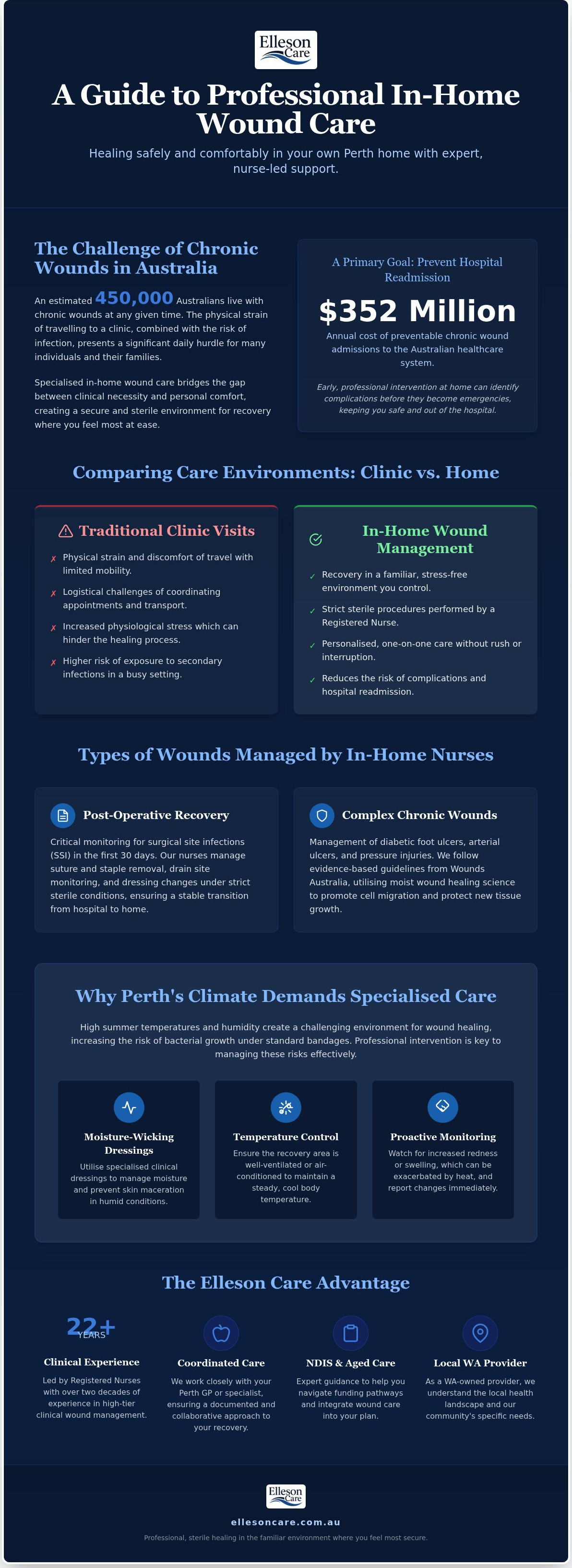
What if the most effective environment for complex wound healing isn't a sterile hospital ward or a busy medical centre, but your own living room? With chronic wounds affecting an estimated 450,000 Australians at any given time, the physical strain of travelling to a clinic with limited mobility is a challenge many families face daily. You likely believe that your recovery should be a time of peace, yet the logistical hurdles of managing dressings and the fear of infection can feel overwhelming. Accessing specialised wound care at home Perth services allows you to bridge the gap between clinical necessity and personal comfort, ensuring your healing journey remains safe and steady.
We understand that navigating the healthcare system can be confusing, especially with the 2026 NDIS Pricing Schedule updates and the strengthened Aged Care Quality Standards now in effect. This guide provides a clear roadmap for accessing nurse-led support that respects your autonomy while delivering high-tier clinical expertise. You'll discover how a Registered Nurse can coordinate your recovery, reduce inflammation, and help you navigate funding pathways through NDIS or My Aged Care. We'll outline exactly how to achieve professional, sterile healing in the familiar environment where you feel most secure.
Key Takeaways
- Understand why professional clinical intervention is vital in the Western Australian climate to prevent secondary infections and avoid hospital readmissions.
- Learn how choosing specialised wound care at home perth reduces the physical burden of clinic commutes while ensuring a sterile environment for recovery.
- Discover how to prepare your living space for clinical support with a practical checklist for hygiene and nurse-led care zones.
- Explore the clinical benefits of having a Registered Nurse with over 22 years of experience manage complex post-surgical dressings and sutures.
- Gain clarity on integrating professional wound management into your NDIS or Aged Care plan to maintain your independence and personal dignity.
The Importance of Specialised Wound Care at Home in Perth
Professional intervention is more than just a convenience; it's a clinical necessity for those managing complex injuries. Unlike general domestic assistance, nurse-led wound care at home perth involves a high level of technical expertise. Registered Nurses with over 22 years of experience understand that the process of wound healing is a delicate biological sequence. If one stage is interrupted by infection or poor dressing choice, the risk of chronic complications increases significantly.
The risk of 'DIY' wound care is substantial. Without professional oversight, secondary infections can develop quickly, often leading to painful complications or hospital readmission. Professional wound care at home perth provides a protective layer of safety, ensuring that dressings are applied in a sterile manner and that the underlying tissue remains healthy. Beyond the clinical benefits, healing in a familiar, stress-free environment allows your body to focus entirely on recovery, reducing the physiological stress that can hinder progress.
Why Perth's Climate Matters for Healing
Perth's unique environment presents specific challenges for skin integrity. During our intense summer months, high temperatures and humidity can create a breeding ground for bacteria under standard bandages. Specialised dressings are essential to manage moisture levels and maintain a stable temperature at the wound site. To support your recovery in the WA heat, consider these steps:
- Utilise moisture-wicking clinical dressings to prevent skin maceration.
- Ensure the recovery area is well-ventilated or air-conditioned to maintain a steady body temperature.
- Monitor for increased redness or swelling, which can be exacerbated by heat and dehydration.
Preventing Hospital Readmission in WA
A primary goal of specialised home care is to keep you out of the hospital system. In 2019-20, hospital admissions for chronic wounds cost the Australian healthcare system $352 million. Many of these cases are preventable with early intervention. By having a Registered Nurse visit your home, you gain an advocate who can identify early signs of sepsis or necrosis before they become emergencies. We work closely with your Perth GP or specialist to ensure that every change in your condition is documented and addressed through a coordinated approach.
This steady, reliable presence doesn't just save money; it saves lives. It's about maintaining your dignity while receiving high-tier clinical support that hasn't lost its human touch. By choosing a local, WA-owned provider, you ensure that your care is managed by professionals who understand our local health landscape and the specific needs of our community.
Types of Wounds Managed by In-Home Nursing Services
Clinical wound management is a precise discipline that extends far beyond simply changing a bandage. It involves a systematic approach to the assessment, cleaning, and application of specialised dressings designed to promote biological healing at a cellular level. For many West Australians, accessing professional wound care at home perth ensures these complex clinical tasks are handled by a Registered Nurse, providing the specific environment an injury needs to close safely and effectively.
Post-Operative Recovery at Home
The period following a hospital discharge is often the most vulnerable time for a patient. Monitoring for surgical site infections (SSI) is vital during the first 30 days, as early detection can prevent serious complications. Having a nurse visit your home allows for professional suture and staple removal in the comfort of your lounge room. This transition from Perth hospitals to home-based care is managed with a focus on stability, ensuring that drain sites are monitored and dressings are changed under strict sterile conditions.
Managing Complex Chronic Wounds
Chronic wounds, such as diabetic foot ulcers or arterial ulcers, require a sophisticated understanding of vascular health and tissue viability. We align our practices with the evidence-based guidelines provided by Wounds Australia, the peak body for wound management. This involves utilising the science of moist wound healing, which maintains an ideal environment for cell migration, rather than using traditional dry dressings that can damage new tissue.
For NDIS participants with limited mobility, managing pressure injuries is a critical component of our clinical support. These injuries require expert assessment to determine the grade of the wound and the appropriate pressure-relieving strategies. Similarly, Perth seniors often face the challenge of fragile "paper-thin" skin. Professional skin tear management is essential to prevent these minor injuries from escalating into chronic ulcers. By choosing a nurse-led approach, you ensure that even the most stubborn injuries are treated with the latest clinical techniques. If you or a family member are struggling with a persistent injury, our clinical support services offer a path toward consistent, professional healing.
Comparing Clinic Visits vs. In-Home Wound Management
While public outpatient clinics serve a vital role in the healthcare system, the physical and emotional cost of reaching them often goes overlooked. For many residents, choosing wound care at home perth is a decision to prioritise stability over the chaos of a hospital environment. A clinic visit usually involves more than just the appointment; it's the preparation, the commute, and the inevitable wait in a public area. When you're managing a painful or complex injury, these hurdles can actually impede the healing process by increasing cortisol levels and physical strain.
One-on-one time with a Registered Nurse offers a level of focus that busy clinic rotations simply can't match. In a clinic setting, you're often seen by whichever staff member is available on the roster, which can lead to fragmented communication. At home, your nurse becomes a familiar partner in your recovery, deeply acquainted with your specific health history and the nuances of your environment. This continuity of care is a hallmark of high-tier professional service, ensuring that your progress is monitored with a steady, expert eye and a deep respect for your autonomy.
The Travel Burden for Perth Seniors
The logistical challenge of navigating Perth traffic shouldn't be underestimated. For seniors or those with limited mobility, a trip to a major health campus can be exhausting. Finding a park at a busy hospital centre often involves long walks from the car park, which is the last thing someone with a leg ulcer or post-operative pain needs. By opting for home-based management, you maintain your daily routine without the disruption of a half-day trip. This preservation of energy allows your body to dedicate its resources where they're needed most: to the healing site.
Sterile Care in the Home Environment
A common concern is whether a home setting can match the sterility of a hospital. Registered Nurses are trained to implement the Australian National Safety and Quality Health Service (NSQHS) Standards within a domestic context. We use the 'aseptic non-touch technique' to ensure that every dressing change is performed with the highest clinical integrity, regardless of the location.
Choosing wound care at home perth allows you to organise a dedicated 'care zone' that is clean, quiet, and well-lit. Unlike public waiting rooms, where you're exposed to a variety of community illnesses, your home is a controlled environment. This significantly reduces the risk of cross-contamination, providing a safe sanctuary for your recovery. It's a methodical, thorough approach that brings hospital-grade safety directly to your bedside.
Checklist: Preparing Your Perth Home for Wound Care
Preparing for a clinical visit shouldn't feel like an additional burden. When you arrange for specialised wound care at home perth, a few simple steps can transform your living space into a safe, efficient treatment area. This preparation allows our Registered Nurses to focus entirely on your clinical needs from the moment they arrive. By creating a dedicated environment, you ensure that every dressing change is performed with the highest level of clinical integrity and personal comfort.
Safety and access are the foundations of a successful home visit. Please ensure your nurse can enter the property securely, especially if you have complex gate codes or specific parking requirements. During the procedure, it's helpful to manage household activity by keeping pets in a separate room and minimising thoroughfare. This creates a calm, focused atmosphere that supports both the nurse's precision and your own sense of peace during the treatment.
Setting Up the Ideal Treatment Space
The right environment directly impacts the quality of clinical assessment. Choose a "Care Zone" that offers both comfort for you and practical access for the nurse. A dining chair with good back support or an adjustable bed is often better than a low, soft couch. Consider these practical elements for your setup:
- Lighting: Ensure the area has bright, direct lighting. Natural light is excellent, but a moveable floor lamp helps the nurse see the wound bed clearly to check for signs of healthy granulation.
- Surfaces: Clear a stable table or benchtop nearby. This provides a clean area for the nurse to set up their sterile dressing kits and equipment.
- Hygiene: While your nurse brings all necessary clinical supplies, having a dedicated waste bin and hand-washing facilities nearby is very helpful.
Communication and Records
Information is a vital tool for healing. For the first visit, please have your hospital discharge summaries and any recent medical history ready for review. This helps the nurse align their treatment with the instructions from your surgeon or specialist. Maintaining a simple log of your pain levels or any changes you've noticed between visits is also highly beneficial. It allows for a more responsive care plan that adapts to your daily experience.
Having your Perth GP's contact details and a current medication list on hand ensures that we can coordinate your care seamlessly with your wider medical team. Organising your nursing services as part of a holistic recovery plan ensures that every aspect of your well-being is addressed. If you're ready to begin your recovery journey in a familiar setting, we invite you to reach out for professional clinical support tailored to your specific needs.
Why Elleson Care is Perth's Choice for Nurse-Led Wound Management
Elleson Care stands as a dedicated partner in the West Australian community, led by Registered Nurses with more than 22 years of clinical experience. We believe that professional nursing is defined by a delicate balance of technical authority and human warmth. Choosing wound care at home perth through a local, WA-owned provider ensures that your support is managed by professionals who truly understand our state's health landscape and specific clinical pathways. We don't just treat a clinical site; we provide a holistic, family-oriented service that prioritises your personal dignity and long-term well-being.
Our approach is built on a foundation of integrity and advocacy. We recognise that families navigating complex care needs require a steady, reliable presence they can trust. By maintaining high ethical standards and utilising evidence-based practices, we offer a sense of stability that general support models often lack. This nurse-led leadership ensures that every aspect of your recovery is monitored with a disciplined, expert eye, allowing you to remain in the familiar environment where you feel most secure.
Specialised NDIS and Aged Care Clinical Support
Navigating the complexities of healthcare funding can be a significant source of stress for many individuals. We specialise in coordinating clinical nursing within the frameworks of the NDIS, DVA, and My Aged Care. Our team ensures that your wound management aligns perfectly with your broader plan goals, whether you're recovering from surgery or managing a chronic condition. With the Strengthened Aged Care Quality Standards and the 2026-27 NDIS Pricing Schedule now in effect, having a nurse-led provider to advocate for your clinical needs is more important than ever. Understanding aged care in Perth involves knowing how professional clinical care fits into your journey to help you stay independent for longer.
A Compassionate, Nurse-Led Journey
Complex or slow-to-heal injuries require direct access to senior clinical expertise. Our Registered Nurses bring this high-tier knowledge directly to your bedside, providing a protective and proactive level of care. We move at a methodical pace that mirrors the steady nature of long-term support, ensuring you never feel rushed or unheard during your treatments. This commitment to excellence means we're both technically proficient and emotionally invested in your recovery. If you're seeking a partner who combines clinical discipline with fundamental kindness, contact Elleson Care today to discuss your specialised wound care needs and discover how we can support your path to healing.
Secure Your Path to Professional Healing at Home
Choosing professional wound care at home perth is a commitment to your long-term health and personal dignity. We've explored how transitioning from hospital to home-based care reduces the physical burden of travel while ensuring a sterile, safe environment for recovery. By designating a dedicated care zone and utilising nurse-led expertise, you can avoid the risks of secondary infection and the stress of clinic commutes. This steady, clinical oversight is essential for maintaining your independence while your body focuses on the complex process of repair.
As a West Australian owned and operated provider, Elleson Care brings over 22 years of Registered Nurse leadership to every home visit. We specialise in supporting NDIS and Aged Care participants, ensuring that your clinical needs are met within your specific funding framework. Our holistic, family-oriented approach means we're focused on the person, not just the injury, providing a steady and reliable presence through every stage of the healing process. Your recovery deserves the highest standard of evidence-based practice delivered with genuine human warmth. We invite you to book a clinical consultation with our Perth nursing team to discuss your specific needs. Let's work together to restore your comfort and independence in the place where you feel most at home.
Frequently Asked Questions
Do I need a referral from my Perth GP for home wound care?
You don't necessarily need a formal referral to begin private nursing services, but we strongly recommend a coordinated approach with your Perth GP. For DVA or certain government-funded pathways, specific documentation is required to ensure your care is subsidised correctly. Our team works closely with your existing medical specialists to ensure every aspect of your wound care at home perth aligns with your broader recovery plan and medical history.
Can I use my NDIS funding for professional wound management?
Yes, NDIS funding can be utilised for clinical nursing supports if your disability impacts your ability to manage wound care independently. Under the 2026-27 NDIS Pricing Schedule, nursing services are categorised to provide professional oversight for complex needs. We assist participants in navigating these categories to ensure they receive high-tier clinical care while maintaining their dignity and independence within their familiar home environment in Western Australia.
How often will a nurse need to visit for a chronic wound?
The frequency of nursing visits depends entirely on the type of injury and the current stage of healing. Some acute surgical wounds may only require a visit every few days, while chronic ulcers often benefit from more frequent monitoring to manage exudate and infection risks. A Registered Nurse will conduct a thorough initial assessment to create a methodical schedule that ensures your wound remains in an optimal environment for recovery.
What should I do if I notice redness or increased pain between nursing visits?
You should contact your nursing team or GP immediately if you observe increased redness, warmth, swelling, or a sudden change in pain levels. These can be early indicators of a secondary infection that requires prompt clinical intervention. Because we prioritise your safety, we provide clear guidance on what to monitor between visits. Early detection is a vital part of the recovery process and helps prevent avoidable hospital readmissions.
Does the nurse bring all the necessary dressings and clinical supplies?
Our Registered Nurses carry essential clinical equipment, but the provision of specific dressings often depends on your funding model. NDIS participants usually have a budget allocated for consumables, while Aged Care Package recipients may have supplies organised through their provider. We ensure every dressing used meets high-tier clinical standards. We'll discuss the most efficient way to manage your supplies during your initial consultation to ensure no disruptions occur to your healing.
Is home wound care covered under a Level 3 or 4 Home Care Package?
Yes, clinical nursing is a core component of Level 3 and 4 Home Care Packages designed to support seniors with complex needs. These packages allow you to use your subsidy to access specialised wound care at home perth without the stress of clinic travel. We work with your package manager to ensure your clinical support is consistent, professional, and focused on maintaining your quality of life while you recover at home.
Can you provide wound care for veterans through DVA funding?
We provide specialised wound care for veterans through DVA funding pathways. As a West Australian owned provider, we understand the specific requirements for DVA clinical nursing and can help you navigate the necessary documentation. Our goal is to provide a steady, reliable presence for veterans, offering the respect and high-standard clinical care they deserve. This support ensures those who served can heal comfortably in their own familiar surroundings.
What is the difference between a Registered Nurse and a support worker for wound care?
A Registered Nurse (RN) has extensive clinical training that allows them to perform complex assessments, debridement, and specialised dressing selections. Support workers provide essential domestic and personal assistance but don't have the legal scope of practice to manage clinical wounds. Choosing an RN-led service means your care is managed by a professional with the expertise to identify complications early and adjust your treatment plan based on evidence-based biological healing stages.


