
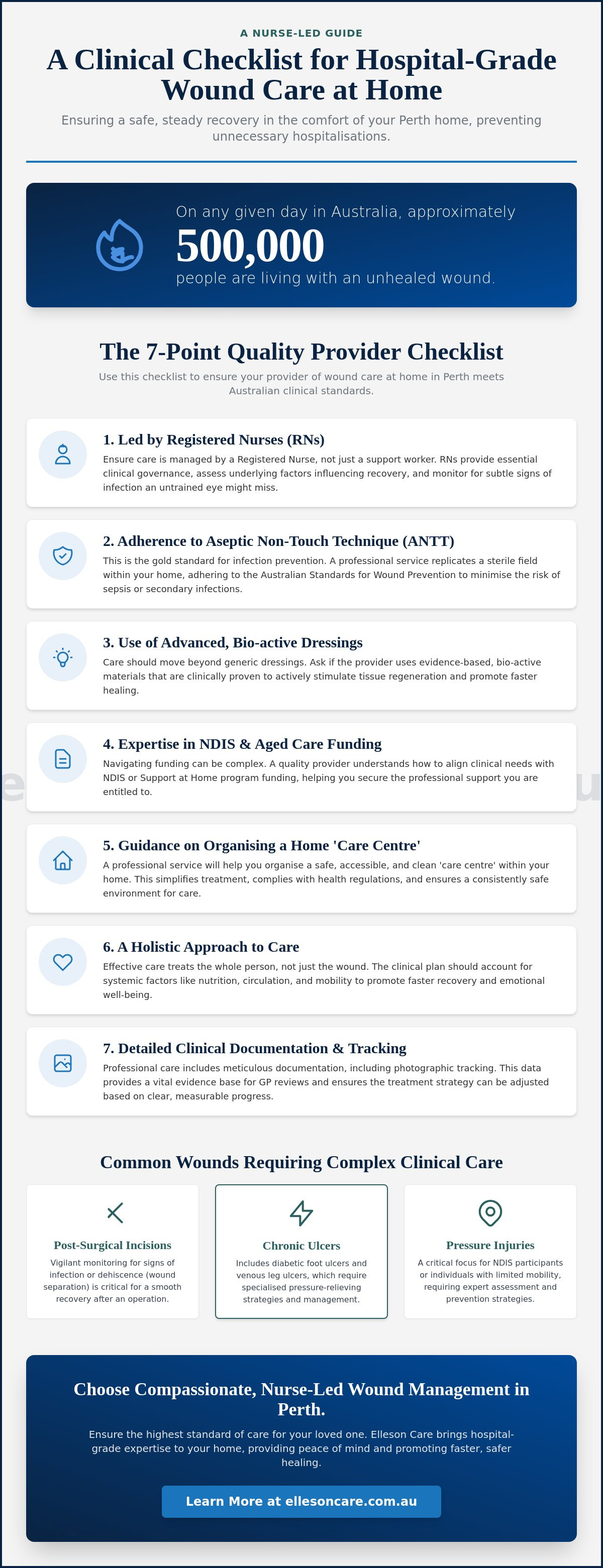
On any given day in Australia, approximately 500,000 people are living with an unhealed wound. For many families, the challenge of managing complex wound care at home in Perth is compounded by the constant fear of infection and the physical strain of transporting a vulnerable loved one to a busy hospital. You might find yourself searching for answers as a wound fails to improve despite your best efforts, or perhaps you're feeling lost while trying to understand how the new Support at Home program or NDIS funding applies to your specific situation.
We understand that your priority is a safe, steady recovery that respects your family's dignity and comfort. This article provides a comprehensive, nurse-led clinical checklist designed to bring hospital-grade standards into your own home, ensuring professional oversight that helps prevent unnecessary hospitalisations. We will explore the latest evidence-based practices for faster healing, clarify how to access professional nursing support, and show you how to manage complex clinical needs with confidence and calm.
Key Takeaways
- Discover how Aseptic Non-Touch Technique (ANTT) and advanced bio-active dressings provide hospital-grade infection control within your own home.
- Use our 7-point quality checklist to ensure your provider of wound care at home in Perth is led by Registered Nurses rather than just support workers.
- Learn how to navigate NDIS and Aged Care funding to secure professional clinical support that aligns with the latest Australian standards.
- Identify how to organise a safe, accessible 'care centre' in your home that simplifies treatment and complies with Western Australian health regulations.
- Understand the importance of a holistic approach that treats the whole person, not just the wound, to promote faster recovery and emotional well-being.
Understanding Specialised Wound Care at Home in Perth
Managing a complex injury outside of a clinical setting requires more than just patience. It demands a structured, professional approach. Specialised wound care at home in Perth is a clinical service led by Registered Nurses, designed to mirror the high standards found in a hospital ward while allowing the patient to remain in their own familiar environment. This professional oversight is essential for preventing readmission to major facilities like Royal Perth Hospital or Fiona Stanley Hospital (FSH). By bringing hospital-grade expertise to the bedside, families can avoid the physical and emotional exhaustion of frequent hospital commutes.
The nurse-led advantage is defined by clinical governance. While basic first aid focuses on covering a wound, a Registered Nurse assesses the underlying factors that influence recovery. They monitor for subtle signs of infection that an untrained eye might miss, such as changes in exudate colour or periwound temperature. This proactive stance provides a sense of stability for families, ensuring that the care plan is always based on the latest evidence-based practices rather than guesswork.
Common Wound Types Requiring Professional Management
Professional management is typically required for three primary categories of injuries. Post-operative surgical incisions need vigilant monitoring for signs of dehiscence, where the wound edges separate, or infection. Chronic ulcers, particularly diabetic foot ulcers and venous leg ulcers, are common among Perth seniors and require specific pressure-relieving strategies. Pressure injuries are another critical focus, especially for NDIS participants or those with limited mobility. A Registered Nurse understands how the wound healing process can be influenced by systemic factors like circulation or nutrition, and they adjust the care plan accordingly to ensure progress doesn't stall.
The Clinical Difference: Basic vs. Complex Wound Care
There is a significant difference between basic care and complex clinical intervention. While a family member might be able to change a simple adhesive bandage, complex care involves advanced techniques like vacuum-assisted closure (VAC) therapy or the application of specialised bio-active materials. In the unique Perth climate, where heat and humidity can increase the risk of bacterial growth, even a minor scratch can quickly become a clinical priority for a vulnerable individual. Professional wound care at home in Perth includes detailed clinical documentation and photographic tracking. This data is vital for GP reviews, providing a clear evidence base to show whether a treatment is working or if a change in strategy is needed. This level of detail ensures that every step taken is purposeful and directed toward a faster, safer recovery.
Clinical Standards: What Hospital-Grade Home Care Looks Like
Providing hospital-grade care within a domestic setting requires a disciplined clinical framework. It's not simply about changing a bandage; it's about adhering to the same rigorous protocols used in a surgical ward. For families seeking wound care at home in Perth, the primary objective is to replicate a sterile environment that promotes healing while minimising the risk of sepsis or secondary infections. This is achieved through the Aseptic Non-Touch Technique (ANTT), which is the gold standard for infection prevention. By following the Australian Standards for Wound Prevention and Management, Registered Nurses ensure that neither the wound nor any sterile equipment is contaminated during the procedure.
Professional oversight also protects patients from compromised products. The February 2026 recall of certain MediHoney Antibacterial Wound Gel batches due to packaging defects highlights why clinical monitoring of supplies is essential for safety. A nurse-led approach moves beyond generic dressings to evidence-based, bio-active materials that actively stimulate tissue regeneration. Families often find that professional clinical support provides the stability needed to manage these complex requirements without the stress of second-guessing every step.
Infection Control and Sterilisation Protocols
Maintaining a 'sterile field' in a Perth lounge room or bedroom is a precise task. Nurses are trained to identify early warning signs of infection, such as subtle changes in odour, heat, or the type of exudate present. They also manage the environment by enforcing strict hand hygiene and the correct use of personal protective equipment (PPE). This level of discipline is what prevents a minor complication from escalating into a hospital emergency. It ensures the home remains a place of healing rather than a source of risk.
Advanced Treatment Technologies Available at Home
Many advanced therapies previously restricted to hospitals are now available through specialised wound care at home in Perth. These include:
- Compression Therapy: Essential for managing chronic oedema and promoting blood flow in venous leg ulcers.
- Negative Pressure Wound Therapy (NPWT): Using vacuum technology to draw out fluid and increase blood flow to deep or slow-healing wounds.
- Clinical Debridement: The careful removal of non-viable tissue by a qualified nurse to prevent bacterial growth and clear the path for new skin cells.
Integrating these technologies into a home care plan requires regular audits by a Senior Registered Nurse. This oversight ensures that the treatment remains effective as the wound changes. It provides a clear, documented path toward recovery that both the family and the patient's GP can trust.
The Perth Wound Care Provider Checklist: 7 Points of Quality
Selecting a clinical partner for wound care at home in Perth is a decision that extends beyond mere convenience. It's about finding a team that integrates seamlessly into your life while maintaining the highest medical standards. While many agencies offer general support, complex wound management requires a specific set of credentials and operational habits. Use the following framework to evaluate potential providers and ensure your loved one receives the quality of care they deserve.
- Registered Nurse (RN) Leadership: Ensure the service is led by an RN who oversees every care plan, rather than relying solely on support workers for clinical decisions.
- Funding Alignment: Confirm the provider is registered for NDIS, DVA, or My Aged Care (Aged Care) services to ensure your funding is utilised correctly.
- Local Perth Presence: A provider with deep roots in Western Australia will have established relationships with local specialists and hospitals.
- Clinical Communication: Ask how they maintain the 'communication loop' with your GP or Perth-based surgeon.
- Consumables Knowledge: The right provider should be familiar with the Chronic Wound Consumables Scheme, which provides subsidised products to eligible individuals.
- Advanced Technology: Enquire if they have access to Negative Pressure Wound Therapy (NPWT) or specialised bio-active dressings.
- Emergency Escalation: Verify their protocol for when a wound shows signs of deterioration or infection.
Evaluating Clinical Expertise and Qualifications
Clinical excellence is non-negotiable. When interviewing a provider, ask specifically about their experience with pressure injury management or complex surgical sites. It's important to know the frequency of RN visits versus Enrolled Nurse (EN) support. While ENs are vital, the high-level assessment and debridement tasks should be guided by a Registered Nurse with specialised wound training. A quality agency will also demonstrate a commitment to ongoing clinical education, ensuring their staff are up to date with the 2022 Australian Standards for Wound Prevention and Management.
Integration with Your Perth Healthcare Team
Recovery is a collaborative effort. A professional wound care at home in Perth service acts as the 'eyes and ears' for your family doctor. They should provide regular, detailed progress reports that include photographic evidence of the wound's trajectory. This documentation is essential for your GP to make informed decisions about medication or specialist referrals. Furthermore, the nurse should liaise with other allied health professionals, such as Dietitians to support skin integrity or Occupational Therapists to provide pressure-relieving equipment. This holistic advocacy ensures that if healing stalls, a hospital review is organised promptly before a crisis occurs.
Organising Your Perth Home for Professional Wound Care
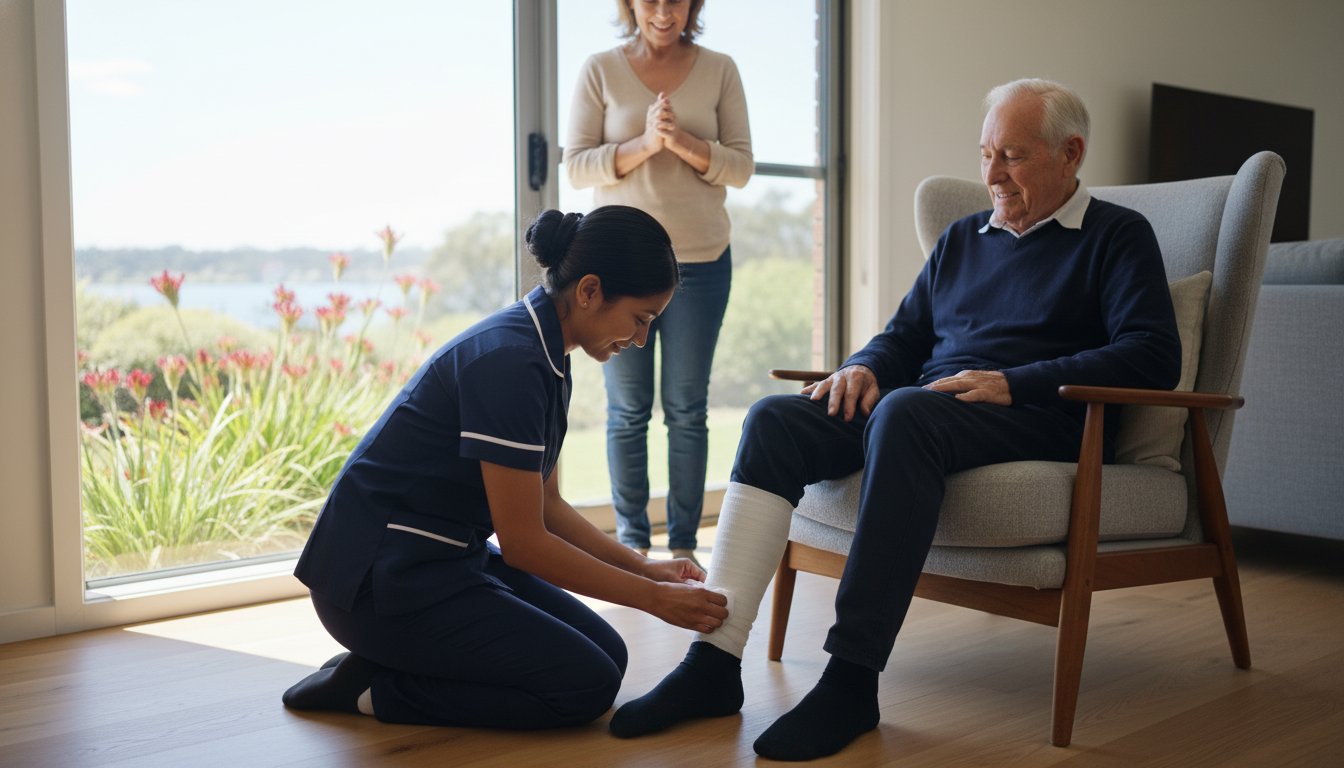
Preparing your home for clinical visits is a vital step in ensuring the success of wound care at home in Perth. It transforms a domestic space into a safe, functional environment for both the patient and the nursing team. This preparation provides a sense of stability and ensures that every procedure is conducted with the same precision found in a clinical facility. By designating a specific 'care centre' within the home, you allow the nurse to focus entirely on the patient's recovery rather than navigating domestic obstacles.
The chosen area should prioritise the patient's dignity and comfort, especially during longer procedures like complex dressing changes or debridement. A stable, comfortable chair or bed with easy access from both sides is ideal. This setup allows the nurse to maintain the Aseptic Non-Touch Technique (ANTT) protocols discussed earlier without compromising their posture or the sterile field. If you require assistance setting up a clinical space for your loved one, our team at Elleson Care can guide you through our clinical support services to ensure every detail is managed professionally.
Preparing the Physical Environment
Adequate lighting is perhaps the most critical requirement for effective wound assessment. The nurse must be able to accurately judge the depth, colour, and texture of the tissue to monitor progress. While natural light is helpful, a high-quality portable lamp ensures consistency regardless of the time of day. You should also ensure there is enough clearance for mobile equipment, such as hoists or dressing trolleys, to move freely. To maintain the highest hygiene standards, it is essential to keep the treatment area a pet-free and smoke-free zone during clinical visits, as airborne contaminants can significantly increase the risk of infection.
Consumables and Equipment Management
Managing clinical supplies requires a methodical approach. We recommend organising a 'clinical cupboard' that is cool, dry, and away from direct sunlight. This is particularly important in the Perth climate, where heat can degrade specialised creams or compromise the adhesive properties of silver-impregnated dressings. Regularly tracking expiry dates on these items ensures that only the most effective materials are used on the wound.
Safety extends to the disposal of medical waste. According to Western Australian health regulations, biohazardous materials and sharps must be handled with extreme care. Your provider should assist you in securing yellow sharps containers and biohazard bags for safe disposal. This disciplined approach to waste management protects your family and the wider community while ensuring your home remains a safe sanctuary for healing. By following these practical steps, you create a professional framework that supports faster recovery and gives your family the confidence that every clinical need is being met with excellence.
Elleson Care: Compassionate, Nurse-Led Wound Management in Perth
At Elleson Care, our foundation is built on more than 22 years of registered nursing leadership. We believe that effective wound care at home in Perth requires more than just clinical skill; it requires a deep respect for the individual's autonomy and personal dignity. Our team does not treat a wound in isolation. We look at the person as a whole, ensuring that their physical and emotional well-being is supported throughout the healing journey. This "family approach" provides a steady, reliable presence for those navigating complex health challenges, offering both technical proficiency and a fundamentally kind service.
Choosing a nurse-led service means you are prioritising safety and clinical integrity. We understand the stress that comes with managing a non-healing wound, and our goal is to provide a sense of stability for your family. By bringing hospital-grade expertise into the domestic environment, we help prevent the exhaustion associated with frequent hospital visits and reduce the risk of secondary complications. Our commitment to high ethical standards ensures that every patient feels fully informed and respected at every stage of their treatment.
A Personalised Approach to Healing
Every recovery is unique, which is why we develop holistic care plans that address the systemic factors influencing skin integrity. This includes monitoring nutrition and mobility, both of which are essential components of the physiological healing process. We also prioritise consistency of staffing. Seeing the same nurse at every visit allows for better continuity of care and enables our clinicians to detect even the smallest changes in a wound's condition. For those seeking broader assistance, our In-Home Aged Care in Perth guide offers insights into staying independent while receiving high-level support.
Navigating Funding for Wound Care in WA
Understanding how to fund professional nursing can be complex, but we are here to help you navigate the available pathways in Western Australia. For NDIS participants, wound care at home in Perth can often be covered under 'Core' or 'Capacity Building' budget categories. Families accessing aged care support should be aware of the Support at Home program, which commenced on 1 November 2025. This model has introduced a bundled pricing structure that makes clinical services more accessible for those with Home Care Packages.
We can also assist you in understanding how to utilise the Chronic Wound Consumables Scheme to subsidise the cost of specialised dressings. If you would like to discuss your specific needs, we invite you to contact us for a confidential clinical discussion and a tailored quote for our clinical support services. Taking this first step ensures your loved one receives the professional oversight they need to recover safely in the comfort of their own home.
Securing a Path to Safe Recovery at Home
Transitioning to professional clinical support provides the safety and emotional stability your family needs during a difficult time. By following a structured checklist and ensuring your home environment is prepared for nursing visits, you can transform the recovery process into a manageable, nurse-led journey. Hospital-grade wound care at home in Perth is achievable when you partner with a provider that prioritises evidence-based practices and rigorous infection control protocols.
Elleson Care is a WA owned and operated provider with a nurse-led team bringing over 22 years of experience to your bedside. As an NDIS and Aged Care Registered Provider, we understand how to navigate complex funding pathways while maintaining the highest clinical standards. We're committed to delivering expert care that respects your autonomy and promotes a faster return to well-being. If you are ready to secure hospital-standard management for your loved one, please Book a Clinical Consultation with an Elleson Care Registered Nurse today. You don't have to navigate this path alone; professional support is here to help your family heal with confidence and peace of mind.
Frequently Asked Questions
Does Medicare cover wound care at home in Perth?
Medicare generally does not provide direct rebates for private in-home nursing services. Most families access wound care at home in Perth through Australian Government funding programs like the NDIS or Aged Care Home Care Packages. If you are eligible, the Chronic Wound Consumables Scheme may also help subsidise the cost of specialised dressings and materials required for your treatment.
How often does a nurse need to visit for a chronic ulcer?
The frequency of clinical visits depends entirely on the wound's condition, the level of exudate, and the specific treatment plan. A Registered Nurse will perform an initial assessment to determine if you require daily attention or twice-weekly dressing changes. This schedule is regularly reviewed to ensure it provides the stability needed for the skin to repair while respecting your daily routine.
Can I use my NDIS funding for specialised wound dressings?
Yes, NDIS participants can typically use their 'Core' or 'Consumables' budget to purchase specialised wound dressings if they are deemed reasonable and necessary for managing their disability. It's important to have these items recommended by a clinician to ensure they align with evidence-based practices. Professional clinical support can help you track these expenses and ensure you have the correct supplies on hand for every visit.
What are the signs that a wound needs urgent hospital attention?
You should seek immediate medical review if you notice signs of systemic infection or rapid deterioration. These include spreading redness around the wound site, a foul odour, high fever, or sudden, intense pain that wasn't present before. These symptoms can indicate cellulitis or the early stages of sepsis, which require a higher level of intervention than can be safely provided in a domestic setting.
Do I need a referral from my GP to start home wound care?
You don't strictly need a formal referral to begin a conversation with a private clinical provider, but a close relationship with your GP is essential for long-term recovery. The nursing team works under the medical guidance of your doctor, following their specific prescriptions for medications or specialised therapies. This collaborative approach ensures that your wound care at home in Perth remains consistent with your broader medical history.
How do I manage a wound between nurse visits?
The most important task for families is to keep the dressing dry and undisturbed. Don't attempt to 'peek' at the wound or change the bandage yourself unless you have been specifically trained and authorised by your nurse. If the dressing becomes wet, loose, or shows signs of heavy leakage, you should contact your clinical team immediately to arrange a review rather than attempting a home fix.
What is the difference between a Registered Nurse and a support worker for wound care?
A Registered Nurse (RN) is a university-trained clinician with the authority to assess wound depth, perform debridement, and identify complex infections. A support worker provides vital non-clinical assistance, such as help with personal care or domestic tasks, but they don't have the qualifications to perform clinical wound procedures. For complex injuries, having an RN-led plan is the only way to ensure hospital-grade safety and oversight.
Can Elleson Care help with post-hospital care after a discharge from Royal Perth Hospital?
Yes, we specialise in supporting patients as they transition back home from major facilities like Royal Perth Hospital or Fiona Stanley Hospital. Our nursing team reviews your hospital discharge summary to ensure that the prescribed clinical protocols are followed exactly. This professional continuity of care is designed to provide a sense of safety and significantly reduce the risk of you needing to be readmitted to hospital.


