

What if limited mobility didn’t mean giving up the activities that make home feel like your own? Finding activities for seniors with limited mobility at home can feel difficult when you’re also thinking about fatigue, comfort and falls. And no one wants a favourite pastime changed so much that it no longer feels enjoyable or personal.
The right activity doesn’t need to be complicated or physically demanding. It could be a familiar hobby, a shared conversation or something new, adapted to suit the person’s interests, energy and movement that day. Offering choices and allowing breaks can help keep the experience relaxed and respectful.
In this guide, you’ll find 12 practical ideas to enjoy at home, from creative projects and music to gentle movement and ways to stay connected. Each can be adjusted to suit different abilities and energy levels, without pressure to keep going. You’ll also find practical ways to make activities more comfortable and safer, so meaningful routines can remain a valued part of everyday life.
Key Takeaways
- Choose activities around the person’s interests and preferred level of involvement, so taking part remains meaningful and enjoyable.
- Use a simple ask, prepare, offer, observe and adjust approach to respond to changing energy and mobility.
- Explore activities for seniors with limited mobility at home across creative, social, sensory and everyday-interest categories.
- Make participation more comfortable by considering seating, lighting, reach, clutter and accessible materials before getting started.
- Personalised daily-living support can help make valued activities easier to prepare for and enjoy at home.
Home Activities for Seniors: Start with What Matters
Reduced mobility doesn’t take away a person’s ability to enjoy a favourite song, make something by hand, share a story or feel involved in daily life. The most suitable activities for seniors with limited mobility at home are shaped around the individual, not a standard idea of what someone should be able to do. Their interests, comfort, energy and preferred level of involvement are the starting points.
Movement can be part of an activity, but it doesn’t have to be the main purpose. Connection, creativity, choice and enjoyment matter too. Adapting a familiar pastime might mean bringing materials within reach or taking a seated role. It shouldn’t become pressure to exercise, keep up or finish a task.
Some everyday activities are meaningful because they support a person’s sense of routine and contribution. The distinction between personal care tasks and more complex daily tasks is described in Activities of Daily Living (ADLs). At home, a person might enjoy choosing what to cook, sorting family photographs or talking through plans, even if someone else handles the physical preparation.
How do you choose an activity that feels right?
Begin with what the person already enjoys or values: a familiar hobby, cultural interests, preferred music, a favourite radio programme or a daily ritual such as having tea together. Offer two or three clear options rather than an open-ended question. Let them choose, suggest a change or decline without needing to explain.
Notice how the person responds, without setting a performance goal. Do they relax, concentrate, smile or begin a conversation? Those responses can help you understand whether the activity feels welcome. If interest fades, pause or offer another option. Participation doesn’t need to be measured by how much gets done.
What does meaningful participation look like at home?
Taking part can mean doing an activity while seated, watching as someone else prepares it, sharing opinions or making decisions together. For example, a person who enjoys gardening might choose which plants to tend while another person brings the potting materials within reach. Their involvement is still personal and purposeful.
Use adult language and speak directly to the person, not only to a family member or support worker. Respect privacy, preferred routines and the choice to stop. Sometimes companionship is the whole activity: sitting together, listening to music or having an unhurried conversation can be enough when that is what the person wants.
The aim is not to fill every quiet moment. It is to make room for experiences that feel familiar, interesting or connecting, with the older person guiding what happens and how they take part.
Adapting Home Activities to Changing Mobility and Energy
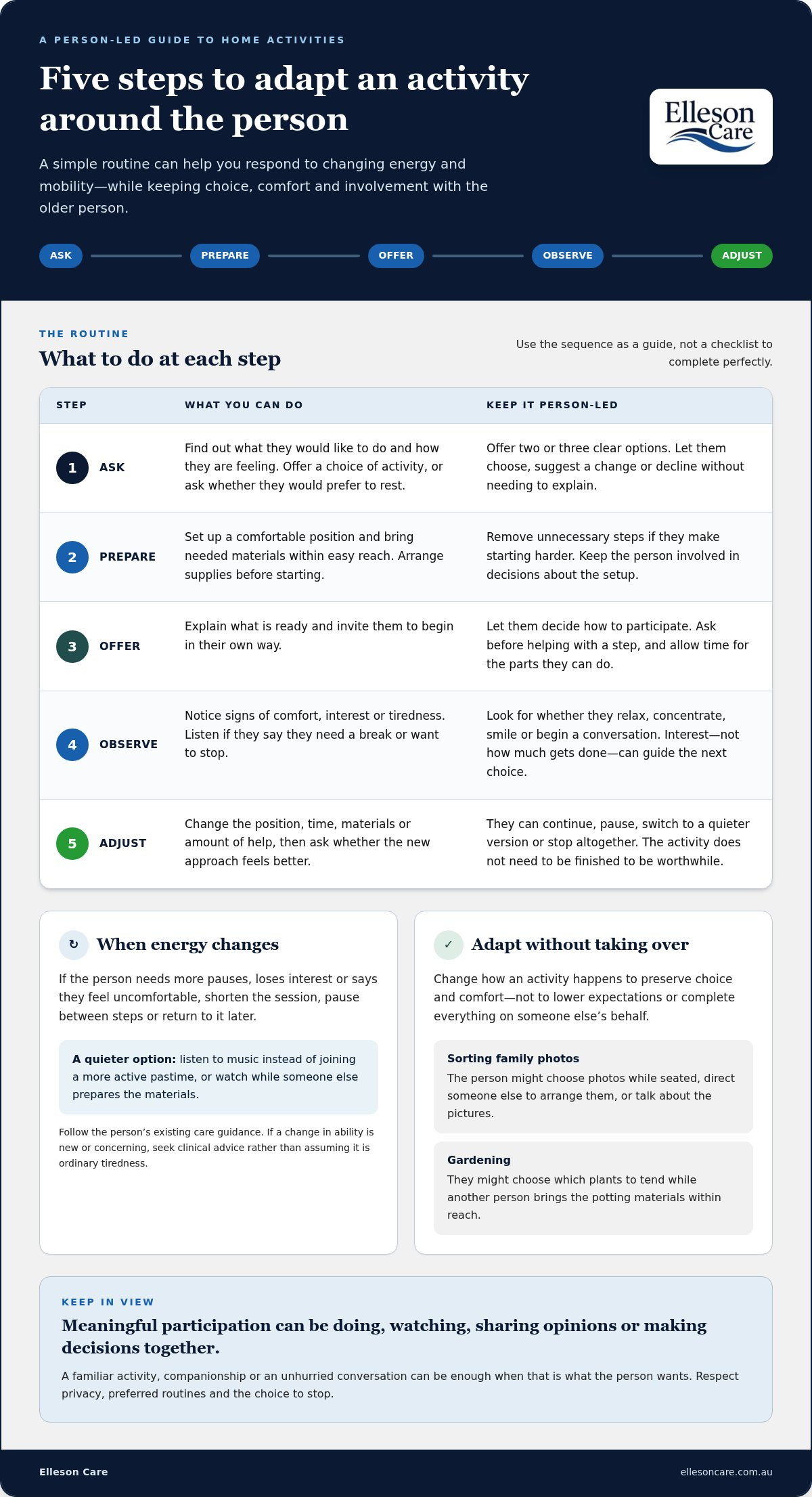
An activity that feels comfortable one day may need a different approach the next. A simple routine can help families and support workers adjust without taking away the person’s control or changing what makes the activity meaningful. Use this sequence as a guide, not a checklist to complete perfectly:
- Ask: Find out what the person would like to do and how they’re feeling. Offer a choice of activity, or ask whether they’d prefer to rest.
- Prepare: Set up a comfortable position and bring needed materials within easy reach. Remove unnecessary steps, such as sorting supplies, if they make starting harder.
- Offer: Explain what’s ready and invite the person to begin in their own way. Keep the choice of how to participate with them.
- Observe: Notice signs of comfort, interest or tiredness, and listen if the person says they need a break or want to stop.
- Adjust: Change the position, time, materials or amount of help, then ask whether the new approach feels better.
Person-led adaptation means changing how an activity happens to preserve the person’s choice and comfort. It isn’t about lowering expectations or completing a task on someone else’s behalf. For example, a person who enjoys sorting family photos might choose them from a seated position, direct someone else to arrange them, or simply talk about the pictures.
How can you adapt an activity without taking over?
Make the setup easier while keeping the person involved in decisions. Place items on a stable surface within comfortable reach, use materials that are easier to handle if needed, and arrange supplies before starting. Ask before helping with a step. If the person can do part of it, allow time for that rather than stepping in automatically.
Keep the invitation open: they can continue, pause, switch to a quieter version or stop altogether. A task doesn’t need to be finished for the time to feel worthwhile.
How should you respond when energy or ability changes?
Look for signs that the activity is becoming tiring, such as the person needing more pauses, losing interest or saying they feel uncomfortable. Shorten the session, pause between steps or return to it later. On a lower-energy day, a person might listen to music instead of joining in a more active pastime, or watch while someone else prepares the materials.
Follow the person’s existing care guidance when adapting activities. If a change in ability is new or concerning, seek clinical advice rather than assuming it is ordinary tiredness. For families who need practical help maintaining meaningful routines, personalised daily-living support at home can help make activities easier to prepare for while keeping the older person involved in choices.
12 Home Activities for Seniors with Limited Mobility
These activities for seniors with limited mobility at home are grouped by the kind of interest they may suit, from making and remembering to games and everyday routines. Choose what feels familiar or appealing, and adapt the setup so joining in can be as simple or involved as the person prefers.
Creative and sensory activities
- Drawing or colouring: Set out paper and pencils or textas on a stable surface. The person might make marks, choose colours or simply decide what to draw.
- Collage making: Prepare a few pictures, cards or paper shapes within reach. They can arrange pieces, direct someone else or select a single image they like.
- Knitting or a simple craft: Offer familiar, manageable materials and prepare the project first. The person can work at their own pace, handle one step or watch.
- Music and memories: Play a familiar song or make a playlist together. Invite the person to choose tracks, listen quietly or share a memory connected to the music.
- Flower arranging: Bring a small selection of flowers and a container to a comfortable position. They can choose colours or scents, arrange a stem or enjoy looking.
- Seated planting: Set up a small container with suitable herbs or flowers and materials close by. The person can choose what to grow, add soil or observe.
Social, thinking and everyday activities
- Photo conversations: Look through family photographs or pictures of a familiar place. The person can tell a story, ask questions or simply choose which photo to see next.
- Large-print puzzles: Offer a puzzle with pieces that are comfortable to handle. They can place a piece, suggest where it belongs or enjoy solving it together.
- Word games: Try naming places, finishing a familiar saying or finding words on a page. Keep the pace relaxed and allow the person to listen or pass.
- Cards: Choose a familiar card game and arrange the cards within easy reach. The person can play a hand, help make decisions or follow along as an observer.
- Simple trivia: Ask a few light questions about favourite music, films, sport or local places. Invite guesses, conversation or a change of topic whenever they wish.
- A gentle seated game: If comfortable and appropriate, pass a soft ball between seated participants. The person can roll it, choose who goes next or watch instead.
There’s no need to try all 12. A familiar song or a short conversation may be just right on one day, while another activity suits a different time. Let the person’s interest guide whether to continue, pause or leave it there.
How to make activities at home comfortable, safe and enjoyable
Comfort and safety start with the person, not the activity. Choose activities for seniors with limited mobility at home that fit their existing care guidance, preferences and current energy. A familiar pastime may need only a change of position or setup to feel more manageable. There’s no need to push through discomfort to complete it.
Before starting, take a moment to prepare the space. A few practical adjustments can make it easier to focus on the activity rather than reaching, straining or moving around unnecessarily.
- Seating: Arrange stable, comfortable seating that suits the activity and the person’s usual care guidance. Make sure they feel settled before placing materials nearby.
- Lighting: Provide enough light to see the activity clearly, especially for reading, crafts or sorting small items. Reduce glare if it makes the space uncomfortable.
- Reach: Place frequently used materials within comfortable reach. Avoid requiring the person to stretch or lean to retrieve supplies.
- Clutter: Clear unnecessary objects from the immediate area and keep walkways free of items that could get in the way.
- Materials: Select items that suit the person’s abilities and care guidance. Set up only what’s needed, and choose simpler or easier-to-handle alternatives where helpful.
What should you prepare before starting?
Choose a space that suits the activity and lets the person take part comfortably. For a card game, arrange the cards on a stable surface and make sure there’s room to play without crowding. For a conversation or music, fewer materials may be needed, but comfortable seating and an easy-to-use setup still matter.
Ask whether the arrangement feels right before getting started. The person may prefer a different chair, more light or fewer items in front of them. Their feedback should guide any changes.
When should an activity be changed or stopped?
Pause an activity if it causes discomfort or distress. If the person says they’re uncomfortable, appears upset or asks to stop, respond promptly. Offer a break, a quieter variation or the option to finish for the day. Tiredness can also be a reason to pause; completing a task is never more important than the person’s comfort.
For movement-based activities, keep to the person’s existing care guidance and follow advice from their treating clinician or allied health professional. If you’re unsure whether an unfamiliar movement is suitable given their health needs, seek professional guidance before introducing it. A gentle activity should remain comfortable and voluntary.
If preparing activities around comfort and care needs is becoming difficult for your family, explore personalised support at home to help make meaningful daily routines easier to take part in.
How personalised support can help seniors enjoy activities at home
Sometimes a valued activity is difficult to start because the setup, household tasks or daily routine take more effort than the activity itself. A family member or support worker can help prepare what’s needed, then leave the older person in control of what happens next. Support might mean setting out craft materials, bringing a favourite album within reach or helping organise a comfortable place to sit.
The aim isn’t to fill someone’s day or turn a hobby into a care task. It’s to make participation more accessible while respecting the person’s preferences, privacy and right to change their mind. That distinction matters: assistance should support the person’s own choices, not replace them.
How can a support person encourage participation?
Start with an open, familiar invitation, such as asking whether the person would like to listen to music or look through photographs. Help with preparation or a household task if needed, but offer choices about the materials, pace and level of involvement. A familiar routine can make joining in feel natural, whether that means sharing a cup of tea before a puzzle or choosing herbs for a small planter.
Sometimes the most useful help is practical. Domestic assistance can reduce the effort involved in preparing a space or gathering supplies, while daily-living support can help a person maintain routines that matter to them. The activity remains theirs to lead, adapt or decline.
When might in-home aged care support be helpful?
Personalised in-home aged care may be helpful when mobility or changing support needs make everyday routines harder to manage. Elleson Care provides in-home aged care and support with daily living in Perth and across Western Australia, with a team led by registered nurses with over 22 years of experience. Families can learn more about in-home aged care in Perth and how support can fit around a person’s needs at home.
Support needs can also change over time. Personal care, domestic assistance and community access can help older people with daily living, tailored to their individual needs. The right support is guided by the person and their circumstances, with the aim of sustaining routines and valued activities while respecting personal choice.
For families exploring activities for seniors with limited mobility at home, consider what practical help would make participation easier, such as support with preparation or daily tasks. You can explore Elleson Care’s in-home support as a calm next step in considering personalised care at home.
Let meaningful routines grow at their own pace
A valued activity doesn’t need to become a fixed part of every day to matter. Start with one small invitation, then let the person’s response guide what comes next. Over time, you may notice which routines feel welcome, what makes them easier to begin and when a different kind of support would help.
For activities for seniors with limited mobility at home, the next step can be as simple as choosing one idea together and deciding how the person would like to take part. Keep their preferences at the centre, and allow room for plans to change. A quiet day or a decision to stop is part of the person’s choice, too.
If extra help with daily routines could make valued activities easier to enjoy, explore personalised in-home support with Elleson Care. With the right support, meaningful moments can continue to take shape around what matters to the person.
Frequently Asked Questions
Is it safe for seniors with limited mobility to do activities at home?
Many home activities can be enjoyed safely when they suit the person’s abilities and care guidance. Choose options that don’t require unsupported standing, reaching or transfers, and consider whether materials can be used comfortably from the person’s usual position. For unfamiliar movement, follow advice from their treating clinician or allied health professional. Stop if they feel unwell, experience pain or become distressed, and seek clinical advice if you’re concerned.
What activities can a senior enjoy if they spend most of the day in bed?
A person who spends much of the day in bed may enjoy listening to familiar music, an audiobook or a radio programme, or having a relaxed conversation. You could also offer a photograph to look at or a familiar object to hold, if that feels comfortable and suits their care guidance. Keep items within easy reach, and don’t ask the person to change position or stretch to take part.
How can I keep a senior with dementia interested in an activity?
Keep the invitation familiar, simple and focused on the present moment. Offer one clear choice, such as listening to a preferred song, rather than explaining several steps at once. Avoid turning an activity into a memory test or correcting someone if they recall details differently. Follow their expressions and responses. If they lose interest, become unsettled or turn away, gently shift to something quieter or end the activity.
How long should an activity last for an older person with limited mobility?
There’s no set duration that suits everyone. Begin with a natural stopping point, such as one song, a few pages of a book or a single round of a game, then see whether the person wants to continue. Allow time for responses and breaks, especially if the activity involves concentration or handling materials. The person’s comfort and interest are better guides than a timer or a goal to finish.
Can seniors with limited mobility do chair exercises at home?
Some people may be able to do chair-based movement, but suitability depends on their health, balance and individual care guidance. Use movements recommended by their treating clinician or physiotherapist rather than copying a general routine. Don’t add movements that involve standing or reaching beyond what they’ve been advised to do. Stop if the person reports pain, dizziness or unusual discomfort, and seek clinical advice before continuing.
What can I do if an older person refuses an activity?
Respect their decision and avoid insisting. They may be tired, uncomfortable, distracted or simply not interested at that moment. Ask calmly whether they’d prefer to rest, try something else or revisit the idea later. A refusal doesn’t need to be persuaded away. If reluctance is a sudden or persistent change, particularly alongside other changes in wellbeing, raise it with their care team or treating clinician.


