

What if complex nursing care could support a person’s health without taking over the routines that make home feel like home? Families considering complex nursing care at home Perth often have practical questions: what clinical support may involve, how it fits into daily life, and how to keep privacy, choice and independence in view.
These concerns are understandable. Skilled nursing tasks matter, but so do familiar routines and the person’s preferences. A person-centred approach considers clinical needs alongside the way someone wants to live at home.
This guide explains common types of nursing support, including wound management, catheter care, medication administration, palliative care, ventilator support and oxygen support. It also covers information that can help shape a care discussion and the difference between clinical nursing and everyday assistance. Elleson Care provides clinical nursing in Perth, alongside aged care and NDIS support, with a focus on evidence-based, person-centred care and respect for dignity.
Key Takeaways
- Complex nursing care at home Perth can involve skilled clinical support shaped around a person’s needs and preferences.
- Clinical nursing and general daily living support serve different purposes, though a person may need both.
- Current care instructions, medication information and relevant clinical contacts can help make a care discussion more specific.
- Sharing preferred routines and personal choices can help support feel more comfortable and respectful at home.
- Elleson Care is a West Australian-owned provider with a qualified nursing team and over 20 years of combined experience across nursing, healthcare, NDIS management and risk management.
What complex nursing care at home in Perth can mean
When health needs become more involved, it can be hard to know what support at home should look like. Families may be balancing clinical tasks, equipment and changing routines while trying to preserve the comfort and familiarity of home. Understanding the types of nursing support available is a useful first step.
Complex nursing care at home is individualised clinical support for health needs that require skilled nursing input. What makes care complex depends on the person’s clinical needs and how support fits into daily life, not on a diagnosis alone.
One person may need a nursing task as part of an established routine. Another may have several clinical needs or require support involving specialised equipment. The practical starting point is to describe the clinical support needed, the instructions already in place and the person’s preferences.
This care calls for clinical judgement as well as practical planning. The overview of ambulatory care nursing describes nursing practice for people receiving care outside hospital, including in home settings. The person’s circumstances guide what support is appropriate.
What can make nursing needs complex?
Several clinical tasks, changing needs or specialised equipment can shape the support a person requires. Examples include wound management, catheter care, medication administration, oxygen support and ventilator support. These are clinical needs that call for nursing input, rather than help with everyday tasks alone.
Personal care, such as assistance with daily activities, and domestic assistance, such as help around the home, serve a different purpose. They can sit alongside clinical nursing, but don’t replace the skilled input needed for nursing tasks. Keeping responsibilities clear helps everyone understand which support addresses each need.
Who may consider complex nursing support at home in Perth?
Older people and NDIS participants may consider nursing support at home when their health needs call for skilled clinical care. The person receiving care should remain central to decisions, with family members involved when the individual wants their support.
Useful conversations start with the person’s priorities: what they want to maintain, what feels comfortable and how clinical support might fit into their day. Elleson Care provides aged care, NDIS support and clinical nursing in Perth. For an overview of clinical support, see the guide to nursing services in Perth.
How complex nursing care can fit into daily life at home
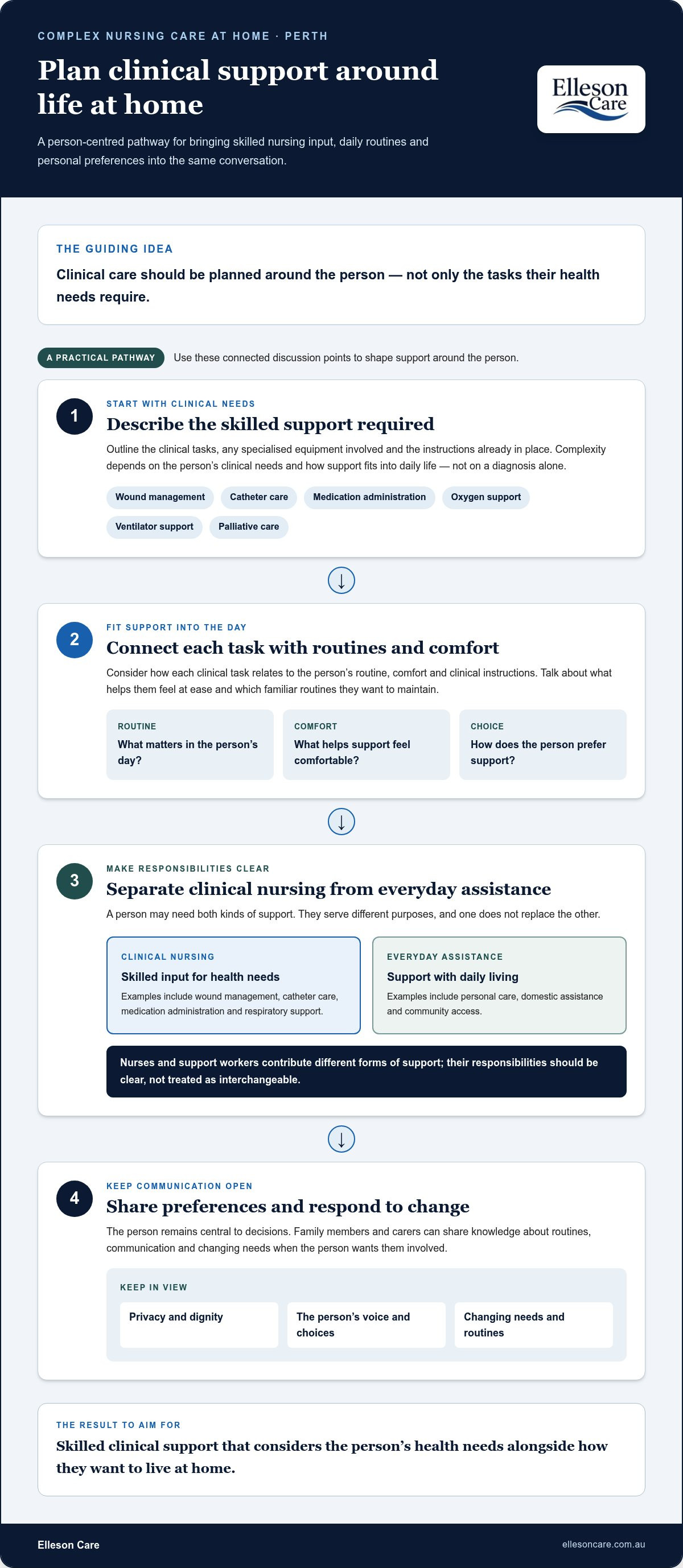
Clinical support is part of a person’s life, not separate from it. A person-centred approach takes account of comfort, routines, communication preferences and choice when considering how nursing tasks fit into the day. Discussing what helps someone feel at ease, which routines matter and how they prefer support to be provided can make planning more practical.
Clinical care should be planned around the person, not only the tasks their health needs require. This keeps the person’s priorities in view while making space for skilled nursing input.
Clinical nursing tasks and everyday support
Wound management, catheter care, medication administration and respiratory support are examples of clinical needs that may call for nursing input. The practical considerations vary from person to person. A care discussion can consider how each task relates to the person’s routine, comfort and instructions from their clinical team.
Everyday assistance serves a different purpose. Personal care, domestic assistance and community access can support daily living, but they aren’t the same as clinical nursing tasks. Nurses and support workers contribute different forms of support, so their responsibilities should be clear rather than treated as interchangeable. This helps families identify what support is needed and how different roles may contribute, without assuming a particular visit schedule or level of coverage.
Respecting dignity, preferences and family involvement
Preferences can shape how care is delivered. A person may have preferences about how information is explained, what helps them feel comfortable during support, and which routines they want to maintain. These details can help protect privacy and independence while making support more personal.
Family members and carers can share useful knowledge about routines, communication and changing needs when the individual wants them involved. Their contribution should support, not replace, the person’s voice. The individual remains central to decisions about their care to the extent they can participate.
Good communication helps everyone understand the person’s preferences and their own role. The person, family or carers, nurses and support workers can share relevant information. If needs or routines change, keeping the conversation open helps ensure support continues to reflect the person’s circumstances.
For older people and families considering in-home support, the Perth in-home aged care guide offers related information about maintaining independence at home. Families exploring complex nursing care at home Perth can also read Elleson Care’s clinical support information.
Complex nursing care at home versus general support: what is different?
It can be difficult to distinguish skilled clinical care from help with everyday activities, particularly when a person needs both. The key difference is the purpose of the support and the expertise required. Complex nursing care at home Perth involves skilled clinical input for health needs, while general support focuses on daily living. The two can complement each other, but not everyone needs both.
Significant clinical needs don’t automatically make home-based care unsuitable. The right arrangement depends on the person’s circumstances and the clinical input their needs require. This comparison can help families describe the support they are seeking, but a list of tasks is not a clinical assessment.
| Area | Complex nursing care | General support |
|---|---|---|
| Purpose | Address clinical needs requiring skilled nursing input. | Assist with daily living, practical tasks or participation in the community. |
| Task examples | Wound management, catheter care, medication administration, ventilator or oxygen support. | Personal care, domestic assistance and community access. |
| Relevant role | A qualified nurse provides clinical support appropriate to the person’s needs. | A support worker may assist with daily living tasks within their role. |
These examples show different purposes, not a fixed service package. A person may receive nursing support, general support, both or another arrangement shaped around their circumstances. Clear roles help ensure everyday assistance isn’t mistaken for clinical care, and clinical needs aren’t reduced to household tasks.
When does a need call for qualified nursing support?
Wound care, catheter care, medication administration, ventilator support and oxygen support are examples of needs that may require qualified nursing input. The person’s clinical circumstances determine the support required; a task list alone can’t establish what care is appropriate. Families can use these examples to describe their concerns and questions in a discussion with the care team, not as a substitute for clinical assessment.
How can nursing and daily living support work together?
Clinical nursing addresses health-related tasks requiring skilled nursing input. General daily living support assists with personal care, household activities or community access. Where both are relevant, each can address distinct needs while contributing to a holistic approach that considers health, comfort, independence and routine. The person’s preferences and circumstances help guide how the roles fit together.
For example, nursing support and help with daily activities may form parts of a broader arrangement, but one doesn’t automatically require the other. The aim is to make responsibilities clear and keep support centred on the person, rather than assuming a diagnosis or clinical task determines every aspect of home life.
Preparing for Complex Nursing Support at Home in Perth
Starting a conversation about complex nursing care at home Perth can feel more manageable when you gather useful information in advance. You don’t need every answer. A clear picture of the person’s current care, preferences and home routines gives the discussion a practical starting point and keeps their priorities in focus.
Information that helps shape an individualised care plan
Before discussing support, gather current care instructions from treating health professionals, relevant medication information and contact details for clinicians involved in the person’s care. Clinical instructions should come from those treating professionals, not be created or changed by family members. Notes about existing support and personal preferences can add useful context.
- Describe the person’s priorities. Note what they want support to help them maintain and what matters most in daily life.
- Gather relevant health information. Collect current care instructions, medication details and information about clinical needs, such as wound, catheter or respiratory support, if relevant.
- Map out existing support. Record current care arrangements and the roles of health professionals, family members and carers already involved.
- Write down routines and preferences. Include daily rhythms, privacy preferences and how the person likes information or assistance to be communicated.
- Clarify who the person wants involved. Note which family members or carers they want included in discussions and how they contribute to support.
These notes don’t need to be formal or exhaustive. They can help you describe the person’s situation and preferences accurately. Avoid assuming that home modifications or equipment will be required. Any requirements depend on individual circumstances and clinical assessment.
Keeping communication clear as needs change
Agreeing how relevant information is shared can help the individual, family, nurses and support workers understand their respective roles. Keep the person’s preferred communication approach central, and use the care contacts established for their situation to discuss changes in health, routines or support needs. Timely updates help the care team consider whether the arrangement still reflects the person’s circumstances.
If there’s immediate danger, call Triple Zero (000) for emergency assistance. Home nursing is not an emergency response service, so urgent situations require emergency help rather than waiting for a routine care discussion.
Preparing these details can make an initial conversation more focused without requiring families to design the clinical plan themselves. Elleson Care’s nursing support information outlines its in-home clinical support.
Elleson Care’s person-centred complex nursing support in Perth
Choosing in-home nursing support is a personal decision, particularly when clinical needs are significant. Families may want confidence in the nursing expertise involved while keeping the person’s preferences, privacy and independence in view. Elleson Care is a West Australian-owned and operated provider serving Perth clients with aged care, NDIS support and clinical nursing.
Clinical experience grounded in individual needs
Elleson Care’s qualified nursing team supports complex needs that may include wound management, catheter care, medication administration, palliative care, ventilator support and oxygen support. The appropriate care depends on the individual’s circumstances. These examples describe areas of clinical support, not a package every person needs.
The team brings over 20 years of combined experience across nursing, healthcare, NDIS management and risk management. This experience goes alongside a commitment to evidence-based, person-centred care and respect for dignity. Clinical capability and personal preferences both matter: the aim is to consider health needs in the context of comfort and daily life, rather than treating a clinical task as the whole picture.
A holistic approach recognises that people have different priorities and circumstances. One person may want support to preserve familiar routines; another may value clear explanations or particular privacy preferences. Listening to the individual helps ensure the care discussion considers what matters to them alongside the nursing input their needs call for. This is central to discussing complex nursing care at home Perth families may be seeking for their individual circumstances.
A clear next step for Perth individuals and families
It can help to start by describing the person’s current clinical support needs, what they want to maintain at home and who they want involved in care conversations. Those details provide a practical basis for discussing an individualised approach. Families don’t need every answer before starting.
For people in Perth, Elleson Care brings clinical nursing together with aged care and NDIS support. A care discussion can focus on the person’s health needs, the support they value and how dignity and respect should guide care. This keeps the conversation grounded in their circumstances instead of assumptions about what everyone with similar needs requires.
If you’re considering in-home clinical nursing for yourself or someone close to you, discuss person-centred nursing support with Elleson Care. Share the support needs and personal priorities that matter to you to start a conversation about a respectful way forward.
Take the next step at your own pace
Deciding what support should look like doesn’t have to happen all at once. For families considering complex nursing care at home Perth, a first conversation can help clarify questions about clinical needs, personal priorities and the role of family or carers. It’s also a chance to keep the person’s voice at the centre, especially when others are helping organise their care.
You don’t need a complete plan before discussing what matters. Start with the questions you have now and the routines or choices you want future support to respect. From there, you can consider next steps with greater clarity and make decisions in a way that feels right for the individual.
Discuss person-centred care with Elleson Care and share what you’re looking for in in-home nursing support. A respectful conversation can be a steady beginning to exploring care that recognises the person behind the clinical needs.
Frequently Asked Questions
Can complex nursing care be delivered at home in Perth?
Yes. Home-based nursing in Perth can include skilled support for wound care, catheter care, medication administration, oxygen or ventilator needs. The appropriate support depends on the person’s clinical requirements and circumstances. Families considering complex nursing care at home Perth can discuss the individual’s needs with Elleson Care. Planned nursing support isn’t an emergency response service and doesn’t replace urgent help. If someone is in immediate danger, call Triple Zero (000).
Is complex nursing care only for older people?
No. Complex nursing needs can arise at different stages of life, and older age isn’t a condition for discussing support with Elleson Care. The organisation provides aged care, NDIS support and clinical support in Perth. A discussion can start with the person’s circumstances, the clinical tasks involved and what they want support to help them do. Eligibility and funding depend on the relevant programme and individual situation, so don’t assume these from age alone.
What happens if someone’s care needs change between nursing visits?
Share changes in health or support needs through the person’s established care contacts so the situation can be reviewed. For example, if usual care instructions no longer seem to reflect current circumstances, tell the relevant treating health professional or care contact rather than changing clinical instructions yourself. Scheduled home nursing isn’t an emergency response. If there’s immediate danger, call Triple Zero (000).
Can nurses support people who use oxygen or a ventilator at home?
Yes. Elleson Care’s clinical support includes oxygen and ventilator support. The appropriate nursing input depends on the person’s clinical requirements and instructions from their treating health professionals. Keep those instructions accessible and share relevant updates with the care team. Home nursing is planned support, not an emergency response. If immediate danger arises, call Triple Zero (000) rather than relying on a scheduled visit.
Can complex nursing support be funded through the NDIS?
NDIS funding depends on the participant’s plan, the supports approved in it and current NDIS requirements. Don’t assume a particular nursing task will be funded simply because it relates to a complex health need. Review the participant’s current plan and relevant NDIS guidance to understand how approved supports apply to their circumstances. Elleson Care provides NDIS and clinical support, while funding decisions depend on the individual plan and applicable requirements.
Does Elleson Care currently provide DVA care in Perth?
No. DVA care is Coming soon and isn’t currently offered in Perth. Elleson Care’s current services include aged care, NDIS support and clinical support. DVA care isn’t available to book at present.
What is the difference between complex nursing care and personal care at home?
Complex nursing care involves skilled clinical input, such as wound or catheter care, medication administration, or oxygen or ventilator support. Personal care assists with daily living, such as dressing or other routine activities. They address different needs, and a person may need one type of support without the other. The appropriate arrangement depends on the individual’s circumstances and preferences.


