

Trust is not a finishing touch in aged care; it helps support feel safe, respectful and personal. Knowing how to build trust with a new carer starts with a good personality and communication match, then grows through patience and consistency. Care relationships often take two to four weeks to settle in, so the first 30 days are a time to build comfort gradually, not expect instant closeness.
It’s understandable to feel cautious when someone new is involved in personal routines or daily support. A carer who listens, respects preferences and explains what they’re doing can help an older person feel heard and more at ease.
This guide explains why trust matters in aged care and how to encourage it from the first visit. You’ll learn how clear communication, shared expectations and consistent follow-through can help a new relationship take shape while keeping the older person’s choices and dignity at the centre.
Key Takeaways
- Consider personality, communication style, language, cultural background and care needs when finding a suitable carer, and include the older person in the choice.
- Notice whether the carer listens patiently, reflects what’s been said and responds to non-verbal cues such as body language and tone.
- Set out preferences, routines, boundaries and communication expectations early, then build familiarity at a pace that feels comfortable.
- Look for trust to grow through consistent follow-through, respect for personal choices and clear communication when plans change.
1. Matching caregivers by personality and communication style
A good match takes account of the person’s care needs, personality, communication style, language and cultural background. Ask the older person which qualities matter to them, such as a calm manner, shared interests or familiarity with their routines. Agree on visit times and how to communicate if plans change.
Introduce a new carer with a short, social visit before personal care begins. Stay nearby if that feels reassuring, and let the person choose what to share. For a child or young person, offer choices and try a shared activity if face-to-face conversation feels difficult.
Ask about qualifications, experience, screening checks and references relevant to the role. Discuss what training and experience relate to the support needed, including personal care or clinical tasks. Requirements vary by role and setting, so focus your questions on the work involved.
In the first conversation, ask how the carer handles changing routines, preferences and feedback. Set clear expectations together, break unfamiliar tasks into manageable steps and acknowledge effort. Agree on the schedule, preferred contact method and what happens if a visit needs to change.
Notice whether the caregiver lets someone finish speaking, reflects their concerns and responds with respect. Patient listening, a calm tone and attention to body language can help the client feel comfortable. The Alzheimer’s Association notes that a person with dementia may sense when a care provider seems uninterested or impatient.
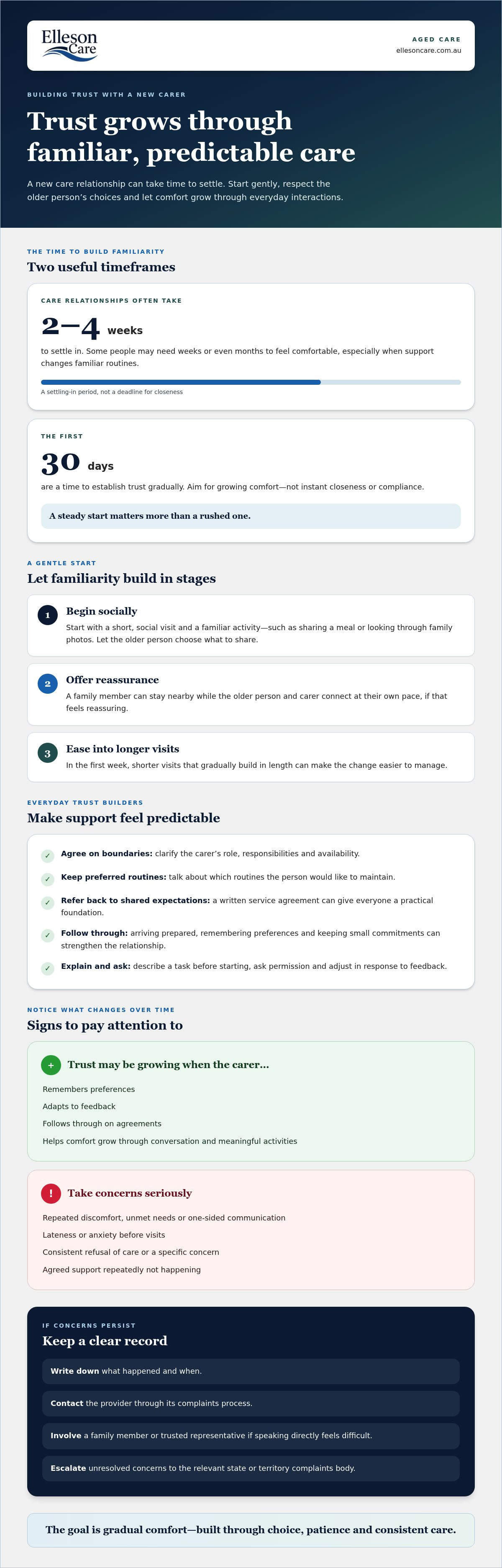
Signs of growing trust include the carer remembering preferences, adapting to feedback and following through on agreements. Warning signs include repeated discomfort, unmet needs, one-sided communication, lateness or anxiety before visits. Take distress, consistent refusal of care or a specific concern seriously.
To raise a concern in Australia, write down what happened and when, then contact the provider through its complaints process. If speaking directly feels difficult, involve a family member or trusted representative. Unresolved concerns can be raised with the relevant state or territory complaints body.
2. Building trust
Care relationships often take two to four weeks to settle, and the first 30 days help establish trust. Some people need weeks or even months to feel comfortable, especially when support changes familiar routines. The goal is gradual comfort, not compliance.
Begin with a short, social visit and familiar activities, such as sharing a meal or looking through family photos. A family member can stay while the older person and carer connect at their own pace. In the first week, shorter visits that gradually build in length can make the change easier to manage.
Families considering how to build trust with a new carer can agree on boundaries before regular visits. Clarify the carer’s role, responsibilities and availability, then discuss which routines the person prefers to keep. A written service agreement can give everyone a practical foundation to refer back to.
A practical way to build trust with a new carer is to make everyday support predictable. A carer who arrives prepared, remembers preferences and follows through on small commitments helps strengthen the relationship. They can explain a task before starting, ask permission and adjust in response to feedback.
Success doesn’t mean becoming close immediately. A parent may resist help during the first week without the match being wrong. Notice whether comfort grows through conversation and meaningful activities, and raise concerns early if agreed support repeatedly doesn’t happen.
Elleson Care: Aged Care Services
Elleson Care provides person-centred Aged Care Services, shaped around each older person’s needs, preferences and dignity. For support with clinical care, Elleson Care also provides Clinical Support, including nursing care for complex needs. NDIS Support Services are available for people seeking disability support.
Contact Elleson Care to discuss in-home support for you or your family member in Perth.
Take the next step at a pace that feels right
Before the next visit, agree on one small goal with the older person, such as choosing an activity or deciding how they’d like assistance to begin. Afterwards, ask what felt comfortable and what they would change. This gives the person a voice in shaping support and makes the next conversation more specific.
Knowing how to build trust with a new carer isn’t about expecting someone to feel comfortable immediately. It’s about making room for choice, honest feedback and a relationship that can develop through everyday interactions. If concerns persist, record what happened and involve someone the person trusts.
When you’re ready to explore support suited to your family’s needs, get in touch with Elleson Care. A thoughtful next step can help the person feel heard and keep their preferences at the centre of care.
Frequently Asked Questions
Why is trust important in elderly care?
Trust helps an older person speak openly about discomfort, changes in their needs or tasks they’d rather manage independently. For example, someone who feels safe communicating may mention new pain or difficulty sleeping, giving their care team useful information to discuss and respond to. In Perth home care, this openness can support more responsive assistance while preserving the person’s dignity and sense of control.


