

What rights do I have as a care recipient, and what can I do if those rights aren’t respected? Whether you receive aged care or NDIS support, you’re entitled to dignity, a say in decisions and the ability to raise concerns without fear of reprisal. The principles overlap, but the rules and complaint pathways depend on your care arrangement.
It’s understandable to feel unsure about consent, privacy, choice or whether speaking up could affect your ongoing support. In Australian aged care, the Aged Care Act 2024 and its Statement of Rights have applied since 1 November 2025. The NDIS has a separate framework, with its own rights, safeguards and complaints process.
This guide explains the standards that should shape your care, how your rights apply across aged care and NDIS support, and practical ways to communicate your preferences or concerns. It also explains where to seek advocacy and how to make a complaint if something feels wrong. Respectful, person-centred support should make it easier to take part in decisions about your care.
Key Takeaways
- If you’re asking “what rights do I have as a care recipient”, the answer depends on whether your support is provided through aged care or the NDIS.
- Identify which rights framework applies to your situation and understand where the two systems differ.
- Dignity, choice, privacy and informed consent should be reflected in everyday support.
- If something feels wrong, note what happened, raise your concern and consider the next steps.
- Share your preferences and take an active role in conversations about your goals and support.
What are my rights as a care recipient in Australia?
Different services use different rules and terminology, so it can be hard to know what standards to expect. If you’re asking, “what rights do I have as a care recipient?”, start with this: your preferences, dignity and safety should be taken seriously, and you should be involved in decisions about your support.
Care-recipient rights are protections and principles that guide respectful, safe and person-centred support. The specific framework depends on the type of care you receive and your circumstances. These rights can relate to dignity, privacy, choice, clear communication, participation in decisions and the ability to raise concerns. The principles are shared across care, but aged care and the National Disability Insurance Scheme (NDIS) have distinct frameworks.
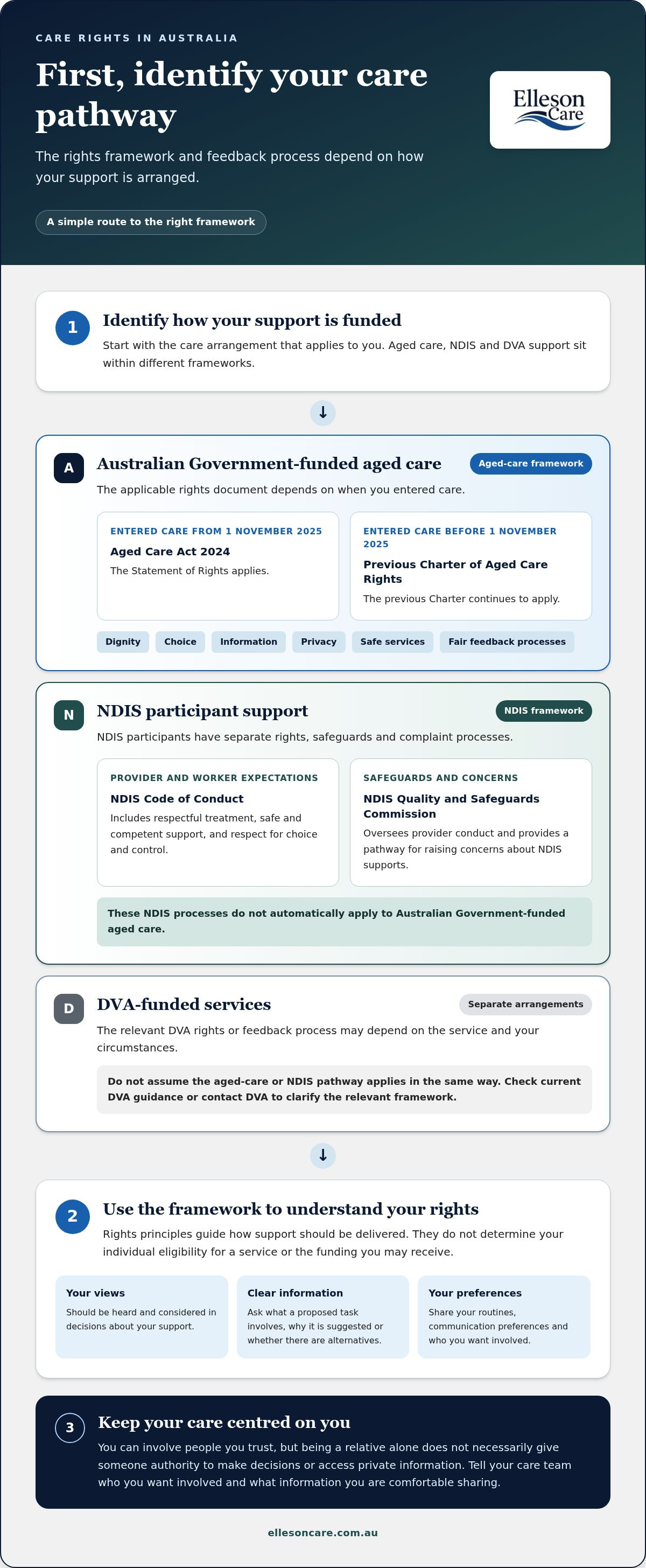
For Australian Government-funded aged care, the Aged Care Act 2024 and its Statement of Rights have applied since 1 November 2025. The previous Charter of Aged Care Rights continues to apply to people who entered care before that date. NDIS participants are covered by a separate scheme and safeguards. The details that apply can also depend on the service and your situation. Identify the relevant care pathway before looking into a specific right or complaint process.
What should respectful care look and feel like?
Respectful support recognises you as an individual, including your routines, identity, culture, communication preferences and personal boundaries. You should receive information in a way you can understand, have time to ask questions and be involved in decisions that affect your everyday care. For example, a support worker can ask when you prefer to get up and how you’d like personal care delivered, rather than assuming one routine suits everyone.
Taking part doesn’t mean you must make every decision alone. It means your views are heard and considered, and staff explain relevant options clearly. Before agreeing to a proposed task, you can ask what it involves, why it’s being suggested or whether there are alternatives. If you’re uncomfortable or need information explained differently, say so. That can help make the conversation more accessible.
Do care rights apply to family members and representatives?
Your care remains centred on you, even if family members help with communication or planning. You can involve people you trust, while an authorised representative may assist within the authority and rules that apply to your care arrangement. Being a relative, by itself, doesn’t necessarily give someone the right to make decisions for you or access your private information.
Who can make or support a decision depends on the decision, your capacity in that situation, your consent and the relevant legal or scheme arrangements. Capacity isn’t simply an all-or-nothing label: you may be able to decide some matters but need help with others. Where you can make a decision, your preferences should remain central. Tell your care team who you want involved, what information you’re comfortable sharing and what support you’d like them to provide.
How do aged-care and NDIS rights differ?
Dignity, safety and choice matter across care, but the rules and complaint pathways aren’t interchangeable. If you’re asking, “what rights do I have as a care recipient?”, first identify how your support is funded and which system governs the service. Your rights pathway depends on your care arrangement, because aged care, NDIS and DVA support each sit within different frameworks.
| Your care situation | Framework to consider |
|---|---|
| You receive Australian Government-funded aged-care services | The aged-care rights framework, including the Statement of Rights under the Aged Care Act 2024 |
| You receive support as an NDIS participant | NDIS participant rights, provider conduct requirements and NDIS Commission safeguards |
| You receive services funded through DVA | The relevant DVA arrangements, which may depend on the service and your circumstances |
Rights in Australian Government-funded aged care
Since 1 November 2025, the Statement of Rights under the Aged Care Act 2024 has applied to people accessing Australian Government-funded aged care. It sets expectations around dignity, choice, access to information, privacy, safe services and fair feedback processes. People who entered care before that date remain covered by the previous Charter of Aged Care Rights. These protections guide how services should treat you, but they don’t determine your individual eligibility for a service or the funding you may receive.
For example, you can expect relevant information to be communicated clearly and your views to be considered in care decisions. Eligibility for a service and the funding available are separate matters determined under the relevant rules. A rights framework helps you understand the standards of care, but it doesn’t itself promise a particular service or funding outcome.
Rights when receiving NDIS support
For NDIS participants, the NDIS Code of Conduct sets expectations for providers and workers, including respectful treatment, safe and competent support, and respect for choice and control. The NDIS Quality and Safeguards Commission oversees provider conduct and provides a pathway for raising concerns about NDIS supports. These processes relate to services delivered under the scheme; they don’t automatically apply to Australian Government-funded aged care.
If your support is funded through DVA, don’t assume that either pathway applies in the same way. DVA-funded services have their own arrangements, and the relevant rights or feedback process can depend on the support involved. Consult current DVA guidance or contact DVA to clarify which framework applies to your circumstances. If you receive support through more than one arrangement, identify the funding stream for the particular service you’re concerned about.
Keeping these systems separate can help you raise a concern with the right organisation and understand which standards apply. For people receiving support at home, person-centred in-home care can make everyday preferences part of care conversations, while the relevant framework continues to guide your rights.
What care rights mean for everyday decisions
Rights matter in the everyday interactions that shape your day. If you’re wondering “what rights do I have as a care recipient?”, consider whether support is delivered with respect, information is clear and you’re included in decisions about your care. These expectations apply across personal care, clinical support and household assistance, while your agreed service plan and safety needs affect what can be provided.
Privacy matters in your home, too. A support worker should communicate respectfully, explain why they’re there and treat your personal space and belongings with care. Sensitive information should be handled appropriately and shared in line with relevant privacy requirements and permissions. You can say how you’d prefer conversations to happen, such as asking to speak somewhere private or requesting an explanation in a different way.
Can you make choices about the way support is delivered?
You can share what helps you feel comfortable and involved, such as how you prefer to be addressed, how instructions should be communicated or which household tasks you want to do yourself. A care plan or other agreed support arrangement can record relevant preferences, goals and practical instructions, giving the people supporting you a clearer picture of what matters.
For example, you might prefer a support worker to explain each step before helping you get dressed, or to leave a particular household task for you to complete independently. Discussing your preferences helps distinguish what you want from what the service has agreed to provide. Not every request about a service or timing can necessarily be accommodated, but you can ask for an explanation and discuss options that respect your needs and agreed arrangements.
What should happen before care or treatment is provided?
Before deciding about support or treatment, you should be given information in a form you can understand. Depending on the decision, this may include what’s proposed, why it’s recommended, relevant risks and alternatives. You can ask questions, request more time where circumstances allow, and say whether you agree or have concerns. Consent should reflect your decision, not an assumption that you’ll go along with what’s suggested.
Try asking, “What will this involve?”, “Are there other options?” or “Can you explain that another way?” If you’re uncertain, say so. You can also raise discomfort during an activity and ask for a pause or a different approach. Clear communication gives you and the person providing support a chance to understand each other before proceeding.
There can be limits in specific situations. Your ability to make a particular decision may depend on your capacity at that time and the nature of the decision. Urgent circumstances or clinical responsibilities may also affect how a request is handled. If a worker can’t safely do what you’ve asked, they should explain the concern and, where possible, discuss an appropriate alternative. For clinical support, that may mean talking through a safer approach rather than proceeding in a way that could cause harm.
These conversations are part of person-centred care, not an unreasonable demand. Share preferences early, ask for clarification and discuss changes as your needs shift. This can help make everyday support more respectful and aligned with what matters to you.
What can you do if your care rights are not respected?
Speaking up can feel difficult, especially if you rely on regular support. You can take a measured approach and don’t need to work out every step at once. A concern might relate to a specific interaction, a decision you don’t understand or an ongoing issue affecting your care.
You can seek help to raise a concern, understand your options and communicate what needs to change. Care recipients have the right to raise concerns without fear of reprisal. The pathway depends on whether the service is funded through aged care, the NDIS, DVA or another arrangement.
- Identify the concern. Describe what happened and what you believe should have been different.
- Write down the details. Note dates, people involved, messages, decisions and any effect on your support. Keep copies of relevant correspondence.
- Raise it with the provider. Explain what response or change you’re seeking, and ask what will happen next.
- Consider further support or escalation. If the concern remains unresolved, seek advocacy or contact the complaints body relevant to your care arrangement.
How can you raise a concern with a care provider?
You can explain the issue in writing or speak with the provider, depending on what feels manageable. Be specific: describe what happened, when it happened, how it affected you and what outcome you want. You might ask for a decision to be explained, a communication preference to be followed or an agreed support arrangement to be reviewed.
A trusted family member, friend or representative may help you prepare or communicate your concern, if you want their support. Ask the provider to explain the next steps and when you can expect an update. Keep a record of the response, any actions agreed to and whether they were followed through.
When can an advocate or complaints body help?
An advocate can help you understand your options, prepare what you want to say and communicate your wishes. This is different from making a formal complaint: an advocate supports you, while a complaints body considers concerns within its remit. You can seek help before deciding whether to complain or while a complaint is being addressed.
For Australian Government-funded aged care, the Aged Care Quality and Safety Commission handles complaints about aged-care services. The Older Persons Advocacy Network (OPAN) provides advocacy for older people engaging with aged care. For concerns about NDIS supports or providers, contact the NDIS Quality and Safeguards Commission. These bodies have distinct roles, so identify the funding and service involved before approaching them. For DVA-funded support, consult the current DVA complaints pathway, as the appropriate process depends on the service.
In Perth, national aged-care and NDIS pathways may apply to local services, but they aren’t interchangeable. Use the relevant organisation’s official information to find current contact details and understand what it can consider. If you receive in-home support and want care that reflects your preferences, talk with Elleson Care about in-home support.
How person-centred care can help you exercise your rights
Knowing your rights is one part of the picture. Putting them into practice can be easier when the people supporting you listen carefully, communicate clearly and make space for your preferences in everyday care. Consistent, respectful support can help you feel more comfortable asking questions or explaining what matters to you.
Person-centred care connects dignity, choice and participation with practical conversations about your goals and support needs. You might discuss which tasks you want to manage independently, what assistance would help with daily routines, or how you prefer clinical information to be explained. Your needs may change over time, so revisit these conversations rather than treating them as a one-off discussion.
At Elleson Care, a registered-nurse-led team provides person-centred in-home aged care, NDIS support and clinical nursing in Perth. The team is led by registered nurses with over 22 years of experience. This approach can support clear conversations about care needs and preferences; it doesn’t replace independent advocacy or legal advice.
Preparing for a conversation about your care preferences
A little preparation can help you feel more confident and communicate what you want. Write down preferred routines, communication needs, questions about your support and any concerns you’d like addressed. If you want someone you trust to join the conversation, ask them to support you in a way that reflects your wishes and consent.
For instance, you might note that you prefer information in writing after a discussion, or that you’d like a worker to explain a task before beginning. Ask for agreed preferences to be recorded in your care plan or support arrangements. Revisit them if your health, goals, home situation or support needs change, and discuss what adjustments may be possible.
Where in-home support fits into your care choices
Support at home can help with different daily needs, depending on your circumstances and funding arrangement. Aged-care support may assist an older person to live at home, while NDIS support relates to a participant’s disability support needs and goals. The systems have separate eligibility, planning and funding rules, so the right to express preferences doesn’t itself determine which services will be funded.
For older Australians, the Support at Home Program replaced Home Care Packages. If you’re learning how home aged-care funding works, the guide to the Support at Home Program in 2026 can help explain the programme and its place in care planning. A separate guide to nurse-led in-home aged care in Perth can help you understand how clinical and daily living support may fit into care at home.
Respectful support should leave room for questions and participation in decisions, at a pace that works for you. Elleson Care provides in-home aged care, NDIS support and clinical nursing in Perth, including personal care, domestic assistance, community access and clinical support.
Make your next care conversation count
Knowing what rights do I have as a care recipient is a useful starting point. Your next step could be a simple conversation about what helps you feel respected, informed and comfortable with your support. You don’t need to have every answer ready. Asking a question, sharing a preference or requesting a clearer explanation can help shape care around what matters to you.
If speaking up feels difficult, write down what you’d like to discuss or invite someone you trust to support the conversation. Your preferences can change, so it’s reasonable to revisit them as your circumstances or support needs evolve. Small, ongoing conversations can help you stay involved in decisions about your care.
To discuss in-home support in Perth that reflects your needs and preferences, contact Elleson Care.
Frequently Asked Questions
Can I refuse care or treatment as a care recipient?
Generally, you can say no to care or treatment, or ask for it to pause while you get more information. Ask what may happen if you refuse and whether another approach is available. Your ability to make a particular decision, urgent circumstances and a clinician’s responsibilities can affect how the situation is managed. If you’re unsure, ask the treating professional to explain the options and record your decision and any agreed follow-up.
Can I choose who provides my care?
You may be able to express a preference or choose between providers, but the options can depend on your funding arrangement, plan, service agreement and which providers can deliver the support you need. For example, an NDIS participant can discuss provider choice in relation to their plan and goals. Ask for any limits to be explained, including whether changing providers affects an existing agreement or continuity of support.
Can a family member make decisions for me about my care?
Not automatically. A family member can support you, help communicate your wishes or attend discussions if you agree, but being related to you doesn’t by itself make them your decision-maker. Formal authority may come from an appointment or arrangement recognised under the relevant rules. Decision-making ability can also depend on the specific decision and circumstances. Tell your care team who you want involved and what information they may receive.
Who can help me make a complaint about aged care in Australia?
The Aged Care Quality and Safety Commission accepts complaints about Australian Government-funded aged-care services. You can also contact the Older Persons Advocacy Network (OPAN) for independent aged-care advocacy. An advocate may help you clarify the outcome you want or prepare what to say, while the Commission handles complaints within its remit. If you’re in Perth, these are national pathways; consult their official websites for current contact options and advocacy eligibility.
Can I complain about an NDIS provider without losing my support?
You can raise concerns about an NDIS provider with the NDIS Quality and Safeguards Commission, and you shouldn’t be punished for making a complaint. This doesn’t guarantee that every support arrangement will stay unchanged, since other factors may affect services. Keep copies of messages and note any changes after you raise the issue. If you’re worried about continuity, discuss a support plan with someone you trust or an advocate.
What should I do if I do not understand my care plan?
Ask the person responsible for the plan to explain it in plain language, including what each support covers, who delivers it and how changes are agreed. You can request an accessible format or have a trusted person help you review it, with your consent. Write down anything that remains unclear and ask for the explanation or amendments in writing. Before agreeing to a change, make sure you understand its practical effect on your support.
Can I access information or records about my care?
You can ask your provider how to access records about your care, such as relevant notes, assessments or decisions. Make the request to the provider that holds the information and be clear about which records and date range you mean. Privacy rules may affect access to information about other people or how records are supplied. If something appears inaccurate, ask how to request a correction or add your perspective to the record.


