

What if a grocery trip could feel manageable without taking choices out of a senior’s hands? Shopping can become tiring, and family members may not always be available to help. Finding help with grocery shopping for seniors Perth families can rely on means planning for more than the trip itself: the older person’s preferences, familiar shops and usual routines matter too.
Good support can make everyday shopping easier while keeping the senior involved in decisions about what to buy, when to shop and how to get there. It can also give families reassurance when they can’t provide regular assistance themselves.
This article explains what grocery support can involve, from shopping alongside a support worker to fitting assistance into broader in-home aged care. You’ll find practical ways to keep grocery choices centred on the older person and make shopping more consistent. Elleson Care provides person-centred aged care in Perth, including domestic assistance, community access and help with daily living. The nurse-led team takes a holistic approach to supporting seniors with familiar routines and community connections at home.
Key Takeaways
- Help with grocery shopping for seniors Perth can cover planning, shopping and related daily tasks while keeping the older person’s choices central.
- Agree on a routine together, including preferred shops, shopping times, how to get there and the level of assistance that feels right.
- Compare independent shopping, family support and planned in-home assistance to find an approach that complements the senior’s abilities.
- Record shopping preferences and communication arrangements so support is consistent and reflects the senior’s wishes.
- Elleson Care’s in-home aged care and domestic assistance can include practical grocery support as part of a person’s daily routine.
Help with grocery shopping for seniors in Perth: what support can include
Person-centred grocery support is practical help with planning, shopping or related daily tasks, guided by the older person’s choices, preferences and usual routines.
That could mean making a shopping list together, accompanying someone to their preferred supermarket or helping with agreed tasks at home. The level of assistance should reflect what the person wants and can comfortably manage. Support can make a familiar trip easier without replacing it or taking decisions away from the shopper.
Grocery assistance can fit within broader in-home aged care, alongside domestic assistance, community access and help with daily living. The wider context of aged care in Australia includes support intended to help older people with day-to-day life. For a senior, practical details make a difference: keeping to a preferred shopping day, choosing familiar brands and deciding whether to browse independently or ask for help finding items.
What can grocery-shopping assistance involve?
Support can start before anyone leaves home. A support worker can help prepare a list, organise the trip and note preferred items. At the shops, the senior might choose products while the worker helps locate them, or they can shop together at a comfortable pace. Agreed support may also include carrying groceries and putting them away at home.
The person receiving support sets the boundaries. They may want help with heavier bags but prefer to choose and pay for groceries themselves. Someone else may want help organising the whole trip. Discuss the arrangement and adjust it if needs or preferences change. Include carrying or putting away items only when agreed, rather than assuming they are part of the support.
Who may benefit from shopping support at home?
Shopping support may suit a senior who finds walking through a supermarket tiring, has difficulty organising a trip or can no longer get to shops as easily as before. Changes in mobility, confidence or energy affect people differently. One person may need occasional help with a particular part of the trip, while another may benefit from a regular routine.
It can also help families who aren’t available to assist consistently. A planned arrangement can provide practical continuity while leaving decisions with the older person. With the senior’s involvement, families can share useful information about routines and preferences so support reflects their wishes rather than assumptions.
Grocery shopping assistance is practical help with shopping and daily living, not emergency response or clinical care. If a clinical need arises, that is separate from the shopping task and calls for appropriate clinical support. Clear boundaries help everyone understand the purpose of the assistance and keep the senior’s comfort, safety and choices in view.
At Elleson Care, grocery shopping support is part of personalised in-home assistance. The registered-nurse-led team brings a holistic perspective to care, while support remains grounded in each person’s daily needs. The aim is to make shopping more manageable without losing the familiar routines and community connections that matter to the person.
How grocery-shopping support can fit a senior’s routine
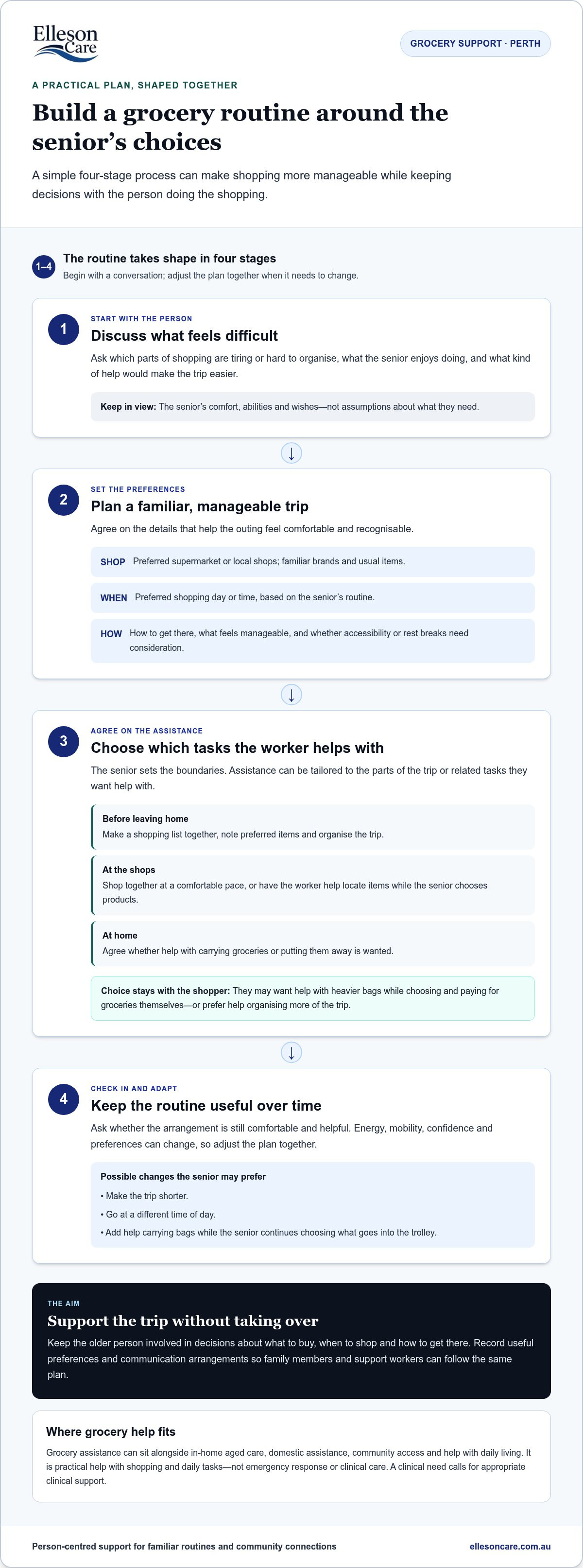
A useful shopping arrangement starts with a conversation, not a preset schedule. The senior can explain what feels difficult, what they enjoy doing and what kind of assistance would make the trip easier. Agree on a routine that suits their preferences and practical needs, then review it if circumstances change.
For families considering help with grocery shopping for seniors Perth, a simple planning sequence can make expectations clear:
- Discuss the need: Identify which parts of shopping are tiring or difficult to organise.
- Set preferences: Choose the preferred shop, day or time, travel approach and shopping method.
- Agree on assistance: Decide whether a support worker accompanies the senior, helps with particular tasks or assists with shopping-related jobs at home.
- Review the routine: Check whether it remains comfortable and useful, then adjust it together if needed.
An agreed routine makes it easier to know what to expect from each shopping trip and helps keep support consistent.
Plan the trip around the older person’s preferences
Start by asking what the senior wants to buy and where they prefer to shop. Their usual supermarket, local shops or a familiar route may matter as much as the items on the list. Discuss how they prefer to get there and when they want to go. Then consider accessibility, rest breaks and how much shopping feels manageable.
Before the outing, clarify the support worker’s role. The senior may want company while making their own choices, help locating items or assistance with related tasks. For general information about aged care support options in Australia, My Aged Care is the Australian Government’s information service.
Keep shopping support flexible over time
A routine should be dependable, but it doesn’t need to be fixed. Energy, mobility, confidence and preferences can change, so check in with the senior about what is working. They might prefer a shorter trip, a different time of day or more help carrying bags, while continuing to choose what goes into the trolley.
Consistent communication helps family members and support workers follow the same preferences. Keep useful details together, such as preferred products, dietary choices, the usual shop and tasks the senior wants to manage independently. Discuss changes with the senior and update the plan so everyone understands the new arrangement.
At Elleson Care, in-home aged care connects practical domestic assistance with the person’s daily routine. Elleson Care’s in-home support includes assistance shaped around the senior’s choices and preferred level of involvement.
Shopping independently, with family or with a support worker
There’s no single right way to manage grocery shopping. A senior may prefer to shop independently, go with a family member or arrange planned in-home support. The best fit depends on what the person wants to do, what feels manageable and how consistently help is available. Assistance doesn’t have to mean handing over control. It can focus on one difficult part of the trip while the senior continues to choose what they buy and how they shop.
For families exploring help with grocery shopping for seniors Perth, compare the options by the control, consistency and practical help they provide.
| Approach | Control | Consistency | Practical assistance |
|---|---|---|---|
| Shopping independently | The senior makes decisions and manages the trip themselves. | Depends on their capacity and circumstances each time. | May suit someone comfortable with travel, shopping and carrying items. |
| Help from family | Can reflect the senior’s preferences when plans are agreed together. | Works well when family availability aligns with the shopping routine. | Can provide company or help with specific tasks. |
| Planned in-home support | Can be tailored to the senior’s preferred level of involvement. | An agreed arrangement can make assistance more predictable. | Can support practical tasks as part of daily living assistance. |
When shopping independently or with family works well
Independent shopping may remain a good fit when the senior feels confident getting to the shops, choosing items and managing the trip. Family assistance can also work well when schedules align and the senior welcomes that support. Family members don’t need to provide every shopping trip, and their involvement shouldn’t override the older person’s wishes. A senior might want company but still prefer to make decisions and handle familiar tasks themselves.
When regular in-home assistance may be helpful
Planned support can help if shopping becomes tiring, difficult to organise or hard to fit around family availability. The worker’s role can focus on the parts the senior finds challenging, leaving other tasks and decisions with them. This makes the arrangement more predictable without assuming the person needs help with everything.
At Elleson Care, grocery support is part of domestic assistance and broader help with daily living at home. The focus is on complementing existing abilities, not replacing them. For example, a senior who can choose products but finds carrying bags difficult can get help with that task while staying actively involved in the shop.
Families considering how shopping support fits with other care needs can read this guide to in-home aged care in Perth. The central question is not whether a senior should accept help, but what kind of support makes daily life easier on their terms. Starting with their preferences helps families and support workers agree on an approach that preserves choice and provides useful assistance.
How to organise grocery help for a senior in Perth
Start with the older person’s priorities, then turn them into a clear plan. A written note helps family members and support workers follow the same preferences, while leaving room to adapt as needs change. For families seeking help with grocery shopping for seniors Perth, begin by asking the senior what they want to manage themselves and where support would make a difference.
Prepare a simple grocery-support plan
Work through the details together and record the agreed arrangements. Keep the plan practical and easy to update. Include:
- Shopping preferences: Preferred shops, familiar brands, dietary needs and how the senior likes to choose items.
- Routine: Preferred day or time, how often to shop, travel preferences and how much shopping feels manageable.
- Assistance: Tasks the senior wants to do independently, tasks where they’d welcome help, and any mobility or access considerations.
- Lists and payment: How the shopping list will be prepared, who will handle payment and how receipts will be shared or stored.
- Communication: Who to update if an item is unavailable, plans change or the senior wants to adjust the arrangement.
Don’t assume one approach to shopping lists or payment suits every household. Agree on a process that protects the senior’s choices and gives everyone a shared understanding. Include the older person in decisions and ask before changing their usual products or routine.
Understand aged care and funding pathways
Funding depends on a person’s circumstances, eligibility and the programme rules that apply to them. Australian Government aged care pathways, NDIS supports and DVA arrangements are distinct, and the appropriate route depends on the individual’s situation. Grocery assistance is not automatically covered. Check current assessment and programme information through My Aged Care, and use this overview of the Support at Home program for WA families for broader context.
If the senior receives support through another pathway, such as the NDIS or DVA, their current plan or assessment explains which supports apply. Keep funding questions separate from the practical plan: first clarify the person’s shopping preferences and assistance needs, then work out how support fits their circumstances.
For Perth families, a useful next step is to review the plan with the senior and identify which parts of shopping are becoming difficult to manage consistently. Elleson Care provides in-home aged care, including domestic assistance and help with daily living, shaped around each person’s needs. Elleson Care’s tailored in-home support can form part of a practical arrangement that respects the older person’s choices.
How Elleson Care supports seniors with grocery shopping in Perth
Grocery shopping is part of daily life, and the right level of help can make it easier to maintain familiar routines at home. Elleson Care provides person-centred aged care in Perth, including domestic assistance and support with daily living. Grocery shopping support is part of this practical assistance, with the senior’s preferences guiding how it fits into their day.
For someone seeking help with grocery shopping for seniors Perth, support can be shaped around what the older person wants to keep doing. They may want to choose groceries themselves, follow a familiar routine or receive help with particular tasks. The arrangement reflects their priorities rather than applying the same routine to everyone.
Person-centred help that respects everyday choices
Support starts with listening. A senior may prefer their usual shop and shopping day, or want to take part in the trip while receiving help with tasks that have become harder. Clear communication establishes what they’d like assistance with and what they prefer to manage independently. Their choices remain central as preferences and daily needs change.
Practical grocery help can sit alongside other daily living support at home. A person may need assistance with shopping as well as other household routines, and a considered approach can address these needs together. The aim is to support dignity and participation while respecting the older person’s pace and decisions.
Elleson Care is West Australian owned and operated, with a registered-nurse-led team that brings over 22 years of experience. This experience informs a holistic approach to in-home aged care and family support. It reflects the team’s broader experience supporting people’s needs at home, rather than clinical care during a shopping trip.
Take the next step with Elleson Care
A conversation helps clarify what’s becoming difficult, what the senior wants to continue doing and what assistance may suit their routine. Seniors and family members can discuss these needs together, keeping the older person involved in decisions. Start with the tasks where practical support would be useful, then build the arrangement around the senior’s preferences.
Domestic assistance and other in-home aged care can fit around the person’s daily life. Families can share relevant context while keeping the senior’s wishes central. A thoughtful plan can make everyday support more consistent without diminishing independence.
Talk with Elleson Care about in-home support for grocery assistance and daily living at home in Perth.
Start with one practical change
A more manageable shopping routine doesn’t need to begin with a complete change to how someone shops. The senior might identify one task they’d like help with, such as planning the trip or handling shopping bags, while keeping the parts they enjoy doing themselves. That small, agreed adjustment helps the person and their family see what support is useful.
If you’re considering help with grocery shopping for seniors Perth, keep the first conversation centred on the older person’s wishes. Their preferences can guide a comfortable support arrangement that can be reviewed as circumstances change. Family members can be part of the discussion, while the senior remains involved in decisions about everyday life.
For a practical next step, talk with Elleson Care about in-home support. A thoughtful plan can make everyday routines more manageable while preserving the choices that matter.
Frequently Asked Questions
Can a support worker help a senior with grocery shopping?
Yes. A support worker can assist with agreed shopping tasks as part of in-home aged care support. For example, they can accompany a senior who wants help getting around the supermarket or help organise groceries at home. The senior should remain involved in decisions about what is bought and which tasks they want help with. Discuss the arrangement in advance so everyone understands the worker’s role.
Can seniors in Perth get grocery-shopping help at home?
Yes. Seniors in Perth can arrange grocery-related assistance as part of practical support at home. It can help if getting to shops is difficult or organising a regular trip takes more energy than it used to. Some people want assistance with the trip itself, while others need help with tasks around shopping. The right arrangement depends on the person’s circumstances, preferences and support needs.
Does grocery-shopping support mean a senior can no longer shop independently?
No. Accepting support doesn’t mean a senior has to stop shopping independently or give up control over purchases. Assistance can focus on a specific need, such as reaching items on shelves or managing bags, while the person continues to choose groceries and make decisions. A senior can also shop alone on some occasions and receive help on others, depending on what feels manageable.
How can families prepare for a senior’s grocery-shopping support?
Families can prepare by discussing the arrangement with the senior and noting practical details that may otherwise be missed. Record preferred brands, items the person avoids, how they like substitutions handled and useful information about getting to the shops. Agree how to share changes, such as a cancelled trip or an unavailable product. Keep the notes accessible to the people involved and update them with the senior’s input.
Can grocery assistance be part of aged care support at home?
Yes. Grocery assistance can be included alongside other in-home aged care and domestic assistance, depending on an individual’s needs and support arrangements. It may sit within a broader plan that also addresses daily living or community access. Whether a particular service can be funded through an aged care programme depends on current rules and the person’s circumstances. My Aged Care provides Australian Government information about assessments and aged care pathways.
What happens if a senior’s shopping needs change?
Review the support arrangement with the senior when their preferences or circumstances change. They may want a shorter visit, a different shopping time or assistance with a task they previously managed themselves. Share the update with the people involved in the routine, and make sure the senior agrees with any changes. If the change relates to health or mobility, consider whether their wider in-home support needs also require review.
Can a support worker help with grocery shopping for someone using NDIS or DVA support?
It may be possible, but the relevant plan, assessment and current programme rules determine which supports apply. NDIS and Department of Veterans’ Affairs arrangements are distinct from aged care pathways, so grocery assistance is not necessarily funded in the same way under each. Elleson Care provides NDIS and DVA support, as well as aged care services. The person or their representative can review their current arrangements to understand how practical help fits.


