

What if a safer return home after a stroke depends not on one kind of care, but on the right combination of clinical and everyday support? If you’ve searched “stroke recovery support at home Perth”, you may still be unsure where nursing ends, rehabilitation therapies begin and help with personal care fits in. These are different forms of support, and understanding their roles can make planning in Perth feel more manageable.
It’s understandable to have questions about the move home after hospital, from daily routines and safety to which funding pathway may apply. The person’s needs, goals and circumstances will shape the support that’s appropriate, with planning guided by their treating healthcare team.
This guide explains what home-based stroke support can involve, how to prepare for the transition in Perth and where NDIS, aged care and private funding may fit. It also explores how clinical nursing and practical assistance with daily living can complement one another, so families can consider a respectful, person-centred plan that supports dignity and autonomy.
Key Takeaways
- Map the person’s clinical needs, daily routines and preferences to identify what support may help at home.
- Use the treating team’s discharge advice to organise medication information, follow-up arrangements and an initial review of support.
- Compare possible funding pathways against individual circumstances, eligibility and current programme rules.
- With stroke recovery support at home Perth, nursing and practical help with personal care or household tasks may address different needs within a tailored plan.
- Elleson Care provides nurse-led post-hospital care alongside personal care and domestic assistance, with support shaped around the person’s dignity and autonomy.
Stroke recovery support at home in Perth: what families may need
Coming home after a stroke can bring relief, but it can also change familiar routines. Tasks that once happened without thought, such as getting dressed, preparing a meal or moving safely around the house, may now take more time or assistance. Families may be adjusting to discharge instructions while trying to respect the person’s independence and privacy.
Home recovery support brings together practical help and, where needed, clinical nursing, shaped around the person’s abilities, goals and treating team’s advice. Recovery varies, and support needs can change over time. The wider Stroke recovery process may involve different rehabilitation goals and therapies, guided by relevant health professionals. Home support can complement that care, but it isn’t emergency treatment or a substitute for specialist rehabilitation.
What can home support help with after a stroke?
Support may include personal care, help with daily routines and domestic tasks such as keeping the home in order. Nursing support can assist with clinical needs after hospital discharge, including medication administration in line with the person’s care arrangements. These supports can work alongside rehabilitation provided by the treating team or relevant specialists. Home support workers do not deliver rehabilitation therapy as part of these daily living supports.
Family involvement should reflect the person’s preferences and care plan. Some people may welcome help with organising routines, while others may want relatives to focus on companionship. Discussing roles together can help protect dignity and avoid placing unplanned care responsibilities on family members. When short-term or temporary respite is needed, on-demand care models such as Royal Care Companion highlight how flexible, pay-as-you-go caregiving can relieve pressure on families during transitional periods.
When is more support at home worth considering?
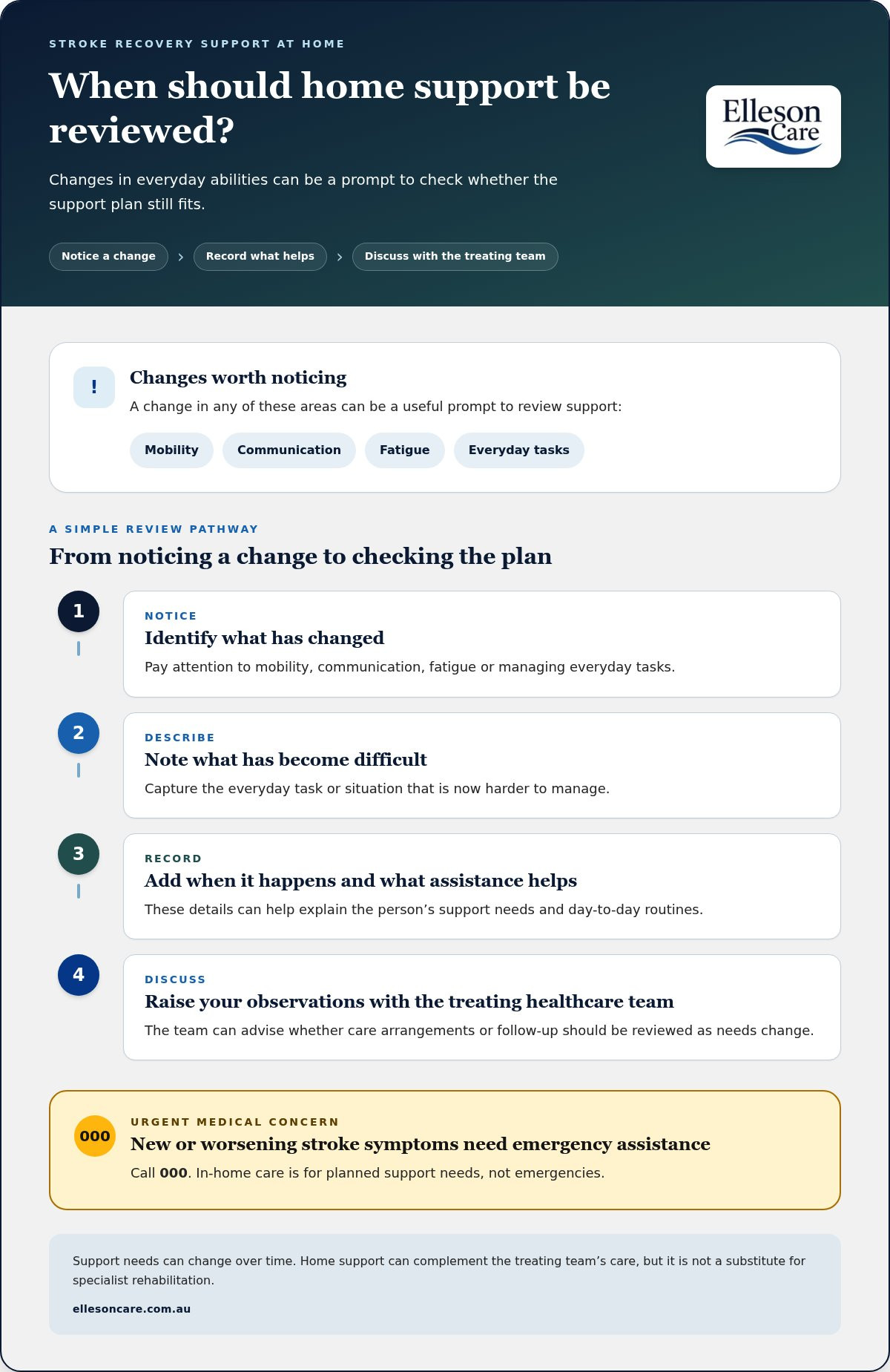
Changes in mobility, communication, fatigue or ability to manage everyday tasks can be useful prompts to review the support plan. Note what has become difficult, when it happens and what assistance helps, then raise those observations with the treating healthcare team. They can advise whether care arrangements or follow-up should be reviewed as needs change.
Don’t wait for routine home support if there’s an urgent medical concern. New or worsening stroke symptoms require emergency assistance: call 000. In-home care supports planned needs, not emergencies.
Clinical nursing and daily assistance: understanding the support mix
After a stroke, families may be arranging several kinds of help at once. Nursing, personal care and rehabilitation can all contribute to a person’s support plan, but they serve different purposes. Separating those roles helps clarify what the treating team guides and what practical assistance can help with at home in Perth.
| Need | Possible support type | Who guides the care? |
|---|---|---|
| Clinical needs after discharge | Home nursing, such as medication administration where included in the care plan | The treating team identifies clinical needs; the nurse follows the relevant care plan |
| Help with everyday routines | Personal care or domestic assistance | The person’s preferences and support plan shape the assistance |
| Rebuilding skills or addressing movement, communication or daily-function goals | Specialist rehabilitation, which may involve allied health therapies | The treating team guides recommendations and relevant therapy professionals deliver their discipline-specific care |
The treating team determines clinical needs and rehabilitation recommendations. Home support can complement that care, but it is not a stroke rehabilitation programme or a replacement for appointments with a GP or treating specialist.
When might clinical nursing at home be relevant?
Post-hospital nursing support provides clinical care at home for needs identified in the person’s care plan. For example, Elleson Care’s clinical nursing includes medication administration. The support should align with discharge instructions and the person’s arrangements for ongoing medical follow-up. Nursing at home doesn’t replace review by a GP or treating specialist, so keep those appointments and follow their advice.
How can daily living support complement clinical care?
Practical assistance can make everyday routines more manageable while clinical needs are addressed separately. Depending on the person’s circumstances and plan, this may include support with washing and dressing, domestic tasks or community access. The person should remain involved in decisions about how and when help is provided, with family participation guided by their preferences.
For families comparing stroke recovery support at home Perth, looking at clinical and daily needs side by side can help reveal gaps in the overall plan. Elleson Care’s nursing services in Perth explain how in-home clinical support can fit into care at home. Families can also explore Elleson Care’s in-home support when considering the mix of assistance that suits the person.
How to assess home support options and possible funding in Perth
Choosing support is easier when the family starts with the person’s needs rather than a particular service or funding scheme. For stroke recovery support at home Perth, compare the clinical care needed, daily tasks that require assistance, how support will remain consistent and what the person wants their routines to look like. A suitable plan should respect privacy, autonomy and the treating team’s advice.
Which questions clarify the support a person needs?
Before discussing options, bring together practical information about life at home. This gives the treating team and relevant support services a clearer picture of what may help:
- Clinical instructions: What does the discharge plan say about medication, nursing needs, follow-up and changes that should be reported?
- Everyday tasks: Which activities, such as personal care, meals or household routines, are difficult or require help?
- Routines and preferences: What times suit the person? How do they prefer to communicate, and what privacy, cultural or personal needs should be respected?
- Family capacity: What support can family members comfortably provide, and where would assistance reduce pressure or make routines more manageable?
- Continuity and goals: Who needs to share relevant updates, and what would the person like to manage more independently?
Review the plan if care needs, circumstances or the person’s preferences change. A routine that works at first may need adjustment as daily life at home becomes clearer.
Which Australian support pathways may be relevant?
Aged care, the Support at Home programme, the NDIS and Department of Veterans’ Affairs support are possible pathways to investigate, depending on individual circumstances. None should be assumed on the basis of a stroke diagnosis alone. Eligibility, assessment requirements and funded supports depend on the applicable programme’s current rules and the person’s situation.
For aged care, check current access arrangements and eligibility through the relevant aged care assessment pathway. NDIS access also depends on individual eligibility criteria, not diagnosis alone. People with DVA entitlements may wish to explore whether relevant support applies to their circumstances. Confirm current requirements with the appropriate programme before relying on funding for a care plan.
The Support at Home program guide for WA families provides further information to consider. Keeping assessment outcomes, discharge information and a clear list of support needs together can help families discuss options and compare how each pathway may fit.
Planning a safe transition from hospital to home after stroke
A clear handover can help reduce uncertainty as the person moves from hospital routines to support at home. Families can work through the steps below with the treating healthcare team, recording who is responsible for each part of the plan. Keep the person involved in decisions wherever possible.
- Discuss discharge instructions. Before leaving hospital, clarify the written advice, who to contact with questions and what follow-up appointments or referrals have been arranged. Ask the treating team to explain any instructions the family is unsure about.
- Organise medication information. Keep an up-to-date list of medicines and the directions provided at discharge. Confirm which clinical tasks are part of the care plan and, if home nursing is involved, what has been delegated to the nurse.
- Map out daily routines. Note the person’s usual preferences and the practical help they may need with personal care, meals or household tasks. Discuss how family and care staff will share agreed responsibilities without overlooking the person’s privacy or autonomy.
- Prepare for the first days at home. Make key contacts and care instructions easy to find. Share relevant information with the people involved in support, following the person’s preferences and the agreed care arrangements.
- Review how the plan is working. Agree how to communicate about the person’s care goals and changing daily needs. Record what is manageable, what is difficult and any questions for the treating team.
What should be discussed before returning home?
Ask the treating team to go through discharge instructions, medication directions and follow-up contacts with the person and family. Clarify which clinical tasks are included in the care plan and who is responsible for them. Then discuss everyday assistance with family and care staff, including how support can fit the person’s routines, communication preferences and choices.
Home support should complement, not replace, clinical follow-up. Keep planned appointments with the GP and treating specialists, and raise new concerns promptly with the healthcare team. If instructions are unclear or needs change, seek guidance rather than altering clinical arrangements independently.
How should support be reviewed once home?
Agree how updates will be shared and who should receive them. A brief record of daily support, emerging difficulties and progress towards agreed goals can make review discussions more specific. Revisit responsibilities if the person’s needs or family capacity changes. For related planning information, see this guide to in-home aged care in Perth.
Elleson Care provides post-hospital care in Perth to complement the person’s discharge plan and treating team’s advice. More information is available in Elleson Care’s post-hospital care information.
Stroke recovery support at home in Perth with Elleson Care
Returning home after a stroke can bring together clinical needs, practical daily tasks and changing family roles. Elleson Care provides in-home aged care, NDIS support and clinical nursing in Perth. Its registered-nurse-led team has over 22 years of experience and provides post-hospital care alongside assistance with daily living.
For families considering stroke recovery support at home Perth, the aim is to build an appropriate mix around the person and their agreed care arrangements. Nursing and everyday assistance can address different parts of a support plan, while the treating healthcare team continues to guide clinical care and rehabilitation recommendations.
What can a person-centred home support plan bring together?
A plan may combine distinct forms of help, depending on the person’s needs and preferences:
- Clinical nursing: Support for clinical care needs after hospital discharge, including medication administration as part of the care arrangements.
- Personal care: Assistance with personal routines, provided respectfully and in keeping with the person’s choices.
- Domestic assistance: Practical help with household tasks to support day-to-day routines at home.
These supports can sit alongside rehabilitation arranged through the treating team, but they are not a substitute for specialist rehabilitation or clinical follow-up. Elleson Care’s registered nurses guide clinical support, while daily assistance addresses practical needs. Family input can help shape familiar routines and share useful information, with decisions centred on the person’s autonomy, privacy and preferences.
Support can be tailored as circumstances change. A person may need more help with daily routines at one stage and a different balance of assistance later. Clear communication between the person, family and care team can help keep support aligned with agreed arrangements.
How can Perth families take the next step?
Before discussing in-home care, gather the person’s current support needs, relevant discharge guidance and any agreed care arrangements. Note which daily tasks are challenging, what the person prefers, and what family members can comfortably contribute. This gives the conversation a practical starting point and helps keep decisions connected to the treating team’s advice.
Elleson Care is a West Australian-owned provider offering in-home aged care, NDIS support and clinical nursing. Its post-hospital care, personal care and domestic assistance can be considered alongside the person’s circumstances, goals and dignity.
Explore Elleson Care’s in-home support
Take the next step towards a supported return home
Planning stroke recovery support at home Perth begins with understanding the person’s clinical needs, daily routines and preferences. Clinical nursing, personal care and household assistance serve different purposes, and the right mix should align with the treating team’s guidance and the person’s agreed care arrangements.
Funding pathways depend on individual circumstances and eligibility, so clarify what support is needed before exploring available options. A clear plan can also help family members understand their roles while keeping the person’s dignity and autonomy central.
Elleson Care is a West Australian-owned provider with a registered-nurse-led team bringing over 22 years of experience. Its in-home support includes clinical nursing, post-hospital care and practical daily living assistance, tailored to individual needs and preferences.
Gather the person’s current needs and discharge guidance, then discuss in-home support with Elleson Care.
Frequently Asked Questions
Is stroke recovery at home possible?
Yes, some people return home after a stroke with support, but whether it’s suitable depends on their health, abilities, home circumstances and the treating team’s advice. Home care can assist with clinical needs set out in an agreed care plan and practical daily living tasks. It doesn’t replace prescribed rehabilitation or emergency care. The treating team can help assess whether home is appropriate and what support may be needed.
What support can a person need after a stroke at home?
Support may include clinical nursing, personal care, domestic assistance or help with community access. A person might need help with medication administration, dressing, household tasks or getting out into the community, but not everyone needs the same assistance. The appropriate mix depends on assessed needs, preferences and care arrangements. Specialist rehabilitation is a separate form of care, so discuss therapy needs and recommendations with the treating team.
Can a nurse visit at home after a stroke in Perth?
In-home nursing may support clinical needs after hospital discharge, depending on the person’s care arrangements and plan. Elleson Care provides nurse-led clinical services and post-hospital care in Perth. The nursing support arranged should follow discharge instructions and agreed clinical responsibilities. Keep in contact with the person’s GP and treating clinicians for ongoing medical decisions and follow-up. Home nursing supports planned care; it isn’t a substitute for those clinical relationships.
How do families arrange stroke recovery support at home in Perth?
Start with the discharge instructions and the treating team’s guidance. Record clinical needs, daily tasks that require assistance, preferred routines and what family members can comfortably provide. This gives you a practical basis for discussing stroke recovery support at home Perth with Elleson Care. Funding pathways and service arrangements depend on individual circumstances and applicable eligibility requirements, so don’t assume a particular scheme will apply or that support can begin immediately.
Does the NDIS fund support after a stroke?
NDIS access depends on current eligibility requirements and the person’s individual circumstances. A stroke diagnosis alone doesn’t establish eligibility, and funding shouldn’t be assumed. Check current information through the official NDIS website to understand access requirements and how to apply. Depending on the person’s situation, aged care or Department of Veterans’ Affairs pathways may also be relevant to investigate. The appropriate pathway depends on individual assessment and applicable programme rules.
Can aged care or Support at Home assist after a stroke?
Aged care pathways, including Support at Home, may be relevant for some older people, depending on current assessment and eligibility requirements. They don’t automatically cover every service a person may need. Check the latest Support at Home arrangements through official Australian Government information, as programme details and individual circumstances matter. An assessment can help clarify whether a pathway applies and what support may be considered; eligibility or funding shouldn’t be assumed.
What should families do if stroke symptoms suddenly return or worsen?
Call 000 immediately if stroke symptoms return or worsen, or if another medical emergency is suspected. Don’t wait for a routine home-care visit or rely on a support worker for emergency response. Follow the emergency dispatcher’s instructions and provide clear information about the symptoms and when they began, if known. Once emergency care is underway, update the person’s treating team about the change so ongoing care can be coordinated appropriately.
For in-home aged care, NDIS support or clinical nursing in Perth, contact Elleson Care to discuss support for your family.


