

Could palliative care begin while someone is still receiving treatment for a serious illness? Yes. If you’re unsure what a palliative services definition means, this care can support quality of life alongside other treatment, not only in the final days of life.
It’s understandable to wonder whether palliative care means treatment has stopped, or how it differs from end-of-life care. Palliative support focuses on a person’s comfort, preferences and wellbeing. End-of-life care is provided when someone is approaching the final stage of life.
This guide explains what palliative services can include, how they may fit into an individual care plan, and what to discuss with the treating team. It also covers how home-based clinical nursing may contribute to support in Perth, where familiar surroundings can matter to individuals and their families.
Elleson Care is a West Australian-owned provider with a registered-nurse-led team and over 22 years of experience. Its in-home clinical nursing includes palliative care and support for complex needs. The sections below outline practical forms of support, clarify common terms and explain how nursing at home can fit alongside the person’s wider care team.
Key Takeaways
- The palliative services definition centres on quality of life during serious illness, with support shaped around the person’s physical, emotional, social and spiritual needs.
- Services may range from clinical support to help for family members. An individual plan won’t necessarily include every type of support.
- Palliative care, end-of-life care and hospice care are related terms, but they describe different contexts and purposes.
- Before speaking with the treating team, note your concerns and questions about symptoms, daily routines, preferred care setting and who coordinates communication.
- In-home palliative nursing may form part of a broader care plan. Elleson Care is West Australian owned and operated, with registered-nurse leadership.
Palliative services definition: what does palliative care mean?
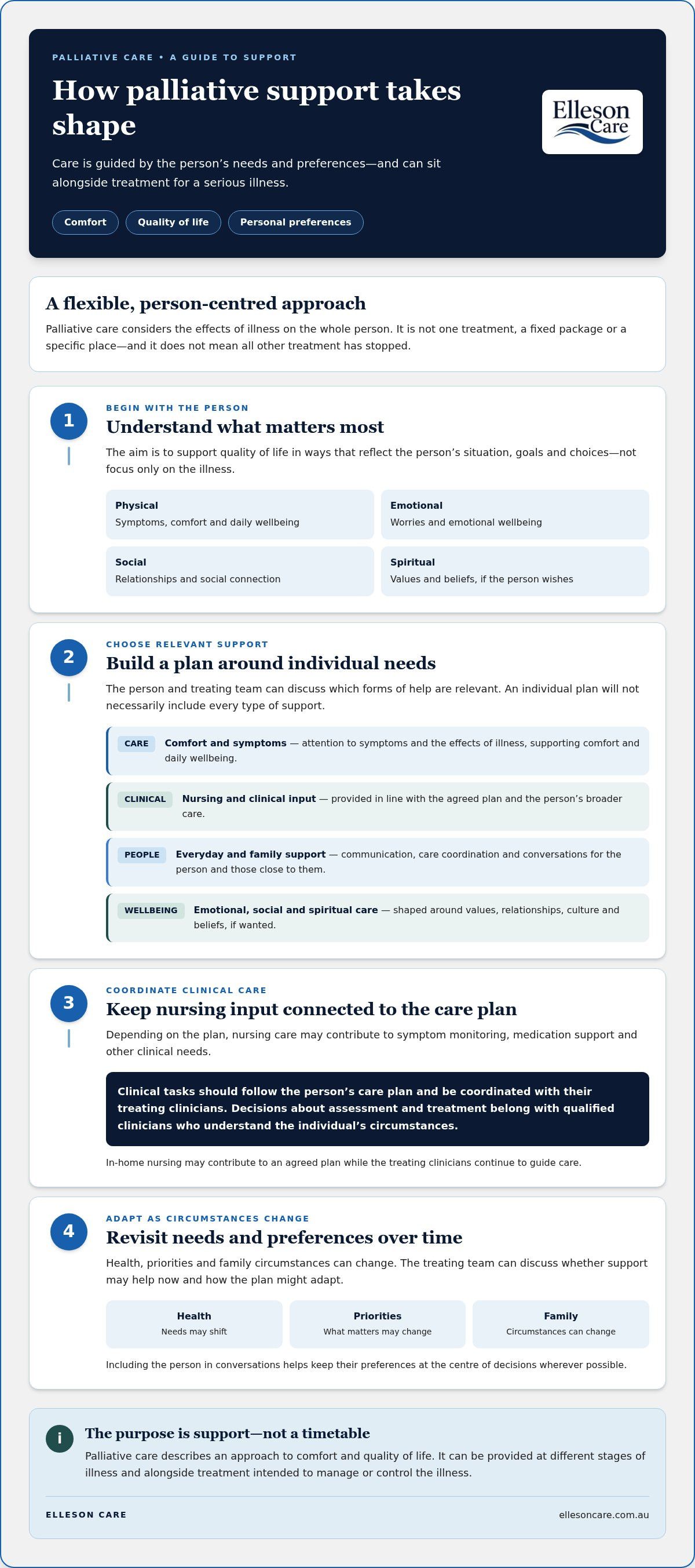
Palliative care aims to improve quality of life during serious illness. It addresses the effects of illness in ways that reflect what matters to the person, rather than focusing only on the disease. Depending on the person’s preferences and circumstances, support may consider physical symptoms, emotional wellbeing, social connections and spiritual concerns.
The palliative services definition describes a broad approach to care, not a single treatment or a specific place. Support may involve health professionals working with the person and their family, and can be provided at different stages of an illness. It can also sit alongside treatment intended to manage or control the illness. The Palliative care overview describes this broad, interdisciplinary approach.
Palliative care describes the support someone may need; it does not predict how long they have to live. Its focus is comfort and quality of life in response to the person’s situation. Support can change as health, priorities or family circumstances change.
Who may benefit from palliative care?
Palliative care may support people living with a serious or life-limiting illness. No single diagnosis defines who can benefit. A person may be managing symptoms, changes to everyday activities, emotional strain or questions about what lies ahead. Their care plan should reflect their goals, choices and dignity, rather than assume that everyone with the same condition needs identical support.
Needs can shift over time. Someone might first value help to stay engaged in daily life, then later need different clinical or family support. The treating team can discuss whether palliative care could help now and how the plan might adapt. Including the person in these conversations helps keep their preferences at the centre of decisions wherever possible.
What does the word “palliative” mean in care?
In plain language, palliative means aimed at easing the effects of illness and supporting comfort and wellbeing. In healthcare, it describes an approach that considers the person as a whole. It does not mean that all treatment has stopped, or that death is necessarily close. Depending on the person’s needs and goals, care may be provided alongside other treatment.
Palliative services can take different forms, including clinical input, practical support or help for family members. They are not one procedure, a fixed package or a specific setting. Support may be coordinated across the person’s care team and delivered where appropriate. The term describes the purpose and approach of care, not a timetable or a single pathway.
What palliative services can include: comfort, clinical care and family support
Palliative services can bring together clinical care and practical, emotional and family support, guided by the person’s needs and preferences. The World Health Organization’s definition of palliative care also emphasises support for the person living with illness and those close to them. The mix of help may change over time.
Palliative care supports the person as a whole and, where appropriate, the people close to them. An individual plan won’t necessarily include every possible service. The person and treating team can discuss which supports are relevant, how they fit alongside other treatment, and when the plan may need review.
- Comfort and symptom support: attention to symptoms and other effects of illness, with the aim of supporting comfort and daily wellbeing.
- Clinical care: nursing input and other clinical support provided in line with the agreed plan and the person’s broader care.
- Everyday and family support: help with communication, care coordination and conversations that support the person and those close to them.
- Emotional, social and spiritual care: support that respects the person’s values, relationships, culture and beliefs, if they wish to include it.
Clinical and comfort-focused support
Depending on the plan, nursing care may contribute to symptom monitoring, medication support and other clinical needs. These tasks should follow the person’s clinical care plan and be coordinated with their treating clinicians. Some people have complex needs, so decisions about assessment and treatment belong with qualified clinicians who understand the individual’s circumstances.
If a symptom changes, becomes harder to manage or affects daily activities, share that with the treating team. General information can explain what services may involve, but it can’t replace clinical advice tailored to the person. In-home nursing may contribute to an agreed plan while the treating clinicians continue to guide care.
Emotional, practical and family support
Support may also address worries, social connection, cultural needs or spiritual concerns, according to the person’s wishes. Clear communication helps everyone understand the care plan, what each person has agreed to do and who to contact with questions. Family members may want to be closely involved, contribute in specific ways or have a more limited role. Their capacity and preferences matter too.
For Perth households considering nursing support at home, Elleson Care’s in-home clinical nursing can form part of a person’s wider palliative care plan. Its registered-nurse-led team provides palliative care and support for complex needs, shaped around the person’s circumstances and the plan agreed with their treating team.
Palliative, end-of-life and hospice: what's the difference?
These terms are related, but they don’t describe exactly the same thing. Palliative care is the broader approach: support to improve quality of life during serious illness. End-of-life care is part of palliative care and focuses on a person’s needs as they approach the final stage of life. “Hospice” can describe a specialist palliative service or a care setting, and its use can vary.
| Term | Purpose | Context |
|---|---|---|
| Palliative care | Supports comfort, wellbeing and quality of life. | May be relevant at different stages of serious illness and can sometimes sit alongside other treatment. |
| End-of-life care | Prioritises comfort and quality of life as life draws to a close. | A component of palliative care for a person approaching the final stage of life. Timing and support needs differ between individuals. |
| Hospice | Provides or describes specialist palliative support. | May refer to a service or setting. The term and arrangements can differ, so clarify what it means in an individual plan. |
Care plans may include overlapping support. A person may receive palliative care for some time, then have additional end-of-life support as their circumstances change. Services may also use these terms differently. Ask the treating team what a term means for the person’s care and what support is planned, rather than relying on the label alone.
Does palliative care mean treatment is stopping?
No, not necessarily. Depending on the person’s circumstances and goals, palliative support may be provided alongside treatment. It is neither a cure nor automatically a replacement for other treatment. The person and their treating clinicians should discuss decisions about continuing, changing or stopping treatment. Clinicians can explain potential benefits, burdens and options in the context of the individual’s health.
If the care plan mentions palliative support, ask how it relates to current treatment. Clarify which clinicians oversee treatment, who to contact with concerns, and how the plan will be reviewed if needs or preferences change. These questions can make care arrangements easier to understand.
Can palliative care happen at home, in hospital or elsewhere?
Palliative care may be provided in different settings, including at home or in hospital, depending on the person’s needs and care arrangements. No one setting is right for everyone. A home-based nurse may contribute to an agreed plan while the person’s treating team continues to guide clinical decisions. Discuss the preferred setting, practical needs and how the care team will communicate, so the plan reflects the person’s circumstances and choices.
How to start a palliative care conversation in Perth
Starting the conversation can feel difficult, especially when family members are processing a new diagnosis or changing care needs. You don’t need every answer first. Begin with the concerns you’ve noticed, then discuss the person’s goals with their treating team and explore what support may fit. Understanding the palliative services definition can help keep the conversation focused on quality of life and the person’s priorities.
A simple sequence can make the discussion more manageable:
- Identify what’s prompting the conversation. Note changes in symptoms, daily activities, emotional wellbeing or the support the person and family need.
- Discuss goals with the treating team. Share what matters to the person, including their preferences, cultural needs and priorities for care.
- Plan suitable support. Agree on next steps, who will coordinate communication and how the plan can be reviewed as circumstances change.
Perth residents may encounter different referral, service and funding arrangements depending on their circumstances. Eligibility and funding rules can change, so confirm current information through official Australian guidance and the relevant treating team before making decisions.
What can families discuss with the treating team?
A short list of questions can be easier to use during an appointment than trying to remember everything. Ask what support may be available for current symptoms, whom to contact if concerns arise, and how the person’s preferences will guide decisions. Clarify who is coordinating the plan and how updates will be shared. Writing down agreed actions and key contacts makes information easier to find later.
- Which changes in symptoms should we report, and who should we tell?
- How can care accommodate the person’s routines, cultural needs and priorities?
- What support could help at home, and how will it work with the treating team?
- What are the agreed next steps, and who is responsible for each one?
How can home support fit into a wider care plan?
Home nursing may contribute to agreed clinical needs as part of the person’s wider care plan. The treating team can clarify how responsibilities are shared and how information is communicated. For a practical overview of clinical care at home, see this Perth nursing services guide.
For older people, the Support at Home program guide outlines information relevant to families exploring support. Funding pathways and eligibility depend on individual circumstances and current rules, so use up-to-date official guidance when planning.
Explore palliative nursing support in Perth with Elleson Care. Its registered-nurse-led team provides in-home palliative care as part of an individual’s broader plan.
Palliative care at home with Elleson Care in Perth
For some people and families, clinical support at home may be part of a preferred care plan. Elleson Care provides in-home palliative nursing in Perth as one component of broader support, in the context of the person’s needs and treating team. The service supports people with palliative or complex clinical needs, with care shaped around their individual plan.
Elleson Care is West Australian owned and operated, with a team led by registered nurses. Its nursing support does not replace the person’s treating clinicians. It contributes to agreed clinical needs at home while the treating team guides decisions about the person’s care. The palliative services definition describes an approach to support; an individual plan sets out what that support involves in practice.
What a person-centred approach can look like at home
Person-centred support starts with the individual, not a standard routine. The person’s preferences, daily rhythms, privacy and priorities can shape how care is delivered. For example, a household can discuss how nursing support fits around familiar routines and what information the person would like shared with family members. The agreed plan and clinical guidance determine the appropriate support.
Good coordination helps everyone understand their role. With the person’s wishes in mind, nursing support can work alongside relevant clinicians and family members involved in the plan. Clear communication helps maintain dignity and comfort, and makes agreed care easier for the person and those close to them to understand. Family involvement should reflect the person’s preferences and what relatives are able and willing to contribute.
When to explore in-home nursing support
A household might discuss nursing support when clinical needs change, when care at home is being considered, or when the person’s daily routine becomes harder to manage. The conversation can clarify what matters to the person, which tasks are part of the clinical plan, and how home-based nursing might fit with existing care. The treating team can explain clinical priorities and coordination.
Before a conversation, write down questions such as what support is being considered, how it relates to the current care plan, and who will communicate updates. Families seeking broader context about clinical support at home can refer to this guide to nursing services in Perth. The right arrangements depend on the person’s circumstances and preferences.
If you’re considering whether in-home clinical nursing could fit into a palliative care plan, learn about Elleson Care’s services.
Take the next step at your own pace
A useful next step is a focused conversation about what would make day-to-day care feel more manageable. Note the person’s priorities, the support they would welcome and any questions for the treating team. These notes can help shape a clear, respectful plan without requiring every decision to be made at once.
Understanding the palliative services definition can help families begin that discussion, but the right support depends on the individual’s needs and choices. For Perth households considering nursing at home, Elleson Care is a West Australian-owned and operated provider with a registered-nurse-led team and over 22 years of experience. Palliative care is among its in-home clinical nursing services.
To discuss how Elleson Care’s in-home palliative nursing could fit into an individual care plan, contact Elleson Care.
Frequently Asked Questions
Is palliative care only for the last days of life?
No. Palliative care may be considered earlier in a serious illness, based on a person’s needs and goals. The phrase palliative services definition describes support focused on quality of life, not a countdown to death. For example, someone may discuss extra support when symptoms or the demands of treatment begin affecting daily life. Their treating team can help determine whether palliative input is suitable at that stage.
Can someone receive palliative care while continuing other treatment?
Yes. Depending on the person’s circumstances, palliative care can be provided alongside treatment for the illness. For instance, a person may continue treatment while discussing support for symptoms, emotional wellbeing or practical care needs. Palliative care doesn’t determine whether another treatment should continue. The person and their treating clinicians can discuss the aims, possible benefits and burdens of each option, and revisit decisions if health or preferences change.
Who can receive palliative care in Australia?
People living with serious or life-limiting illness may be considered for palliative care; access isn’t limited to one diagnosis. The type of support depends on the person’s needs, location and available services. A GP or treating specialist can discuss whether palliative care may help and what local pathway could apply. Age, treatment choices and care setting can also affect how support is organised, so individual advice matters.
How is palliative care different from hospice or end-of-life care?
Palliative care is a broad approach to support during serious illness. End-of-life care refers to palliative support as a person approaches the final stage of life. Hospice may refer to a specialist service or a care setting, and its use can vary. These terms can overlap, but they aren’t interchangeable. Ask the treating team what a term means in the person’s specific plan, rather than inferring the care arrangement from the label alone.
Can palliative care be provided at home in Perth?
Yes, palliative support may be provided at home in Perth when this suits the person’s needs and care arrangements. Home nursing can contribute to agreed clinical care while the treating team remains involved in the wider plan. Discuss which needs could be supported at home, how updates will be shared and what other services are involved. The preferred setting may change as circumstances do.
Does Medicare, the NDIS or aged care funding cover palliative services?
Some palliative-related care may be funded through different pathways, but coverage depends on eligibility, the type of service and individual circumstances. Medicare may subsidise eligible medical services; it doesn’t automatically cover every home-care service. The Support at Home program can fund eligible older Australians’ care, while NDIS funding relates to eligible disability supports rather than replacing health treatment. Ask the treating team or relevant programme contact to clarify current rules and the person’s options.
How can a family raise palliative care with a GP or treating team?
Choose a suitable time and explain what has prompted the conversation, such as a symptom change or difficulty managing everyday routines. You could ask, “Could palliative support help with the person’s current priorities?” Bring notes about the person’s wishes and questions about care at home, symptom support or who coordinates communication. If the person wants family involved, agree who will take notes and how next steps will be shared.


