

If you’re searching for how to convince my spouse we need help, you may already be carrying more practical and emotional responsibility than feels manageable. A refusal can be painful, especially when you’re trying to support someone you love, not take control. A useful place to start is with what matters most to your spouse, rather than what you think they should accept.
It’s understandable to want a clear answer, but pressure can make a difficult conversation feel like criticism. Your spouse may be worried about losing independence, changing routines or having someone unfamiliar involved. Listening to those concerns can help keep your relationship at the centre of the discussion.
This guide explains how to raise the subject respectfully, explore what may be behind a “no” and describe support in terms of your spouse’s preferences, daily needs and goals. You’ll also consider in-home support and manageable first steps, such as gathering information together, without asking your spouse to make a major decision straight away.
Key Takeaways
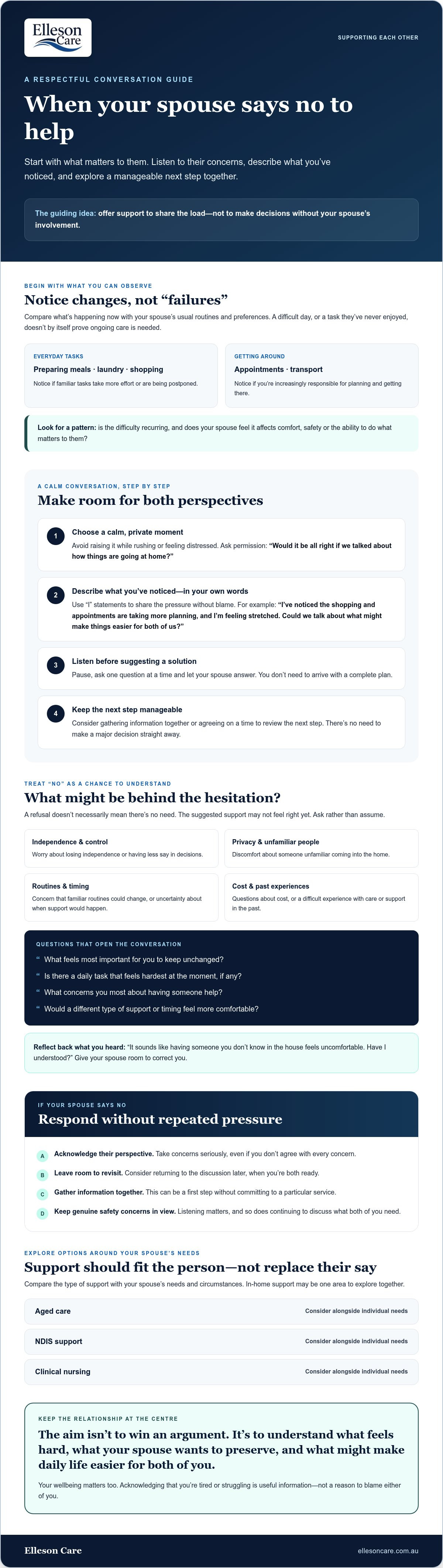
- Notice which everyday tasks are becoming harder, and describe what you observe without labelling or blaming your spouse.
- Ask about possible reasons for their hesitation, including concerns about privacy, cost, unfamiliar people or past experiences.
- Learn how to convince my spouse we need help by preparing a calm conversation, listening first and agreeing on a time to review the next step.
- If your spouse says no, avoid repeated pressure. Consider whether to revisit the discussion later or gather information together.
- Compare aged care, NDIS support and clinical nursing according to your spouse’s needs and circumstances.
How to recognise when you and your spouse may need extra help
Asking whether extra help could make life easier doesn’t mean you’re taking over or giving up. Support can help protect your spouse’s choices and make daily life more manageable for both of you. It should respond to what your spouse wants and needs, not replace their say in how they live.
Offering support means sharing the load; removing independence means making decisions without someone’s involvement. Keeping that distinction in mind can help you approach the conversation as a partner, rather than as someone trying to take control.
Which changes are worth discussing?
Look for changes in familiar routines instead of making a judgement about your spouse. Perhaps preparing meals, keeping up with laundry or getting to appointments now takes more effort. You might notice a task being postponed, or find yourself increasingly responsible for household jobs and transport.
Compare what’s happening now with your spouse’s usual habits and preferences. One difficult day, or a task they’ve never enjoyed, doesn’t prove that ongoing care is needed. Consider whether the difficulty is recurring and whether your spouse feels it affects their comfort, safety or ability to do what matters to them. When shifts in energy or daily stamina are linked to persistent physical challenges, looking at root-cause healthcare perspectives from practices like Rooted Functional Medicine can help you consider whether underlying chronic health factors are contributing.
How to raise the subject without blame
Choose a private, calm moment when you’re both able to talk, rather than raising the subject while rushing out or feeling distressed. Ask permission first: “Would it be all right if we talked about how things are going at home?” This gives your spouse room to say when they’re ready.
Use first-person statements to describe what you’ve noticed and how it affects you, without turning the conversation into a criticism. For example: “I’ve noticed the shopping and appointments are taking more planning, and I’m feeling stretched. Could we talk about what might make things easier for both of us?”
Then pause and give your spouse time to respond. You don’t need to arrive with a complete plan. If the conversation itself has become difficult, couples therapy is one form of support focused on helping partners address relationship concerns. For now, a first step may simply be understanding what each of you is finding hard and what you’d like to preserve.
If you’re wondering how to convince my spouse we need help, start by describing the shared pressure, not by insisting on a particular service. Your wellbeing matters too. Acknowledging that you’re tired or struggling is useful information, not a reason to blame either of you.
Why your spouse may resist help, and how to listen first
A refusal can feel discouraging, particularly if you’re managing more of the household or worrying about your spouse’s wellbeing. Try to treat “no” as information about how the idea feels to them, rather than proof that they don’t care or that the conversation is over.
Refusing help doesn’t necessarily mean there’s no need; it may mean the support being suggested doesn’t feel right yet. Listening can help you understand what’s troubling your spouse, but it doesn’t mean you have to agree with every concern or ignore a genuine safety issue. Take their perspective seriously while continuing to discuss what both of you need.
What might be behind a refusal?
There may be several reasons, so ask rather than assume. Your spouse might worry that accepting help will reduce their independence, alter a familiar routine or mean losing control over decisions. They may feel uncomfortable having an unfamiliar person in the home, or have questions about privacy and what support would involve.
Cost may be a concern, as can uncertainty about the type or timing of support. Your spouse might imagine a larger change than you have in mind, when you’re only considering help with one task. If they’ve had a difficult experience with care or support before, ask about it gently. Don’t assume it explains their current decision or that they’ll feel the same way now.
Questions that help you understand their perspective
Ask one question at a time, then allow room for an honest answer. For example:
- “What feels most important for you to keep unchanged?”
- “Is there a daily task that feels hardest at the moment, if any?”
- “What concerns you most about having someone help?”
- “Would a different type of support or timing feel more comfortable?”
Before suggesting a solution, reflect back what you heard: “It sounds like having someone you don’t know in the house feels uncomfortable. Have I understood?” This shows you’re listening and gives your spouse the chance to correct you. It can also clarify whether they oppose support in general or have reservations about a particular arrangement.
If you’re unsure what support could involve, an information-gathering conversation with a provider such as Elleson Care’s in-home support team may help you understand the options. You can ask questions without treating the discussion as a commitment. The aim is to find out what might suit your spouse’s preferences, not to make the decision for them.
How to convince your spouse we need help: a conversation plan
If you’re thinking about how to convince my spouse we need help, aim for a shared discussion, not a campaign to secure agreement. You can explain why support matters to you while recognising that your spouse has a say in decisions about their care. A useful conversation may clarify what each of you needs, even if you don’t decide on a service straight away.
Prepare for a calm, specific conversation
Choose a private time when neither of you is rushed, upset or in the middle of an argument. Focus on one or two observable concerns, such as a household task that has become difficult or the amount of planning appointments now require. Avoid bringing every frustration into the discussion. Consider what might feel manageable to both of you, and be prepared to hear that your spouse sees things differently.
You might open with: “Could we talk about how things have been going at home? I’ve noticed organising appointments is taking more effort, and I’d like us to consider whether any support could make things easier. What do you think?”
Use shared language and agree on one next step
“We” language can make clear that you’re discussing a shared household concern, not accusing your spouse. It shouldn’t imply that you can decide on their behalf. Offer choices rather than presenting one fixed answer, and let your spouse say what feels acceptable.
- Prepare: Identify the specific change you want to discuss and what you hope the conversation will achieve.
- Ask: Check that it’s a suitable time to talk, and explain why you’re raising the subject.
- Listen: Give your spouse space to respond. Clarify what they mean before replying or suggesting solutions.
- Share: Describe your concerns using calm, first-person language, including how the situation is affecting you.
- Explore: Consider options together, such as finding out more about support or discussing one task that could be made easier.
- Agree on a review: Decide on one manageable next step, or choose a time to return to the conversation if neither of you is ready.
A first step doesn’t need to be a commitment to ongoing care. You might agree to gather information, write down questions or find out what support for a particular task could involve. If you’re not ready to decide, agree when you’ll check in again. That makes it easier to revisit the subject without either person feeling pressed to answer immediately.
Prepare, ask, listen, share, explore and review: these steps create room for a respectful decision, without promising that you’ll both reach the same conclusion at once.
What to do when your partner says no to getting help
Hearing “no” can be disappointing, especially if you’re worried and feeling stretched. Try not to respond with repeated pressure, threats or shame. These can make your spouse feel cornered and less willing to talk. A refusal doesn’t mean you have to drop the subject forever, but your partner may need time or more information before considering a next step.
You could pause and agree to revisit the discussion, or ask whether your spouse would be comfortable gathering information together without making a decision. If you both want to explore support, you might discuss a small, time-limited trial of one agreed task, then review how it felt. Make the choice together, and be clear about what you’ll review and when.
When to pause and return to the discussion
If you’re repeating yourselves, becoming upset or no longer listening to each other, take a break. You might say, “I can see this feels difficult. Would it be all right if we come back to it next week?” Agreeing on a time can help the conversation feel less like an ultimatum and more like an open question.
Your wellbeing deserves attention too. If caring responsibilities are growing and you’re feeling exhausted, consider talking with someone you trust or seeking support for yourself. You don’t have to wait for your spouse to agree before looking for information that could help you understand your options. Likewise, when family strain begins affecting adolescents or young people in the home, specialised counselling services such as thriveteens.ca can provide valuable guidance and support.
When safety or health concerns change the next step
A disagreement about support is different from an urgent health concern or immediate danger. If your spouse has sudden or severe symptoms, or someone is in immediate danger, contact emergency services on 000. For other health concerns, seek advice from an appropriate health professional, such as your GP. Elleson Care provides aged care, NDIS support and clinical nursing, but it isn’t an emergency medical response provider.
If aged care support is one option you’re considering, read current information about the Support at Home Program in 2026 and check eligibility and funding details through official Australian sources. You can also make an information-gathering enquiry about Elleson Care’s support services without treating it as a commitment to proceed. This may help you and your spouse discuss what support could look like, if and when you’re both ready.
If you’re searching for how to convince my spouse we need help, remember that a respectful pause can be part of the process. The aim isn’t to win agreement in one conversation, but to keep communication open while taking health and safety concerns seriously.
Explore practical support together in Perth
Once you’re both ready to consider possibilities, keep the first step small. You might agree to find out about one household task, discuss whether an assessment is appropriate, or have an information-gathering conversation. Exploring options doesn’t commit either of you to accepting care. It gives you a clearer basis for deciding what, if anything, would suit your spouse.
Match the type of support to the need
Different supports address different needs. In-home aged care may include help with personal care or domestic tasks. NDIS support is relevant for people who meet the scheme’s eligibility requirements, while clinical nursing addresses health-related care needs. These are different pathways, and eligibility or funding shouldn’t be assumed.
For current 2026 information about aged care programmes, including the Support at Home Program, check My Aged Care or another appropriate official source. For NDIS access and funding, consult the NDIS directly. Discuss clinical needs with an appropriate healthcare professional, who can help clarify what care may be needed. Availability, eligibility and funding depend on individual circumstances.
Depending on what you’re exploring, Elleson Care’s guides to in-home aged care and respite care in Perth may help you prepare questions. Treat them as starting points for learning, not as a recommendation that one option must be right for your spouse.
Make the first enquiry feel manageable
Before contacting a provider, write down what your spouse wants to keep doing independently, which routines matter to them and what task they might consider discussing. Ask how support can reflect the person’s preferences and goals, how they’re involved in decisions, and what information is needed to understand their circumstances.
- What support would address the task we’re concerned about?
- Can we discuss preferences, routines and goals before considering options?
- What should we confirm about eligibility, funding and availability?
- What would happen after this initial conversation?
These questions can help you and your spouse stay in control of the discussion. You might decide to explore only one need, or simply take the information away and think about it together.
If you’re considering how to convince my spouse we need help, remember that a joint enquiry can be an opportunity to ask questions, not a commitment to proceed. Elleson Care is a West Australian owned and operated provider offering in-home aged care, NDIS support and clinical nursing in Perth.
Take the next step together, at your own pace
Discussing support doesn’t mean you need to make a major decision straight away. Start by listening to what matters to your spouse, sharing your concerns without blame and identifying one manageable next step. If they’re not ready, agreeing to revisit the conversation later can help keep communication open.
If you’re still considering how to convince my spouse we need help, remember that the aim isn’t to win an argument. It’s to understand each other’s concerns and explore whether support could reflect your spouse’s preferences, routines and goals. An enquiry can simply be a way to gather information.
Elleson Care is a West Australian owned and operated provider offering person-centred aged care, NDIS support and clinical nursing. Its care team is led by registered nurses with over 22 years of experience. If you’d like to explore what support at home may involve, you can talk with Elleson Care about support at home.
You don’t have to resolve everything in one conversation. A respectful discussion and a small shared step can be a steady place to begin.
Frequently Asked Questions
How do I talk to my spouse about needing help without starting an argument?
Choose a calm, private time and ask if your spouse is willing to talk. If you’re wondering how to convince my spouse we need help, focus on a shared concern rather than trying to win agreement. Describe one thing you’ve observed, explain how it affects you and ask what your spouse thinks. Listen before suggesting options, and pause if either of you becomes distressed or the discussion stops being constructive.
Why might my spouse refuse care or support at home?
Your spouse may worry about losing independence, privacy, control over routines or the choice of who comes into the home. They may also have concerns about cost, timing, the kind of help offered or a past experience. These are possibilities to ask about, not conclusions to draw for them. Try asking what they’d want to keep unchanged and what, if anything, would make support feel more acceptable.
What should I do if my spouse refuses help but I am worried about their safety?
Separate immediate danger or urgent symptoms from a non-urgent disagreement about support. If someone is in immediate danger or needs urgent emergency assistance in Australia, call 000. For a health concern that isn’t an emergency, contact your spouse’s GP or another appropriate health professional for advice. Describe the specific changes you’ve noticed. A care provider can discuss support options, but it isn’t an emergency response service.
Can I arrange support for my spouse without their consent?
For non-urgent support, involve your spouse in decisions and ask what they’re willing to consider. Being married doesn’t automatically mean you can make every care decision for them. Authority to decide on another person’s behalf can depend on their circumstances and any relevant formal arrangements. If you’re unsure, seek guidance from an appropriate health professional or a qualified legal adviser in Western Australia before making decisions for your spouse.
How can we start with a small amount of help at home?
Start by agreeing on one task your spouse is comfortable discussing, such as domestic assistance, personal care or help with community access. Ask a provider what the support would involve, how your spouse’s preferences would shape it and what needs to be considered before proceeding. If you both agree, you could discuss a limited trial and then review how it feels. An information enquiry alone doesn’t commit you to care.
When should I seek professional advice about my spouse’s changing needs?
Consider speaking with your spouse’s GP when changes in daily routines, mobility, personal care or managing health needs persist or concern either of you. A health professional can help assess what may be contributing and discuss appropriate next steps. Don’t wait for a routine appointment if symptoms are sudden or severe, or there’s immediate danger. In an emergency in Australia, call 000.
What home support options are available for families in Perth?
Options may include in-home aged care, NDIS support for eligible participants and clinical nursing, depending on the person’s needs and circumstances. Elleson Care provides person-centred aged care, NDIS support and clinical nursing in Perth. A provider can explain its services and what information is needed to discuss them. Check current programme rules, eligibility, funding and local availability through the relevant official sources, as these can vary by pathway and individual.


