

What if a concern you’re unsure about is still worth raising? When support affects your safety, dignity or daily life, it can be hard to judge whether to speak up, especially if you’re worried about damaging a relationship or disrupting care. Reporting problems with an NDIS provider doesn’t have to mean making a formal complaint straight away. You can seek guidance, ask the provider to respond or consider another pathway.
This guide explains how to record what happened, decide who to contact and choose a next step that reflects your needs and preferences. You’ll learn when to raise an issue with the provider, when the NDIS Quality and Safeguards Commission may be the right contact, and when a concern belongs with another body, such as the NDIA for a plan decision. It also covers what to do if someone may be in immediate danger and how to prepare for a response, escalation or change of provider. You deserve to be heard and to make informed decisions about your support.
Key Takeaways
- A complaint can be a concern about a provider’s service, conduct or response. You don’t need to decide whether a breach occurred before seeking guidance.
- For reporting problems with an NDIS provider, choose a pathway that fits the issue: raise it with the provider if it feels safe and appropriate, contact the NDIS Quality and Safeguards Commission, or seek help from another relevant service.
- Factual notes about dates, people involved, what happened, the impact and any response can help you explain your concern clearly.
- If you’re worried about retaliation or unsure where to start, you can ask for guidance without committing to a particular complaint pathway.
- If the response doesn’t resolve your concern, ask for clarification or escalation, seek independent guidance and review your immediate support needs separately.
Reporting problems with an NDIS provider: what counts as a concern?
Raising a concern can feel difficult when you rely on a provider for regular support. You may worry about changing the relationship or disrupting services, even when something doesn’t feel right. A concern doesn’t have to be a formal allegation. A complaint is an expression of dissatisfaction about a provider’s service, conduct or response.
Reporting problems with an NDIS provider can include missed supports, disrespectful communication, unsafe care or needs that weren’t met as agreed. The right pathway depends on what happened, whether anyone may be at immediate risk and what you want to happen next. This guide offers general information, not legal advice or an emergency response service. If someone is in immediate danger, contact emergency services.
What kinds of NDIS provider problems can you raise?
You can raise concerns about service quality, communication, privacy, safety or whether agreed support is being provided. For example, you might be concerned that a worker shared personal information inappropriately, spoke to you disrespectfully or didn’t follow an agreed support arrangement.
You don’t need to work out whether a rule was breached before asking a question or making a complaint. Describe what you experienced and its impact, rather than presenting an allegation as a proven fact. The provider or organisation receiving the concern can assess it through the relevant process.
Is a complaint different from an incident or an NDIS decision?
A complaint expresses dissatisfaction with a provider’s service, conduct or response; an incident is an event that may require a safety response, while an NDIS plan or funding decision follows a separate review pathway. These categories can overlap. For instance, an incident may lead to a complaint about how the provider responded. Not every incident is reportable to the Commission, but registered providers must report certain serious incidents, including death, serious injury, abuse, neglect and sexual misconduct, within 24 hours.
For a concern about a provider or worker, the NDIS Quality and Safeguards Commission is the primary complaints body. A complaint about an NDIA plan or funding decision is different: participants must first request an internal review from the NDIA, generally within three months of the decision. Identifying which issue you’re facing can help you choose a suitable next step without needing to resolve every detail first.
Who should you contact about an NDIS provider problem?
The right contact depends on the issue, how urgent it is and what you want to happen. You may choose to approach the provider if that feels safe, but it isn’t automatically a required first step. Check the relevant process for your circumstances, particularly if there are safety concerns or you’re unsure whether direct contact is appropriate.
| Contact | May suit concerns about | What to consider |
|---|---|---|
| Your provider | Service quality, communication or agreed support | Ask for its complaints process, how it will respond and when you can expect an update. Choose a contact method that works for you. |
| NDIS Quality and Safeguards Commission | NDIS provider or worker conduct, service quality and safety | You can contact the Commission if direct resolution isn’t suitable or hasn’t addressed the concern. Its WA contact centre hours are 7.30 am to 3.30 pm, Monday to Friday. |
| Another relevant service | Plan or funding decisions, advocacy needs or legal disputes | These matters may need a different pathway. An advocate or legal service can help you understand your options. |
When might you raise the issue with the provider first?
If you feel comfortable doing so, contacting the provider gives it an opportunity to understand the concern and respond. Ask for its complaints procedure, a response timeframe and an accessible way to communicate, such as in writing or with communication support. A support person, nominee or advocate can assist if you want one. You can choose another route if direct contact doesn’t feel safe or appropriate.
When might the NDIS Quality and Safeguards Commission be relevant?
The Commission is the primary complaints body for concerns about NDIS providers and workers, including registered and unregistered providers. You can use its online complaint form or call 1800 035 544, a free call from landlines. Check the Commission’s website for current contact options and guidance about how it handles complaints. Contacting it doesn’t guarantee a particular investigation or outcome.
If there’s an immediate threat to someone’s safety, call 000. The Commission is not an emergency response service. For a concern about an NDIA plan or funding decision, contact the NDIA about its review process. A dispute requiring legal advice may call for a legal service. If you’d like help finding advocacy organisations, the Disability Advocacy Network Australia provides information about disability advocacy.
If you’re considering a different provider in Perth, you can explore NDIS support services from Elleson Care as one option. Changing providers isn’t necessary or right for every concern.
What if you fear retaliation or are unsure which pathway fits?
You can seek guidance about reporting problems with an NDIS provider without first deciding that a rule has been broken. It’s understandable to worry about how speaking up could affect your supports or relationship with a worker. Ask about your options before choosing a pathway, and explain any concerns about how contact might affect your safety or ongoing care.
Each option has different benefits and limits. Speaking directly with the provider may allow it to respond to a service concern, but it may not feel appropriate or safe for everyone. Contacting the NDIS Quality and Safeguards Commission may be more suitable for concerns about provider or worker quality and safety, though the Commission decides how it handles a complaint and what action, if any, follows. An independent advocate can help you understand and communicate your choices, but availability and the support they can provide may vary.
How can you raise a concern while maintaining choice and dignity?
Choose a communication method that works for you, whether that’s a phone conversation, written message or another accessible format. You can ask for plain-language information, an interpreter or other communication adjustments, and involve a support person if you wish. Before sharing details, ask the provider or Commission how your information may be used, who may receive it and what the next step could involve. Don’t assume that a complaint can be made anonymously or that particular information will remain confidential.
If you’re worried that raising the issue could affect your supports, describe that concern clearly and ask how it can be considered. Keep a note of what you asked and the guidance you received. If there’s an immediate safety risk, seek urgent help rather than waiting for a complaint process.
Who can support you in Western Australia?
An independent disability advocate may help you understand complaint options, prepare what you want to say or communicate your views. Availability and eligibility can vary, so check what assistance an organisation currently offers. A trusted family member, friend or other support person may also accompany you, if you choose.
A support coordinator can help you navigate supports and consider practical options, but isn’t automatically an independent advocate. Ask about their role and any relationship with the provider involved. You can also ask an advocacy service whether it is independent of the provider and able to assist with your concern.
You remain in control of what you share and which step you take. If you’re not ready to make a formal complaint, start by asking about your options and deciding what feels safe and appropriate.
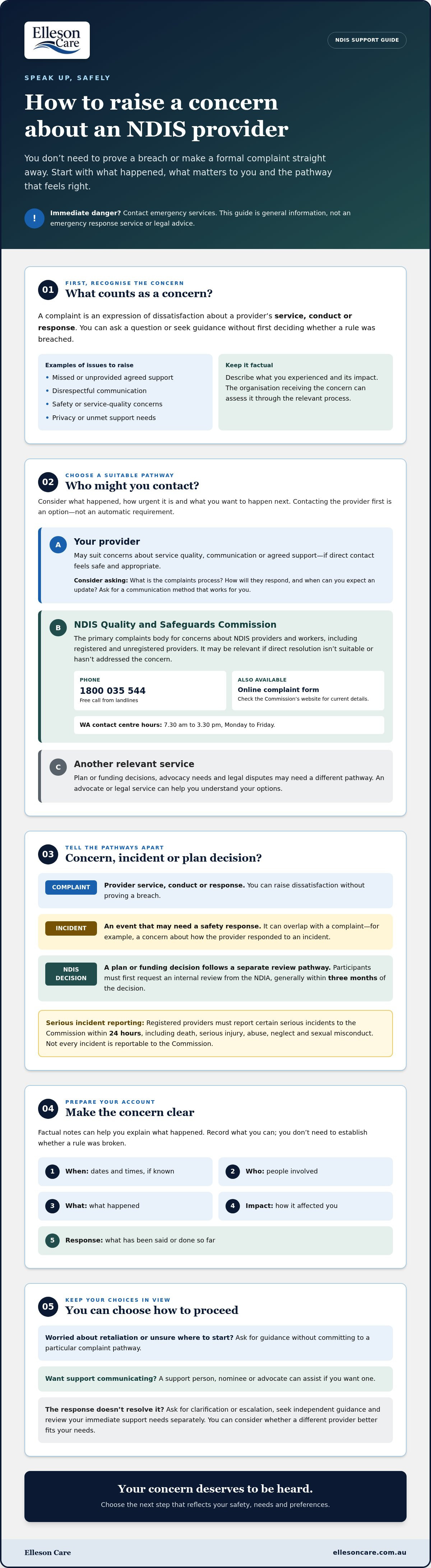
How to prepare and report a problem with an NDIS provider
A clear, factual account can help the provider or relevant body understand what happened and what you need now. You don’t need to have every document or remember every detail before making contact. When reporting problems with an NDIS provider, use these steps as a guide and adapt them to your communication needs.
- Identify the concern. Write down what you want the recipient to understand or address.
- Record the details. Note dates, locations, people involved, what happened and how it affected you.
- Choose a pathway. Decide whether to contact the provider, the NDIS Quality and Safeguards Commission or another relevant service.
- Make contact. Explain the concern and the outcome you’re seeking, such as an explanation, safer support or a change to a process.
- Keep records. Save relevant correspondence and note contact dates, reference numbers and agreed follow-up.
What information should you record before making a complaint?
Make notes in your own words, while the details are fresh if possible. Separate what you experienced directly from anything someone else told you. Include relevant messages or documents, but share only what helps explain the concern. Health and personal information can be sensitive, so avoid sending unrelated records and ask how submitted information may be handled.
If you don’t know an exact date, say so rather than guessing. A short timeline can show what happened and when, including any response you received. You can also note what would help resolve the issue, while recognising that the receiving body will assess what action is appropriate.
What should you expect after making contact?
Ask how your concern will be acknowledged, assessed and communicated, and whether you’ll receive a reference number or need to provide anything further. Processes and timeframes can vary, so check the current guidance of the provider or organisation you contact rather than relying on an assumed deadline or outcome.
Keep copies of what you send and make a brief record of calls or meetings, including the date, who you spoke with and any agreed next step. If communication is difficult, ask about accessible formats, an interpreter or other adjustments. You can also ask a support person to help organise the information or communicate on your behalf, if you choose.
If you’re considering a different provider in Perth, you can discuss your NDIS support needs with Elleson Care. This is a separate step from making or following up a complaint.
After reporting: follow up, consider options and choose support that fits
Making a complaint is one step. You can still ask what happens next and decide what support you need in the meantime. If a response is unclear or doesn’t address your concern, ask the provider or the NDIS Quality and Safeguards Commission to explain its reasoning, whether there’s a review or escalation option, and what further information could be considered. The available next steps depend on who handled the concern and the process they used.
Keep copies of replies and note new developments, including dates and changes to your support. If you’re uncertain about the response, check current official guidance or speak with an independent disability advocate. Complaint processes can take time, and no particular outcome can be assumed.
What can you do if the response does not resolve the concern?
Be specific about what remains unresolved. For example, ask whether a safety issue has been addressed, how a decision was reached or who can review the response. If the concern involves the Commission, use its current guidance to understand what follow-up options apply. An advocate may help you prepare questions or consider your choices, while legal advice may be appropriate for a legal dispute.
Consider your immediate support needs separately from the complaint. If a regular arrangement is no longer suitable, work out what support you need now and what options are practical. You don’t have to wait for the complaint outcome before making a plan.
How can you assess another NDIS support provider?
Changing providers is one possible choice, not a required result of making a complaint. Before deciding, check that a prospective provider’s service scope aligns with your goals and support needs. Consider how a transition could affect continuity of support and your plan arrangements.
Ask how the provider will respect your communication preferences and involve you in decisions. You could also ask how to raise a concern, who will respond and how you’ll be kept informed. The way a provider listens to your questions can help you decide whether its approach feels suitable.
If you’re considering another option in Perth, explore Elleson Care’s NDIS support services and consider whether they align with your needs. Choosing what happens next remains your decision.
Take your next step with confidence
Speaking up doesn’t require you to prove that a rule was broken. Start by recording what happened, then choose a pathway that fits the concern and feels appropriate for your circumstances. If you’re unsure, ask for guidance before deciding how to proceed.
Keep your immediate support needs in view while a complaint is being considered. If the response doesn’t resolve your concern, ask about clarification or escalation to understand your options. Changing providers is a personal choice, not an automatic outcome of reporting problems with an NDIS provider.
If you’re considering a different support arrangement in Perth, Elleson Care is a West Australian owned and operated provider. Its registered-nurse-led team brings over 22 years of experience and provides person-centred NDIS support alongside clinical and in-home aged care services. Explore Elleson Care’s NDIS support services to consider whether they may suit your needs.
You deserve support that respects your dignity, communication preferences and choices. Take the next step at a pace that feels right for you.
Frequently Asked Questions
Can I complain to the NDIS Commission without contacting my provider first?
Yes. Contacting your provider first may help resolve some concerns, but don’t assume it’s required or suitable in every situation. The NDIS Quality and Safeguards Commission handles concerns about NDIS providers and workers. Check its current complaint guidance for your circumstances, particularly if direct contact feels unsafe, inappropriate or unlikely to address the issue. You can ask the Commission about the process before deciding what information to provide.
What should I do if an NDIS provider is not following my plan?
Record what support was agreed, what happened and how it affected you. You could ask the provider to explain the difference and state what you need to happen next. If the concern is about provider conduct or service quality and remains unresolved, check the NDIS Commission’s current complaint guidance. If you’re concerned about a funding or plan decision itself, a separate NDIA review pathway may apply. This distinction can help guide your next step when reporting problems with an NDIS provider.
Can I make an anonymous complaint about an NDIS provider?
Don’t assume a complaint can be handled anonymously or that anonymity will allow the issue to be fully assessed. Check the NDIS Commission’s current instructions about anonymous complaints and the details it needs. Before sharing sensitive information, ask how it may be used, whether the provider may be contacted and what choices are available. You can also ask what information is essential to explain the concern and what may happen after you make contact.
What happens after I report an NDIS provider?
The next steps depend on the issue, the information you provide and the organisation receiving your complaint. You may be asked for further details or advised about possible follow-up options. Keep a record of when you made contact and any reference number you receive, and ask how updates will be provided. Don’t rely on a particular timeframe or outcome unless it’s confirmed in current official guidance or by the organisation handling your concern.
Is a complaint the same as reporting an NDIS incident?
No, they’re not necessarily the same. A complaint usually expresses dissatisfaction about a provider, worker or support, while an incident may involve an event affecting a participant’s safety or wellbeing. Provider reporting obligations and a participant’s complaint options can differ, and one event may raise both issues. If someone is in immediate danger, seek urgent assistance first. Check current NDIS Commission guidance to identify the appropriate route for your circumstances.
Can someone help me report a problem with my NDIS provider?
Yes. If the participant wants support, a trusted person, nominee or independent disability advocate may help them understand options or communicate their concern. Choose someone the participant trusts and wants involved. A support coordinator may assist with navigating services, but isn’t automatically an independent advocate. In Perth or elsewhere in Western Australia, check an advocacy organisation’s current role, eligibility and availability before relying on it for assistance.
What if I am worried my NDIS provider will treat me differently after I complain?
That concern is understandable, especially if you rely on ongoing support. You can ask the provider or the NDIS Commission how information may be handled and what options could suit your circumstances. Don’t assume confidentiality or protection from repercussions is guaranteed. If contacting the provider directly feels unsafe, consider seeking independent guidance first. Keep immediate support and safety needs in view while you decide whether and how to raise the concern.


