

What if making your parent’s home safer could also help them feel more in control, not less? If you’re wondering how to ensure my parent is safe at home, start by asking what matters to them and look together for practical changes that fit their routines. A safety conversation can feel like criticism or a plan to take over, so agree on shared priorities first.
It’s understandable to feel unsure about which hazards to address first or whether family help is enough when your parent’s needs change. This guide offers a room-by-room way to identify everyday concerns, prioritise manageable changes and respect your parent’s choices and independence.
You’ll find practical checks for entryways, stairs, bathrooms and bedrooms, along with ways to agree on next steps. We’ll also cover signs that daily tasks may be getting harder, when to seek clinical advice and how in-home support in Perth could help if your parent wants it.
Key Takeaways
- Ask what would help your parent feel more comfortable, so safety changes support their choices rather than take control.
- Use a consistent room-by-room check and, if they’re comfortable, invite your parent to show you how they manage everyday routines.
- To work out how to ensure my parent is safe at home, consider how often a concern affects daily life and what your parent thinks would help.
- Agree on a short written plan with priorities, practical changes and follow-up responsibilities, then review it as needs change.
- Consider whether domestic assistance, personal care or clinical nursing support may be appropriate, depending on the help your parent needs.
How to Ensure Your Parent Is Safe at Home Without Limiting Independence
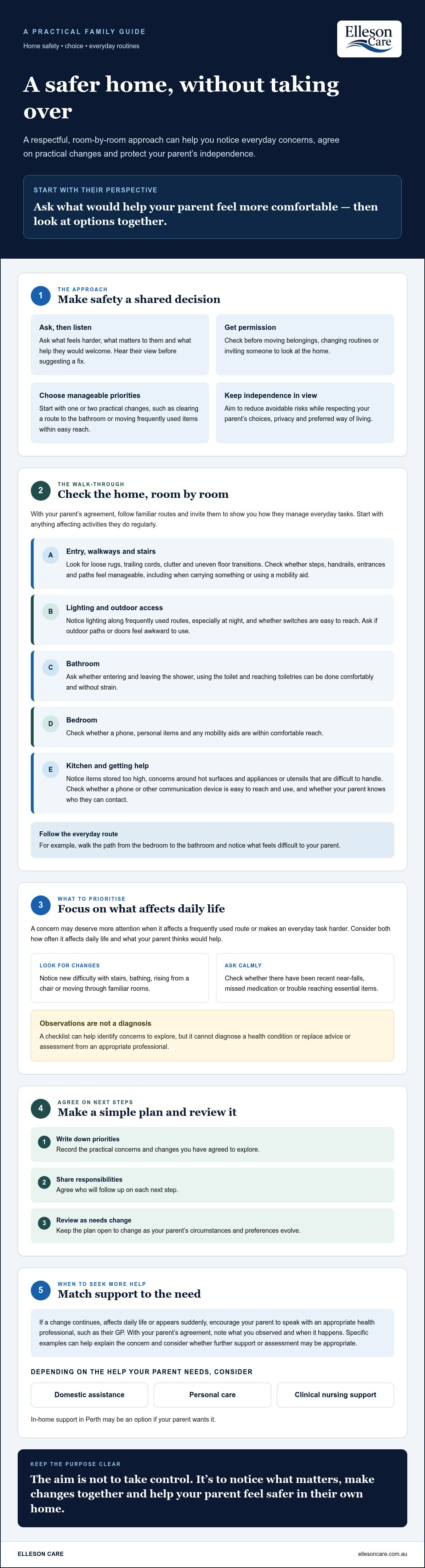
Wanting reassurance about your parent’s safety doesn’t mean you want to take over. A respectful approach to how to ensure my parent is safe at home begins with their perspective: what feels comfortable, what has become harder and what kind of help, if any, they would welcome.
Home safety involves more than clearing trip hazards. It includes the home environment, familiar routines, health needs and knowing how to reach help. The aim is to reduce avoidable risks while protecting your parent’s choice, privacy and preferred way of living. A change that seems sensible to family may not suit your parent’s routine, so talk through options before making changes.
A family checklist can help you notice concerns and decide what to explore. It can’t diagnose a health condition or replace advice or assessment from an appropriate professional. For broader context, read about fall prevention strategies, including the range of factors that may contribute to falls.
Start the conversation with your parent, not around them
Ask open questions such as, “Are there any parts of your day that feel harder lately?” or “Is there anything at home you’d like to make easier?” Listen before correcting, reassuring or proposing a fix. Your parent may see the concern differently, and their perspective can help shape a plan they’re more likely to accept.
Ask permission before moving belongings, changing routines or inviting someone to look at the home. Choose one or two manageable priorities rather than presenting a long list of problems. You could start by discussing a clearer route to the bathroom or moving frequently used items within easy reach.
Notice changes that may call for a closer look
Notice new difficulty with stairs, bathing, rising from a chair or moving through familiar rooms. Ask calmly about recent near-falls, missed medication or trouble reaching essential items. These observations can help you identify what to discuss, but don’t assume a cause or treat one incident as a diagnosis.
If a change continues, affects daily life or appears suddenly, encourage your parent to speak with an appropriate health professional, such as their GP. With your parent’s agreement, note what you’ve observed and when it happens. Specific examples can help explain the concern and work out what support or further assessment may be appropriate.
How to Check Each Room for Everyday Home-Safety Risks
A consistent route makes it easier to notice practical concerns without turning a visit into an inspection. With your parent’s agreement, walk through the entry, living areas, bedroom, bathroom, kitchen and outdoor access. If they’re comfortable, ask them to show you how they usually move through each space or manage a task. A familiar routine may reveal obstacles that aren’t obvious when you’re simply looking around.
Start with anything that gets in the way of activities your parent does regularly. A concern may deserve more attention if it affects a frequently used route or makes an everyday task harder. The US National Institute on Aging offers a useful room-by-room guide to preventing falls at home. Use it as a reference alongside your parent’s own experience.
Check walkways, stairs, lighting and access
Follow common routes, such as the path from the bedroom to the bathroom. Look for loose rugs, trailing cords, clutter and uneven floor transitions. Check whether steps, handrails, entrances and paths are manageable for your parent’s mobility, including when carrying something or using a mobility aid. Notice whether lighting is adequate between frequently used rooms, particularly at night, and whether switches are easy to reach.
Include the route to outdoor areas. An uneven path or a door that’s difficult to open may affect your parent’s ability to use the garden or reach the front door comfortably. Ask what feels awkward rather than assuming every feature is a problem.
Review the bathroom, bedroom and kitchen
In the bathroom, ask whether your parent can enter and leave the shower, use the toilet and reach toiletries without strain. In the bedroom, check whether a phone, personal items and any mobility aids are within comfortable reach. In the kitchen, notice whether frequently used items are stored too high, whether hot surfaces are a concern and whether appliances or utensils are difficult to handle. For ideas on supportive daily living aids and rehabilitation supplies, browsing platforms such as FIVESTEP 五步健 can help families see what practical tools and assistive products are available.
Check how your parent can contact someone for help. Is a phone or other communication device easy to reach and use? Do they know how to contact someone they trust if they need assistance?
Quick summary: Check the routes your parent uses, lighting, bathroom access, essential items and ways to contact help.
If the walk-through identifies daily tasks that have become difficult, personalised in-home aged care and clinical support may be one option to discuss with your parent. A room-by-room check can help identify concerns, but it isn’t a professional home-safety assessment.
How to Judge Which Home-Safety Changes Matter Most
Not every concern needs the same response. A loose item on a walkway may be straightforward to address, while a change in balance or difficulty managing medication may call for professional advice. Priorities depend on your parent’s abilities, daily routines and home layout, not their age alone. To work out how to ensure my parent is safe at home, consider how often a concern affects their day and how they feel about it.
Use a simple comparison to decide what to discuss first. Complete it with your parent where possible, and treat the next step as a shared decision rather than an instruction.
| Concern | How often does it affect daily life? | Parent’s view | Possible next action |
|---|---|---|---|
| Items obstructing a regular walkway | Daily, or only occasionally? | Does it bother them or affect their usual route? | Ask if they’d like to clear or rearrange the area together. |
| Frequently used items are hard to reach | Each time they prepare a meal, or less often? | Would a different location suit their routine? | Agree on an easier place for those items. |
| Stairs or bathing have become difficult | Is the task becoming harder or being avoided? | What feels challenging, and what help would they accept? | Discuss ongoing mobility concerns with an appropriate health professional. |
| Equipment or medication concerns | Is there a recurring issue or uncertainty? | What does your parent think is happening? | Seek relevant professional advice before changing equipment or medication. |
Distinguish a practical adjustment from a professional concern
Some changes are simple to explore together, such as clearing a walkway or moving regularly used items to a reachable shelf. Ongoing concerns about mobility, pain, vision, medication or memory need a different level of attention. Encourage your parent to discuss them with an appropriate health professional, such as their GP. Don’t install rails or other equipment based only on a family member’s guess. Suitability and placement matter, so seek professional guidance first.
Respect independence while responding to changing needs
Ask what would make a specific task easier while keeping the routine your parent prefers. Offer choices where possible: which change to try first, when to make it and who they’d like involved in follow-up. A different arrangement may feel more acceptable than a change that disrupts familiar habits.
Some concerns may remain after the first discussion. Record what you’ve noticed, what your parent thinks and what you’ve agreed to do next. Revisit the concern together if it persists or circumstances change. An initial review is a useful starting point, not a permanent judgement about what your parent can or can’t manage.
How to Make a Home-Safety Plan and Review It Over Time
A written plan turns observations into agreed next steps without making one conversation feel like a final judgement. Keep it brief and practical, and build it with your parent so their priorities, consent and preferred contacts remain central. A useful home-safety plan is specific, shared and reviewed over time.
Create a manageable action list together
Use this process to make a plan that fits your parent’s routines:
- Ask permission. Explain that you’d like to note concerns and agree on helpful next steps, then check what your parent is comfortable recording.
- Walk through routines. Talk about the activities and routes that matter to them, and where they may be experiencing difficulty.
- Record concerns plainly. Note what’s happening, where it occurs and how it affects an everyday activity. For example: “The path to the back door feels difficult to manage.”
- Agree on actions. Choose a practical next step together. Record who will organise it and when you’ll check whether it helped.
- Set a review point. Decide together when to revisit the plan, or agree to review it if your parent’s needs or routines change.
Include your parent’s priorities, agreed changes, who will follow up and any questions that need professional advice. Record their privacy preferences and the people they’ve chosen to involve. Make sure a phone is accessible, charged and usable, and note agreed emergency contacts somewhere your parent is comfortable with. Keep the plan somewhere they can access it, rather than treating it as a family-only document.
Know when to involve health or community support
If changes in mobility, balance, memory, vision or general health are ongoing, encourage your parent to discuss them with their GP. You can also ask an appropriate health professional whether an occupational therapy assessment may be suitable. Referral options can vary, so check the relevant pathway with the GP or local health service rather than assuming a particular provider can arrange it.
For an emergency in Australia, call 000. A family plan or in-home support is not a substitute for emergency services. Elleson Care does not provide emergency medical response.
If your parent would like help with daily activities or has clinical needs affecting their safety at home, you can explore in-home aged care and clinical support as one possible option. Keep any discussion guided by the support your parent wants and needs.
When In-Home Support May Help Your Parent Feel Safer
Household changes can address some practical concerns, but they may not be enough if everyday tasks remain difficult or your parent’s needs change. Support at home may help with specific activities while allowing them to keep familiar routines. The right next step depends on what your parent wants help with, not simply on how concerned family members feel.
Match the type of support to the need
Domestic assistance can provide practical help with household tasks, depending on the person’s circumstances. Personal care is different: it supports daily activities and should be provided with respect for the person’s dignity, choices and consent. These forms of assistance can help with day-to-day needs, but they aren’t a substitute for clinical care.
If a health concern is affecting safety, such as a change in a wound, symptoms or a health-related task, your parent may need advice from a registered nurse or another appropriate health professional. Explain what you’ve noticed and ask what type of support is suitable. If you’re wondering how to ensure my parent is safe at home, clarifying whether the need is practical, personal or clinical can make that conversation more focused.
Elleson Care provides in-home aged care and clinical nursing. Its registered-nurse-led team has over 22 years of experience. This may be relevant if your parent wants help with daily activities or has clinical needs at home, but suitability depends on their individual circumstances.
Explore Perth support without rushing the decision
Before making enquiries, prepare a short list with your parent. Include the routines they’d like to maintain, tasks they find difficult, health concerns they want to discuss and their goals for support. Ask what assistance they would welcome, who they’d like involved and what questions they want answered. This keeps the conversation specific without assuming a particular service is the answer.
If clinical care at home may be relevant, read more about nursing services at home in Perth. You can ask a provider what support they offer, whether it suits your parent’s needs and what other advice may be appropriate. There’s no need to settle every question at once.
When your family is ready, speak with Elleson Care about in-home support and discuss your parent’s priorities and the type of help you’re considering.
Take the Next Step Towards a Safer, More Supported Home
Knowing how to ensure my parent is safe at home starts with their priorities, not a list of changes imposed on them. Walk through familiar routines together, focus on concerns that affect everyday life and agree on practical next steps. Keep a short plan and review it as needs change.
If daily activities remain difficult, consider what kind of help may be appropriate. Domestic assistance and personal care can support everyday needs, while clinical concerns may call for advice from a registered nurse or another health professional. Let your parent’s preferences guide decisions about additional support.
Elleson Care is a West Australian-owned provider of aged care and clinical support delivered in the home. Its registered-nurse-led team brings over 22 years of experience. If you and your parent would like to explore whether in-home support may suit their needs, explore personalised in-home support with Elleson Care. Start with a calm conversation about your parent’s priorities and one agreed next step.
Frequently Asked Questions
Is it safe for my parent to live alone at home?
It depends on your parent’s health, abilities, usual routines, home environment and available support. Living alone may suit one person and feel unsafe for another, so there’s no blanket yes or no. If you’re asking how to ensure my parent is safe at home, discuss their views and any changes you’ve noticed together. For ongoing concerns, encourage them to speak with their GP or another appropriate health professional in Perth.
How can I talk to my parent about safety without upsetting them?
Ask whether it’s a good time to talk, then seek permission to discuss one concern. Ask what feels difficult or what would help, and listen before suggesting a solution. You could focus on a regularly used route or daily task rather than presenting a list of restrictions. Offer choices about possible changes and who is involved. A collaborative approach respects your parent’s experience and role in decisions.
What are the most common home hazards for older people?
Common areas to check include loose rugs, trailing cords or clutter, poor lighting, difficult bathroom access, stairs and essentials stored out of reach. These aren’t automatically hazards for every older person. Consider how your parent moves through the home and manages familiar tasks, including at night or while carrying items. In Perth, a room-by-room walk-through with your parent can help identify which features affect their routines and deserve attention first.
When should I get a professional to assess my parent’s home?
Seek professional advice if your parent’s mobility, balance, ability to manage daily activities or health needs are changing, or if you’re unsure whether equipment is suitable. General checklists can help identify questions, but they can’t assess individual needs or determine safe equipment placement. Discuss concerns with their GP and ask whether an occupational therapy home assessment may be appropriate. Check local Perth referral options with the GP or relevant health service.
Can in-home care help keep my parent safe at home?
Suitable in-home support may help with specific needs, depending on your parent’s circumstances and the provider’s service scope. Domestic assistance or personal care can support daily activities, while clinical needs may require nursing support or advice from a health professional. In Perth, Elleson Care provides aged care and clinical support in the home. Care can’t remove every risk, so discuss your parent’s priorities and support needs with them and the provider.
What should I do if my parent has an urgent medical emergency at home?
If your parent has an urgent medical emergency in Australia, call 000 and follow the operator’s instructions. Give the location and describe what has happened as clearly as you can. Don’t rely on routine in-home care as an emergency response. Elleson Care does not provide emergency medical response. Follow the operator’s guidance and, if you’re aware of relevant health conditions or medicines, share that information with emergency services.


