

What if the true measure of your loved one's care isn't found in a completed checklist, but in the way they smile when their support worker arrives? For many Perth families, the transition to the Support at Home programme feels like a series of administrative hurdles rather than a path to better living. You likely feel that sense of unease when care becomes a routine of "ticking boxes" instead of a meaningful connection. It's common to worry that NDIS or aged care funding might be underutilised if you can't see tangible improvements in your parent's or partner's daily life.
We understand that measuring the success of in-home support requires a delicate balance of clinical data and personal well-being. This guide provides a clear framework to help you evaluate provider performance using the mandatory 2026 National Quality Indicator standards and specific clinical markers. By the end of this article, you'll have the tools to communicate effectively with providers about quality of life outcomes. We'll examine how nurse-led oversight serves as a vital safety net, ensuring that health needs are managed with professional precision while prioritising the comfort and dignity of those you love most.
Key Takeaways
- Understand how modern home care success has evolved from simple task completion to a holistic focus on personal autonomy and dignity.
- Learn how the 2026 National Quality Indicator (QI) Program provides a standardised framework for measuring the success of in-home support through mandatory reporting.
- Identify the "invisible" clinical markers, such as nutrition and skin integrity, that require professional nurse-led oversight to maintain health stability.
- Utilise a practical monthly scorecard designed for West Australian families to track energy levels, mobility, and emotional well-being.
- Discover why a nurse-led model offers a superior level of clinical governance and safety compared to standard support services.
What Does 'Success' Look Like in In-Home Support?
Measuring the success of in-home support involves more than checking if a support worker arrived on time. While punctuality is a baseline requirement, true success is found in the tangible impact on a person's life. It's a sophisticated blend of clinical safety, physical health, and the achievement of personal milestones. For many Perth families, success is defined by whether their loved one feels empowered to live with dignity in their own home rather than just receiving a service. This shift toward person-centred care means we now look at outcomes through the eyes of the participant, ensuring that every hour of support contributes to their specific life goals.
Distinguishing between service delivery and service impact is vital for any family navigating the in-home care system. Delivery is simply the act of showing up; impact is the reduction in a loved one's anxiety, the maintenance of their skin integrity, or the joy they find in a community outing. Families play a central role in this evaluation by defining what a "good day" looks like, whether that's a morning spent in the garden or a stable day without respiratory distress. When measuring the success of in-home support, these personal preferences must carry as much weight as clinical observations.
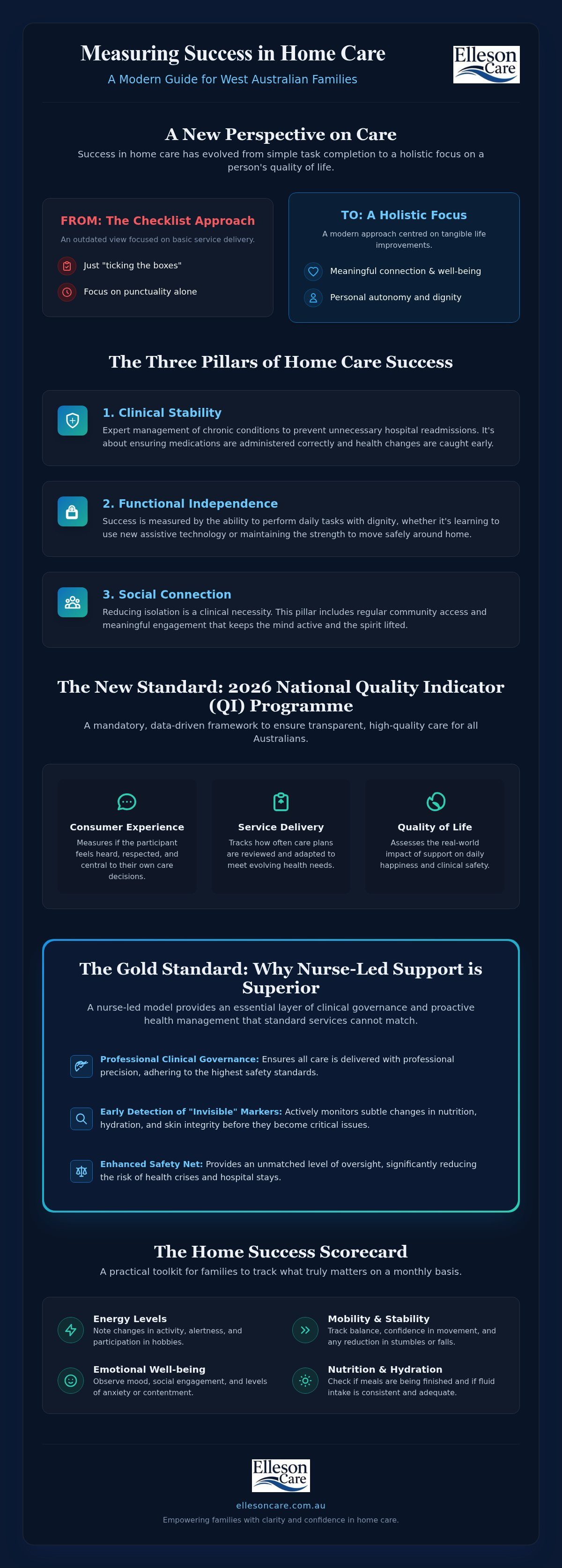
The Three Pillars of Home Care Success
- Clinical Stability: This involves the expert management of chronic conditions to prevent unnecessary hospital readmissions. It's about ensuring medications are administered correctly and health changes are caught early.
- Functional Independence: Success here is measured by the ability to perform daily tasks with dignity. It might mean a client learning to use new assistive technology or maintaining the strength to move safely around their home.
- Social Connection: Reducing isolation is a clinical necessity, not just a lifestyle choice. Success includes regular community access and meaningful engagement that keeps the mind active and the spirit lifted.
Why Measuring Success is Crucial in 2026
With the continued transition to the Support at Home programme, ensuring value for money within NDIS and Aged Care budgets is more important than ever. Families need to know that every dollar spent is buying an improvement in quality of life. Regular measurement allows for the identification of early warning signs, such as subtle changes in nutrition or hydration, before they escalate into health crises. By using clear metrics, you're empowered to have informed, professional conversations with your Perth care agency, ensuring the support plan remains responsive to your loved one's evolving needs.
The 2026 National Quality Indicator (QI) Program for Support at Home
Starting from 1 July 2026, the Australian Government has implemented mandatory reporting requirements for all providers under the Support at Home programme. This initiative, known as the National Quality Indicator (QI) Program, marks a significant shift in how the aged care sector operates. Instead of providers simply reporting on their own internal processes, they must now collect and submit data on specific consumer outcomes every quarter. For families in Perth, this means that measuring the success of in-home support is no longer a matter of guesswork or anecdotal evidence. It's now backed by a rigorous, data-driven framework designed to ensure every participant receives a high standard of care.
In Western Australia, where residential care occupancy rates often exceed 95%, the ability to remain at home safely is paramount. Whether you're in Subiaco or Joondalup, these new standards provide a transparent way to hold providers accountable. The programme focuses on three primary domains: consumer experience, service delivery, and quality of life. These indicators aren't just administrative hurdles; they're designed to reflect the real-world impact of support on your loved one's daily happiness and clinical safety.
Key Indicators Every Family Should Know
Understanding these indicators helps you advocate for better care. The Consumer Experience domain asks a fundamental question: does the participant feel heard and respected? This goes beyond polite conversation; it's about whether their choices are reflected in their daily routine. Care Planning indicators measure how often goals are reviewed. As health needs evolve, the support plan must adapt accordingly. Finally, Service Delivery focuses on consistency and punctuality. If a provider is frequently late or sends different workers every week, it's a clear sign that the service isn't meeting national expectations.
How to Access Your Provider's Quality Data
You can use the My Aged Care 'Find a Provider' tool to compare different organisations across Western Australia. This platform uses a Star Rating system that incorporates the latest QI data, giving you a quick visual guide to performance. However, don't stop there. We recommend asking your Perth care agency for their most recent internal quality audit results. A transparent provider will be happy to share how they're performing against these benchmarks. By staying informed, you can ensure that measuring the success of in-home support remains a collaborative process between your family and your care team.
Clinical Markers: Measuring Health Outcomes at Home
When measuring the success of in-home support, clinical markers provide the most objective evidence of a provider's effectiveness. While social engagement is vital, the safety net of nurse-led oversight ensures that underlying health issues don't compromise a loved one's independence. Registered nurses bring a level of clinical accountability that goes beyond basic assistance. They monitor invisible markers like subtle changes in nutrition, hydration, and skin integrity. These factors are often the first indicators of health decline, yet they can be easily missed without professional training. By tracking these metrics, families can feel confident that their loved one's physical health is being proactively managed.
The relationship between clinical nursing and maintained independence is particularly strong for Perth seniors. Success isn't just about surviving; it's about thriving in a familiar environment. When a support team includes clinical expertise, medication reviews and wound management become routine rather than emergency responses. This professional oversight reduces the anxiety families often feel regarding whether their parent's or partner's complex needs are truly being met. It transforms care from a reactive service into a stable, long-term health strategy.
Preventative Care as a Metric for Success
Effective clinical care is often defined by what doesn't happen. Success is measured by the absence of emergency hospital visits due to preventable issues like urinary tract infections or falls. High-quality nursing services incorporate regular check-ins to identify early signs of infection or pressure injuries. This proactive approach is fundamental to the quality of home- and community-based services, as it directly correlates with longer periods of stable living. For families in Western Australia, fall prevention strategies and home safety assessments are essential metrics that ensure the home remains a place of safety rather than risk.
Managing Complex Needs in Western Australia
For families managing complex clinical requirements, success metrics are highly specific and technical. In Perth, where specialised care can be difficult to coordinate, having a provider capable of managing ventilator support or oxygen therapy at home is a significant advantage. Success in these scenarios is measured by the stability of the participant's respiratory function and the absence of technical complications. Similarly, professional management of catheter and bowel care significantly improves daily comfort and personal dignity. In palliative care settings, success is redefined as the prioritisation of comfort and the ability for families to spend meaningful time together without the stress of managing complex clinical tasks themselves.
The Home Success Scorecard: A Toolkit for Perth Families
While government standards provide a baseline, measuring the success of in-home support within your own household requires a more personal touch. We recommend that families conduct a brief monthly "Check-In" to move beyond the feeling of simply ticking boxes. By using a simple 1 to 5 scale to track happiness, energy, and mobility, you can transform vague feelings into clear data. This scorecard approach helps identify red flags, such as a sudden decline in social interest or physical stamina, before they become significant issues. It ensures that your NDIS or Aged Care funding is actually improving your loved one's daily experience.
Step 1: Reviewing the Care Plan Goals
Success is only measurable if your goals are specific and still relevant. A care plan shouldn't be a static document; it needs to evolve as your loved one's needs change. If you haven't had a formal Plan Review in the last 6 months, it's time to request one. For example, a successful outcome for a specific NDIS goal might be defined as: "The participant will independently prepare a light morning meal three times per week using assistive kitchen tools by the end of the quarter." Clear definitions like this make measuring the success of in-home support much simpler for both the family and the provider.
Step 2: Monitoring the 'Soft' Indicators
Clinical markers are essential, but the "soft" outcomes often define the quality of life. Observe whether your loved one looks forward to the support worker's visit or if they seem more engaged in community activities than they were three months ago. Another vital metric is your own well-being. If the primary family carer feels less stressed and more confident in the care being provided, it's a strong indicator that the support plan is working effectively. These emotional indicators are just as valid as clinical data when evaluating a provider's impact.
Step 3: Communicating with Your Provider
Raising concerns with a care team can feel daunting, but professional providers value constructive feedback. If success metrics aren't being met, it's important to address this early. You might find great value in working with a dedicated support coordinator who can act as an advocate and manage these complex outcomes for you. If a provider consistently fails to meet the agreed-upon standards of care or happiness, you have the right to consider other options. To discuss how a personalised, nurse-led approach can improve your family's results, you can contact our Perth team for a professional consultation.
Why Nurse-Led Support is the Gold Standard for Success
While many agencies provide essential domestic assistance, the gold standard for measuring the success of in-home support is found in a nurse-led model. The distinction between a general carer and a nurse-led support team is significant. A standard carer performs vital tasks, yet a nurse-led team operates under a framework of clinical accountability and professional governance. This model ensures that every aspect of care is overseen by a Registered Nurse who understands the complexities of chronic disease management and acute health changes. It provides a level of safety that a social-only model simply cannot match.
As a West Australian owned and operated provider, we understand the specific nuances of the Perth health system. We know the local specialists, the referral pathways, and the challenges families face when trying to coordinate care across multiple services. This local expertise allows us to provide a more integrated experience for our clients. When success is measured by the stability of a loved one's health and their ability to remain in their own community, having a partner who is deeply rooted in Western Australia makes a tangible difference.
A Holistic Family Approach to Care
True success isn't just about the participant; it's about the overall wellbeing of the entire household. Our family-centred approach moves beyond a list of daily tasks to focus on the holistic health of the family unit. We recognise that culturally sensitive care is essential for the diverse communities across Perth, ensuring that support is respectful and inclusive of personal values. With more than 22 years of clinical experience, our leadership team provides the peace of mind that comes from knowing your loved one is in expert hands. We focus on the quiet, steady confidence that stems from reliable, ethical care standards.
Partnering with Elleson Care for Measurable Outcomes
Our commitment to transparent reporting ensures that families are never left wondering about the impact of their support plan. We conduct regular goal reviews and maintain active coordination with GPs and specialists to ensure a unified care strategy. This collaborative approach means that everyone involved in your loved one's health is moving in the same direction. Measuring the success of in-home support becomes a shared journey of continuous improvement. If you're ready to experience the stability of nurse-led care, the first step is booking a clinical assessment with our experienced team to discuss your specific needs.
Empowering Your Family with Purposeful Care
Measuring the success of in-home support is a continuous process that evolves alongside your loved one's needs. By combining the 2026 National Quality Indicator standards with your own personal scorecard, you can ensure that care is both clinically sound and emotionally fulfilling. We've explored how clinical markers like skin integrity and nutrition are the foundation of safety, while the "soft" indicators of happiness and social connection provide the true measure of a life well-lived.
As a West Australian owned and operated provider led by Registered Nurses with 22 years of experience, we specialise in complex NDIS and aged care support. We're here to help you move beyond simple task-based care towards a model of clinical accountability and personal dignity. Book a clinical consultation with our Perth nursing team to measure your current care success and gain the peace of mind your family deserves. You don't have to navigate these complex changes alone; with the right partner, you can turn the challenges of home care into a stable and joyful future.
Frequently Asked Questions
What are the new 2026 quality indicators for in-home aged care?
Starting 1 July 2026, providers under the Support at Home programme must report on mandatory Quality Indicators (QI). These metrics primarily focus on consumer experience and quality of life. Providers collect data quarterly, ensuring that services across Western Australia meet national benchmarks for safety and participant satisfaction. This data-driven approach simplifies the process of measuring the success of in-home support by providing clear, comparable evidence of how well a provider is performing.
How do I know if my NDIS provider is meeting my goals?
You can determine if goals are being met by reviewing the progress reports provided during your NDIS plan review. A successful provider will document specific instances where you've gained independence or achieved a milestone. If your provider isn't regularly discussing these outcomes with you, it's a sign they may not be focusing on your personal aspirations. Clear communication and regular goal tracking are essential for measuring the success of in-home support within an NDIS framework.
Can I change my home care provider if I'm not happy with the results?
Yes, you have the right to change providers at any time if your current service isn't meeting your expectations. For aged care, you'll need to contact My Aged Care to re-activate your referral code before notifying your current provider. In the NDIS, you can simply end your service agreement according to the notice period specified. Choosing a nurse-led, Perth-based provider like Elleson Care can offer the clinical stability and accountability needed to improve your results.
What are the signs of poor quality in-home support?
Common red flags include frequent staff turnover, inconsistent arrival times, and a lack of transparency regarding clinical care. If you notice your loved one's health is declining without proactive intervention, or if communication with the agency feels difficult, the quality of support may be insufficient. Poorly managed documentation and a failure to respect personal dignity are also critical signs that the provider is not meeting the high standards expected by West Australian families.
How often should a home care plan be reviewed in Western Australia?
A home care plan should be formally reviewed at least once every 12 months, though we recommend a review every six months for those with complex needs. If a significant health event occurs or if your loved one's mobility changes, an immediate review is necessary. Regular check-ins ensure that the support remains relevant and effective. At Elleson Care, our registered nurses provide ongoing oversight to ensure every care plan stays aligned with current health requirements.
Does the Support at Home program cover clinical nursing services?
Yes, the Support at Home programme specifically includes funding for clinical nursing services to help seniors manage complex health conditions at home. This covers essential tasks such as wound management, medication administration, and chronic disease monitoring. Since October 2026, funding has increased to support the higher award wages for registered nurses. This ensures that Perth families can access high-tier clinical expertise without having to transition into residential care facilities prematurely.
How do I measure the success of respite care for my family?
Success in respite care is measured by the well-being of both the participant and the primary carer. For the participant, success looks like a safe, engaging experience that maintains their routine and dignity. For the family carer, it's measured by a genuine reduction in stress and the ability to return to their role feeling refreshed. If the transition back to daily care is smooth and the participant enjoyed their time, the respite service has been successful.
Who monitors the quality of NDIS services in Perth?
The NDIS Quality and Safeguards Commission is the federal body responsible for monitoring and regulating NDIS providers across Australia, including Western Australia. They handle complaints, manage provider registrations, and ensure that all services comply with the NDIS Code of Conduct. If you have concerns about the safety or quality of your support in Perth, you can contact the Commission directly. They work to protect participants' rights and maintain high standards across the disability sector.


