

If your loved one requires complex medical care, the four walls of a hospital shouldn't be the only place where they feel truly safe. For many Perth families, the transition to home care is often clouded by the fear of medical complications and the exhausting search for staff who possess genuine clinical expertise. You might feel overwhelmed by the technical requirements of tracheostomy care or ventilator support, wondering how to maintain a high standard of safety without losing the comfort of a family environment.
We understand that managing ndis high intensity support perth isn't just about ticking boxes; it's about protecting the dignity and health of someone you love. This guide offers expert clinical guidance to help you navigate the 2026 NDIS practice standards and funding reforms with absolute confidence. We'll examine how Registered Nurse oversight creates a bridge between hospital-grade safety and home-based comfort. You'll gain a clear understanding of the latest competency requirements and how to secure a provider that prioritises professional clinical integrity and long-term well-being.
Key Takeaways
- Understand the critical difference between standard personal care and High Intensity Daily Personal Activities (HIDPA) to ensure clinical safety at home.
- Learn how to navigate the three distinct levels of ndis high intensity support perth to secure the specific skills and funding your situation requires.
- Discover why Registered Nurse oversight is the gold standard for managing complex risks like ventilator support and wound management safely.
- Find out how to coordinate a seamless transition from major Perth hospitals back to a home environment with professional clinical leadership.
- Explore the benefits of a holistic, family-centred care model that prioritises the dignity and comfort of both the participant and their loved ones.
What is NDIS High Intensity Support and HIDPA?
The framework of the National Disability Insurance Scheme (NDIS) provides a vital safety net for Australians living with disability. Within this system, High Intensity Daily Personal Activities (HIDPA) is a specialised designation for supports that carry a higher level of clinical risk. For families seeking ndis high intensity support perth, this means the care provided goes beyond basic assistance with daily living. It involves managing health conditions that require specific technical skills and constant vigilance. The NDIS Quality and Safeguards Commission enforces stricter practice standards for these services to ensure that providers maintain the highest levels of safety and clinical integrity.
Identifying Complex Health Care Needs
Determining when a participant requires high intensity support depends on the complexity of their medical profile. It isn't just about the number of hours of care needed, but rather the nature of the tasks performed. Specific examples include enteral (PEG) feeding, tracheostomy management, and complex catheter care. These needs often arise from conditions like dysphagia, where swallowing difficulties create a high risk of choking or aspiration. When these triggers are present, the support is no longer considered "standard." Instead, it is governed by the NDIS Practice Standards, which dictate how complex clinical risks must be managed to prevent hospitalisation and ensure a stable life at home.
High Intensity vs. Standard Personal Care
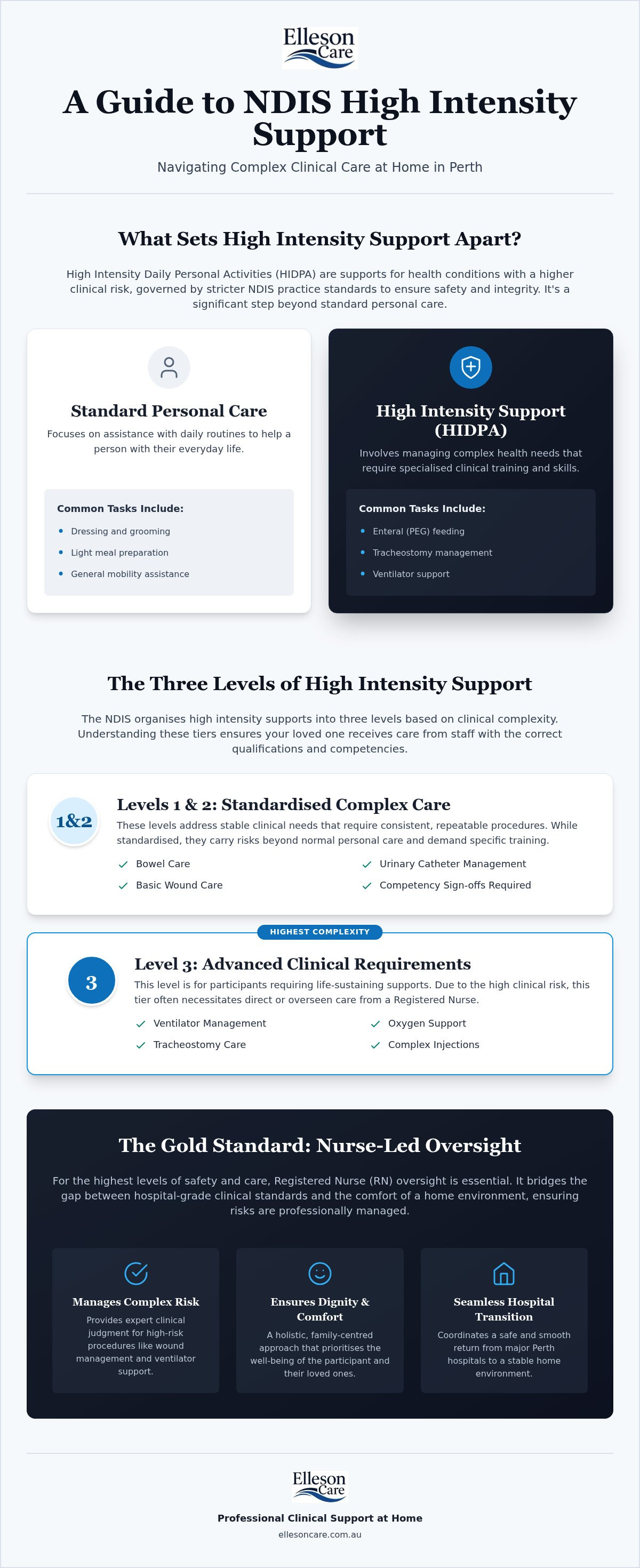
The transition from standard care to high intensity support marks a significant shift in the required competency of your support team. Standard personal care focuses on helping a person with their routine, such as dressing or light meal preparation. In contrast, high intensity support requires workers to possess specialised training to handle clinical procedures safely. By February 2026, the NDIS Quality and Safeguards Commission mandated that all workers delivering these complex supports must meet updated competency standards. Navigating ndis high intensity support perth involves a clear understanding of these distinctions to ensure your funding aligns with the necessary level of clinical expertise.
Risk assessment plays a vital role in this process. If a participant's health is fragile or if their care involves invasive procedures, professional nursing intervention becomes the gold standard for safety. Your NDIS plan will specifically reflect these requirements through allocated funding for high intensity daily personal activities. This ensures you have access to a provider capable of delivering the clinical oversight necessary for a safe and dignified home environment. Choosing a provider with a deep understanding of these standards is the first step toward long-term stability and peace of mind for your family.
The Three Levels of NDIS High Intensity Support
The NDIS categorises high intensity supports into three distinct levels based on the complexity of the task and the level of clinical risk involved. For families seeking ndis high intensity support perth, understanding these tiers is essential for ensuring your loved one receives care from staff with the correct qualifications. These levels are governed by the NDIS High Intensity Support Skills Descriptors. These documents outline the specific competencies a support worker must demonstrate before they can safely assist with complex health needs.
Level 1 and 2: Standardised Complex Care
Level 1 and 2 supports generally address stable clinical needs that require consistent, repeatable procedures. This includes assistance with bowel care, urinary catheter management, and basic wound care. While these tasks are considered standardised, they still carry inherent risks that standard personal care does not. It's vital that support workers undergo thorough shadowing and receive formal competency sign-offs from a qualified professional. This process ensures that the care provided is tailored specifically to your unique health profile rather than a generic checklist. When workers are properly trained in these intermediate skills, it provides a stable foundation for health at home.
Level 3: Advanced Clinical Requirements
Level 3 represents the highest tier of complexity within the NDIS framework. This level is reserved for participants who require life-sustaining supports such as ventilator management, oxygen support, and tracheostomy care. Because of the high clinical risk involved, Level 3 support often necessitates professional nursing services to manage potential complications. This tier also covers complex injection administration and the management of severe dysphagia, where the risk of aspiration is significant. At this level, the focus shifts from task completion to active clinical monitoring and risk mitigation.
The NDIS Skill Descriptors act as a safeguard. They ensure that the person entering your home has the technical proficiency to keep your loved one safe. Whether you are managing a stable condition or a highly complex clinical profile, finding a provider that prioritises these standards is crucial. If you are currently navigating the transition from a hospital setting, you might find it helpful to speak with an experienced Perth care provider about how these levels apply to your specific NDIS plan. This clarity ensures that your funding is utilised effectively to provide the safest possible environment for your family.
The Importance of Nurse-Led Oversight in Perth
High intensity support is more than a checklist of medical tasks; it is a comprehensive clinical risk management strategy. For participants requiring ndis high intensity support perth, Registered Nurse (RN) leadership is the gold standard for ensuring long-term health stability. An RN bridges the critical gap between complex medical advice from specialists and the daily support provided in your home. With over 22 years of experience, our nurse-led approach ensures care plans are living documents, reviewed regularly to reflect changes in health status or lifestyle goals. This level of oversight provides families with the peace of mind that a professional is always looking ahead to prevent complications before they arise.
When a participant transitions from a hospital like Fiona Stanley or Royal Perth Hospital, the medical instructions can be overwhelming. An RN acts as a translator, turning clinical jargon into practical, safe routines that support workers can follow with precision. This ensures that the high standard of care initiated in the hospital continues seamlessly at home. In the event of a clinical emergency or a subtle change in health, having an experienced nurse at the helm means that decisions are made based on two decades of clinical expertise. This protective nature is what defines a high-tier professional service that hasn't lost its human touch.
Clinical Governance and Safety
In Western Australia, clinical governance is a key factor in reducing hospital readmission rates for NDIS participants. Effective RN oversight involves regular clinical audits and rigorous staff competency reviews. This process ensures every aspect of care, from complex wound management to medication administration, meets strict Australian healthcare standards. By maintaining these high benchmarks, we protect the individual's safety while fostering a sense of security for their loved ones. It isn't just about compliance; it's about creating a stable environment where health risks are managed with quiet, steady confidence.
Empowering Support Workers through Training
At Elleson Care, we believe the best care happens when support workers are empowered by clinical knowledge. Our nurses personally train staff on the specific clinical needs of each participant. This bespoke training goes beyond generic modules, focusing on the nuances of your unique profile. We prioritise maintaining personal dignity, ensuring that even the most complex health procedures are handled with respect and sensitivity. Fostering a culture of clinical excellence in the home ensures support workers feel confident and participants feel truly cared for. This holistic approach transforms technical support into a compassionate service that respects individual autonomy.
Navigating the NDIS Pathway in Western Australia
Transitioning from major Perth facilities like Fiona Stanley Hospital or Royal Perth Hospital (RPH) back to a home environment is a significant milestone. For participants requiring ndis high intensity support perth, this journey requires meticulous coordination between hospital discharge teams, families, and community providers. The goal is to ensure that the high level of clinical safety maintained in the ward is replicated in the comfort of your own home. Working with your Support Coordinator early in the discharge process is essential to secure the necessary HIDPA funding and ensure your NDIS plan reflects your actual clinical needs.
The 2026 reforms have introduced changes to how services are structured and accessed. Understanding the Support at Home Program transitions is vital for families who may be navigating both the NDIS and aged care systems. This ensures there are no gaps in care as funding models evolve. Medical evidence remains the cornerstone of any successful application for high intensity funding, requiring a collaborative approach between your medical team and your chosen provider.
Securing the Right Funding in Your Plan
To prepare for an NDIS planning meeting, you must gather comprehensive clinical justification. This isn't merely a list of tasks; it's a professional assessment of clinical risk. Essential reports from your GP or specialists should detail why high intensity support is a reasonable and necessary requirement for your safety. You'll also need to consider how consumables and specialised equipment funding will be managed alongside your support hours. Clear medical evidence from Allied Health professionals helps the NDIA understand the technical nature of your care, such as complex bowel management or enteral feeding requirements.
Choosing a Local Perth Provider
Selecting a West Australian owned and operated provider offers distinct advantages. Local providers have a deep understanding of the WA Health landscape and established relationships with Perth's major hospitals. When interviewing potential partners, ask specific questions about their clinical oversight and emergency protocols. It's important to know exactly how a Registered Nurse will be involved in your daily care and what happens if a medical complication arises after hours. Navigating ndis high intensity support perth involves more than just selecting a service; it's about building a clinical partnership. If you're ready to arrange professional oversight for your home care, you can contact our team for a clinical consultation today.
Elleson Care: Professional Clinical Support at Home
Managing a complex health condition at home is an act of profound commitment, but it also carries a significant emotional and physical weight for the entire family. We recognise that for many Perth families, the constant vigilance required for medical safety can lead to exhaustion and a loss of personal time. Our approach to ndis high intensity support perth focuses on relieving this burden by providing a safety net of clinical expertise. With over 22 years of nursing experience, we don't just provide a service; we offer a partnership that prioritises the dignity of the participant and the well-being of their loved ones. Our holistic family approach ensures that care is integrated into your life in a way that feels supportive rather than intrusive.
The transition from a clinical setting to a home environment should be a time of relief, not increased stress. By providing a steady, reliable presence, we help families reclaim their roles as parents, partners, and siblings while we manage the technical complexities of care. Whether your needs involve ventilator support or specialised respite care in Perth, our team is trained to maintain the highest standards of safety with a gentle, human touch. This clinical authority, balanced with genuine warmth, ensures that your home remains a place of comfort and security.
Comprehensive Clinical Services
Our clinical offerings are designed to address the full spectrum of complex health needs. We specialise in wound management, palliative care, and post-hospital support, ensuring that every medical requirement is met with professional precision. Beyond the technical tasks, we integrate Allied Health assessments and domestic assistance to create a seamless daily routine. We take great care in tailoring a care team that doesn't just match your clinical needs, but also matches your personality and lifestyle. This ensures that the people entering your home are a source of comfort and trust, fostering a culture of excellence in every interaction.
Start Your Care Journey with Confidence
Beginning a new care arrangement is a significant step, and we've refined our process to be as transparent and reassuring as possible. Your journey starts with an initial assessment led by one of our Registered Nurses. During this time, we'll discuss your clinical requirements, your personal goals, and any concerns your family may have. This is followed by a meet-and-greet with your dedicated support team, allowing you to build a connection before services commence. We believe that informed families are empowered families, and we're here to guide you through every stage of the process. Contact Elleson Care today to discuss your high intensity support needs.
Securing Your Future with Expert Clinical Care
Choosing the right path for complex care is a decision that impacts the safety and dignity of your entire family. We've explored how professional Registered Nurse oversight transforms task-based assistance into a robust clinical strategy, ensuring that high-risk needs like ventilator support are managed with absolute precision. By understanding the three levels of support and the 2026 practice standards, you're now better equipped to advocate for the funding and specialised skills your loved one deserves.
As a local, West Australian family-owned business led by RNs with over 22 years of clinical experience, we're dedicated to bringing hospital-grade safety into the comfort of your home. We're here to help you navigate the complexities of ndis high intensity support perth with a focus on holistic, person-centred well-being. If you're ready to secure a stable and professional future for your home care, we invite you to book a clinical consultation with our Registered Nurses today. You don't have to manage these technical challenges alone; a steady and knowledgeable partner is ready to support you every step of the way.
Frequently Asked Questions
What qualifies as NDIS high intensity support in 2026?
High intensity support refers to assistance for participants with complex health needs that involve significant clinical risk. In 2026, this category includes activities like tracheostomy management, ventilator support, and complex bowel care. These tasks require support workers to meet updated competency standards defined by the NDIS Quality and Safeguards Commission. It's a specialised form of care designed to manage health risks safely while maintaining a participant's independence within their local community.
Do I need a Registered Nurse to provide my high intensity support?
While support workers often deliver day-to-day care, Registered Nurse oversight is essential for managing complex clinical risks. For ndis high intensity support perth, an RN provides the necessary clinical governance, creates care plans, and trains staff on specific medical procedures. This leadership ensures that all interventions meet Australian healthcare standards. Having an experienced nurse involved provides a bridge between specialist medical advice and the practical support provided in your home.
How do I get high intensity daily personal activities (HIDPA) in my NDIS plan?
Securing HIDPA funding requires comprehensive medical evidence from your GP or a medical specialist. This documentation must justify why high intensity support is reasonable and necessary based on your clinical risk profile. During your NDIS planning meeting, you should present Allied Health reports that detail the technical nature of your care needs. This evidence ensures the NDIA allocates the correct funding level to cover the specialised skills required for your safety and well-being.
Can high intensity support be provided in my own home in Perth?
Yes, high intensity support is specifically designed to be delivered in your own home environment. Elleson Care specialises in helping Perth participants transition from hospitals like Fiona Stanley or Royal Perth Hospital back to their familiar surroundings. Our nurse-led team provides the technical expertise required to manage complex medical needs safely outside of a hospital ward. This allows you to receive professional clinical care while remaining connected to your family and local community.
What is the difference between Level 2 and Level 3 high intensity support?
The primary difference lies in the complexity of the clinical tasks and the associated risk. Level 2 support involves intermediate tasks such as urinary catheter management or basic wound care. Level 3 is reserved for the most complex clinical needs, including ventilator management and tracheostomy care. Because Level 3 supports are often life-sustaining, they require a higher degree of technical proficiency and more frequent clinical oversight from Registered Nurses to ensure participant safety.
How does Elleson Care ensure the safety of participants with complex needs?
Safety is maintained through rigorous clinical governance and the leadership of Registered Nurses with over 22 years of experience. We conduct regular clinical audits and staff competency reviews to ensure every procedure meets strict healthcare standards. By personally training our support workers on your specific health profile, we create a bespoke care environment. This protective approach ensures that potential complications are identified early, reducing the risk of hospital readmission and providing stability for your family.
Is high intensity support available for both aged care and NDIS participants?
Yes, complex clinical support is available for both NDIS participants and those receiving aged care services. While the funding models differ, the clinical requirements for managing complex health needs remain the same. Elleson Care provides ndis high intensity support perth alongside specialised nursing for seniors through the Support at Home Program. This ensures that regardless of your age or funding type, you have access to professional clinical oversight for conditions like chronic wound management or respiratory support.
What training do Elleson Care support workers receive for complex clinical tasks?
Our support workers undergo a comprehensive training process led by Registered Nurses. This includes formal competency sign-offs and shadowing experienced staff before they work independently. The training is tailored to the specific clinical needs of each participant, ensuring workers are proficient in the exact procedures they will perform. This bespoke approach builds confidence in the care team and ensures that technical tasks are performed with precision, respect, and a deep commitment to participant dignity.


