

What if the best ndis support worker isn’t simply the person who can help with the most tasks, but someone whose support fits your goals, preferences and daily life? Feeling safe, respected and comfortable with the person supporting you matters as much as knowing what help they can provide.
If you’re unsure whether support can include personal care, household tasks or getting out into the community, you’re not alone. It can also be difficult to know where a support worker’s responsibilities end, how services relate to your NDIS plan, and what to ask about consistency and compatibility. This guide explains the role and common boundaries, and gives you practical questions to help compare support options in Perth.
You’ll learn about everyday assistance, the difference between general support and clinical care, and what to discuss before services begin. Elleson Care is a West Australian owned and operated provider whose NDIS support includes personal care, domestic assistance, and social and community participation. Use the guidance below to prepare for a conversation about the support that matters to you.
Key Takeaways
- Understand how everyday support can be shaped around a participant’s goals, routines, preferences and support needs.
- Learn which tasks may be part of an ndis support worker’s role, and why clinical duties and responsibilities should be clarified.
- Compare support options by discussing communication, relevant experience, availability and agreed responsibilities, not just the tasks on offer.
- Prepare for a clear start by identifying goals, confirming practical arrangements and checking funding questions through appropriate NDIS channels.
- Explore how Elleson Care’s NDIS support services include personal care, domestic assistance, and social and community participation.
What does an NDIS support worker do for Perth participants?
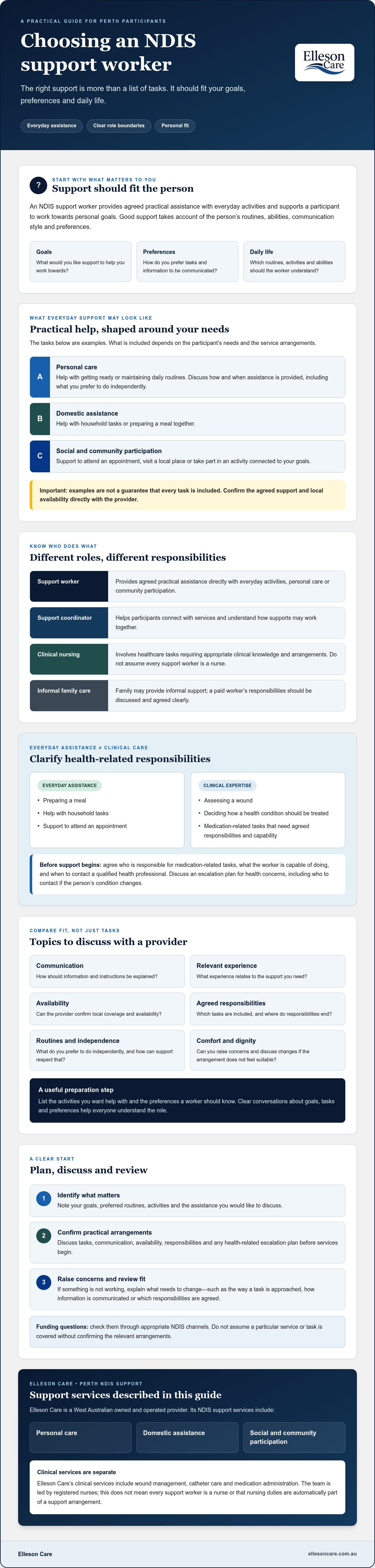
An NDIS support worker provides agreed practical assistance with everyday activities and supports a participant to work towards personal goals. The role should be person-led: support reflects what matters to the participant, their routines and abilities, and the assistance they need. For background on the scheme, see this overview of the National Disability Insurance Scheme (NDIS).
Support work is different from support coordination, clinical nursing and informal family care. A support coordinator helps participants connect with services and understand how supports may work together. A support worker provides agreed assistance directly. Clinical nursing involves healthcare tasks that require appropriate clinical knowledge and arrangements. Don’t assume every support worker is a nurse. Family members may provide informal support, but a paid worker’s responsibilities should be discussed and agreed rather than left unclear.
What kinds of everyday support can a worker provide?
Depending on the participant’s needs and service arrangements, everyday assistance may include personal care, such as help with getting ready or maintaining daily routines. The participant should be involved in decisions about how and when assistance is provided, including what they prefer to do independently.
Domestic assistance may include preparing a meal together or help with household tasks. Community participation could mean attending an appointment, visiting a local place or taking part in an activity connected to the participant’s goals. These are examples, not a promise that every task is included. Elleson Care’s NDIS support services include personal care, domestic assistance, and social and community participation.
How does participant choice shape the support relationship?
Good support takes account of a person’s preferences, communication style and routines. A participant might prefer instructions to be explained in a particular way, need more time to complete a task independently, or want support arranged around established habits. Sharing these preferences early helps set expectations and supports comfort and dignity.
Participants should be able to raise concerns and discuss whether an arrangement feels suitable. If something isn’t working, describe what needs to change, such as how a task is approached, how information is communicated or which responsibilities are agreed. The right approach depends on the person, so discuss specific support with the provider before it begins.
For Perth participants, support may relate to home routines, appointments or community activities. Local coverage and availability can vary, so confirm these details directly rather than assuming a particular worker or service is available. A useful first step is to list the activities you want help with and the preferences a worker should know. Clear conversations about goals, tasks and preferences help everyone understand the role.
NDIS support worker tasks, clinical boundaries and safe role expectations
An ndis support worker can assist with agreed daily activities, but the role doesn’t automatically include clinical assessment or treatment. The National Disability Insurance Scheme’s guidance on what a support worker does describes practical help with daily activities, personal care and community participation. Duties should still be discussed in light of the participant’s needs, the worker’s capability and the service arrangements.
Where do everyday support and clinical nursing differ?
Preparing a meal, helping with household tasks or supporting someone to attend an appointment are examples of everyday assistance. Assessing a wound or deciding how a health condition should be treated, by contrast, requires appropriate clinical expertise. Medication-related tasks also need clear discussion: agree who is responsible, what the worker is capable of doing and when a qualified health professional should be contacted.
Elleson Care offers clinical support separately from its everyday NDIS support services. Its clinical services include wound management, catheter care and medication administration. The team is led by registered nurses, but this doesn’t mean every support worker is a nurse or that nursing duties are automatically part of a support arrangement. Participants and families should agree on responsibilities and an escalation plan for health concerns, including who to contact if a person’s condition changes.
What should participants know about safety and conduct?
Before support begins, discuss practical expectations that help protect dignity and build trust:
- Consent and privacy: How will the worker ask permission before providing personal assistance, and how will private information be handled?
- Communication and boundaries: What communication style works best, and how should concerns or changes to agreed tasks be raised?
- Safety and escalation: Who should be contacted if a health or safety concern arises, and what should the worker do in that situation?
The NDIS Code of Conduct applies to NDIS providers and workers. In Western Australia, workers in risk-assessed roles must hold a valid NDIS Worker Screening Check. For current details about screening, conduct obligations and complaints pathways, check guidance from the NDIS Quality and Safeguards Commission. Requirements can depend on the role and service context, so confirm what applies to the arrangement you’re considering.
Clear role boundaries support safer, more consistent care. If you’re discussing everyday and clinical needs together, you can learn about Elleson Care’s support services and ask which service may suit your circumstances.
How to choose an NDIS support worker in Perth: compare fit, not just tasks
A suitable ndis support worker needs more than the right task list. Consider whether the person’s approach, capabilities and service arrangements suit the participant’s goals and everyday life. Comparing providers against a few consistent criteria can help you spot what needs clarification before support starts.
| What to compare | Questions to ask |
|---|---|
| Goals | How will you learn what the participant wants to work towards? |
| Communication | How will the worker adapt to the participant’s communication preferences and share updates? |
| Experience | What experience or capabilities are relevant to the agreed support needs? |
| Availability and continuity | Do the proposed times suit the participant, and who should be contacted if the worker is unavailable? |
| Responsibilities | Which duties are agreed, and how can the arrangement be reviewed or changed? |
Questions to ask before choosing support
Ask how the provider gets to know the participant’s routines, preferences and goals, and how those details guide day-to-day support. For example, find out how the worker will support the participant’s choices during personal care or community activities, and how privacy and consent will be respected. Clarify how feedback is shared, who responds to concerns, and how changes to needs or agreed duties are discussed.
For services in Perth, confirm the proposed location, any travel arrangements and how continuity is managed directly with each provider. Don’t assume a provider covers a particular suburb or can offer a specific schedule. Ask what options are available if the usual worker is unavailable, rather than relying on an unconfirmed promise.
How can families assess a good personal fit?
Skills matter, but comfort and respectful communication matter too. Consider whether the participant feels listened to, whether the worker can follow their preferred routines, and whether cultural or personal considerations have been discussed. If support takes place at home, agree on boundaries such as which areas are private and how the worker should approach tasks.
An introductory conversation can help the participant express what feels comfortable before regular support is established. Include the participant in decisions and invite feedback in a way that works for them. Providers and workers must follow the NDIS Code of Conduct, which outlines expected conduct. If something feels unsuitable, raise it with the provider and ask how it can be addressed.
To discuss whether its NDIS support services may suit your circumstances, you can contact Elleson Care about support options.
Getting started with an NDIS support worker: plan, discuss and review
A clear start helps everyone understand what support is intended to do and how it will work in practice. Begin with the participant’s goals, clarify the help they want, discuss practical arrangements with the provider, then review whether the support feels suitable. An ndis support worker arrangement should reflect the participant’s circumstances, with responsibilities and communication discussed before support begins.
What should participants prepare for an initial conversation?
A short list can keep the conversation focused. Consider noting:
- Goals and activities: What would the participant like support to help them do?
- Routines and preferences: Which daily routines matter, and how would they like assistance to be provided?
- Communication needs: What communication approach works best, and who should receive updates?
- Practical arrangements: What timing, worker continuity, cancellation and travel details need clarification?
- Responsibilities: Which tasks are agreed, and who should be contacted with questions or changes?
Participants can choose to include a family member or advocate in the discussion. They can help ask questions or share relevant information while keeping the participant’s preferences and decisions central.
Ask whether the provider uses a service agreement and what it would cover. Arrangements can differ, so don’t assume one format applies to every participant. Read any proposed document carefully and clarify the supports, responsibilities, communication and practical terms before agreeing.
How should support arrangements be reviewed?
Review the arrangement by asking whether the agreed support is helping with the participant’s stated goals and whether the day-to-day experience feels respectful and comfortable. If routines, needs or preferences change, raise this early with the provider. Discuss whether tasks, communication or practical arrangements need to be reconsidered.
Check the participant’s current NDIS plan information and direct funding questions to the appropriate NDIS channels. Don’t assume what a plan funds or whether a particular support is covered. Confirm details against current official guidance and the participant’s own plan.
If family support needs include planned breaks, discuss those needs and available options with the relevant provider. To ask whether Elleson Care’s NDIS support services may suit your circumstances, contact Elleson Care about support options.
NDIS support worker services in Perth: how Elleson Care can help
Elleson Care is a West Australian owned and operated provider offering NDIS support services, aged care and clinical support. For participants considering an ndis support worker, the conversation can start with what they want support to help them do, the routines they’d like to maintain and the assistance that feels right for them.
What support can Elleson Care discuss with participants?
Elleson Care’s NDIS supports include:
- Personal care: assistance with agreed daily personal care needs, with attention to the participant’s preferences and dignity.
- Domestic assistance: practical help with household tasks that have been discussed and agreed.
- Social and community participation: support to take part in activities and community life in ways connected to the participant’s goals.
These are starting points for a conversation, not a one-size-fits-all package. Participants and families can explain what matters to them, how they prefer support to be provided and which practical arrangements need clarification. Confirm exact services, local coverage and availability directly with Elleson Care before making plans.
The team is led by registered nurses with more than 22 years of experience. This is relevant context for the provider’s wider care experience, but it doesn’t mean every NDIS support worker is a registered nurse or that clinical duties are part of ordinary support work. Agree on the role, responsibilities and service arrangements for the individual situation.
When might clinical support also be relevant?
Some people may need clinical nursing alongside everyday assistance. Elleson Care separately provides clinical support, including wound management, catheter care and medication administration. Discuss clinical care as a distinct service, clarifying the person’s needs and appropriate responsibilities rather than assuming it is part of an NDIS support worker’s tasks.
If you’re exploring care at home, read about nursing services at home in Perth. Whether you’re asking about everyday support, clinical care or how the two may relate, discuss the participant’s circumstances and confirm service fit and Perth availability directly.
To talk through your needs and ask about Elleson Care’s NDIS support services, contact Elleson Care.
Take your next step towards support that fits
Choosing an ndis support worker starts with the participant’s goals, preferences and everyday support needs. Look beyond the task list: discuss communication, privacy, routines, worker continuity and how responsibilities will be agreed. Clear boundaries matter, particularly where everyday assistance and clinical care may both be relevant.
Before support begins, check current plan information and confirm funding questions through appropriate NDIS channels. Then review the arrangement together, so concerns or changes can be raised and discussed respectfully.
Elleson Care is a West Australian owned and operated provider offering NDIS support services, including personal care, domestic assistance, and social and community participation. Its team is led by registered nurses with more than 22 years of experience. This team background does not mean every support worker is a nurse, so discuss the specific support and service fit you need.
To discuss your circumstances and ask whether Elleson Care’s Perth NDIS support services may suit your needs, contact Elleson Care about your support options.
Frequently Asked Questions
What does an NDIS support worker do?
An NDIS support worker provides agreed practical assistance with everyday activities and personal goals. Depending on the participant’s needs and arrangements, this may include personal care, domestic assistance or support to take part in social and community activities. The participant’s preferences, abilities and routines should guide how help is provided. Clarify duties with the provider so everyone understands what the worker will do and where their responsibilities end.
Can I choose my NDIS support worker?
Participants can express preferences about who supports them and discuss whether a proposed arrangement feels suitable. Consider communication style, relevant experience, comfort with support at home and how the worker respects privacy and routines. Ask the provider how participants are involved in decisions and what options are available if the match doesn’t feel right. Choices may also depend on service arrangements and availability, so confirm these directly.
Do I need a registered NDIS provider to use a support worker?
Whether you need a registered provider depends on how your NDIS funding is managed and the type of support involved. For example, NDIA-managed funding generally requires registered providers, while other arrangements may allow more choice. Some supports may have specific registration requirements. Check your current plan and confirm the rules for your circumstances through official NDIS information. Don’t assume a particular provider’s registration status without checking directly.
Can an NDIS support worker provide nursing care?
Not automatically. Everyday support, such as household assistance or help with daily activities, is different from clinical assessment and nursing treatment. A worker’s duties depend on their capability and agreed service arrangements, so clarify responsibility for medication or health-related tasks with the provider and relevant qualified health professional. Elleson Care provides clinical support separately, with a team led by registered nurses. This doesn’t mean every support worker is a nurse.
How do I find an NDIS support worker in Perth?
Start by listing the support you need, your goals and practical preferences, then compare providers on communication, relevant experience, agreed duties and continuity arrangements. Ask each provider to confirm whether they cover your part of Perth, how travel is handled and what availability they can offer. Elleson Care is a West Australian owned and operated provider offering NDIS support services. Confirm directly whether its services suit your circumstances.
Can an NDIS support worker help with household tasks and community access?
These may be included when they align with the participant’s needs, goals and agreed supports. Household assistance could involve help with meal preparation or other domestic tasks. Community participation may include support to attend an activity or take part in local life. Tasks and funding arrangements aren’t the same for everyone, so check the current plan and agree on responsibilities with the provider before support begins.
What should I ask before starting with an NDIS support worker?
Ask how the provider will learn about the participant’s goals, routines and communication preferences. Clarify which tasks are included, who to contact with questions, and how worker availability, cancellations and changes are handled. Discuss privacy, consent and how feedback can be shared or the arrangement reviewed. Check any proposed service agreement carefully, and confirm funding questions against current plan information or with the appropriate NDIS channel.


