

Imagine the moment the hospital discharge papers are placed in your hands; the initial relief of returning home is often followed by a quiet sense of anxiety. You might wonder how you'll manage complex medications or who will monitor your recovery when the clinical team is no longer just down the hall. For many families in Western Australia, the transition back to the community is the most challenging part of the healing journey. It's completely natural to feel overwhelmed by the physical and medical demands of recuperation while you are still regaining your strength.
Securing professional post hospital care at home perth ensures that your transition is not just a change of scenery, but a safe and structured continuation of your clinical journey. We understand that recovery is more than just following a list of instructions; it's about feeling secure in your own environment. This guide explores how nurse-led oversight and personalised support can alleviate the burden on your family while prioritising your safety and dignity. You'll learn how professional clinical monitoring and domestic assistance can reduce the risk of readmission and foster a faster, more comfortable recovery in the place you love most.
Key Takeaways
- Understand the clinical importance of the "vulnerable period" following discharge and how professional oversight prevents hospital readmission.
- Discover the essential balance between registered nursing and domestic assistance when arranging post hospital care at home perth.
- Navigate the 2026 Support at Home program funding levels to ensure your clinical and personal care needs are fully supported.
- Learn how to coordinate effectively with Perth hospital discharge planners and conduct a comprehensive home safety audit before returning home.
- Identify the benefits of a nurse-led recovery model that prioritises clinical safety, family well-being, and personal dignity.
The Transition Home: Why Professional Post-Hospital Care Matters
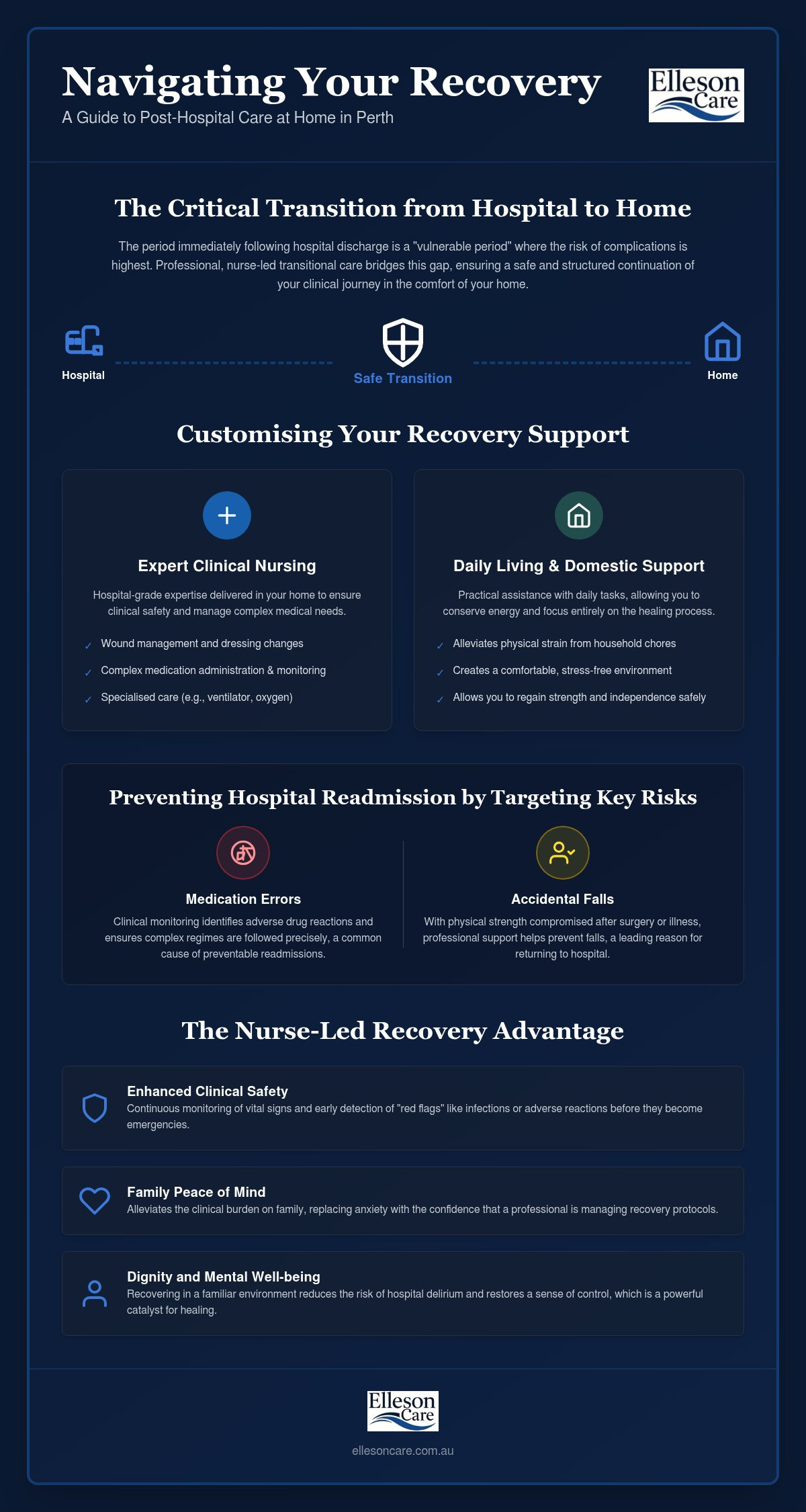
The journey from a hospital ward to your own front door is a significant milestone, yet it marks the beginning of what clinicians often call the "vulnerable period." This is the critical timeframe immediately following discharge when the risk of medical complications or unplanned readmission is at its highest. Engaging professional Transitional care provides a vital bridge between the acute hospital setting and your long-term recovery. For families seeking post hospital care at home perth, this oversight isn't just about convenience; it's about ensuring clinical safety during a time of physical and emotional fragility.
When you transition home, the structured environment of the hospital disappears. Suddenly, the responsibility for monitoring symptoms and managing complex recovery protocols falls on you or your family members. Professional oversight transforms this experience by replacing anxiety with a structured, nurse-led plan. This support allows you to focus entirely on healing while an expert manages the clinical complexities that often lead to stress and confusion.
Reducing the Risk of Hospital Readmission
Unplanned hospital readmissions often stem from preventable issues, specifically medication errors and accidental falls. When you return home after surgery or a serious illness, your physical strength is compromised and your medication regime may have changed significantly. Clinical monitoring identifies "red flags" such as subtle changes in vital signs, adverse drug reactions, or early signs of wound infection before they escalate into emergencies. For those managing chronic conditions, consistent follow-up care ensures that your recovery remains on track and that any deviations are addressed with professional precision.
The Mental Health Benefits of Home-Based Recovery
There's an undeniable healing power in sleeping in your own bed and following your own familiar routine. In a hospital, your schedule is dictated by the ward's needs; at home, you regain a sense of control and personal dignity. This familiar environment is particularly crucial for seniors, as it significantly reduces the risk of "hospital delirium," a state of acute confusion often triggered by the sterile and disorienting nature of clinical wards. Recovering in your own Perth home allows you to reconnect with your sense of self, which acts as a powerful catalyst for physical healing.
Restoring your independence is a gradual process that requires patience and the right level of encouragement. By having a steady, reliable presence in the home, you can rebuild your confidence at your own pace. Whether it's the comfort of a cup of tea in your own kitchen or the peace of your own garden, these small moments of normalcy are essential for a holistic recovery. Professional post hospital care at home perth ensures these moments are protected by a safety net of clinical expertise.
Customising Your Recovery: Clinical and Domestic Support Options
Effective recovery is rarely a one-size-fits-all process. It requires a bespoke plan that balances your acute medical requirements with the practicalities of daily life. When arranging post hospital care at home perth, the goal is to create a seamless environment where clinical safety and domestic comfort coexist. By tailoring support to your specific needs, you can transition from a patient back to an individual in control of your own environment.
Expert Clinical Nursing at Home
Clinical care is the foundation of a safe return. Registered Nurses provide a level of oversight that goes beyond basic assistance, bringing hospital-grade expertise into the home. This includes precise wound management and dressing changes to prevent infections, which is a primary concern for those recovering from surgery. Managing complex prescriptions is another pillar of this service. Nurses ensure medication is administered correctly and monitor for any adverse reactions or side effects. For individuals with specialised needs, such as ventilator support, oxygen therapy, or catheter requirements, having a professional at your side is vital. This level of support is often a core component of the Transition Care Program (TCP), which helps bridge the clinical gap between hospital discharge and long-term independence.
Daily Living and Domestic Support
Physical recovery is an exhausting process. Simple tasks like laundry or light housekeeping can become impossible hurdles when you are instructed to rest. Domestic assistance ensures your home remains a hygienic, organised sanctuary, allowing you to focus entirely on healing. Nutrition plays an equally important role in your recuperation. Tailored meal preparation supports your body's healing, focusing on specific dietary needs recommended by your surgical team. Additionally, reliable transport to follow-up appointments at Perth medical centres ensures you never miss a critical check-up during these early weeks.
Dignity remains at the heart of every interaction. Personal care services provide gentle, professional help with showering, dressing, and mobility, ensuring you feel refreshed and safe. We also coordinate closely with allied health professionals to integrate physiotherapy and occupational therapy into your daily routine. This holistic approach ensures that every facet of your well-being is addressed with care and expertise. If you're feeling uncertain about the logistical steps of returning home, exploring professional clinical support can provide the clarity and stability your family needs during this time.
Funding Post-Hospital Care in Perth: Navigating the 2026 Landscape
Navigating the financial side of recovery shouldn't add to your stress while you are trying to heal. Since November 1, 2025, the Australian aged care system has undergone a significant transformation with the commencement of the Support at Home program. This new framework replaced the old four-level Home Care Packages with a more precise eight-level classification system. For families seeking post hospital care at home perth, understanding these classifications is the first step toward securing the clinical oversight you need without unexpected financial burdens.
The 2026 Support at Home Program Transition
The new program is designed to be more responsive to immediate needs, particularly for short-term restorative care after a hospital stay. A critical update for 2026 involves the reclassification of personal care services. From October 1, 2026, services such as showering, dressing, and grooming will be classified as "Clinical Care." Under the current regulations, clinical care attracts a 0% participant contribution, meaning these essential services are fully government-funded. You can find a detailed breakdown of these shifts in our Support at Home program guide. If you were already receiving or approved for a Home Care Package on or before September 12, 2024, you are protected by "no worse off" arrangements to ensure your contribution rates remain stable.
Accessing these funds typically begins with a My Aged Care referral and an Aged Care Assessment Team (ACAT) evaluation. During this process, it's helpful to have a discharge planning checklist for families ready to ensure all your clinical requirements are clearly documented. This documentation is vital for ensuring your funding classification accurately reflects the complexity of your recovery needs.
DVA and NDIS Support Pathways
For veterans in Western Australia, the Department of Veterans’ Affairs (DVA) offers specific nursing and domestic support programs that often provide a more direct route to care. These provisions are designed to honour your service by providing high-tier clinical support directly in your home. Similarly, NDIS participants can include post-hospital goals in their plan reviews to ensure their clinical recovery is fully supported. This is particularly relevant for participants requiring complex wound management or ventilator support.
Choosing a local Perth provider offers a distinct advantage for funding advocacy. Local experts understand the specific West Australian health landscape and can help you navigate the nuances of the 2026 funding tiers. By aligning your funding with a nurse-led care model, you ensure that every dollar is directed toward a safe, professional, and dignified recovery in your own home.
Preparing for Discharge: Checklist for Perth Families
A successful return home begins long before you leave the hospital ward. Coordinating with discharge planners at major institutions like Fiona Stanley Hospital or Sir Charles Gairdner Hospital ensures that your medical team and your home support providers are perfectly aligned. This collaboration is the foundation of effective post hospital care at home perth, as it allows for a seamless transfer of clinical information and care protocols. By preparing your home and your support network in advance, you can avoid the common pitfalls that lead to stress and medical complications during the first few days of recovery.
Coordinating with the Hospital Discharge Team
Before you leave the ward, it's essential to have a detailed conversation with your treating team. Ask your doctor for a clear summary of your recovery milestones and any specific "red flags" you should watch for. You should also ensure that all new prescriptions are filled at the hospital pharmacy before you depart, as finding a local chemist with specific medications in stock can be challenging on the day of discharge. Don't forget to confirm your transport arrangements well in advance. Whether you are being collected by a family member or a specialised transport service, having a firm plan in place reduces last-minute anxiety and ensures you arrive home safely and comfortably.
Home Safety and Modification
Preparing your physical environment is a vital step in preventing accidents during your recuperation. We recommend conducting a thorough home safety audit to identify and rectify potential hazards. Consider the following practical adjustments:
- Remove loose rugs, mats, and electrical cords from walkways to eliminate trip hazards.
- Ensure all areas, especially hallways and bathrooms, have bright and accessible lighting.
- Organise equipment hire, such as adjustable hospital beds, over-toilet frames, or shower chairs, at least 48 hours before you arrive home.
- If your home has multiple levels, set up a "recovery station" on the ground floor with easy access to a bathroom to avoid the strain of stairs.
Verifying that professional nursing services are scheduled to commence within the first 24 hours of your return provides an immediate safety net. This allows for a formal clinical handover, where your home care nurse can review the hospital's instructions and ensure your recovery environment is clinically sound. Taking these proactive steps allows you to step through your front door with a sense of security. If you feel overwhelmed by these logistical requirements, you can book a clinical consultation with our Perth-based team to help coordinate your transition home.
The Elleson Care Difference: Nurse-Led Recovery in Perth
Selecting a provider for post hospital care at home perth is a decision that deeply affects your clinical safety and your emotional well-being. At Elleson Care, we believe that professional recovery requires more than just basic assistance; it demands a high level of clinical leadership. Our service is led by Registered Nurses with over 22 years of experience, ensuring that your transition from hospital is guided by seasoned medical expertise. This clinical authority provides a sense of stability for families navigating the complexities of post-surgical or acute illness recovery.
We understand that your needs will change as your strength returns. Our care plans aren't static documents; they are dynamic frameworks that evolve alongside your progress. By maintaining a nurse-led model, we can adjust clinical interventions in real time, ensuring you always receive the appropriate level of support. This steady, reliable presence allows you to focus on your rehabilitation while we manage the technicalities of your medical oversight. It's about providing a safety net that adapts to your unique healing journey.
Clinical Excellence and Compassionate Care
Our Registered Nurses supervise every individual care plan to ensure absolute medical accuracy. This rigorous oversight is particularly crucial for those with complex clinical needs, such as ventilator support or advanced wound management. We prioritise continuous training for our support team, ensuring that every staff member reflects our commitment to evidence-based practices and personal dignity. Our success is reflected in the many recovery stories of those who have accessed in-home aged care in Perth. These experiences demonstrate how a nurse-led approach fosters independence while maintaining a safety net of professional care.
Your Local Perth Care Partner
Being West Australian owned and operated means we have a profound connection to the community we serve. We understand the local healthcare landscape, from the discharge protocols of Perth’s major hospitals to the specific needs of WA families. Our holistic "Family Approach" ensures that we don't just care for the patient; we act as a supportive partner for the entire family unit. We maintain transparent communication with your medical professionals and loved ones, ensuring a unified approach to your healing journey.
Trust is built through consistency, integrity, and a deep respect for your autonomy. We pride ourselves on being a steady presence in your home, providing the expert care you deserve without losing the human touch. If you're preparing for a hospital discharge or seeking specialised clinical support, we invite you to start your recovery journey with a compassionate expert today. Our team is ready to provide the professional oversight and personalised support necessary for a safe, comfortable, and dignified return to your familiar surroundings.
Empowering Your Journey to Independence
Returning home after a hospital stay is a significant step that requires more than just rest; it demands a structured environment where clinical safety and personal comfort are perfectly balanced. By prioritising professional oversight during the critical first weeks, you can avoid the common medical complications and stress that often lead to unplanned readmission. Whether you are navigating the 2026 Support at Home funding transitions or coordinating complex NDIS requirements, having a local partner ensures your recovery remains on track. Professional post hospital care at home perth provides the stability your family needs to focus on healing rather than the complexities of clinical logistics.
As a West Australian owned and operated provider, we take pride in our nurse-led model. With over 22 years of clinical experience, our Registered Nurses are specialists in providing complex care for Aged Care, NDIS, and DVA participants. We are committed to protecting your dignity while providing the expert monitoring required for a successful recuperation. You don't have to manage this transition alone. Speak with a Registered Nurse about your post-hospital recovery today to arrange a personalised plan that puts your well-being first. We look forward to supporting your return to health in the familiar surroundings of your own home.
Frequently Asked Questions
What is the difference between post-hospital care and a convalescent home?
Post-hospital care at home allows you to recover in the comfort of your own environment, whereas a convalescent home is a residential facility. Choosing home-based support ensures you maintain your personal autonomy and dignity while receiving professional clinical oversight tailored specifically to your familiar routine.
How quickly can Elleson Care set up support after a hospital discharge?
We recommend contacting our team as soon as your discharge planning begins at a Perth hospital. This early coordination allows us to liaise with ward staff and ensure all necessary clinical equipment and nursing schedules are in place before you arrive home. This proactive approach ensures a seamless transition without gaps in your care.
Can I use my Home Care Package for post-hospital clinical nursing?
Yes, Home Care Package funds can be used to cover clinical nursing and personal support during your recovery. Under the transition to the Support at Home program, clinical services are prioritised to ensure safety. It's important to check your current funding classification to see how these services fit into your individual budget.
Does the NDIS cover post-hospital recovery services in Perth?
The NDIS provides funding for post hospital care at home perth when these services are deemed reasonable and necessary to meet your disability-related goals. We specialise in helping NDIS participants navigate complex clinical transitions, ensuring that wound management or ventilator support is maintained throughout the recovery journey.
What happens if my care needs change during my recovery?
Our care plans are dynamic and are designed to evolve as your physical strength and independence return. Our Registered Nurses conduct regular clinical reviews to adjust your support levels, ensuring you always receive the right amount of care. This flexibility allows us to scale back domestic assistance as you become more mobile and confident.
Are your nurses registered to work in Western Australia?
All our clinical services are led and supervised by Registered Nurses who are fully registered to practice in Western Australia. Our leadership team brings over 22 years of clinical experience to every care plan, ensuring that all support meets the highest West Australian health standards and regulatory requirements.
How much does post-hospital care at home cost in Perth?
The cost of recovery support varies based on the intensity of clinical needs and the specific funding pathway you are accessing, such as NDIS, DVA, or the Support at Home program. We focus on providing transparent information to help you understand how your government subsidies can be used to cover these essential services without unexpected out-of-pocket expenses.
Can you help with transport to follow-up hospital appointments?
We provide domestic assistance that includes safe transport to follow-up appointments at Perth medical centres and hospitals. Our team ensures you can attend critical check-ups comfortably and on time, removing the stress of navigating traffic or finding parking while you are still regaining your physical strength.


