

What if the greatest threat to your loved one's independence isn't a medical diagnosis, but a loose rug or a poorly lit hallway? For many families in Western Australia, the fear of a parent falling while home alone is a constant, heavy weight. You want them to stay in the house they love, yet you're likely searching for a reliable preventing falls for elderly at home checklist to clear the confusion. It's natural to feel overwhelmed by conflicting advice, but creating a secure environment doesn't have to be a source of stress.
We believe that maintaining personal dignity is just as vital as physical safety. This guide provides a professional, nurse-led approach to home security that's designed to help seniors stay independent and secure in their own spaces. By following these evidence-based steps, you'll gain the peace of mind that comes from a genuinely safer living environment. We'll walk you through the essential 2026 Support at Home programme standards, practical modifications for every room, and the clear steps needed to access expert clinical assessments here in Perth to ensure your family remains supported.
Key Takeaways
- Identify hidden environmental hazards in every room by using a comprehensive preventing falls for elderly at home checklist tailored for West Australian households.
- Recognise the clinical connection between hydration during Perth summers and balance, ensuring physical health is managed alongside home modifications.
- Learn the distinction between simple DIY home adjustments and professional installations, such as clinically-approved safety rails that meet Australian standards.
- Understand how a nurse-led assessment provides a layer of protection by spotting health-related risks that environmental audits often miss.
- Gain clarity on navigating the 2026 Support at Home programme to secure the necessary funding and professional care for ageing in place safely.
Why Fall Prevention is Your First Step to Independent Living in Western Australia
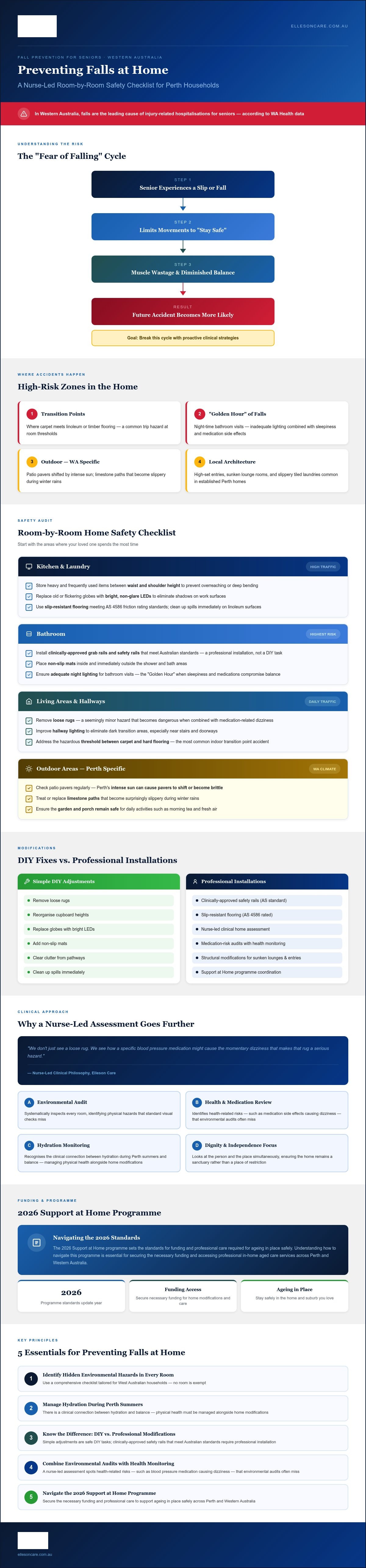
A single fall can change the course of a senior's life in an instant. It isn't just about the physical bruising or the risk of a fracture; it's about the psychological ripple effect that follows. When a senior experiences a slip, they often enter a "fear of falling" cycle. They begin to limit their movements to stay safe, which leads to muscle wastage and diminished balance. This loss of physical conditioning, ironically, makes a future accident more likely. Breaking this cycle is the primary goal of any clinical safety strategy. We believe that effective fall prevention is a proactive clinical habit rather than a one-time fix.
Our nurse-led approach prioritises personal dignity by looking at the person and the place simultaneously. While a preventing falls for elderly at home checklist is an essential tool, its value is amplified when guided by clinical expertise. We don't just see a loose rug. We see how a specific blood pressure medication might cause the momentary dizziness that makes that rug a serious hazard. By combining environmental audits with health monitoring, we ensure that the home remains a sanctuary of independence rather than a place of restriction.
The Reality of Falls for Seniors in Perth
In Western Australia, falls are a significant public health priority. According to WA Health data, falls are the leading cause of injury-related hospitalisations for seniors across the state. Local architectural trends often contribute to these figures. Many established Perth homes feature high-set entries, sunken lounge rooms, or slippery tiled laundries that weren't originally designed with ageing in mind. Professional in-home aged care in Perth provides the specialised oversight needed to modify these spaces, allowing seniors to remain in the suburbs they've called home for decades.
Identifying High-Risk Zones in Your Home
Identifying danger zones requires a sharp eye for detail. Most accidents occur at transition points, such as the threshold where plush lounge carpet meets kitchen linoleum or timber flooring. We also pay close attention to the "Golden Hour" of falls. This typically occurs during night-time bathroom visits when lighting is inadequate and a senior's balance may be compromised by sleepiness or medication side effects. Using a preventing falls for elderly at home checklist helps families systematically audit these high-traffic areas.
Outdoor environments in WA present unique challenges too. Our intense sun can cause patio pavers to shift or become brittle, while common limestone paths often become surprisingly slippery during the winter rains. Integrating evidence-based fall prevention strategies for older adults into your home maintenance routine ensures your garden and porch remain safe for morning tea and fresh air. By addressing these zones now, you're protecting your future mobility and peace of mind.
The Comprehensive Home Safety Checklist: A Room-by-Room Audit
Conducting a systematic review of each room ensures that no hazard is overlooked. This preventing falls for elderly at home checklist serves as your roadmap to a more secure residence, allowing you to address risks before they lead to an injury. We recommend starting with the areas where your loved one spends the most time, focusing on simple adjustments that yield significant safety improvements. For a professional perspective on these modifications, a clinical home assessment can identify specific risks unique to your floor plan and physical needs.
The Kitchen and Laundry: High-Traffic Hazards
In the kitchen, the goal is to minimise the need for extreme movements. Organise cupboards so that heavy or frequently used items sit between waist and shoulder height. This simple change prevents overreaching or deep bending, both of which can trigger momentary balance issues. Lighting is equally critical; replacing old, flickering globes with bright, non-glare LEDs helps eliminate shadows on work surfaces. In Australia, the term 'slip-resistant' refers to specific friction ratings governed by the AS 4586 standard to ensure flooring provides adequate grip under various conditions. Immediate cleanup of spills is essential on Australian linoleum and tiles, as even a small amount of water creates a significant skid risk. Seniors should also retire old step-ladders in favour of long-handled reacher-grabber tools to keep both feet firmly on the ground.
Bathrooms and Wet Areas
The bathroom is often the most hazardous room in the home due to wet surfaces and confined spaces. Many families choose decorative grab rails for their aesthetic appeal, but these often lack the weight-bearing capacity of clinically-approved safety rails. It's vital to ensure any rail is installed into the wall studs by a qualified professional to guarantee it can support a person's full weight during a slip. Choose suction-based non-slip mats that feature tapered edges to prevent curling, which can itself become a trip hazard. If standing for the duration of a shower becomes tiring, transitioning to a stable shower chair provides necessary support. A helpful nurse's tip is to check the water temperature before entering; a sudden burst of hot water can cause a 'scald-startle' reaction, leading to a dangerous loss of balance.
In the living area, modern technology brings a tangle of charging cables for phones and tablets. These should be secured against skirting boards or tucked behind furniture to keep walkways clear. While recliners offer comfort, they can be difficult to exit safely if the seat is too deep or the mechanism is stiff. In the bedroom, optimal bed height is achieved when the feet touch the floor comfortably while sitting on the edge, facilitating a safe transfer. Bedside lighting should be easily accessible from a lying position, ensuring the path is illuminated before your loved one even stands up.
Beyond the Floor: Managing Physical Health and Medication Risks
While the home environment is the foundation of safety, the person living within it is the most important factor. A comprehensive preventing falls for elderly at home checklist must extend beyond the physical structure of the building to include health-related variables. In Western Australia, our climate plays a unique role in balance. During the intense Perth heat, dehydration can lead to orthostatic hypotension, which is a sudden drop in blood pressure when standing. This dizziness is a major contributor to slips, making hydration a clinical priority for seniors living alone.
Vision changes also require careful management. Bifocals or multifocal lenses can distort depth perception when looking down at stairs, significantly increasing trip risks. Footwear choice is another area where habits can be dangerous. While "scuffs" or loose slippers are popular in the Australian summer, they lack the heel support and grip needed for stability. Ensuring your preventing falls for elderly at home checklist includes a footwear audit is a simple but life-saving step. Regular nursing services provide the clinical oversight needed to monitor these subtle changes in health before they lead to an incident.
Medication and Fall Risk
Certain medications, particularly those for blood pressure or sleep, can impact stability and reaction times. It's vital that a GP audits all scripts annually through a formal Medication Review to identify any drugs that may increase the risk of dizziness. To prevent confusion or double-dosing, we recommend using Webster-paks. These organised dose systems ensure the right medication is taken at the right time, reducing the risk of chemically-induced falls that occur when a senior accidentally takes too much of a sedative or heart medication.
The Role of Strength and Balance
Maintaining muscle mass is a key defence against injury. Simple daily movements like calf raises or sit-to-stand exercises from a sturdy chair can significantly improve leg strength and coordination. For those looking for community support, Perth offers excellent "Stay On Your Feet" classes designed specifically for seniors to improve their mobility. Our nurse-led team often coordinates with physiotherapists to create a holistic plan that balances medical needs with physical conditioning, ensuring that your loved one has the physical resilience to navigate their home with confidence.
Organising Home Modifications: From DIY Fixes to Professional Help
Once you've identified potential hazards through a preventing falls for elderly at home checklist, the transition from observation to action begins. Many families start with low-cost DIY fixes that provide immediate results. Removing decorative floor rugs and securing loose cables are vital first steps. Installing glow-in-the-dark non-slip tape on the edges of internal steps can also significantly improve visibility during those high-risk night-time hours. We believe that safety upgrades don't have to make a home feel like a hospital. By choosing modern, high-quality fixtures, we can ensure your living space remains a stylish sanctuary while providing the necessary structural support for ageing in place.
For more complex challenges, major modifications such as modular ramp installations or walk-in shower conversions may be required. These changes are often essential for maintaining long-term independence, but they require careful planning and professional oversight. Using your Support at Home program funding effectively allows you to prioritise these larger projects, ensuring your home environment evolves alongside your physical needs.
When to Call an Occupational Therapist (OT)
While a checklist is a brilliant starting point, an Occupational Therapist provides a deeper level of analysis. They conduct formal assessments to measure "functional reach" and "transfer safety", which determine exactly where a rail should be placed based on your unique height and grip strength. This is particularly important in Perth homes with varied construction types; an off-the-shelf rail might not be suitable for a specific limestone or thin stud wall. Our team coordinates closely with allied health professionals to ensure every modification is clinically sound and professionally installed. If you're unsure where to begin with these structural changes, you can organise a clinical home safety assessment to get expert guidance.
Funding Your Home Safety Upgrades
Navigating the financial side of home modifications can feel daunting, especially with the transition to the new Support at Home programme in 2026. Most Perth seniors will access funding through either the Commonwealth Home Support Programme (CHSP) for smaller fixes or a Home Care Package (HCP) for more significant renovations. It's essential to use the My Aged Care portal to seek specific approvals for "home maintenance" or "modifications" before work begins. Additionally, Perth veterans may be eligible for specialised support through the Department of Veterans' Affairs (DVA), which often covers the cost of clinically required safety equipment and minor home adjustments to ensure those who served can stay safe in their own homes.
How Nurse-Led In-Home Care Strengthens Your Fall Prevention Strategy
While a preventing falls for elderly at home checklist is a vital foundation for safety, its effectiveness is maximised when paired with clinical oversight. A checklist can identify a loose floorboard, but a Registered Nurse identifies the subtle changes in gait, balance, or cognitive function that increase risk. At Elleson Care, our West Australian owned and operated team brings over 22 years of experience to every home we enter. We understand that fall prevention isn't just about the environment; it's about the daily habits and physical state of the person within it. This professional perspective ensures that your home remains a place of security rather than a series of hazards.
Our domestic assistance services take the "heavy lifting" out of daily life. Tasks like vacuuming, changing bed linens, or hanging out the laundry are physically demanding. Overexertion often leads to the fatigue that precedes a fall. By supporting these chores, we preserve your loved one's energy for the activities they truly enjoy. Similarly, our personal care services provide dignity during showering and dressing. Having a professional present during these high-risk routines ensures a safe start to the day, giving Perth families the peace of mind that a clinical expert is overseeing the care plan.
A Holistic Family Approach
We believe that safety is a shared journey. Our team empowers family carers by training them to spot early warning signs, such as a loved one's increased reliance on furniture for balance while walking. Regular clinical check-ins allow us to monitor vitals and prevent "silent" health declines, such as fluctuating blood pressure, which often go unnoticed until an accident occurs. For one Perth client, a simple bathroom modification identified during a routine nursing visit allowed them to maintain their independence after a health setback, proving that a proactive approach saves lives. We don't just provide a service; we act as a steady, reliable partner in your family's wellbeing.
Getting Started with Elleson Care
Integrating fall prevention into your NDIS or Aged Care plan is a seamless process with our guidance. We help you navigate the 2026 Support at Home standards to ensure your support is both clinically sound and appropriately funded. Booking a consultation with our Registered Nurses is the first step toward a more secure home environment. We'll work with you to tailor a strategy that respects your autonomy while providing the highest standard of professional care. Contact Elleson Care today for a professional home safety assessment to secure your loved one's future in the home they love.
Take the Next Step Toward Lasting Independence
Creating a secure home environment is a journey that balances practical environmental adjustments with consistent clinical oversight. By utilising a preventing falls for elderly at home checklist, you've already begun the vital work of protecting your loved one's dignity and physical safety. Whether you're navigating the 2026 Support at Home programme or seeking specialised NDIS or DVA support, remember that professional guidance ensures no detail is overlooked. Our West Australian family-owned and operated team is here to provide the steady, expert presence your family deserves.
Led by Registered Nurses with over 22 years of experience, we offer the clinical depth needed to turn a simple house into a lifelong sanctuary. We invite you to Book a Professional Home Safety Assessment with Elleson Care to gain the clarity and confidence required for ageing in place. You don't have to navigate these complex care needs alone. With the right support and a proactive strategy, you can ensure that home remains the safest, most comfortable place for the years ahead.
Frequently Asked Questions
What is the most common cause of falls for seniors at home?
Environmental hazards are the leading cause of accidents within the home. Common risks identified during a safety audit include:
- Loose floor coverings and rugs
- Inadequate lighting in hallways
- Slippery surfaces in wet areas
When these hazards meet physical factors like decreased muscle strength or side effects from medication, the risk increases significantly. Identifying these risks is the first step toward creating a secure living space that supports independence.
Can I get government funding for grab rails and ramps in Western Australia?
Yes, Perth seniors can access government funding for home modifications through programmes like the Commonwealth Home Support Programme (CHSP) or a Home Care Package (HCP). These schemes are designed to cover the costs of essential safety upgrades such as grab rails and ramps. If you're an NDIS participant or a veteran supported by the DVA, additional funding pathways are available to ensure your home environment meets clinical safety standards without financial strain.
How often should a senior's home safety checklist be updated?
You should review your preventing falls for elderly at home checklist at least every six months. It's also vital to update the audit following any change in health status, such as a hospital discharge or a new medication prescription. Regular reviews ensure that as physical needs evolve, the home environment remains supportive. Seasonal changes in Perth, such as increased winter rain making outdoor paths slippery, also warrant a fresh safety check.
What should I do immediately after an elderly person falls at home?
First, stay calm and encourage your loved one to remain still while you check for pain or visible injuries. Don't attempt to lift them immediately, as this can cause further harm if a fracture is present. If they're unable to get up or are in significant pain, call 000 for emergency assistance. Once the immediate crisis has passed, contact your clinical care provider to review the incident and prevent future occurrences.
Is a 'falls pendant' or medical alert system necessary if I have home care?
While home care provides essential daily support, a medical alert system offers an extra layer of security during the hours a carer isn't present. These devices ensure that help is always accessible in the event of a sudden slip or medical emergency. We recommend viewing these systems as a complementary part of a broader safety strategy that includes clinical monitoring and domestic assistance to reduce the risk of needing emergency help.
How do I convince a parent to remove their favourite rugs for safety?
Start the conversation by focusing on their desire to stay independent in their own home. Explain that removing a trip hazard like a loose rug is a proactive way to avoid an accident that might force a move to residential care. You could suggest compromising by securing the rug with professional-grade non-slip backing or moving a cherished piece to a low-traffic area where it can still be enjoyed safely without being a hazard.
What exercises are best for preventing falls in people over 75?
Exercises that target lower body strength and balance are most effective for seniors. Recommended movements include:
- Calf raises for ankle stability
- Heel-to-toe walking
- Sit-to-stand repetitions
Many Perth seniors also benefit from community programmes like Tai Chi or 'Stay On Your Feet' classes. Always consult with a health professional or a nurse-led team before starting a new physical routine to ensure it's safe for your specific needs.
Does Medicare cover home safety assessments by a nurse in Perth?
Medicare generally doesn't cover the cost of a comprehensive home safety assessment. However, these professional evaluations are frequently funded through My Aged Care packages, NDIS plans, or DVA benefits for veterans. At Elleson Care, we work with families to access these funding streams, ensuring our Registered Nurses can provide a clinical audit of your living space. This professional oversight identifies health-related risks that a standard preventing falls for elderly at home checklist might miss.


