

What if wound care could be planned around the person, rather than another difficult trip across Perth? Wound dressing services at home bring nursing support into familiar surroundings, where comfort and daily routines can be considered alongside clinical needs. At Elleson Care, registered nurses with over 22 years of experience provide wound and pressure injury management as part of individualised care at home.
It’s understandable to feel uncertain about dressing changes, what to expect during a nursing visit or how home support may fit your circumstances. A clear care plan can help the person and family understand the support being provided and feel more prepared for ongoing care.
This guide explains what a home nursing visit may involve, what information to prepare and how wound care can be tailored to the individual. It also outlines considerations around aged care and NDIS funding pathways in Perth, so you can take an informed next step towards professional support.
Key Takeaways
- Wound dressing services at home may include nursing assessment, dressing support and review, guided by the person’s clinical needs.
- A home visit can follow a clear sequence, from discussing care needs to planning support and reviewing how it is working.
- Whether home nursing is suitable depends on the person’s circumstances and the level of clinical care required.
- Before arranging support, gather relevant clinical information, support contacts and preferred communication details.
- Elleson Care provides nurse-led wound and pressure injury management at home in Perth, with care tailored to the individual.
What do wound dressing services at home involve?
Wound dressing services at home are nursing care provided in a person’s home to assess a wound, support dressing changes and review care according to clinical needs. They’re different from general home assistance: a nurse provides clinical support, rather than simply helping with everyday tasks. Care is planned around the wound and the person, not a single routine applied to everyone.
Wound management may involve assessing the wound, providing dressing support and reviewing the care plan over time. The approach depends on the person’s circumstances and clinical needs. Wounds can change as they heal, which is one reason care needs to be considered individually. For a foundational overview, read about the stages of wound healing.
Who may benefit from wound care at home?
Home nursing may suit someone who finds travelling to appointments difficult or uncomfortable, or who needs wound support after a hospital stay. It can also be relevant for people living with a pressure injury or an ongoing wound that requires clinical attention. Across healthcare, dedicated mobile services like Healix360 show how advanced wound care can be delivered directly to patients in their homes or residential facilities. A registered nurse assesses the individual’s circumstances before care is planned, helping ensure the support reflects their needs rather than assumptions about the wound.
What makes home-based nursing different?
Care takes place in familiar surroundings, allowing the nurse to consider how support fits into the person’s daily routine. The person can be involved in discussions about their care, and family members or carers can contribute with the person’s agreement. This can make the plan clearer for everyone involved. For wider context on in-home clinical support, see the Perth nursing services guide.
At home, wound management can also sit alongside a person’s broader care needs. Elleson Care provides wound and pressure injury management in Perth as part of a person-centred approach to clinical nursing at home. The registered-nurse-led team brings over 22 years of experience, with support tailored to the individual.
How a nurse-led wound dressing visit is planned and delivered
A home visit is guided by the person’s clinical needs, preferences and circumstances. A registered nurse bases wound support on an individual assessment, then plans care to suit the person rather than following a routine for every wound.
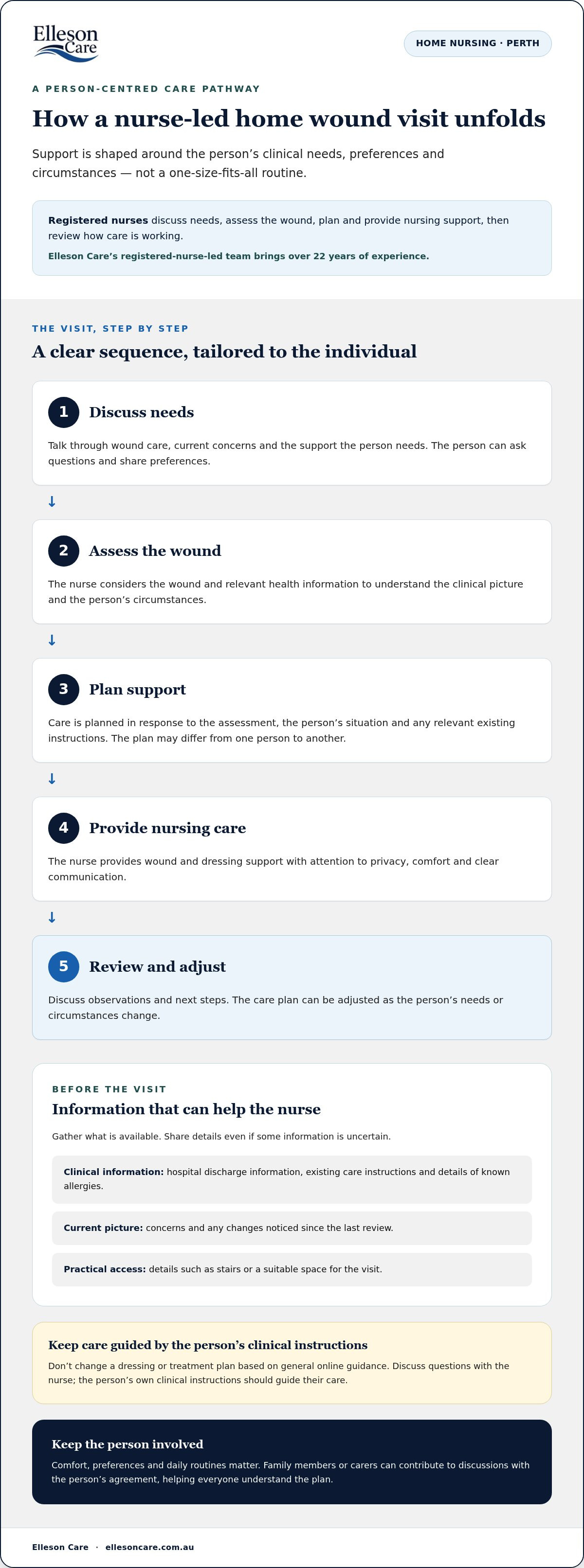
The process generally moves through a series of steps:
- Discuss needs: The nurse talks with the person about their wound care, current concerns and the support they need.
- Assess the wound: The nurse considers the wound and relevant health information to understand the clinical picture.
- Plan support: Care is shaped around the assessment, the person’s circumstances and any relevant existing instructions.
- Provide nursing care: Support is delivered with attention to privacy, comfort and clear communication.
- Review: The nurse discusses observations and any next steps, adjusting the plan as the person’s needs or circumstances change.
The assessment and care plan will vary from person to person. The person should feel able to ask questions and understand what the nurse is doing. If they want family or carers involved, communication can include them with the person’s agreement.
What information helps the nurse understand the situation?
Before the visit, gather relevant hospital discharge information, existing care instructions and details of known allergies. It may also help to note current concerns, changes noticed since the last review and practical access needs, such as stairs or a suitable space for the visit. Share what you know, even if some details are uncertain. Don’t change a dressing or treatment plan based on general online guidance; discuss questions with the nurse. MedlinePlus offers general information about how to change a dressing at home, but the person’s own clinical instructions should guide their care.
How can care remain person-centred over time?
Comfort, preferences and daily routines matter throughout ongoing care. For example, the person can explain what helps them feel at ease during a visit and when they prefer care to fit around everyday activities. The nurse can communicate relevant observations and next steps directly to the person, or to agreed supports, so everyone understands the plan. Wound management may also sit alongside broader support at home; read the in-home aged care guide for more on this approach.
For Perth families considering wound dressing services at home, Elleson Care provides nurse-led wound management tailored to individual needs. Explore Elleson Care’s home nursing support to learn more.
Is home wound care right, or is another setting needed?
Receiving nursing support at home can reduce the burden of travelling, but it isn’t the right setting for every wound or every stage of care. The choice depends on the clinical need, the person’s health and circumstances, and whether the required care can be safely provided at home. A registered nurse’s assessment helps determine whether home support is appropriate or whether another setting is needed.
Home-based care doesn’t mean managing a wound alone. Professional nursing oversight can guide wound support and review, while a clinic or hospital may be more suitable if the person needs assessment or treatment that cannot be provided at home.
| Setting | May suit when | Considerations |
|---|---|---|
| Home nursing | Travel is difficult, and the person’s wound care needs can be supported at home. | The nurse considers the home environment, clinical needs and existing supports. |
| Clinic | A person can travel and needs an in-person review in a clinical setting. | Getting to appointments may be difficult or uncomfortable for some people. |
| Hospital | Urgent assessment or hospital-level care may be needed. | A home visit is not a substitute for urgent or hospital care. |
When might home nursing be a practical option?
Home nursing may be worth considering when appointments involve a difficult journey or when wound care needs to be considered alongside other support at home. The person’s mobility, daily routine, home circumstances and existing care arrangements all help shape what may be practical. In the same way, for individuals managing mobility challenges or lower-limb concerns elsewhere, organising a podiatrist home visit Sydney provides a practical way to receive targeted clinical care in familiar surroundings. These factors can guide a conversation, but they don’t determine suitability on their own. A clinical assessment is needed to consider the individual’s wound and care requirements.
When should someone seek urgent medical help?
Seek urgent medical assessment if symptoms are severe or getting worse rapidly. If it’s a medical emergency in Australia, call Triple Zero (000). Don’t wait for a routine home nursing visit if urgent help may be needed. This article can’t diagnose a wound or replace advice from a clinician. If you’re unsure about a change in the wound or the person’s condition, seek advice from an appropriate health professional.
For families considering wound dressing services at home, the aim is to find a setting that fits the person’s clinical needs while supporting their comfort and circumstances. An assessment helps clarify whether home nursing is suitable and what other care may be needed.
How to arrange wound dressing services at home in Perth
Arranging home nursing can feel more manageable when you have the key details together. Start by describing the wound care support needed, what prompted the request and any difficulties travelling to appointments. This gives the conversation a practical starting point and helps identify what information may be useful for planning care.
- Describe the support needed: Explain whether care is ongoing, follows a hospital stay or relates to a pressure injury, and share any current concerns.
- Gather relevant information: Have existing wound care instructions, discharge information and relevant health details available to discuss.
- Explain what works at home: Note mobility or access needs, communication preferences and any support the person would like from family or carers.
- Discuss coordination: Share relevant details of the person’s aged care, NDIS or DVA arrangements so these can be considered alongside their care needs.
What to prepare before arranging care
Write down the person’s current wound care instructions and relevant health information, including known allergies or recent changes they’ve noticed. Note practical details such as access to the home, mobility support or communication needs that could affect a visit. Include the person’s preferences and whether they want a family member or carer involved in discussions. These details help keep the conversation focused on the person’s circumstances.
How funding and care coordination fit in
Funding pathways vary according to the person’s situation, existing plan and applicable arrangements. Aged care, NDIS and DVA supports each have their own considerations, so funding shouldn’t be assumed or treated as automatic. Discuss the relevant arrangements with the person’s plan or care coordinator, and share the information with the nursing team as care is discussed. For wider aged care funding context, read the Support at Home program guide.
Once the person’s needs, home circumstances and coordination details are clear, a conversation about wound dressing services at home can focus on a tailored approach. Elleson Care provides clinical nursing and wound management at home in Perth, with support shaped around individual needs. Discuss home wound nursing with Elleson Care.
Wound dressing support at home with Elleson Care
For people in Perth who need clinical wound support without travelling to every appointment, Elleson Care provides wound management in the familiar setting of home. The West Australian owned and operated provider delivers clinical nursing, aged care and NDIS support at home, with wound and pressure injury management included in its nursing services.
Care is led by registered nurses, and the team brings over 22 years of experience. Families can discuss wound care needs with an experienced clinical team, while keeping the person’s comfort, dignity and preferences central to the conversation. Support is tailored to the individual rather than treated as a standard routine.
What to expect from Elleson Care’s approach
Wound management is considered in the context of the person’s clinical needs and day-to-day circumstances. The nurse can discuss the support needed and how it may fit alongside broader clinical care. Where relevant, wound care can form part of a more holistic approach to wellbeing at home.
Family members or carers may be part of the conversation if the person wants them involved. Their participation isn’t a requirement: the person’s wishes and autonomy remain important. Clear, respectful communication helps everyone involved understand the support being discussed and the next steps.
Pressure injury management is also part of Elleson Care’s clinical nursing support. Whether the person needs wound management, support for a pressure injury or care that sits alongside other needs, the approach is shaped around their circumstances. A discussion about the person’s situation can help establish what support is needed and what information may be useful to consider.
Taking the next step in Perth
If you’re arranging care for yourself or a family member, share the main concern, any existing care instructions and the preferred way to continue the conversation. It’s also helpful to explain what matters most to the person, such as comfort, communication preferences or support from family. Questions can be raised openly and discussed respectfully, without pressure to have every detail worked out in advance.
For families considering wound dressing services at home, a conversation with a local clinical nursing team can help clarify the next step. Discuss home nursing support with Elleson Care.
Take the next step towards wound care at home
Choosing wound dressing services at home starts with understanding the person’s clinical needs, daily circumstances and whether home nursing is a suitable setting. A registered nurse can assess the situation and shape support around the individual, while urgent or more complex needs may call for another care setting.
Preparing current care instructions, relevant health information and details about the person’s preferences can help make an initial conversation more focused. Funding arrangements may also depend on the person’s circumstances, so include any relevant plan or care coordinator in discussions.
Elleson Care is a West Australian owned and operated provider serving Perth. Its registered-nurse-led team brings over 22 years of experience, with clinical services including wound management and pressure injury management. Care is tailored to the person and can sit alongside their broader needs at home.
If you’re ready to discuss support for yourself or a family member, discuss home nursing support with Elleson Care. A clear, respectful conversation can help you consider a suitable next step.
Frequently Asked Questions
Can a nurse change a wound dressing at home?
Yes, a registered nurse can provide wound management and dressing support at home when it’s appropriate for the person’s clinical needs. The nurse’s assessment and relevant care instructions guide the support, rather than a single routine for every wound. They can explain what to monitor and how follow-up will be communicated. If symptoms are severe or rapidly worsening, seek urgent medical help instead of relying on online information.
What happens during a home wound dressing visit?
A home visit may involve discussing the person’s needs, reviewing relevant care information, assessing the wound and providing support in line with the clinical plan. The nurse should consider the person’s comfort, privacy and preferences throughout the visit. Each situation is different, so the steps may vary. Ask the nurse to explain the planned care and how any observations or follow-up arrangements will be communicated.
Is wound dressing at home suitable for every wound?
No, home care isn’t suitable for every wound or situation. A registered nurse can assess the person’s clinical needs and circumstances to help determine whether support at home is appropriate. Some symptoms may require urgent medical assessment or another level of care. If the wound changes rapidly or the person becomes seriously unwell, seek urgent medical help. Call Triple Zero (000) for a medical emergency in Australia.
How do I arrange wound dressing services at home in Perth?
Start by describing the person’s wound care needs and where they live in Perth. Gather relevant care instructions, hospital discharge information and details about mobility, communication or other support needs at home. Elleson Care provides clinical nursing and wound management support in people’s homes in Perth. A conversation can help clarify the person’s circumstances and the next steps for arranging suitable support.
Can NDIS funding pay for wound dressing services at home?
NDIS funding depends on the participant’s circumstances, plan and how the support relates to their disability-related needs. Don’t assume every wound dressing service will automatically be funded through the NDIS. Review the participant’s plan and discuss the support with their coordinator or plan manager. Relevant clinical information can help explain the care need clearly. Funding decisions depend on the participant’s individual arrangements.
Can aged care or DVA support include wound care at home?
Aged care and Department of Veterans’ Affairs (DVA) arrangements depend on individual circumstances, assessments and applicable funding rules. Elleson Care provides wound management as part of its clinical nursing services, but funding shouldn’t be assumed. Review the person’s current care arrangements and discuss how nursing support may fit with their plan or the relevant coordinator. Check current program guidance before making funding decisions, as arrangements may change.
When should I seek urgent help for a wound?
Seek urgent medical assessment if symptoms are severe, worsening rapidly or causing serious concern. An online article can’t assess a wound or determine whether it’s infected or urgent. If the person is experiencing a medical emergency in Australia, call Triple Zero (000). For non-emergency concerns, follow the person’s clinical instructions and seek advice from an appropriate health professional. Don’t delay urgent care while waiting for a routine nursing visit.


