

What if the transition from a home care package level 3 to the 2026 Support at Home program was actually an opportunity to secure more robust, nurse-led care in your own home? For many families in Perth, the shift to the new classification system has brought a mix of uncertainty and concern about whether intermediate funding will still cover essential clinical nursing. It's understandable to feel anxious about navigating these regulatory changes while also managing the practicalities of an ACAT assessment.
We're here to provide the clarity and stability you need during this period of change. You'll discover how to maximise your intermediate funding under the new rules, including the 1 July 2026 price caps and the upcoming 1 October 2026 transition to fully funded personal care. This article provides a clear roadmap for accessing the support you deserve. We'll help you understand your new classification and show you how to choose a local provider with the clinical expertise to help you stay at home with confidence and dignity.
Key Takeaways
- Understand how the traditional home care package level 3 has transitioned into the new intermediate classifications within the 2026 Support at Home program.
- Identify the essential balance of clinical nursing and domestic assistance required to support your wellbeing and safety at home.
- Prepare for your ACAT assessment in Perth by learning how to clearly communicate intermediate care needs to the assessment team.
- Manage your individual budget effectively by understanding the quarterly funding structure and how income-tested fees apply to your situation.
- Recognise the clinical advantages of a nurse-led approach in ensuring your care plan remains responsive to changing health requirements.
Understanding the Transition: Home Care Package Level 3 in the 2026 Support at Home System
The aged care landscape underwent a significant transformation on 1 November 2025, when the previous system was replaced by the Support at Home program. If you've been researching a home care package level 3, it's essential to understand that this level is now categorised as "intermediate care" within a more flexible framework. While the terminology has evolved, the core purpose remains steadfast. The system is designed to provide the precise level of support needed to maintain your independence while addressing more complex health requirements than basic domestic help allows.
The primary objective of these updates is to ensure seniors can age in place safely. By providing structured intermediate support, the government aims to prevent the premature entry of individuals into residential aged care facilities. This shift acknowledges that most people prefer the comfort and familiarity of their own homes. The broader framework of Aged care in Australia has moved toward a model that prioritises personal autonomy, clinical safety, and dignity for every individual.
The Move from "Packages" to "Classifications"
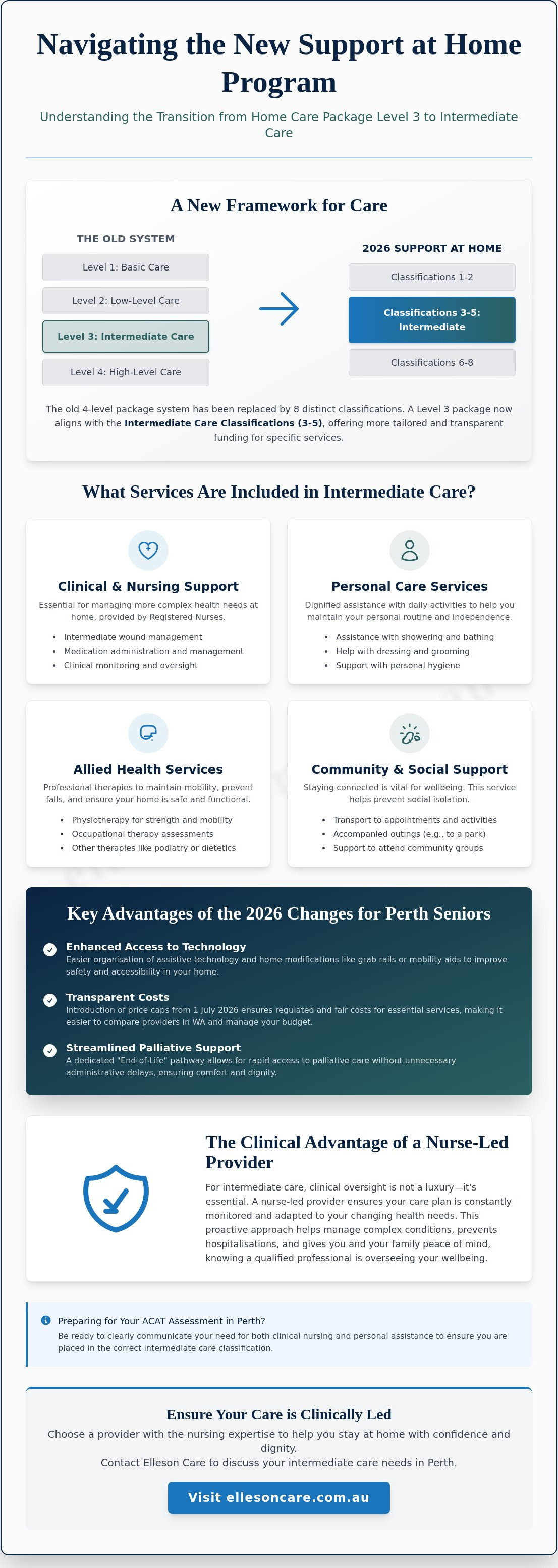
The 2026 system has moved away from the old four-level structure in favour of eight distinct care classifications. Your previous home care package level 3 now aligns with the intermediate classifications, typically ranging from Classification 3 to Classification 5 depending on your specific health requirements. This isn't just a name change. Funding is now allocated based on a defined list of services rather than a single lump sum. This ensures that the budget is used effectively for clinical nursing, personal care, and domestic assistance that directly impacts your well-being. It's a more transparent way to ensure the funds actually match the care you receive.
Why the 2026 Changes Benefit Perth Seniors
For families in Western Australia, these regulatory updates offer several practical advantages. There's now a much stronger emphasis on accessing assistive technology and home modifications. This means you can more easily organise equipment like grab rails or mobility aids that make your Perth home safer and more accessible.
The 2026 regulations also introduce a streamlined "End-of-Life" pathway. This ensures that intermediate care recipients can access palliative support without unnecessary administrative delays. Additionally, the introduction of price caps on 1 July 2026 provides much-needed transparency. You'll find it easier to compare providers in WA, knowing that costs for essential services are regulated and fair. This clarity helps you focus on what truly matters: the quality of the clinical support and the compassion of the people providing it.
What Services Are Included in Level 3 Intermediate Care?
Transitioning to a home care package level 3 classification means your care plan moves beyond simple domestic assistance. It addresses a specific threshold where clinical oversight becomes necessary to maintain safety at home. This intermediate level provides a balanced blend of practical help and professional health monitoring. It's designed for individuals who are still mostly independent but require more than just a weekly cleaning service to thrive.
Personal care services are a cornerstone of this support level. This includes assistance with showering, dressing, and personal hygiene, always delivered with a focus on preserving your dignity. Allied health services also play a vital role. You'll have access to physiotherapy and occupational therapy assessments. These professionals help you stay mobile and ensure your home environment is set up to prevent falls and injuries.
To prevent social isolation, the package includes community access and social support. Whether it's a walk in a local Perth park or attending a community group, staying connected is essential for mental well-being. Managing your Support at Home budget effectively allows you to prioritise these diverse services based on your unique lifestyle and health priorities.
Clinical and Nursing Support for Level 3
Intermediate care often requires the expertise of Registered Nurses. Under the 2026 framework, this includes intermediate wound management for surgical sites or chronic ulcers. Nurses also handle medication administration and management, ensuring complex regimes are followed accurately. For those with specific health needs, catheter care and continence management are integrated into the daily routine. This professional monitoring is crucial for managing chronic conditions like diabetes or heart disease. It provides peace of mind for both you and your family. If you're unsure how these clinical services fit into your schedule, speaking with a clinical support specialist can clarify the best approach for your health goals.
Domestic and Lifestyle Assistance
While the clinical focus is high, the practicalities of daily living aren't overlooked. Level 3 funding covers essential domestic tasks to keep your home running smoothly. These services work in tandem with clinical care to create a holistic support system. Key inclusions often involve:
- Thorough house cleaning and laundry services to maintain a hygienic environment.
- Nutritious meal preparation tailored to your specific dietary requirements.
- Transport assistance for specialist medical appointments or grocery shopping in Perth.
- Minor home modifications, including the installation of grab rails or ramps, to enhance your immediate safety.
By combining these practical services with professional nursing, the intermediate classification creates a stable foundation for ageing in place. It ensures that as your needs become more complex, your support system adapts accordingly.
Assessing Your Eligibility: Do You Need Intermediate or High-Level Support?
Determining whether your needs fall into the intermediate or high-level category is a pivotal step in your aged care journey. For many, the transition to a home care package level 3 occurs when daily tasks become physically taxing or when a chronic health condition requires more consistent monitoring. It's common to feel a sense of hesitation. You might worry that accepting help means losing your independence. We view it differently. Intermediate support is a partnership designed to protect your dignity and give you the confidence to continue living life on your own terms in the Perth community.
Identifying the signs that you require intermediate care rather than basic support is essential for your safety. You might notice that managing multiple medications is becoming confusing, or perhaps a minor fall has made you wary of showering without someone nearby. These aren't signs of failure. They're indicators that your current environment needs slight adjustments to remain sustainable. By addressing these needs early, you often prevent the health crises that lead to more restrictive care settings.
The ACAT Assessment Process in Perth
The Aged Care Assessment Team (ACAT) in Western Australia facilitates the gateway to government-funded support. To begin, you must register with My Aged Care, which usually leads to a telephone screening before a face-to-face meeting is organised. When an assessor visits your home in WA, they'll focus on your physical health, your cognitive wellbeing, and how you're currently managing at home. It's helpful to have a family member or a trusted advocate present to ensure all your clinical concerns are voiced clearly. The ACAT assessment serves as the formal mechanism for determining your specific classification and funding level within the 2026 Support at Home framework.
Intermediate vs. High-Level Care (Level 4)
Understanding the distinction between intermediate and high-level care ensures you receive the appropriate volume of professional attention. While intermediate classifications provide a robust baseline of clinical nursing and personal care, high-level classifications are reserved for those with intensive, complex clinical requirements that need more frequent intervention. You can review the official government subsidy rates to see how funding differs across these tiers. If your health needs increase unexpectedly, the system allows for a reassessment to facilitate a step-up in support. Signs you may need to move toward a home care package level 3 classification include:
- Increased difficulty with complex medication regimes or wound care.
- Frequent episodes of dizziness or a history of recent falls.
- Noticeable difficulty with personal hygiene or dressing without help.
- The presence of chronic conditions that require regular monitoring by a Registered Nurse.
Preparation is the key to a successful assessment. By documenting your daily challenges and health goals before the assessor arrives, you ensure the resulting care plan truly reflects your needs and supports your desire to stay at home.
Managing Your Support at Home Budget and Waitlists in WA
Securing a home care package level 3 classification is a significant milestone, yet it often brings a new set of questions regarding financial management and timing. Under the 2026 Support at Home program, your funding is structured as an individual quarterly budget. This system provides greater transparency, ensuring you know exactly how much is allocated to your care. A key feature of the 2026 regulations is the 10% cap on care management fees. This ensures the vast majority of your funding is directed toward the clinical nursing and support services you actually receive in your Perth home.
Effective budget management also involves understanding how unspent funds are handled. In the current 2026 framework, you can carry over unspent funds up to $1,000 or 10% of your quarterly budget, whichever is greater. This flexibility allows for better planning, especially if your needs fluctuate throughout the year. It provides a financial buffer that helps maintain the steady, reliable presence of care that is so vital for long-term well-being.
Understanding Contributions and Fees
Your total care budget is comprised of government subsidies and, in some cases, personal contributions. The Income Tested Care Fee is determined by Services Australia based on an assessment of your income and assets. This is distinct from the basic daily fee, which some providers may ask you to pay. It's helpful to remember that there is a lifetime contribution cap, currently indexed at approximately $135,318.69, which limits the total amount you will ever pay toward your care. For a detailed breakdown of how these finances work within the new system, you can explore our Support at Home program guide.
Navigating the WA Waitlist
Wait times for intermediate care in Western Australia can vary depending on the "national priority queue." While you wait for your full home care package level 3 funding to be assigned, it is essential to stay in active contact with My Aged Care. If your circumstances change or your health declines, you should request an urgent update to your profile. Many families in Perth use the Commonwealth Home Support Programme (CHSP) as a temporary bridge. This allows you to access basic services while waiting for your more comprehensive intermediate classification to be finalised.
Choosing a Perth-based provider early in the process is a strategic advantage. It allows you to build a relationship with a team that understands the local WA health landscape and can help you transition smoothly once your funding is approved. If you need assistance navigating the local waitlist or understanding your eligibility, contact our Perth team today for professional guidance.
Why a Nurse-Led Provider is Essential for Level 3 Home Care in Perth
Selecting the right provider for a home care package level 3 is a decision that profoundly impacts your safety and daily comfort. While many organisations offer basic domestic assistance, the intermediate classification requires a higher degree of clinical oversight to be truly effective. A nurse-led approach ensures that your care isn't just a checklist of tasks; it is a professionally managed health strategy. Having Registered Nurses oversee your support means that subtle changes in your health are recognised before they escalate into crises. This proactive monitoring is the foundation of successfully managing complex intermediate needs while remaining in the home you love.
Clinical expertise provides a sense of stability for both the individual and their family. It moves the focus from reactive "crisis management" to a steady, evidence-based model of well-being. By prioritising person-centred care, we ensure that every clinical intervention respects your personal dignity and autonomy. You remain the leader of your own life, supported by experts who are technically proficient and emotionally invested in your quality of life. This balance of clinical authority and human warmth is what allows seniors to age in place with genuine confidence.
The Value of Local WA Expertise
There is a distinct advantage to choosing a provider with deep roots in the Western Australian community. Local ownership leads to better community nursing outcomes because the team understands the specific health networks and resources available across the Perth metropolitan area. We recognise that WA's senior population is diverse, requiring a culturally sensitive approach that honours individual backgrounds and life stories. Understanding the local context allows for a more responsive service that feels like a partnership rather than a transaction. For more information on navigating these choices, you can read our guide to In-Home Aged Care in Perth.
Partnering with Elleson Care for Level 3 Support
At Elleson Care, our nurse-led team is dedicated to helping you navigate the transition to the Support at Home program with ease. We understand the complexities of the 2026 regulations and work closely with families to ensure their home care package level 3 funding is utilised effectively. Our specialised approach focuses on high-standard clinical nursing, including intermediate wound management and palliative support, delivered with a gentle, professional touch. We are committed to being a reliable, protective presence in your life, ensuring that your care plan evolves as your needs change. If you're ready to discuss a tailored support plan for yourself or a loved one, please Contact our compassionate experts for a consultation and discover the difference that nurse-led care can make.
Securing Your Future with Confidence and Clinical Safety
The transition to the Support at Home program represents a new chapter in how intermediate care is delivered. By understanding the shift from the traditional home care package level 3 to the current classification system, you can better advocate for the clinical nursing and personal support you need. We've explored how to manage your individual budget and the importance of preparing thoroughly for your ACAT assessment to ensure your health goals are met with precision.
Elleson Care provides over 22 years of nurse-led clinical expertise, offering the stability and professional oversight required for intermediate and complex clinical support. As a West Australian owned and family-focused provider, we're dedicated to protecting your autonomy while ensuring your safety. Book a free consultation with our Perth-based clinical care team to discuss how we can support your journey. You don't have to navigate these changes alone; a steady and compassionate partner is ready to help you thrive in the comfort of your own home.
Frequently Asked Questions
What is the difference between HCP Level 3 and the new Intermediate Support at Home classification?
The primary difference lies in the transition from a single package level to a more granular classification system within the 2026 Support at Home program. While the old home care package level 3 provided a lump sum, the new intermediate classifications allocate funding based on specific service lists. This ensures that your budget directly supports your assessed clinical and domestic needs with greater transparency and flexibility.
How long is the waitlist for a Level 3 Home Care Package in Perth in 2026?
Wait times in Perth depend on your priority status within the national queue as determined by your ACAT assessment. While the government aims to reduce delays, it is best to check the current estimated wait times on the My Aged Care portal for the most accurate regional data. You can access interim support through the Commonwealth Home Support Programme (CHSP) while you wait for your full intermediate funding to be assigned.
Can I use my Level 3 funding for clinical nursing and wound care?
Yes, clinical nursing services, including professional wound management and medication administration, are essential components of intermediate support. These services are overseen by Registered Nurses to ensure your health remains stable and any chronic conditions are managed effectively. This clinical oversight is a key feature of the intermediate classification, providing a higher level of safety than basic domestic assistance alone.
Does the Level 3 classification cover home modifications like ramps and rails?
The intermediate classifications do cover minor home modifications and assistive technology designed to enhance your safety. This includes the installation of grab rails, ramps, or other equipment recommended by an occupational therapist. These modifications are vital for preventing falls and ensuring your Perth home remains a safe environment as your mobility needs change over time.
What happens to my Level 3 funding if I need to go into hospital?
If you are admitted to hospital, your home care services are temporarily suspended, and your provider should be notified immediately. Your funding and services will resume once you are discharged and return home. It is important to discuss "leave" provisions with your provider, as there are specific rules regarding how long your package can remain on hold while your place in the program is protected.
Can I choose my own carers with a Level 3 Support at Home budget?
You have the right to choose the staff who provide your care under the consumer-directed model of the Support at Home program. Your provider should work with you to match carers who suit your preferences and clinical requirements. This ensures that the support you receive is not only professional but also respectful of your personal dignity and cultural background.
Is an income assessment required for Level 3 intermediate care?
An income assessment by Services Australia is required to determine if you need to pay an Income Tested Care Fee. While the government provides a subsidy based on your home care package level 3 classification, your personal financial situation determines your individual contribution. It is advisable to complete this assessment early to understand your total budget and any out of pocket costs.
How do I switch providers if I already have a Level 3 package in WA?
Switching providers in Western Australia is a straightforward process that begins with reviewing your current home care agreement for notice periods. Once you have selected a new Perth based provider, you must contact My Aged Care to re-activate your referral code. This allows for a smooth transition of your budget and care plan without any interruption to your essential clinical or domestic services.


