

What if the small concern you're hesitant to mention is actually the missing piece of the puzzle for your care team? It's natural to feel a sense of hesitation when learning how to give feedback to your care provider. You might worry about making things awkward with a valued carer or fear that raising a point about daily support could lead to unwanted friction. In our close-knit Perth community, these relationships are built on trust, and the thought of jeopardising that connection is a common worry for many families.
We understand that your comfort and dignity are paramount. This guide will show you how to share your thoughts in a way that empowers both you and your support team. By reframing these conversations as a vital tool for clinical improvement rather than a personal critique, you can ensure your needs are met with respect. We'll walk you through the practical steps of who to contact, how to articulate your thoughts, and how the latest Australian care standards protect your right to a high quality of life.
Key Takeaways
- Understand that sharing your thoughts is a fundamental right under the Charter of Aged Care Rights and NDIS standards, ensuring your care remains safe and high-quality.
- Learn how to distinguish between a specific process and the individual carer to keep your conversations objective, professional, and focused on solutions.
- Discover practical communication techniques, such as "I" statements and the feedback sandwich, to master how to give feedback to your care provider while maintaining a positive relationship.
- Identify the clear escalation paths available in Western Australia, from internal provider discussions to independent bodies like HaDSCO or the Aged Care Quality and Safety Commission.
- Recognise how open dialogue fosters a stronger partnership with your nurse-led care team, leading to more personalised clinical support and better daily outcomes.
Understanding Your Rights: Why Feedback is Essential for High-Quality Care
Understanding your rights is the first step in ensuring your voice is respected within the healthcare system. In Australia, the framework for aged care and disability support is built on the principle that you are the central partner in your own health journey. Knowing how to give feedback to your care provider isn't just about addressing problems; it's about active patient participation in healthcare, which is proven to lead to safer and more effective outcomes. Your insights help bridge the gap between clinical theory and your daily reality.
The Role of the Charter of Aged Care Rights
The 2026 landscape for Australian care focuses heavily on transparency and personal agency. The Charter of Aged Care Rights and the NDIS Practice Standards explicitly state that you have the right to be treated with dignity and to have your concerns heard without fear of retribution. Under the new Aged Care Act that commenced in November 2025, providers are legally required to maintain transparent feedback and complaint processes. This shift towards consumer-directed care means your lived experience is valued as much as clinical data. Whether you're receiving NDIS support or aged care services in Perth, your provider must offer a safe environment where you can speak up freely.
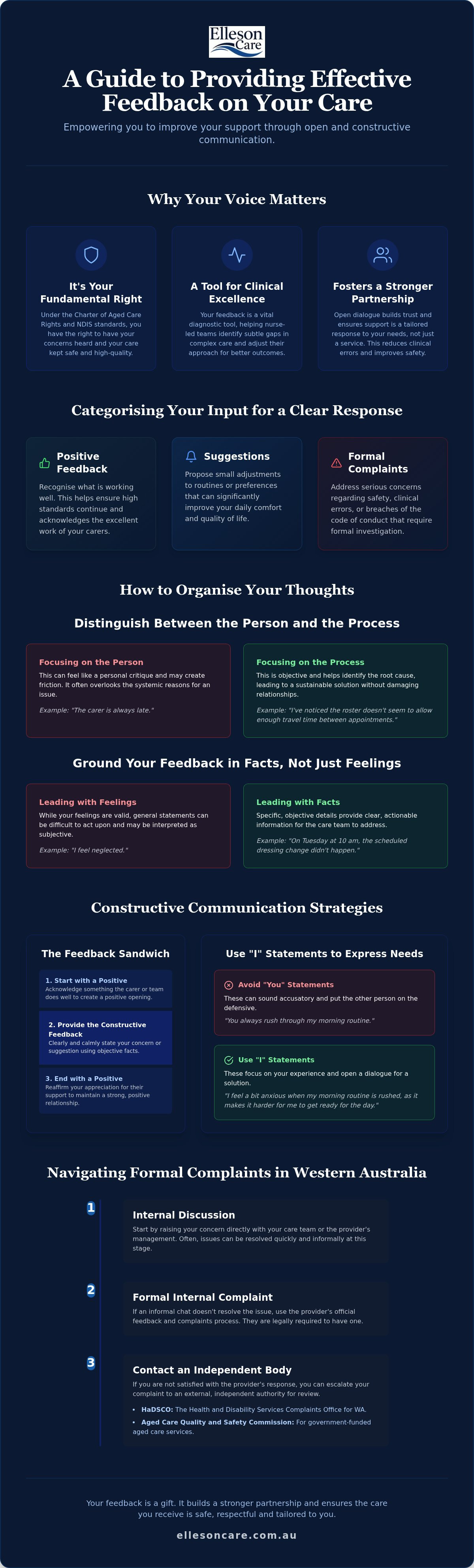
It helps to categorise your input so the provider can respond appropriately:
- Positive Feedback: Recognising what is working well to ensure those high standards continue.
- Suggestions: Small adjustments to routines or preferences that improve your daily comfort.
- Formal Complaints: Serious concerns regarding safety, clinical errors, or breaches of the code of conduct.
Feedback as a Tool for Clinical Excellence
For a nurse-led organisation, your input acts as a vital diagnostic tool. Registered nurses with decades of experience use your observations to identify subtle gaps in complex areas like wound management or palliative care that might otherwise go unnoticed. When you share that a specific dressing is uncomfortable or a routine feels rushed, you're providing data that helps clinicians adjust their approach. Learning how to give feedback to your care provider effectively creates a safer environment for everyone involved.
Open communication is directly linked to better health outcomes for seniors and NDIS participants alike. We view this dialogue as a gift; it allows us to uphold professional integrity and ensures the care delivered in your home is truly holistic. Your input directly influences the safety and quality of care delivered in your Perth home. When families and providers work in tandem, the risk of clinical errors decreases. This partnership ensures that support is not just a service, but a tailored response to your unique life circumstances.
Preparing for the Conversation: How to Organise Your Thoughts
Approaching a care provider with concerns can feel overwhelming, especially when you value the person supporting you. Emotional preparation is just as vital as the technical details. Before you speak, take a moment to reflect on whether you're dealing with a one-off incident or a recurring pattern of behaviour. This distinction helps you present a clear case rather than a list of grievances. By taking a methodical approach to how to give feedback to your care provider, you transform a potentially stressful interaction into a productive clinical discussion.
It's helpful to distinguish between the "person" and the "process" to keep the conversation objective. If a carer is consistently late because they've been given a roster with no travel time, the issue lies with the agency's scheduling process rather than the individual's work ethic. Identifying these nuances allows you to address the root cause of the problem without damaging the personal rapport you've built with your support team.
The "Facts vs. Feelings" Framework
While your feelings are entirely valid, grounding your feedback in objective facts makes it easier for a provider to take action. Start by writing down specific dates and times when the issue occurred. If a medication was missed or a care routine was skipped, note the exact impact this had on your daily comfort or health. For example, instead of saying "I feel neglected," you might say, "On Tuesday at 10 am, the scheduled dressing change didn't happen, which caused increased skin irritation by evening." This clarity helps the provider understand the clinical urgency of your request.
- Document the event: Keep a simple diary or refer to your care plan and medication logs.
- Define the impact: Explain how the deviation from the plan affected your routine or well-being.
- Identify the solution: Decide exactly what you want to achieve, such as a change in schedule or a different care technique.
Who is the Best Person to Talk To?
Choosing the right audience is key to a swift resolution. For minor adjustments to your daily routine, a direct, respectful conversation with your support worker or nurse is often the most effective route. However, if the concern involves safety, clinical standards, or recurring conflicts, it's more appropriate to contact the Care Manager or Practice Manager. They have the authority to adjust rosters and review clinical protocols. If you're feeling unsure about the process, the Aged Care Quality and Safety Commission provides resources to help you understand what to expect from your provider's internal response.
Don't feel you have to do this alone. Involving a trusted family member or an independent advocate can provide the emotional support needed to ensure your points are heard. At Elleson Care, we encourage this collaborative approach, as it aligns with our commitment to holistic, family-centred aged care services. Having a second person review a care plan ensures that nothing is missed during these important discussions.
Effective Communication Strategies for Families and Care Recipients
Many families hesitate to speak up because they fear creating an awkward atmosphere in their own home. However, the goal of communication is to build a stronger partnership, not to assign blame. Mastering how to give feedback to your care provider involves using techniques that foster collaboration. One of the most effective tools is the "I" statement. Instead of saying, "You are always late," try, "I feel concerned when the morning routine starts later than planned, as it affects my medication schedule." This shift focuses on your experience and needs rather than the carer's perceived failings, which naturally reduces defensiveness.
Another helpful method is the "Feedback Sandwich." This involves starting and ending the conversation with a genuine positive observation while placing the constructive feedback in the middle. For instance, you might acknowledge how much you appreciate a carer's gentle nature before discussing a specific clinical preference. Professional providers maintain strict anti-discrimination and non-retribution policies to protect your rights. They understand that honest dialogue is the only way to improve. While most issues are resolved through these direct conversations, understanding the process for formal complaints in Western Australia provides an essential safety net for your peace of mind.
Conversation Starters for Common Care Issues
Having a few prepared phrases can make a difficult conversation feel much more manageable. If you need to address punctuality, you might say: "I value our time together, but I find it difficult when our start time varies, as it makes it hard to organise my day." For clinical concerns, a collaborative tone works best: "I noticed a change in the wound dressing today; could we discuss the process to ensure we're following the latest nurse-led plan?" Don't forget to provide positive reinforcement when things are going well. A simple, "I really appreciated how you handled the physiotherapy exercises today; it felt very supportive," goes a long way in maintaining morale.
Navigating Cultural and Personal Preferences
Your care should always reflect your personal identity and heritage. Communicating specific dietary, religious, or lifestyle requirements is a matter of dignity. It's vital that in-home aged care Perth providers remain culturally sensitive and responsive to your unique background. To ensure your person-centred goals are being met, set a specific time to meet with your care team. This prevents anyone from feeling rushed and allows for a focused discussion on how the support plan can better align with your values. Professional care is not a one-size-fits-all service; it's a bespoke arrangement that should evolve alongside your preferences.
When to Escalate: Navigating Formal Complaints in Western Australia
While most concerns are resolved through direct dialogue, there are times when an issue requires a more formal approach. Understanding the difference between general feedback and a formal complaint is essential for protecting your rights. Feedback often involves suggestions for improvement or minor adjustments to daily routines. A complaint, however, usually involves a breach of service standards, safety concerns, or a failure to meet clinical obligations. Knowing how to give feedback to your care provider effectively includes knowing when that feedback needs to be escalated to an external body.
The standard escalation path begins with your provider's internal process. If the resolution is unsatisfactory, Western Australians can turn to the Health and Disability Services Complaints Office (HaDSCO). This independent statutory authority provides a free service to help resolve complaints about health, disability, and mental health services. In the 2024-2025 financial year, HaDSCO closed 3,076 complaints, demonstrating its active role in the WA healthcare sector. For NDIS participants, the NDIS Quality and Safeguards Commission acts as the national regulator, ensuring providers meet strict safety requirements. In Western Australia, there were 3.5 complaints related to abuse and neglect per 1,000 NDIS participants during that same period, highlighting the vital role of these oversight bodies.
External Advocacy and Support Services
You don't have to manage these processes alone. The Older Persons Advocacy Network (OPAN) offers free, independent advocacy to help seniors understand their rights and resolve issues with aged care providers. Similarly, the Health Consumers’ Council WA empowers individuals to participate in decisions about their care. If the stress of a transition or a dispute becomes too much, engaging a respite care Perth provider can offer your family the necessary breathing space while you work through a resolution with your primary team. These services provide a protective layer that ensures your dignity remains intact throughout the process.
Serious Clinical Concerns and Ahpra
In cases involving serious clinical misconduct or safety risks, it may be necessary to report a registered nurse or health practitioner to the Australian Health Practitioner Regulation Agency (Ahpra). This is a significant step usually reserved for professional negligence or ethical breaches. Under the nursing services regulatory framework, you should also expect "Open Disclosure" if something goes wrong. This is the professional requirement for healthcare providers to have an open, honest discussion with you about any incident that resulted in harm, including an apology and a plan to prevent it from happening again. Professional integrity is the foundation of high-quality care.
If you feel your current support isn't meeting the high standards you deserve, our nurse-led team is here to help you organise professional clinical support that prioritises your safety and dignity.
The Elleson Care Approach: Building a Partnership Through Open Dialogue
At Elleson Care, we view every interaction as an opportunity to strengthen the bond between our team and your family. As a nurse-led organisation, we understand that high clinical standards are only possible when there's an environment of total transparency. We've intentionally built our service on a "no-blame" culture, which encourages both our staff and our clients to speak up immediately if they see room for improvement or have safety concerns. This proactive stance ensures that learning how to give feedback to your care provider becomes a constructive part of your care journey rather than a source of stress. We believe that an open conversation today prevents a clinical complication tomorrow.
Our commitment to the support at home program standards means we don't just wait for issues to arise; we actively seek out your perspective. We've established a dedicated feedback loop where your suggestions are directly integrated into our clinical protocols. When you share a thought about a routine or a specific nursing need, it's reviewed by our leadership team and used to refine our staff training and service delivery models. This systematic approach ensures that the support you receive is always evolving to meet your unique circumstances, keeping your safety and comfort at the centre of everything we do.
Nurse-Led Advocacy for Every Client
One of the distinct advantages of working with a local, WA owned and operated provider is the direct access you have to our leadership. Our Registered Nurses, who bring over 22 years of experience to their roles, act as your clinical advocates within the wider healthcare system. They ensure that your medical needs and personal dignity are never compromised by bureaucratic processes. Because we're a family-centred business, you aren't just a number in a database; you're a member of a community where your voice carries genuine weight. This local accountability means that when you speak, we're here to listen and make immediate adjustments.
Next Steps: Sharing Your Thoughts With Us
We invite you to be an active partner in your care journey. Whether you'd like to acknowledge a carer who has gone above and beyond or suggest a change to your clinical support, we've made the process straightforward and accessible. You can access our internal feedback forms at any time or request a formal care review to discuss your goals in detail. We promise to listen, respond, and act on your feedback within set timeframes, ensuring that you always feel heard and respected. Open dialogue isn't just a policy for us; it's the foundation of the safety and stability we provide to families across Perth every day.
Empowering Your Care Journey through Partnership
Your voice is the most powerful tool for ensuring the support you receive remains safe, respectful, and perfectly aligned with your lifestyle. By understanding your rights under the Charter of Aged Care Rights and the NDIS standards, you've taken the first step toward a more transparent relationship with your support team. Knowing how to give feedback to your care provider isn't about conflict; it's about fostering a clinical environment where your personal dignity is always the priority. Whether you're using "I" statements to resolve a minor scheduling issue or navigating formal escalation paths in Western Australia, your input is a vital contribution to clinical excellence.
At Elleson Care, our nurse-led leadership brings over 22 years of experience to every family we serve. As a West Australian owned and operated provider, we pride ourselves on a holistic, family-centred approach that treats you as a partner, not just a recipient of services. We encourage you to contact the Elleson Care team in Perth to discuss your personalised care needs today. Together, we can ensure your support plan is as unique as you are, providing the steady and reliable presence your family deserves.
Frequently Asked Questions
Can I be kicked out of my care program for making a complaint?
No, you cannot be removed from your program for raising a concern. Both the NDIS Practice Standards and the Charter of Aged Care Rights protect your right to provide feedback without fear of retribution. Professional providers are required to have a clear, non-discriminatory complaints process. If you feel you're being treated differently after speaking up, you should contact an advocacy service or the relevant government commission in Western Australia immediately.
What if I am unhappy with my specific support worker but like the agency?
It's perfectly acceptable to request a different support worker while staying with the same agency. Personalities don't always align; professional providers understand that the "right fit" is essential for your comfort. You should speak with your Care Manager or Practice Manager about your preferences. They can usually adjust the roster to find a team member who better suits your personality and specific clinical needs without disrupting your overall service agreement.
How long should I wait for a response after giving feedback?
Most providers aim to acknowledge feedback within two business days. A full resolution typically takes between 14 and 30 days, depending on the complexity of the issue. You should ask for an expected timeframe when you first submit your thoughts. If you haven't received a response within the agreed period, it's appropriate to follow up. Clear communication about deadlines helps ensure your concerns are being taken seriously by the management team.
Do I need a lawyer to make a formal complaint to HaDSCO?
No, you don't need a lawyer to lodge a complaint with the Health and Disability Services Complaints Office (HaDSCO) in Western Australia. HaDSCO is an independent statutory authority that provides a free service to all Western Australians. Their role is to facilitate a resolution between you and the provider through an impartial process. You can contact them directly via their website or phone to start the process without any legal representation or associated costs.
Can my family member give feedback on my behalf if I am unable to?
Yes, a family member or trusted advocate can certainly provide feedback on your behalf. This is common in a holistic family approach to healthcare, especially when a client has complex needs or communication difficulties. If you have the capacity, you should provide consent for them to act as your representative. In cases where a person cannot give consent, a legally appointed guardian or enduring power of attorney can manage these discussions with the provider.
What happens if the provider disagrees with my feedback?
If a provider disagrees with your feedback, the next step is to request a formal review of the situation. You should ask them to explain their position in writing, referencing your specific care plan or service agreement. If a mutual resolution cannot be reached internally, this is the point where you should escalate the matter to an external body, such as the Aged Care Quality and Safety Commission, for an independent assessment of the clinical standards.
Is it okay to give positive feedback, or is the system only for complaints?
Positive feedback is highly encouraged and is a vital part of learning how to give feedback to your care provider. Sharing what is working well helps your team understand your preferences and reinforces high standards of care. It boosts staff morale and ensures that successful strategies are maintained. Many providers use positive testimonials to identify "best practice" examples that can be shared across their entire nursing and support staff.
How do I give feedback to an NDIS provider specifically?
To give feedback to an NDIS provider, you should first use their internal feedback or complaints system. All registered NDIS providers in Perth must have a documented process for handling these interactions. If you're not satisfied with their internal response, you can contact the NDIS Quality and Safeguards Commission. They provide a dedicated team to help participants resolve issues regarding the safety or quality of their disability support services and can take regulatory action if needed.


